

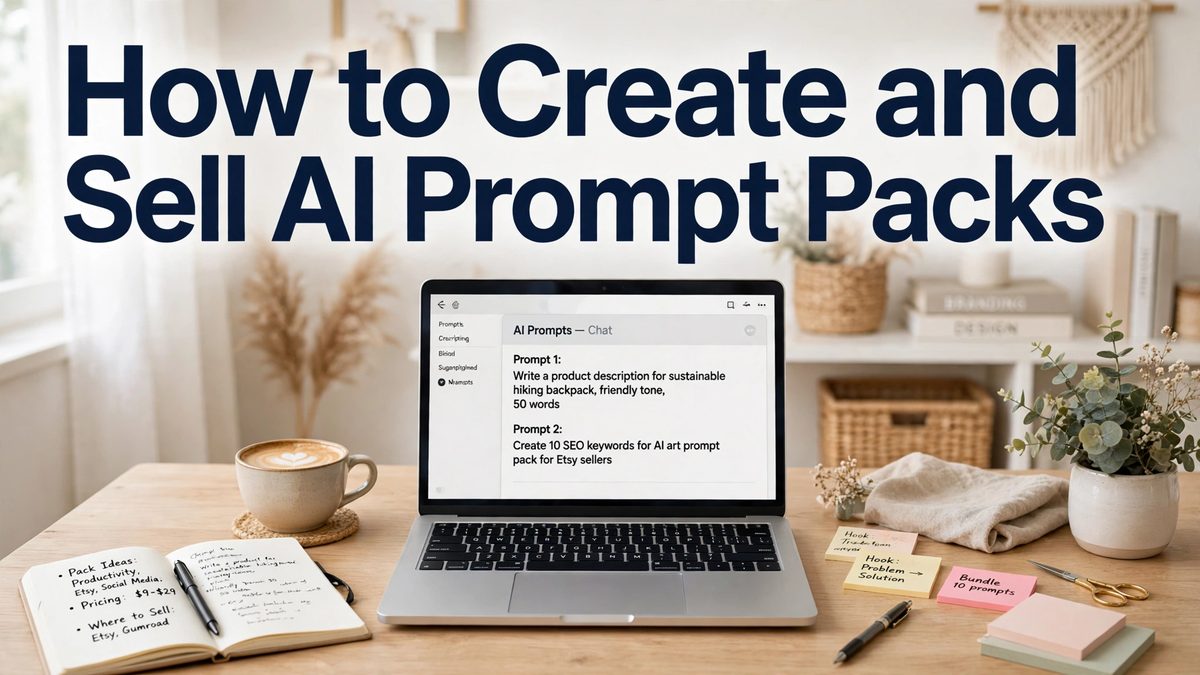
A friend of mine runs a tiny bakery, and one afternoon she showed me her phone and groaned, “I know AI can write my newsletters, but whenever I try, it sounds like a robot.” I asked what she’d typed. Her prompt was one line: “Write a newsletter about cupcakes.” I rewrote it with a few details about her customers, her tone, and her goal, and the result sounded just like her. She looked at me and said, “I would pay for that.”
That moment taught me that many people don’t need more AI tools. They need better instructions. If you can write clear, tested prompts for specific jobs, you can build AI prompt packs that save others time and sell repeatedly.
In this guide, I’ll walk you through choosing a niche, writing prompts that work, testing and packaging them, pricing, and selling responsibly.
What Is a Prompt Pack?
A prompt pack is a collection of ready-to-use instructions for AI tools, organized around a specific task or audience. For example:
- Email prompts for freelancers: pitches, follow-ups, and proposals.
- Content planning prompts for bloggers: keyword ideas, outlines, and repurposing plans.
- Study prompts for students: summaries, quizzes, and explanations.
- Meal planning prompts for families.
- Small business prompts: product descriptions, customer replies, and social posts.
Why buyers pay for them:
- They save time. Users skip trial and error.
- They teach structure. Good prompts show how to give context and format.
- They’re niche-specific. Generic prompts exist everywhere, but tailored ones feel valuable.
The honest part: Many free prompt lists exist, and AI tools change quickly. Your pack must offer real organization, testing, examples, and guidance, not just a copied list. Check platform rules on AI-related products and keep your content original.
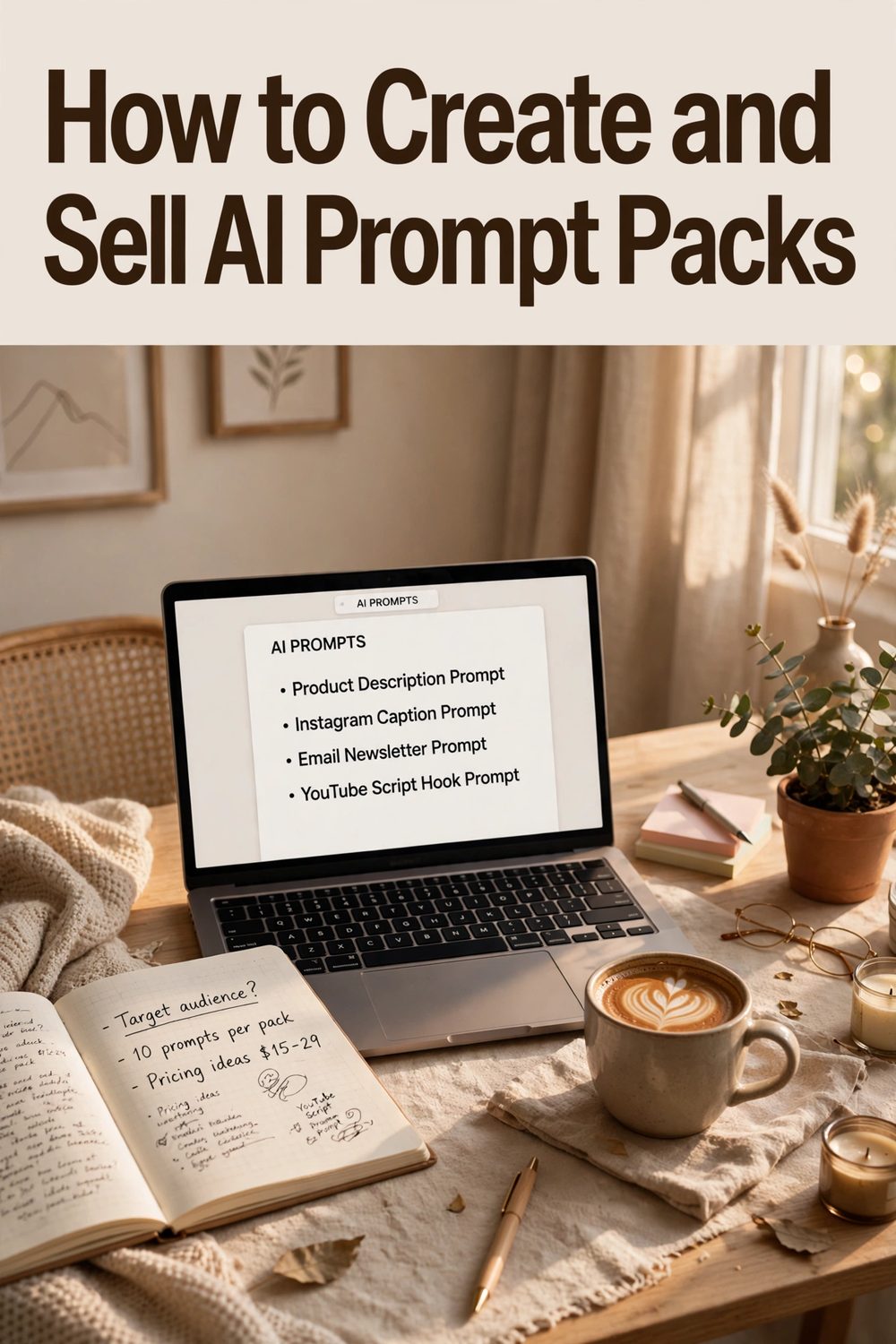
Step 1: Choose a Niche and a Problem
Specific beats broad. Ask:
- Who is my buyer? Freelancer, teacher, parent, blogger, shop owner?
- What repetitive task drains their time?
- What outcome do they want?
- What’s missing from current free resources?
Niche Ideas
- Prompts for freelance writers: pitching, outlining, and editing.
- Prompts for social media managers: content calendars and captions.
- Prompts for Etsy sellers: listings, tags, and customer messages.
- Prompts for teachers: lesson plans and rubrics.
- Prompts for job seekers: resumes, cover letters, and interview practice.
- Prompts for moms: meal plans, chore charts, and schedule planning.
- Prompts for coaches: session plans and client emails.
Pro tip: Combine a profession and a task, such as “client onboarding prompts for virtual assistants.”
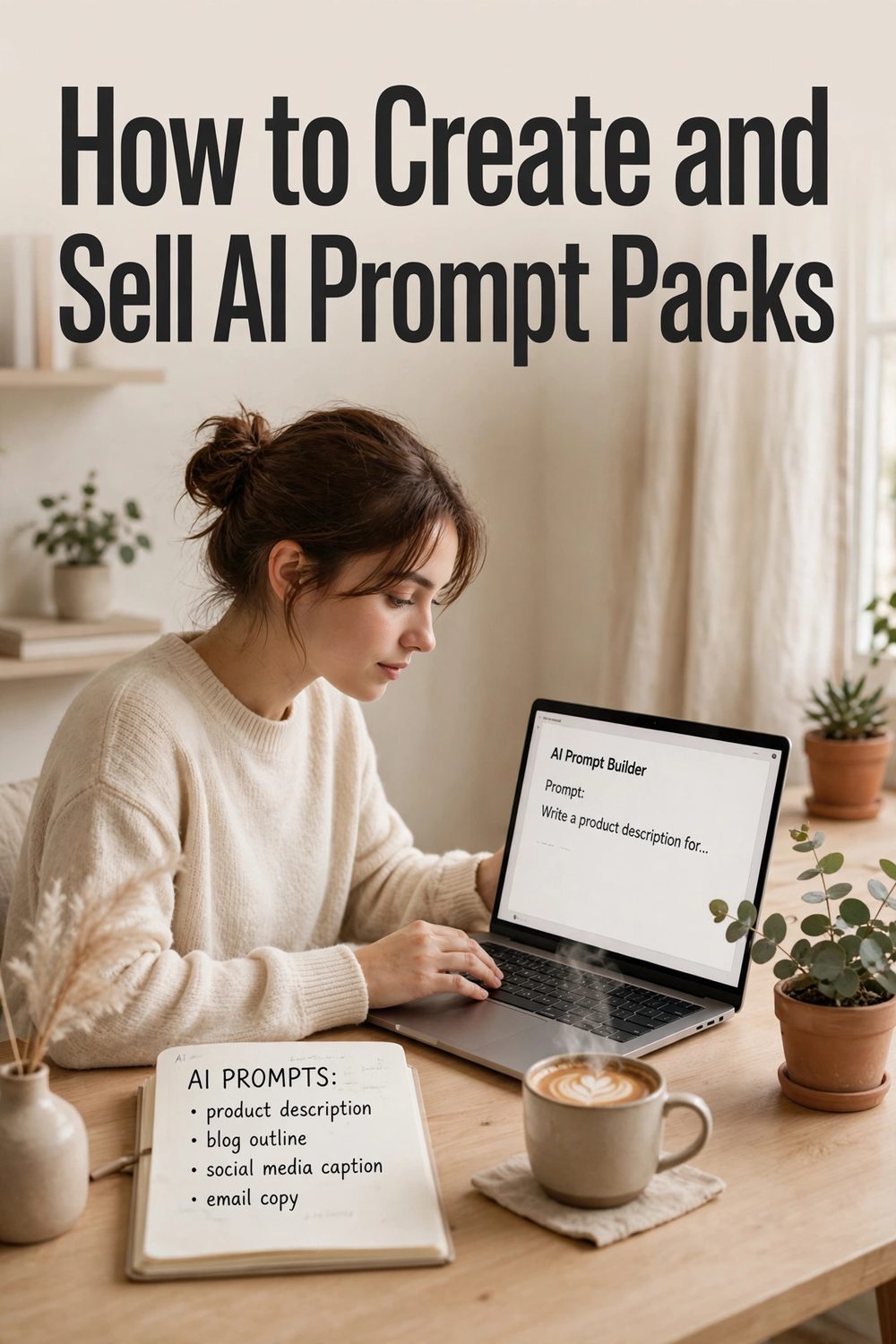
Step 2: Learn What Makes a Prompt Great
Effective prompts usually include:
- Role: “You are an experienced email marketer for small shops.”
- Task: “Write a three-email welcome sequence.”
- Context: Audience, goal, and tone.
- Format: Length, structure, and style.
- Constraints: What to avoid or include.
- Examples: Samples of desired output when helpful.
- Placeholders: Clear brackets like [your product] for users to fill in.
The Claude Advantage goes deeper into frameworks that make prompts consistent and effective, and it’s a great way to sharpen your own skills before you sell.
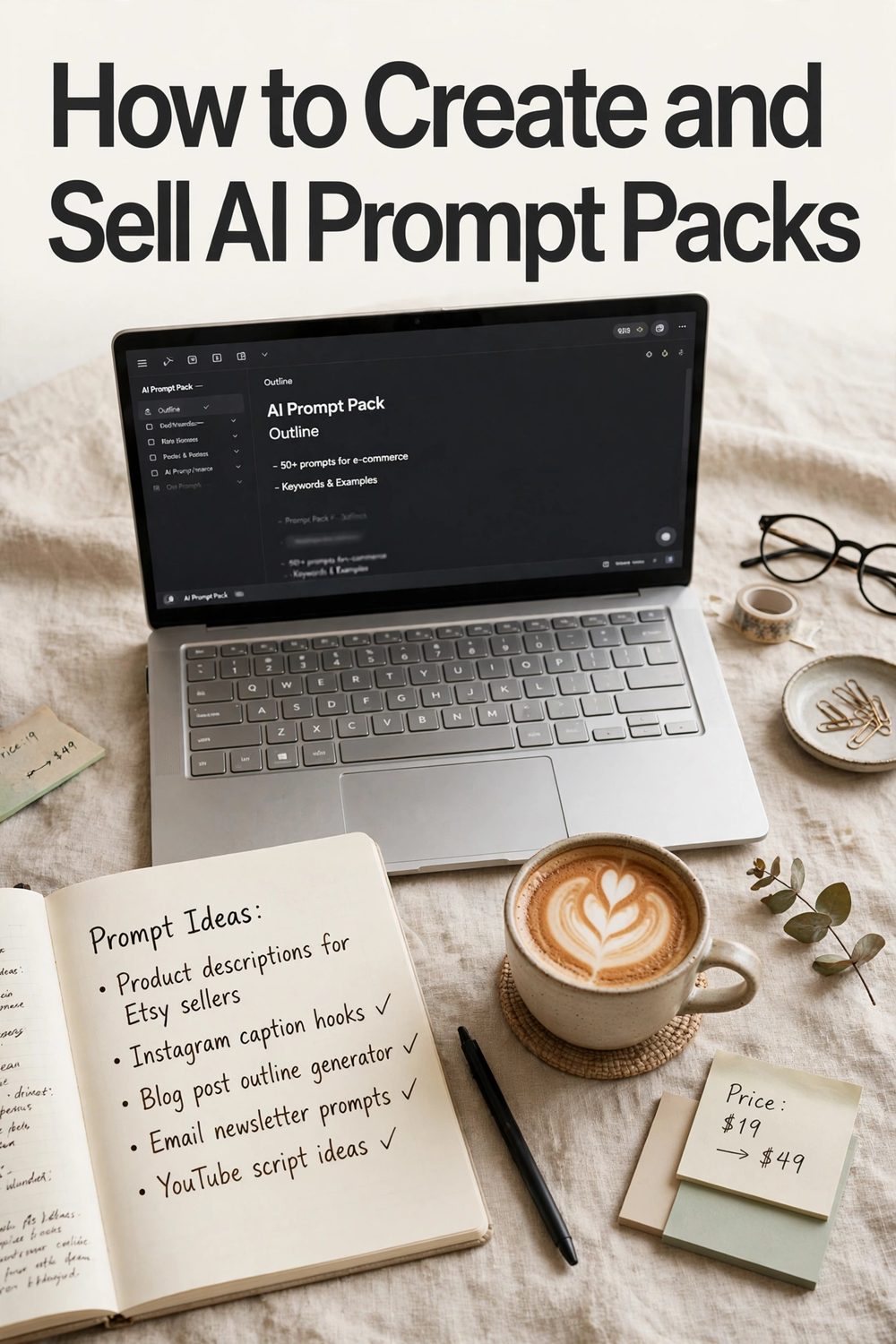
Step 3: Write and Organize Your Prompts
Build a Logical Structure
- Group prompts by workflow, such as “Find clients,” “Write proposals,” and “Deliver projects.”
- Number prompts for easy reference.
- Add short instructions on when and how to use each one.
- Include examples showing sample inputs and outputs.
- Provide customization tips so buyers can adapt prompts to their style.
- Add a quick-start guide explaining how to get the best results.
Aim for Quality Over Quantity
A pack of 30 well-tested prompts with examples beats 300 generic ones. Most buyers want clarity and reliability, not overwhelm.
Step 4: Test Everything
Testing is what separates a real product from a list.
- Run each prompt several times with different inputs.
- Check consistency and quality of results.
- Improve wording where outputs are vague or off-topic.
- Test across tools if you claim compatibility, and note which tools you tested.
- Ask beta testers from your target audience to try the pack and share feedback.
- Check for accuracy. Remind users to fact-check outputs, especially for legal, medical, financial, or technical topics.
Be honest about limitations. AI results vary, and you can’t guarantee specific outcomes.
Step 5: Design and Package Your Product
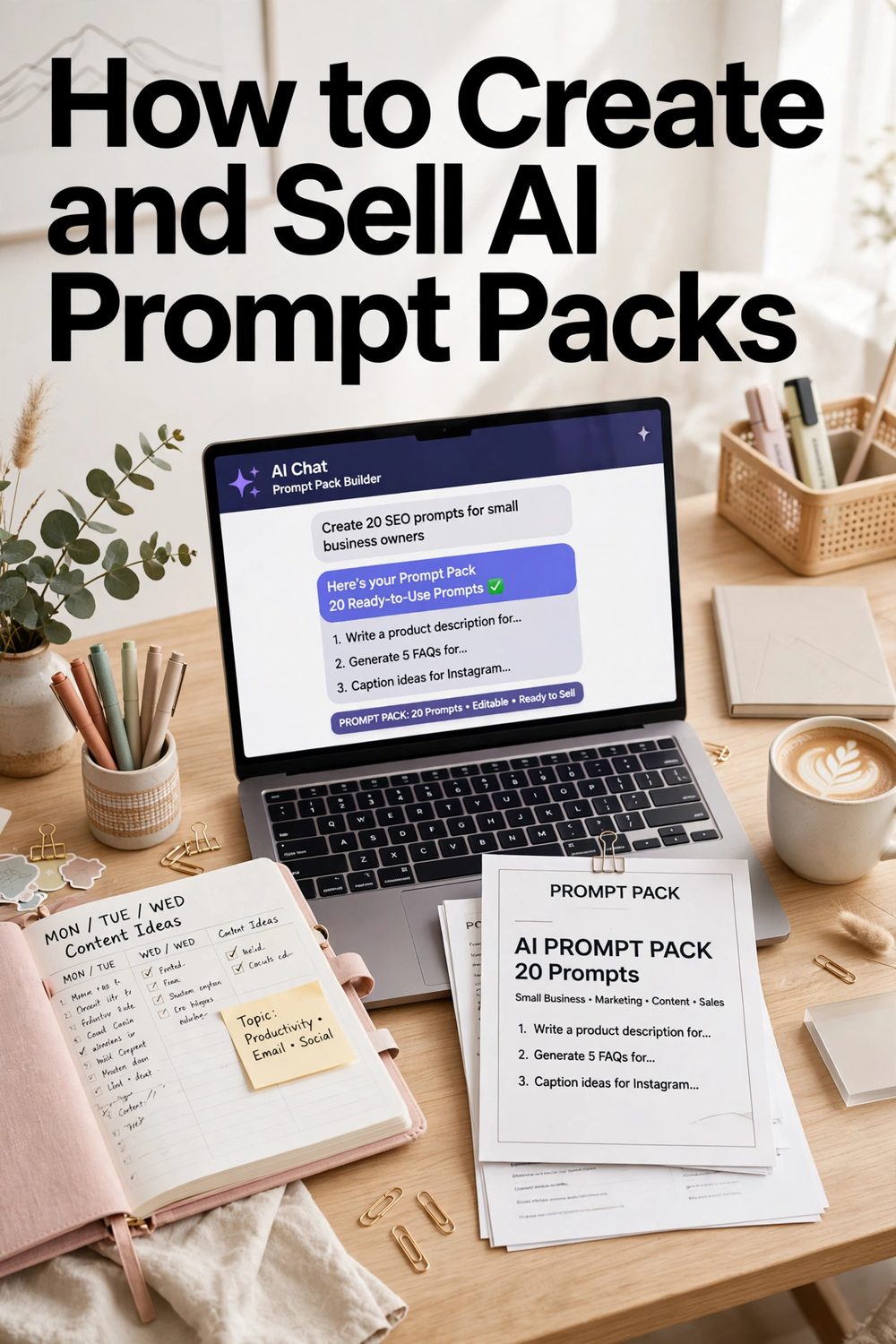
- Format: PDF, Notion template, Google Doc, or spreadsheet.
- Design: Use Canva or a clean layout with consistent headings and spacing.
- Cover: Make a clear, benefit-driven cover and title.
- Bonuses: Add checklists, a prompt-writing cheat sheet, or sample workflows.
- Updates: Offer free updates for a period to build trust.
The Stay-At-Home Mom’s Guide to Making Money Online offers inspiration for packaging and selling digital products as a beginner.
Step 6: Price Your Pack
- Small, focused packs: often $7–$19.
- Comprehensive packs or bundles: often $19–$49.
- Role-specific systems with templates and training: often $49–$149+.
Pricing tips:
- Price by the time and effort saved.
- Offer launch pricing to your first buyers.
- Bundle related packs to raise order value.
- Raise prices as you gather testimonials and improve the product.

Step 7: Choose Where to Sell
- Gumroad: Simple setup and great for direct selling.
- Etsy: Large digital-product audience, though check current rules on AI-related listings.
- Your own website or Notion page.
- Creator marketplaces where allowed.
Read each platform’s policies on AI content, descriptions, and claims.
Step 8: Market Your Prompt Packs
- Share free sample prompts on social media, Pinterest, and your blog.
- Create short demos showing a prompt and its result.
- Build an email list with a free mini pack.
- Write helpful posts like “10 prompts to write better client emails.”
- Collaborate with creators in your niche.
- Collect testimonials and before-and-after examples.
For beginner-friendly marketing strategies, The Digital Marketing Playbook explains how to attract and convert buyers, and The Personal Brand Blueprint helps you become the trusted voice in your niche.
A 30-Day Launch Plan
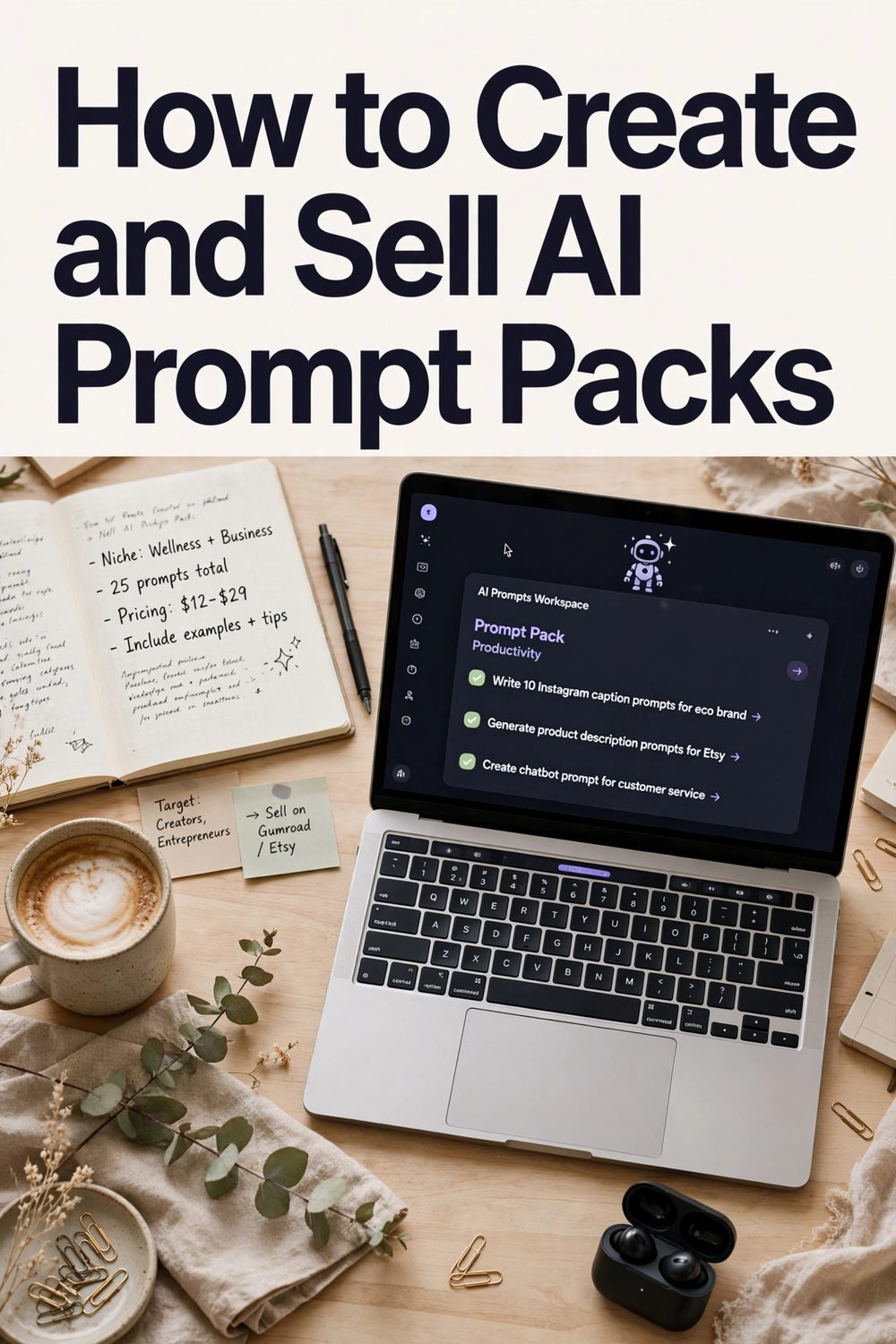
- Week 1: Choose your niche, research competitors, and outline 30 prompts.
- Week 2: Write, test, and refine prompts with examples.
- Week 3: Design the pack, write the sales page, and set up your platform.
- Week 4: Launch to your list and network, gather feedback, and plan updates.
Legal and Ethical Basics
- Create original prompts. Don’t copy others’ paid packs.
- Avoid unrealistic claims like guaranteed income or results.
- Follow platform and tool terms of service.
- Respect privacy. Remind buyers not to paste sensitive information into any tool.
- Track income and save for taxes. Consult a qualified professional.
The Smart Mom’s Complete Guide to Money provides friendly guidance for managing digital income.
Sample Prompts Inside a Real Pack
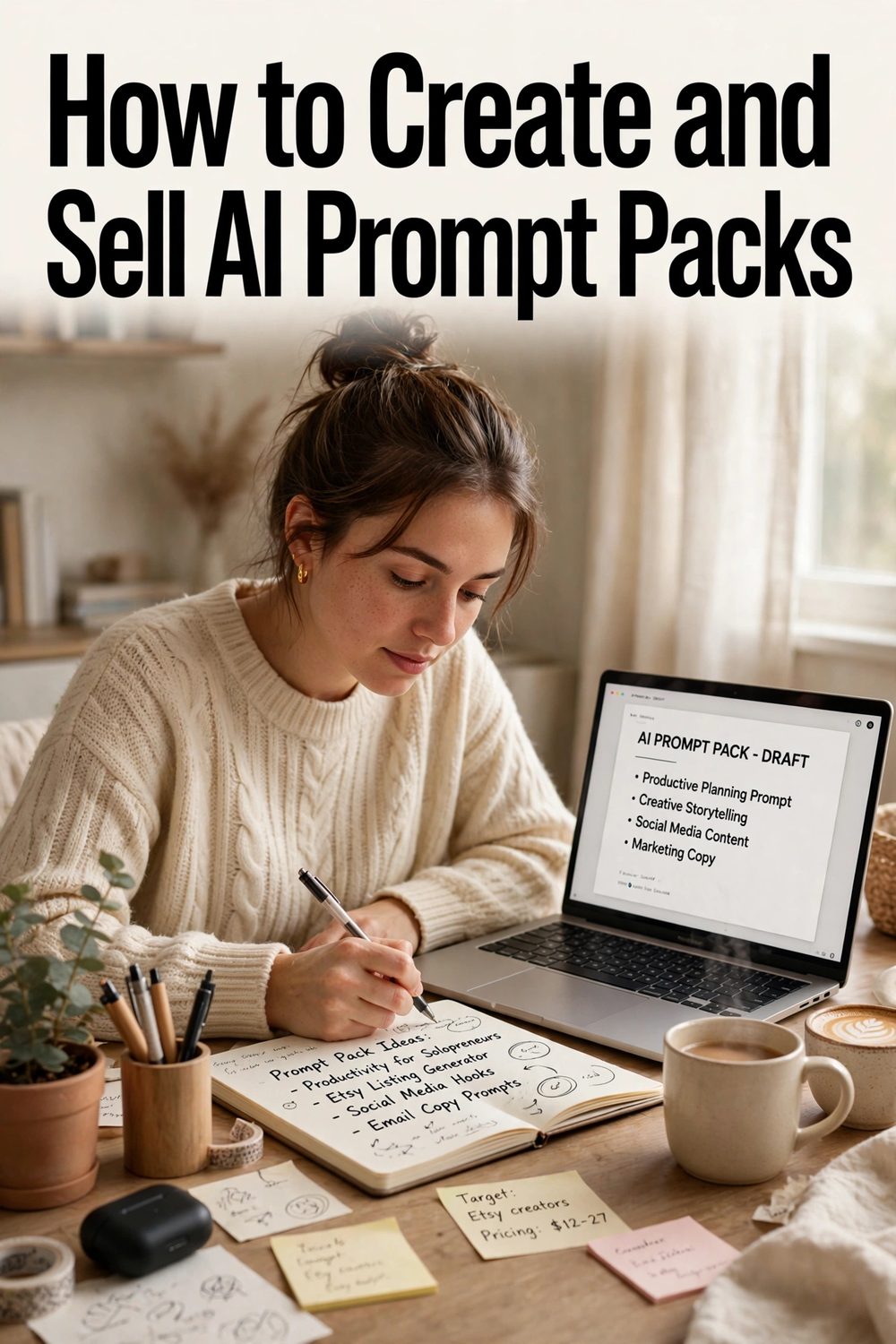
Seeing an example helps you picture the product. Imagine a pack called “Client Email Prompts for Freelance Writers.” One prompt might read:
“You are an experienced freelance writer. Write a polite 120-word follow-up email to [client name] about an unpaid invoice for [project]. The invoice was due on [date]. Keep the tone professional and warm, include a clear next step, and avoid sounding aggressive.”
Notice the role, task, context, tone, and constraints. Below that prompt, include a sample output, a short tip such as “Add a personal detail about the project,” and a variation for a second reminder. That structure turns a plain instruction into a teaching tool, which is what makes buyers feel the pack was worth paying for.
How to Keep Your Packs Updated
AI tools change often, so a pack that works today may behave differently in six months. Protect your reputation with a simple maintenance routine:
- Re-test your prompts every quarter with current versions of popular tools.
- Note any changes in a version log inside the pack.
- Rewrite prompts that produce weaker results.
- Email updates to past buyers, which builds goodwill and repeat sales.
- Collect feedback and add new prompts for common requests.
Customers remember creators who keep products current, and many will gladly buy your next pack because of it.
Mistakes to Avoid
- Selling generic prompts that free lists already offer.
- Skipping testing.
- Overpromising results.
- Ignoring updates as AI tools change.
- Forgetting to teach. Explanations add value.
Quick Answers About Selling Prompt Packs
Will prompt packs still sell as AI improves? Demand may shift, but structured workflows, templates, and training remain valuable for many users. Update your products as tools evolve.
Do I need technical skills? No. Clear writing, testing, and understanding your audience matter most.
How much can I earn? It varies widely with niche, quality, and marketing. Many creators start with modest sales and grow over time.
Can I use AI to help write my prompts? Yes, but test and refine everything yourself so the final product is accurate and original.

Your Best Prompts Are Already Useful
Selling AI prompt packs is about turning clear thinking and testing into a product that saves people time. Choose a niche, write and test prompts, package them clearly, and share honest examples.
This week, pick one repetitive task in a niche you know and write five tested prompts for it. Trust me, once you see a buyer use your pack to finish in minutes what used to take hours, you’ll know you’ve created something valuable. Let’s start writing!










Leave a Reply