


Did you know that you can build a genuinely profitable print on demand shop without spending a single dollar on ads? I know because I’ve done it — my POD shop crossed $2,800 in sales last month, and I have never once run a paid campaign.
I remember when I first started selling designs online. I watched other sellers pouring hundreds of dollars into Facebook and Etsy ads every month, and I panicked, because I simply didn’t have that kind of budget as a broke stay-at-home mom trying to build something on the side. Little did I know that ads weren’t actually the secret ingredient everyone made them out to be. What I discovered instead is that SEO and organic social content can build a print on demand business that’s just as profitable — and honestly, far more sustainable, because you’re not renting your traffic every single month.
If you’re staring at your empty print on demand shop wondering how you’re supposed to get sales without an ad budget, this guide is for you. In this comprehensive guide, I’ll walk you through exactly how to grow a print on demand business using SEO and social media content, step by step, with zero ad spend required.
Why Skipping Ads Might Actually Be the Smarter Move
Here’s the truth nobody tells you when you start a POD business: ads can get you fast sales, but the second you stop paying, the traffic stops too. That’s not a business — that’s a rented audience.
SEO and organic social content work differently. Big mistake I made early on was thinking organic growth would take forever and wasn’t “worth it.” Girl, was I wrong about that. Once a design or listing starts ranking or gaining traction, it can keep generating sales for months — sometimes years — completely free. That compounding effect is the real secret weapon of a no-ads POD business.
The trade-off is patience. Organic growth takes longer to build momentum than ads do. But once it’s built, it’s yours — no algorithm can shut it off by draining your bank account.
Step 1: Pick a Niche That’s Built for Organic Discovery
Not every niche is equally easy to grow without ads. Here’s what I learned the hard way: broad, trendy niches are incredibly hard to rank for organically because you’re competing with thousands of other sellers.
Look for niches with these characteristics:
- Specific enough to rank for, but with real search volume (“funny nurse shirts” beats “funny shirts” every time)
- Evergreen interest — hobbies, professions, life milestones, and inside jokes tend to sell steadily year-round
- Community-driven — niches with active Facebook groups, subreddits, or hashtags give you built-in places to share content
Some proven, low-ad-dependency POD niches include pet lovers, specific professions (teachers, nurses, realtors), hobby communities (fishing, gardening, crafting), and life-stage milestones (retirement, new moms, graduations). These audiences actively search for and share products that speak directly to their identity.
Pro tip: Use free tools like Google Trends, Etsy’s own search bar autocomplete, and Pinterest Trends to see what people are already searching for before you design a single product.

Step 2: Master On-Platform SEO First
Whether you’re selling on Etsy, Shopify, or your own site, on-platform SEO is your foundation. This is the single highest-leverage thing you can do before you post a single social media update.
For Etsy Listings
- Titles: Front-load your primary keyword, then include 2-3 relevant long-tail variations naturally
- Tags: Use all 13 available tags — each one is a chance to be found for a different search
- Descriptions: Write for humans first, but naturally include your target keywords in the first two sentences
- Photos: High-quality mockups with your product actually shown in context (not just a flat design) dramatically improve click-through rate, which Etsy’s algorithm rewards
For Your Own Shopify Store
- Optimize product page titles and meta descriptions with your target keyword
- Write real product descriptions — not just a design description, but the story, the occasion it fits, who it’s for
- Build a blog around your niche (more on this in a moment) to capture search traffic your product pages can’t reach on their own
Here’s what I learned the hard way: I used to write titles like “Cute Cat Shirt” because it felt natural. My sales tripled after I rewrote it to “Funny Cat Mom Shirt, Cat Lover Gift for Women” — specific, keyword-rich, and exactly what someone would actually type into a search bar.
Step 3: Build a Blog to Capture Search Traffic
This is the step almost every POD seller skips, and it’s a massive missed opportunity. A simple blog attached to your shop lets you rank in Google for searches your product listings alone never could.
Write posts like:
- “Best Gifts for [Your Niche]”
- “10 Things Every [Your Niche Persona] Will Understand”
- “How to Choose the Perfect [Product Type] Gift for [Occasion]”
Link naturally to your relevant products within each post. Over time, these posts become quiet little sales machines, ranking for gift-guide searches and pulling in buyers who are already in a shopping mindset — without you spending a cent on ads.

Step 4: Grow Through Organic Social Media Content
Social media is your amplifier — it gets your products in front of people who aren’t actively searching yet, but who will buy the moment they see the right design.
Pinterest is genuinely the closest thing to “free ads” for POD sellers because it functions as a visual search engine, not just a social feed. Create fresh pins for every new design, use keyword-rich pin titles and descriptions, and pin consistently rather than in bulk bursts.
TikTok and Instagram Reels
Short-form video is a game-changer for POD right now. You don’t need to show your face — content like “packing orders,” “designing a new shirt from idea to finished product,” or “customer reviews reacting to their order” performs incredibly well and builds trust fast.
Facebook Groups
Find niche-specific groups related to your product themes and genuinely participate — answer questions, share relevant content, and only mention your shop when it’s truly relevant. This built me my first 50 sales before I had any real following of my own.
Pro tip: Batch your content creation. I film and design a week’s worth of social content in one sitting every Sunday, so I’m never scrambling to post something during a busy week. This one habit alone kept me consistent when motivation was nowhere to be found.
Step 5: Build an Email List to Own Your Traffic
Here’s something I wish someone had told me sooner: social platforms and search algorithms change constantly, but your email list is yours forever. Start collecting emails from day one with a simple discount code offer, and send a monthly update featuring new designs, seasonal collections, or exclusive early access.
Your email list becomes your most reliable, ad-free sales channel over time — every new product launch gets an instant audience without depending on any platform’s mood that day.
Step 6: Track What’s Actually Working
Trust me, guessing your way through growth will burn you out fast. Instead, track:
- Which listings/posts drive the most traffic — double down on that style, keyword, or niche angle
- Your top-performing pins and reels — repurpose the format, not just the specific design
- Conversion rate per traffic source — Pinterest traffic might convert differently than TikTok traffic, and that data should shape where you spend your time

Staying Consistent When Growth Feels Slow
This is the part I care about most, because organic growth without ads absolutely works — but only if you stick with it long enough to see the compounding effect kick in.
Set realistic expectations. SEO and organic social growth typically take 3-6 months to build real momentum. Knowing this upfront keeps you from quitting right before things start working.
Celebrate small wins. Your first organic Pinterest sale, your first blog post ranking on page one, your first viral reel — these are all signs the system is working, even before the big numbers show up.
Remember why ads aren’t the goal. Every sale you make without an ad budget is money that goes straight into your pocket instead of a platform’s. That margin is what makes a no-ads POD business genuinely sustainable long-term.
Your No-Ads Print on Demand Business Starts Here
Building a print on demand business without spending a dollar on ads is absolutely possible — it just requires trading ad budget for consistent SEO and organic social content instead. Pick a niche built for discovery, master your on-platform SEO, build a blog to capture search traffic, show up consistently on Pinterest and short-form video, and start your email list from day one. Do these things consistently, and the compounding traffic will keep working for you long after you’ve stopped actively promoting a single design.
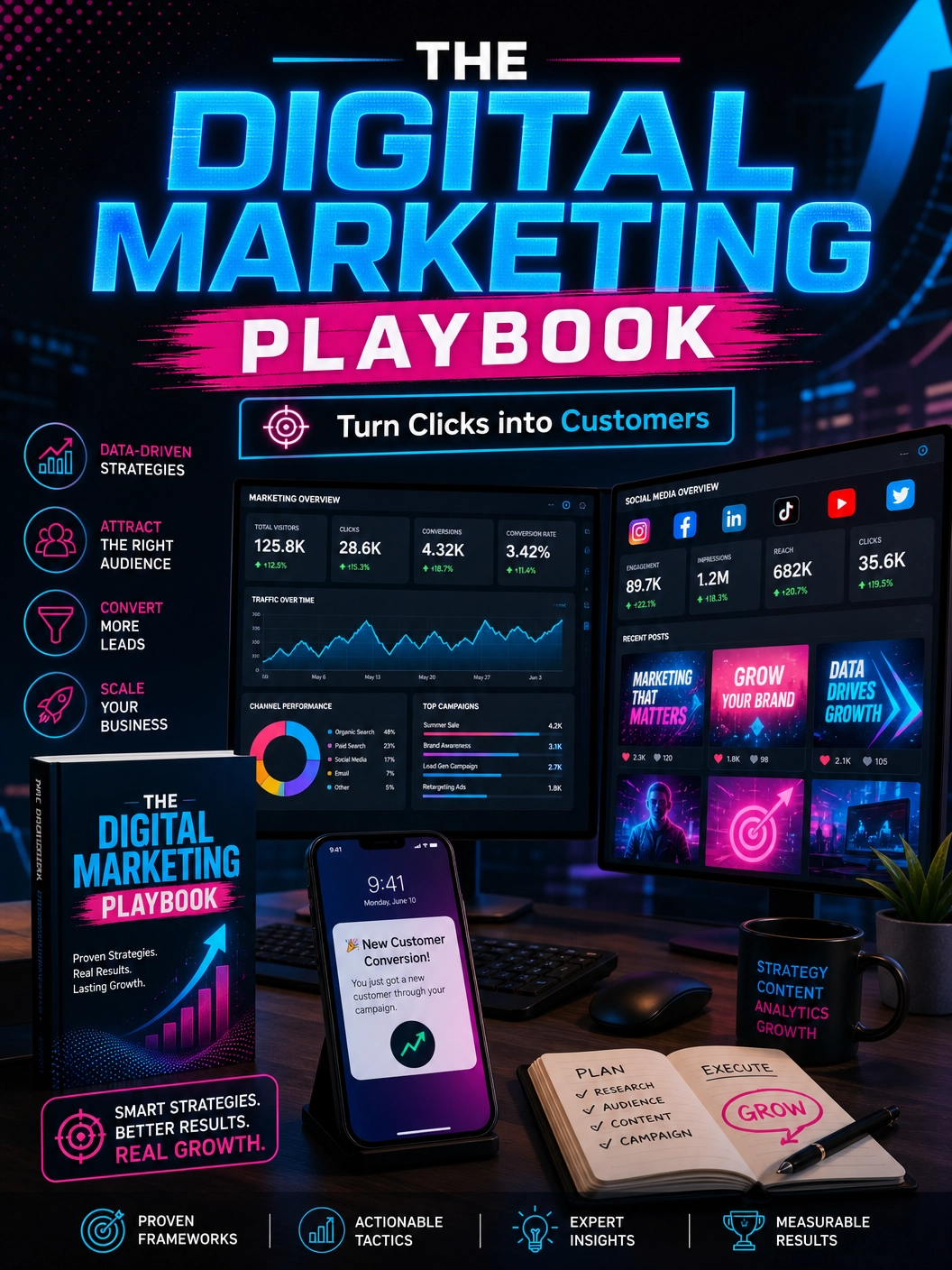
If you want a complete roadmap for growing your reach through SEO, content, social, and email without relying on paid ads, The Digital Marketing Playbook covers every organic channel in detail — SEO, content, social, email, and even AI — so you’re not piecing this strategy together alone. It’s exactly the kind of guide I wish I’d had when I was staring at my empty shop wondering how sellers without ad budgets ever made any sales.
You don’t need a big budget to build a real print on demand business. You need a consistent plan and the patience to let it compound. Now go build it, lady boss.






Leave a Reply