


For my first six months of selling online, I had a “system” for tracking my money: I glanced at my PayPal balance, felt either pleased or panicked, and went on with my day. When tax season rolled around, I spent an entire weekend digging through emails, screenshots, and crumpled receipts, trying to piece together what I’d earned and spent. I cried a little. I may have eaten an entire bag of chocolate.
The worst part? I discovered I’d been losing money on one of my products for months. I thought it was my bestseller because it sold the most, but after fees, materials, and shipping, I was barely breaking even. If I’d been tracking properly, I’d have caught it in week two.
Since then, I’ve built a simple, low-stress system for tracking income, sales goals, and expenses. It takes about 15 minutes a week, and it’s saved me from both tax-time meltdowns and bad business decisions. In this guide, I’ll walk you through exactly how to set it up, even if you hate numbers. (Quick note: I’m not an accountant or tax professional. Tax rules vary by location, so please check with a qualified professional for your situation.)
Why Tracking Your Money Matters (Even If Your Side Hustle Is Small)
When you’re just starting out, tracking can feel like unnecessary paperwork. Who needs a spreadsheet for $200 a month? Here’s the thing: the habit matters more than the amount. Tracking helps you:
- Know whether you’re actually profitable. Revenue isn’t profit. You need to subtract costs.
- Spot your best (and worst) products or services. Then you can focus on what works.
- Prepare for taxes without scrambling.
- Set realistic goals based on real numbers.
- Stay motivated. Watching your income climb, even slowly, is a great confidence boost.
- Make smarter spending decisions. You’ll know what you can afford to reinvest.
I wish someone had told me this at the start. Good records turn “I think I’m doing okay” into “I know exactly where I stand.”

The Three Numbers Every Side Hustler Should Know
Keep it simple. At minimum, track these three:
- Income (revenue): All the money coming in from sales or services.
- Expenses: Everything you spend to run your business, like platform fees, software, supplies, advertising, and shipping.
- Profit: Income minus expenses. This is what you actually keep (before taxes).
Once you’re comfortable, you can add extras like profit by product, average order value, or hours worked. But start with the big three.
Step 1: Separate Your Business and Personal Money
This one’s a game-changer, and I put it off for way too long. Mixing your business and personal finances turns tracking into a nightmare.
Here’s what to do:
- Open a separate bank account (or at least a separate card) for your side hustle if possible.
- Route all income into that account.
- Pay business expenses from it.
- Pay yourself by transferring a set amount to your personal account.
Even if your business is tiny, this one move makes everything clearer. When I finally separated mine, my monthly tracking time dropped by more than half.
Step 2: Choose Where You’ll Record Everything
You need one reliable “home” for your numbers. Options include a spreadsheet, an accounting app, or printable trackers you fill in by hand. There’s no wrong answer. The best system is the one you’ll actually use.
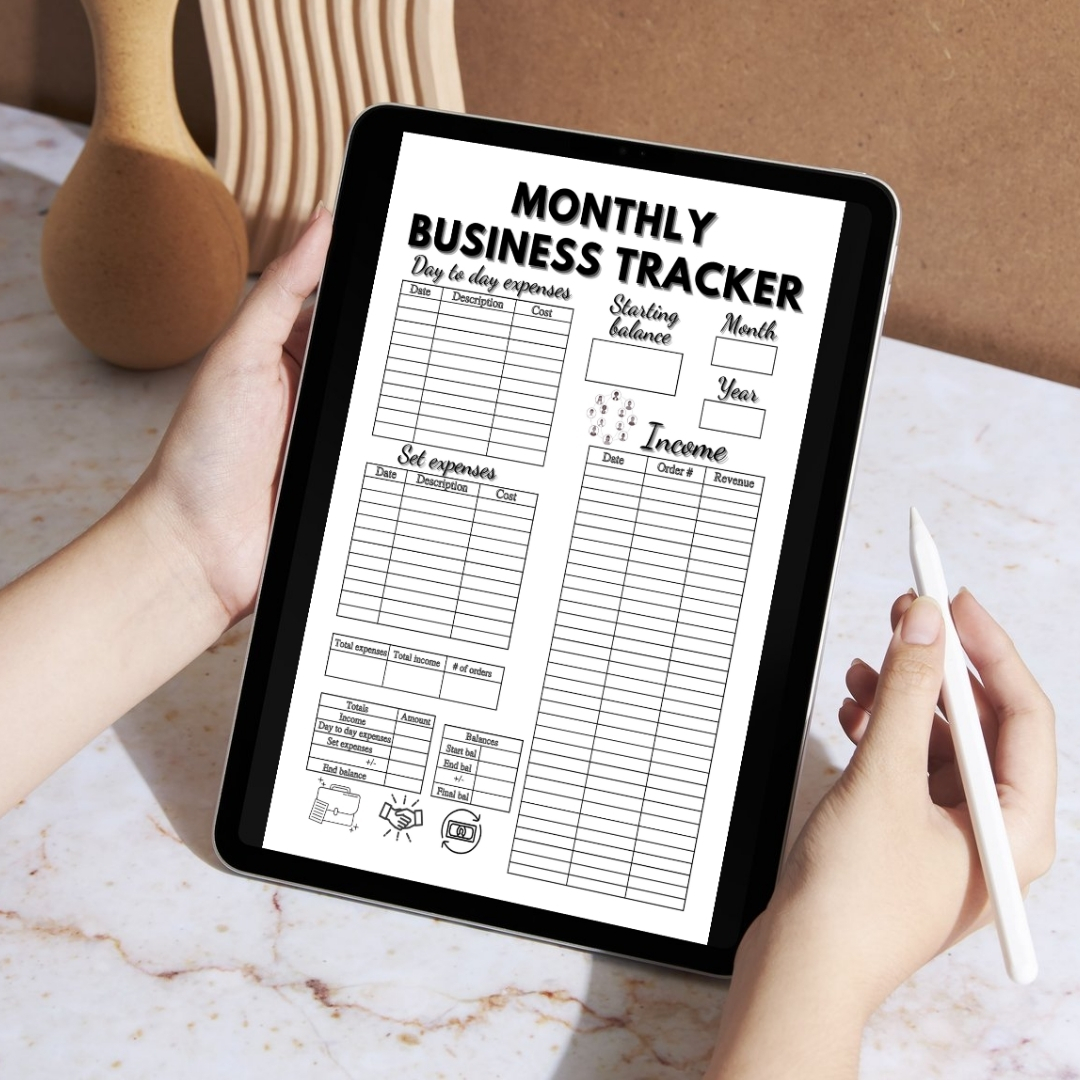
I’m a pen-and-paper person for my weekly check-ins, and printable templates make that easy. The Monthly Business Tracker (Editable Canva Template) is a $2.99 download where you can log your monthly income, expenses, and totals in a simple layout. Because it’s editable in Canva, I customized the categories to match my business: software, supplies, marketing, platform fees, and so on.
Pro tip: Keep your categories few and consistent. Five to eight categories is plenty. Too many, and you’ll never finish.
Step 3: Keep Your Receipts Under Control
Receipts were my nemesis. They’d pile up in my bag, my car, and random coat pockets. Now I follow a simple rule: record it within 48 hours.
Here’s my quick receipt routine:
- Snap a photo of every receipt or save the digital copy to one folder.
- Log it with the date, vendor, amount, and category.
- Toss or file the paper once it’s recorded.

A dedicated log keeps this painless. The Receipt Journal (Editable Canva Template) is a $2.99 printable for recording your purchases and receipts in one organized spot. I fill it in every Friday while I have my coffee. It takes about five minutes, and at year-end, I have a neat record rather than a shoebox of chaos.
Depending on where you live, you may be required to keep business records for several years, so ask an accountant or check your local tax authority’s guidelines.
Step 4: Set Monthly Sales Goals and Track Progress
Tracking what has happened is helpful. Setting targets for what will happen is motivating. Once you know your baseline numbers, pick a realistic monthly sales goal.
Here’s how I set mine:
- Look at the last three months of income to find your average.
- Aim for a modest increase, perhaps 10 to 20 percent.
- Break it into weekly targets. A monthly goal of $800 means about $200 a week.
- List the actions that will get you there (new listings, promotions, outreach).
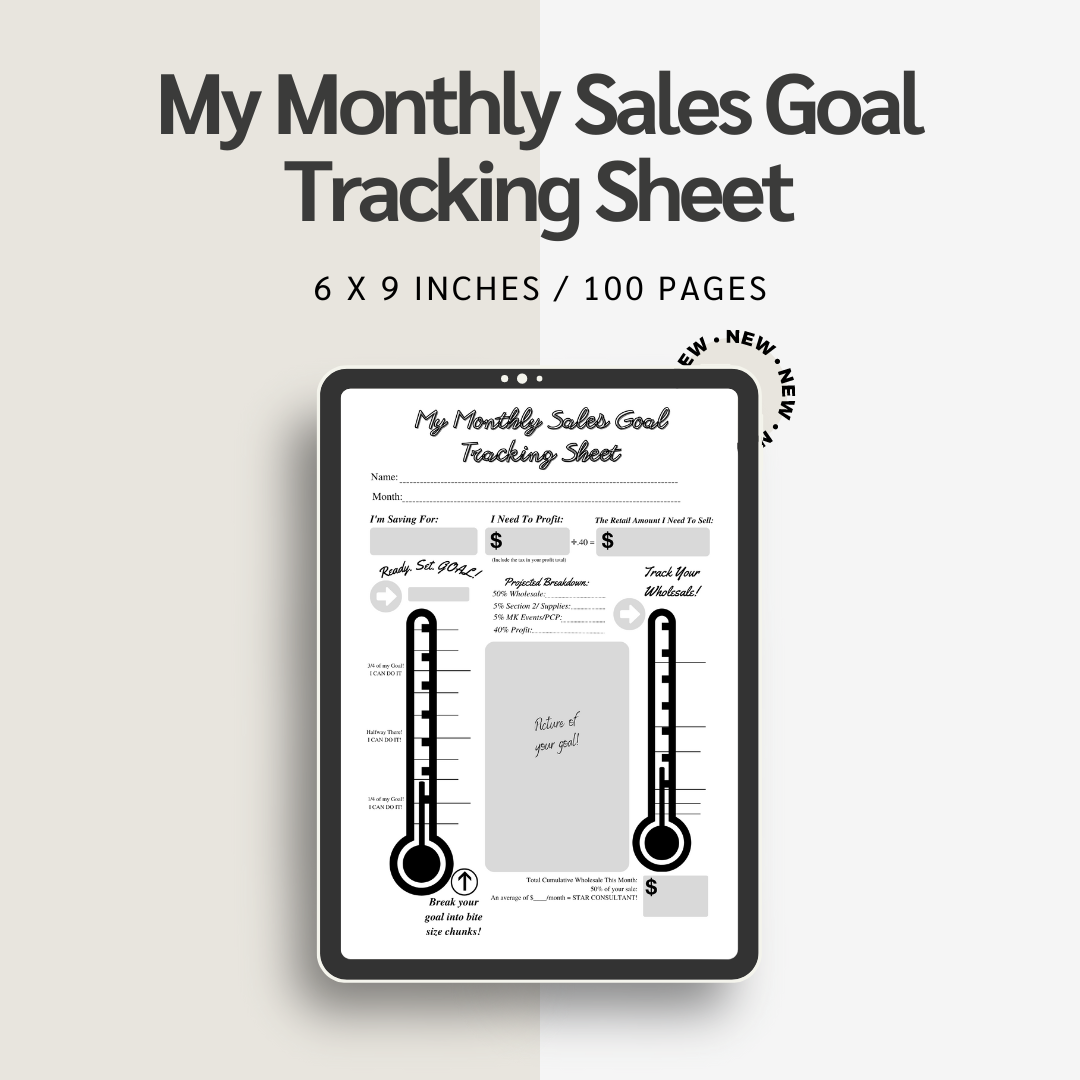
To stay on top of it, I use the My Monthly Sales Goal Tracking Sheet (Editable Canva Template), a $2.99 printable that lets you set a monthly target and record your progress along the way. Seeing a goal bar slowly fill up is wildly motivating, trust me. And on slow weeks, it tells me early that I need to adjust, instead of finding out on the 30th.
Step 5: Do a Weekly 15-Minute Money Check-In
Consistency beats intensity. Here’s the quick weekly routine I follow every Friday:
- Record new income from the past week.
- Log expenses and receipts.
- Update your sales goal tracker.
- Note anything unusual, like a refund, a big expense, or an unexpected sale.
- Ask one question: “What’s one thing these numbers are telling me?”
That last step turns data into insight. One week, my numbers told me that most of my income came from just two products, which led me to focus my marketing on those. Another week, I noticed my software subscriptions had crept up to $87 a month, and half of them I barely used. I canceled three on the spot.

Step 6: Do a Monthly Review and Know Your Profit
At the end of each month, sit down for about 30 minutes to close the books. Calculate:
- Total income
- Total expenses
- Profit (income minus expenses)
- Profit margin (profit divided by income, as a percentage)
- Best-selling product or service
- Biggest expense category
Then compare to the previous month and to your goal. Ask yourself:
- Did I hit my sales goal? Why or why not?
- Which expenses were worth it? Which weren’t?
- What’s one thing I’ll try next month?
When I did my first honest monthly review, I discovered my “bestseller” had a thin margin after fees and materials. I raised the price slightly and saw hardly any drop in sales. That one change added real money each month. You’ll uncover similar opportunities once your numbers are in front of you.
Step 7: Set Aside Money for Taxes and Reinvestment
One of the scariest surprises for new side hustlers is the tax bill. In many places, self-employment income isn’t taxed automatically, so you may owe money at the end of the year. Rules differ widely, so check with a local tax professional, but a helpful habit is:
- Set aside a percentage of every payment in a separate savings account. Ask a professional what percentage makes sense for you.
- Don’t touch it. Treat it as money that was never yours.
I also use a simple “profit split” rule: when profit comes in, a portion goes to taxes, a portion to reinvesting in the business, and a portion to me. Seeing it divided up on paper makes it feel more manageable and less like a mystery.

Common Money Tracking Mistakes
- Mixing business and personal money. Separate them early.
- Waiting until tax season. Weekly check-ins are far easier.
- Confusing revenue with profit. Always subtract your costs.
- Ignoring small expenses. Fees and subscriptions add up fast.
- Using too many categories. Keep it simple.
- Not tracking your time. Divide your profit by hours worked to see your true hourly rate. It can be eye-opening.
- Giving up after a messy month. Just start again with a clean page.
A Simple Weekly and Monthly Tracking Checklist
Every week (15 minutes):
- Record income
- Log expenses and receipts
- Update your sales goal sheet
- Note one insight
Every month (30 minutes):
- Total income, expenses, and profit
- Review your best and worst performers
- Set next month’s goal
- Transfer tax and reinvestment savings
Every quarter (1 hour):
- Look at trends across three months
- Cancel unused subscriptions
- Adjust pricing or products
- Plan big goals for the next quarter

Turn Your Numbers Into Confidence
Tracking your side hustle’s finances doesn’t have to be complicated or scary. A few simple trackers, a weekly check-in, and a monthly review are enough to know exactly where you stand, avoid tax-time panic, and make decisions based on facts instead of guesses.
Start this week. Separate your accounts if you haven’t, pick a tracker you enjoy using, and record this week’s income and expenses. Within a month, you’ll feel more in control, and you’ll likely spot opportunities you never saw before. Your future self, the one calmly handling tax season, will thank you!










Leave a Reply