


When I started affiliate marketing, I signed up for every program that promised a high commission. Within a month, I had links for twenty products, and I’d actually used only three. My content felt scattered, readers didn’t trust my recommendations, and my earnings were close to zero. A reader finally told me, “You recommend a lot of stuff, but I can’t tell what you actually love.” Ouch, but fair.
If you’re looking for the best affiliate programs for beginners, here’s the first thing to know: the best program isn’t the one with the biggest percentage. It’s the one that fits your audience, offers a product you genuinely believe in, and pays you reliably.
In this guide, I’ll walk you through how affiliate programs work, what to compare, where to find programs, and how to build a small, trustworthy portfolio of recommendations.
How Affiliate Programs Work
You join a company’s program, receive a unique tracking link, share it, and earn a commission when someone buys through it.
Common Commission Structures
- One-time commission: A percentage or flat fee for each sale.
- Recurring commission: You earn repeatedly while the customer stays subscribed.
- Lead-based commission: A payment for sign-ups, trials, or leads.
- Tiered commissions: Higher rates as you refer more customers.
The honest part: Affiliate income is rarely instant, programs change terms, and commissions can be reduced or paused. Never rely on one program for all your income.

Step 1: Start With Your Audience, Not the Commission
Ask yourself:
- Who is my audience?
- What problems are they trying to solve?
- What tools or products do they already use or need?
- What have I personally used and loved?
Programs that match real needs convert far better than random high-paying offers.
Step 2: Compare the Key Program Terms
When evaluating a program, look at:
Commission Rate and Type
- Percentage or flat fee?
- Recurring or one-time?
- How does it compare with similar programs?
Cookie Duration
The cookie window determines how long after a click you can earn from a sale. Longer windows give you more opportunity, though many readers buy quickly.
Payout Terms
- Minimum payout threshold.
- Payment schedule (monthly, bi-monthly).
- Payment methods and fees.
- Reversal and refund policies.
Product Quality and Reputation
- Do reviews support the product?
- Does the company offer good support?
- Is the price fair?
- Would you recommend it to a friend?
Conversion Potential
- Does the product solve a clear problem?
- Is there a free trial or low entry price?
- Does the company provide helpful marketing materials?
Program Rules
- Allowed promotion methods.
- Restrictions on paid ads, coupons, or brand terms.
- Disclosure requirements.
Rules change, so always read the current terms.

Step 3: Choose Programs That Fit Your Content
For Bloggers
Tools for blogging, email marketing, design, hosting, and productivity often have strong recurring programs.
For Pinterest and Visual Creators
Products that are easy to show visually, such as planners, templates, decor, and design tools, work well.
For YouTubers
Software and tools with clear demonstrations convert well.
For Newsletter Writers
Trusted tools, books, courses, and services that fit your readers’ goals.
For Digital Product Sellers
Complementary tools, such as design apps, scheduling tools, and learning resources.
Pro tip: Software with recurring commissions can build steady income, while low-priced physical products may require high volume.

Step 4: Find Affiliate Programs
- Check the tools you already use. Many have affiliate pages in the footer or help center.
- Search “[product name] affiliate program.”
- Browse affiliate networks, which host many brands in one dashboard.
- Look at creator marketplaces for digital products and courses.
- Ask creators you admire what they recommend.
- Check brand partnership pages.
If you want to promote helpful digital resources, many creators offer affiliate options, and it’s worth reaching out directly to ask.
Step 5: Start Small and Test
You don’t need dozens of programs.
- Choose three to five programs that fit your audience and that you’ve used.
- Write honest reviews or tutorials for each.
- Add links where they naturally help readers.
- Track clicks and conversions.
- Keep programs that perform and drop those that don’t.
AI can help you outline reviews and compare features. Always add your real experience and fact-check details. The Claude Advantage shows how to prompt effectively for outlines and comparisons.
Step 6: Create Content That Converts
- Honest reviews: Share pros, cons, and who the product is best for.
- Tutorials: Show how to solve a problem using the product.
- Comparisons: Help readers choose between options.
- Resource lists: Curate tools for a specific goal.
- Case studies: Share your results and process honestly.
The Digital Marketing Playbook walks through traffic and content basics that support affiliate success, and The Personal Brand Blueprint helps you build the trust that makes recommendations believable.
Step 7: Disclose and Follow the Rules
- Clearly disclose affiliate links, near the top of posts or videos.
- Follow advertising rules in your region, such as FTC guidelines in the US.
- Follow program and platform terms.
- Avoid exaggerated claims and guaranteed results.
- Never recommend products you wouldn’t use.
Transparency protects your readers and your reputation.

Step 8: Diversify and Track Your Results
- Use a simple spreadsheet to track programs, links, clicks, and earnings.
- Review monthly and double down on winners.
- Add new programs gradually.
- Avoid relying on a single program.
- Keep an eye on policy changes.
Red Flags to Avoid
- Programs that require you to pay to join.
- Pyramid or recruiting-focused structures.
- Unrealistic income promises.
- Low-quality or controversial products.
- Unclear terms or missing contact information.
- Pressure tactics.
For ideas on honest ways to earn from home, The Stay-At-Home Mom’s Guide to Making Money Online offers beginner-friendly options, and if you’re considering building a larger audience, The Complete Beginner’s Guide to Building a KOL Influencer Career explores partnerships and trust-building in more depth.

A Simple Program Comparison Table Idea
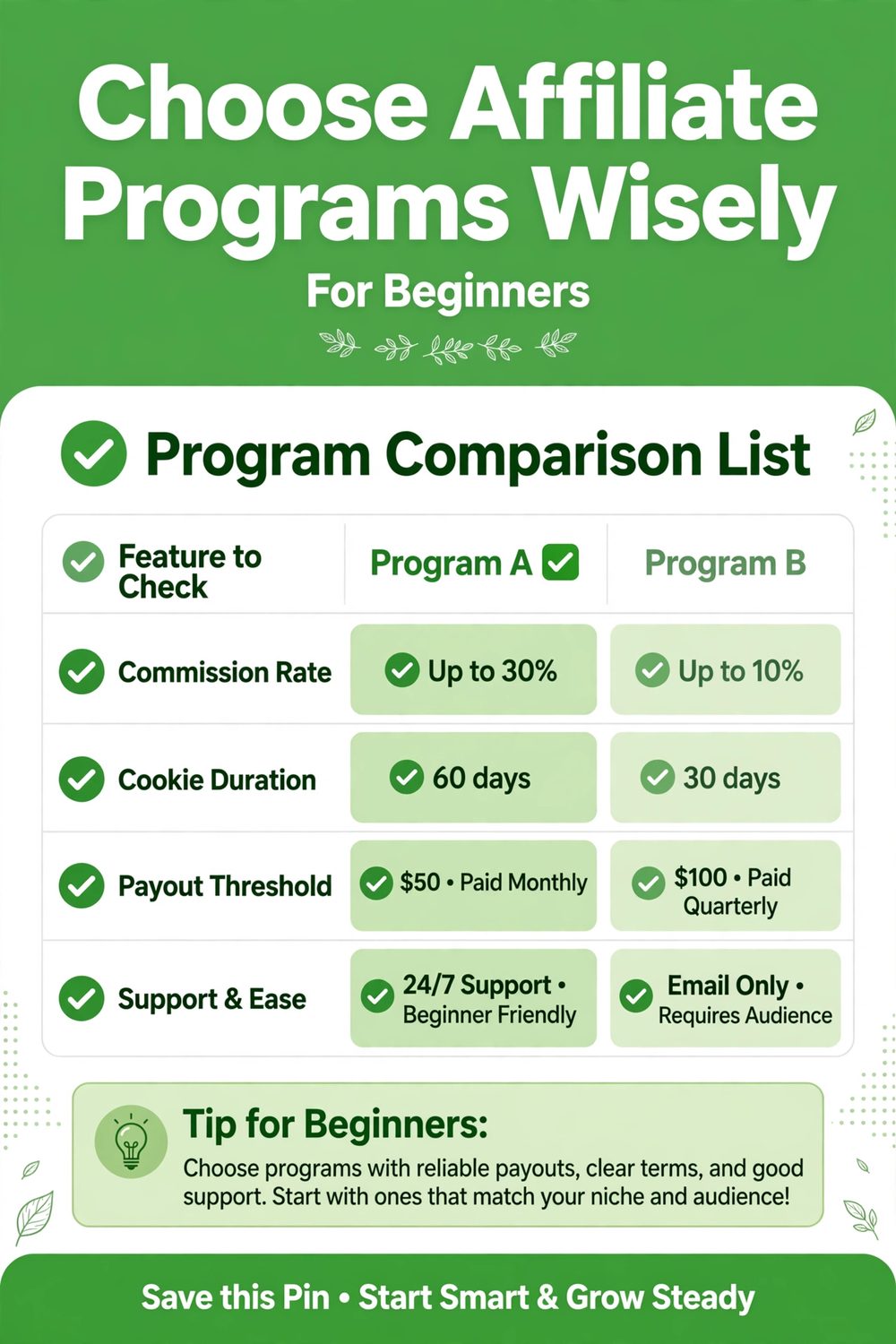
Create a table with these columns:
- Program name
- Product type
- Commission
- Recurring or one-time
- Cookie length
- Payout threshold
- Your experience with it (1–5)
- Audience fit (1–5)
Fill it in for five programs and choose the top two or three to start with. This quick exercise often reveals that a lower-paying program with a better audience fit beats a flashy, high-commission one.
A 30-Day Affiliate Starter Plan
- Week 1: Identify audience problems and list tools you’ve used.
- Week 2: Research and apply to three to five programs.
- Week 3: Write two honest reviews or tutorials with disclosures.
- Week 4: Share your content, track clicks, and note what to improve.
Money Basics
- Track affiliate income and expenses.
- Set aside money for taxes. Consult a qualified professional.
- Expect delays between sales and payouts.
The Smart Mom’s Complete Guide to Money offers friendly guidance for managing variable income.
Example: Choosing Between Two Programs
Let’s say you run a blog about productivity for moms and you’re deciding between two programs.
- Program A: A planner brand paying a 20% one-time commission with a 30-day cookie. You’ve used the planner for a year and your readers regularly ask about it.
- Program B: A scheduling app paying 30% recurring commission with a 60-day cookie. You’ve tried it for two weeks and found it only okay.
The numbers make Program B look more attractive, but Program A matches your audience, your experience, and your authentic enthusiasm. Start with Program A, write an honest review, and keep testing Program B until you can speak about it with real confidence. Trust and fit usually beat the headline commission.
Tracking Your Affiliate Performance
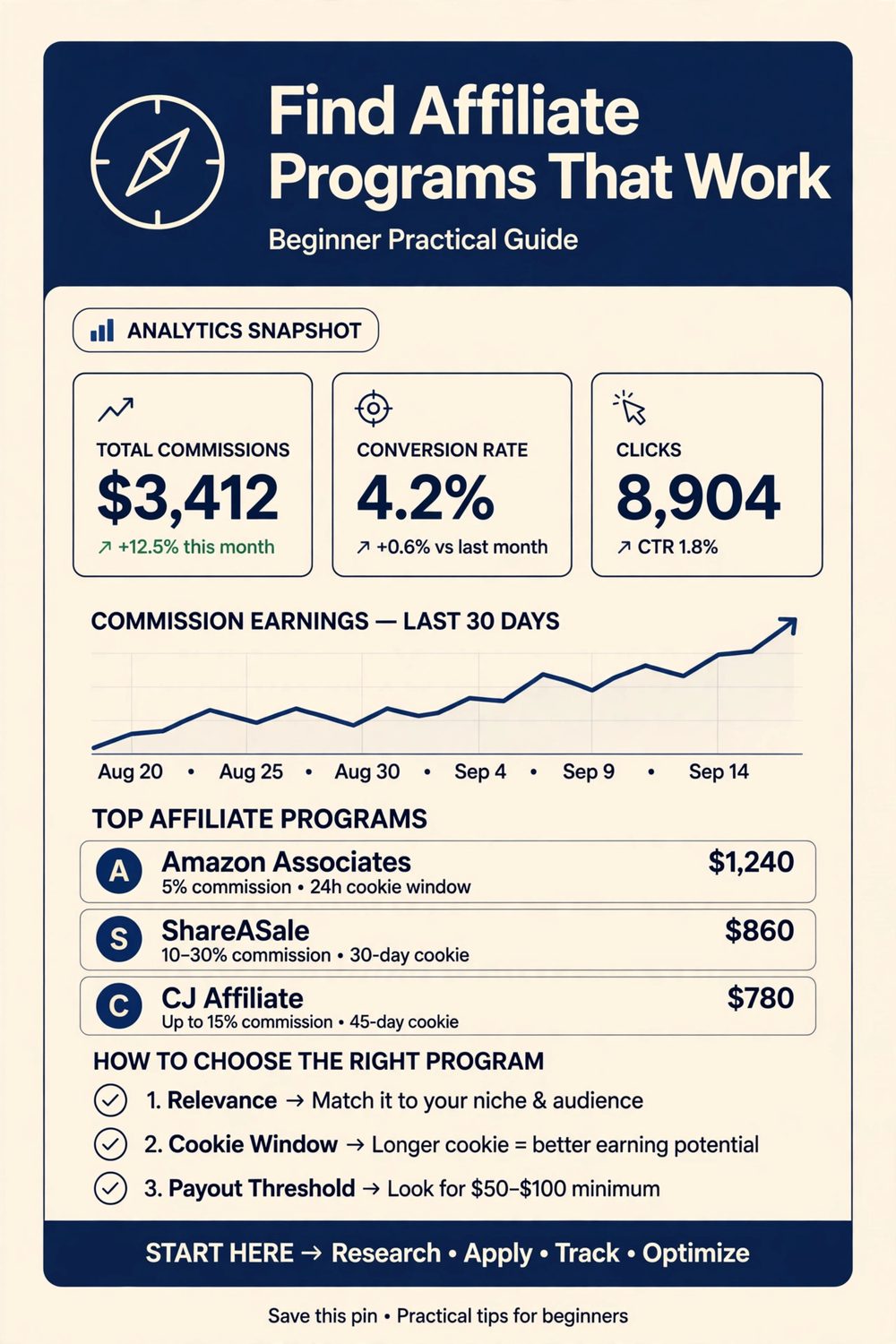
A simple tracking routine helps you spot what’s working:
- Record clicks and conversions each month for every link.
- Calculate your conversion rate by dividing sales by clicks.
- Note which posts or videos produce the most clicks.
- Check which placements perform best, such as intro paragraphs, comparison tables, or end-of-post recommendations.
- Update underperforming posts with clearer explanations, fresh screenshots, or better calls to action.
Even small improvements add up over time, and the data helps you decide which programs deserve more of your attention.
Mistakes to Avoid
- Joining too many programs at once.
- Promoting products you haven’t tried.
- Chasing only high commissions.
- Ignoring program rules.
- Hiding affiliate links.
- Expecting quick money.
Quick Answers About Affiliate Programs
How many programs should I join? Start with a few that fit your audience, and expand slowly.
Are recurring commissions better? They can build steady income, but fit and conversions matter more.
Do I need a big audience? No. A small, trusting audience can convert well.
Is affiliate marketing still worth it? Yes, when you recommend products honestly and serve your readers’ needs.
Recommend Only What You’d Tell a Friend
Choosing the best affiliate programs as a beginner is about fit, trust, and honesty. Start with your audience’s needs, compare terms carefully, test a few programs, and build content that truly helps.
This week, list five tools you already use and check whether they have affiliate programs. Trust me, a recommendation you believe in always outperforms a link you chase. Let’s get started!









Leave a Reply