

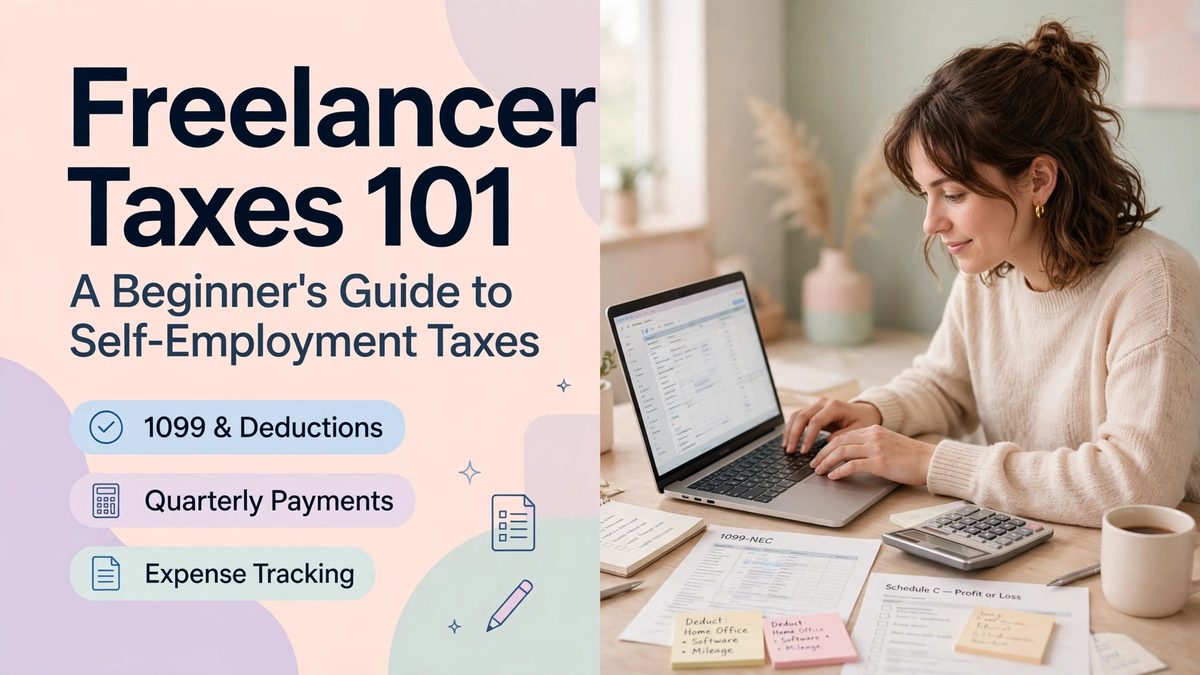
My first tax season as a freelancer felt like opening a drawer full of tangled cables. I had receipts in three apps, a half-finished spreadsheet, and a mild panic about whether I owed money. I didn’t know that people who work for themselves are often responsible for setting aside their own taxes. When I finally sat down with a professional, I learned something comforting: tax stress is mostly the result of not having a system, not of being bad at money.
If you’re dealing with freelancer taxes for the first time, you’re not alone, and you don’t need to become an accountant. You need to understand a few basics, keep good records, set aside money regularly, and know when to ask for help.
Why Freelancer Taxes Feel Different
When you’re an employee, an employer usually withholds taxes from your paycheck. When you’re self-employed or earning side income, that often doesn’t happen automatically.
Common Differences
- You may owe taxes on all net profit from your work, not just on a paycheck.
- You may pay additional self-employment or social contribution taxes, depending on where you live.
- You may need to make estimated payments during the year in some countries.
- You can often deduct legitimate business expenses, which reduces taxable profit.
- You’re responsible for record keeping.
The honest part: Rules vary widely, and mistakes can be costly. A little planning and professional guidance can save a great deal of stress.

Step 1: Understand What Counts as Income
Generally, income from freelancing and online work includes:
- Client payments for services.
- Sales of digital products and printables.
- Affiliate commissions.
- Ad revenue and sponsorship payments.
- Platform payouts from marketplaces and creator programs.
- Tips and bonuses.
- Sometimes goods or services received in trade.
Income typically counts when you earn or receive it, depending on the method your country uses. Even if a platform doesn’t send you a tax form, you may still need to report the income.
Step 2: Separate Business and Personal Money
This is the simplest habit that pays off.
- Open a separate bank account for business income and expenses.
- Use a separate card for business spending if possible.
- Pay yourself from the business account on a schedule.
- Avoid mixing personal purchases into business records.
Separation makes bookkeeping easier and helps you answer questions clearly if you’re ever asked to show your records.

Step 3: Track Income and Expenses Consistently
A simple system beats a perfect one.
What to Record
- Date and amount of every payment received.
- Client or source.
- Business expenses with date, amount, vendor, and purpose.
- Mileage or home office information where relevant.
- Receipts and invoices, stored digitally.
Tools
- A spreadsheet.
- Free or low-cost accounting software.
- A receipt-scanning app.
- A cloud folder organized by year and month.
The Smart Mom’s Complete Guide to Money offers friendly, practical guidance for building simple money habits that make tax time easier.
Step 4: Know Common Business Deductions
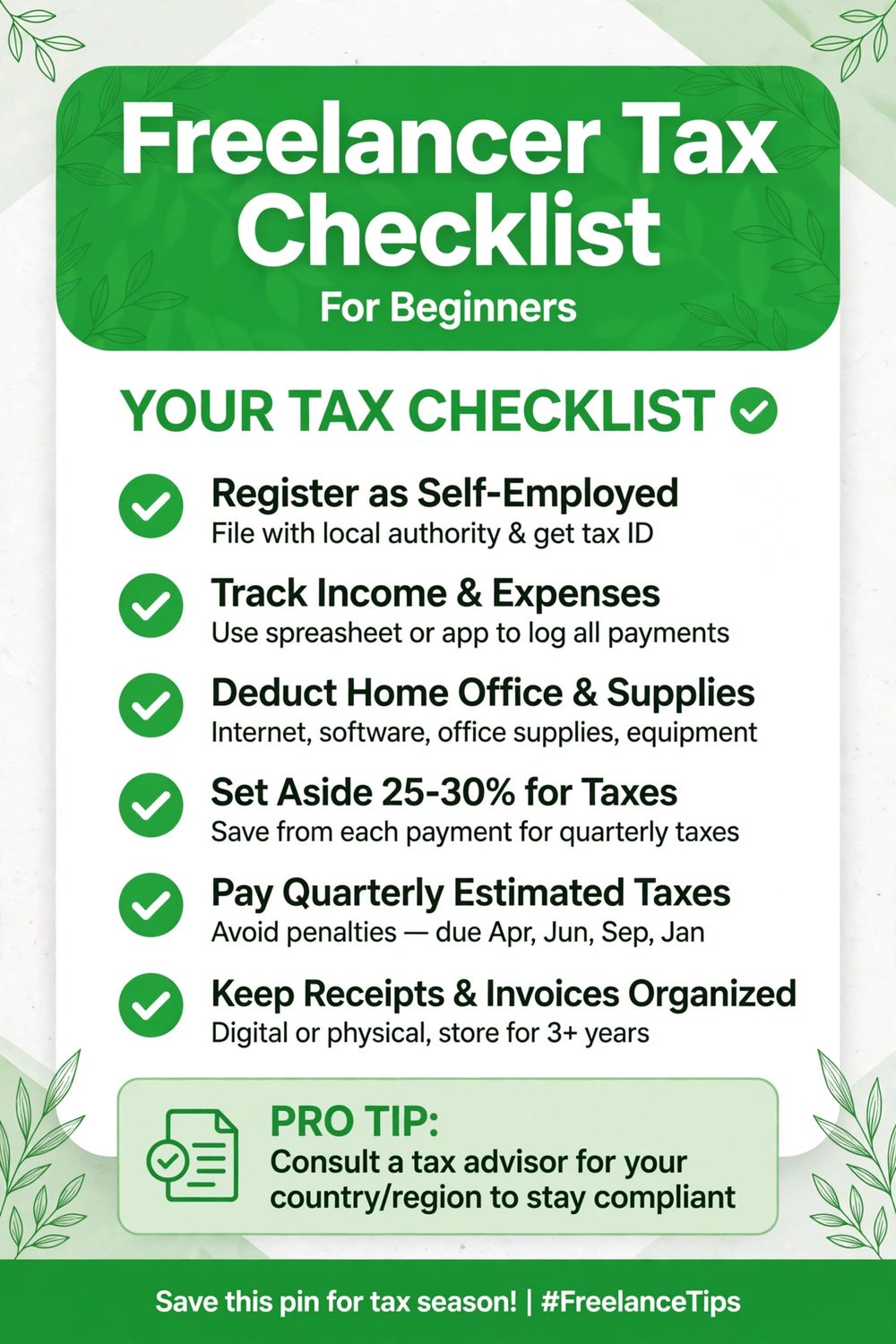
Deductions reduce your taxable profit. What qualifies depends on local rules, but categories often include:
- Software and subscriptions used for work.
- Equipment such as computers and cameras, which may be deducted or depreciated.
- Internet and phone, often partially.
- Home office costs, under certain conditions.
- Marketing and advertising.
- Education and training related to your business.
- Professional fees such as accounting or legal help.
- Platform fees and payment processing fees.
- Business travel and mileage, following rules.
- Business insurance.
Be Careful
- Only deduct legitimate business expenses.
- Keep receipts and records.
- Don’t deduct personal expenses.
- Understand limits and documentation requirements.
When unsure, ask a professional.
Step 5: Decide How Much to Set Aside
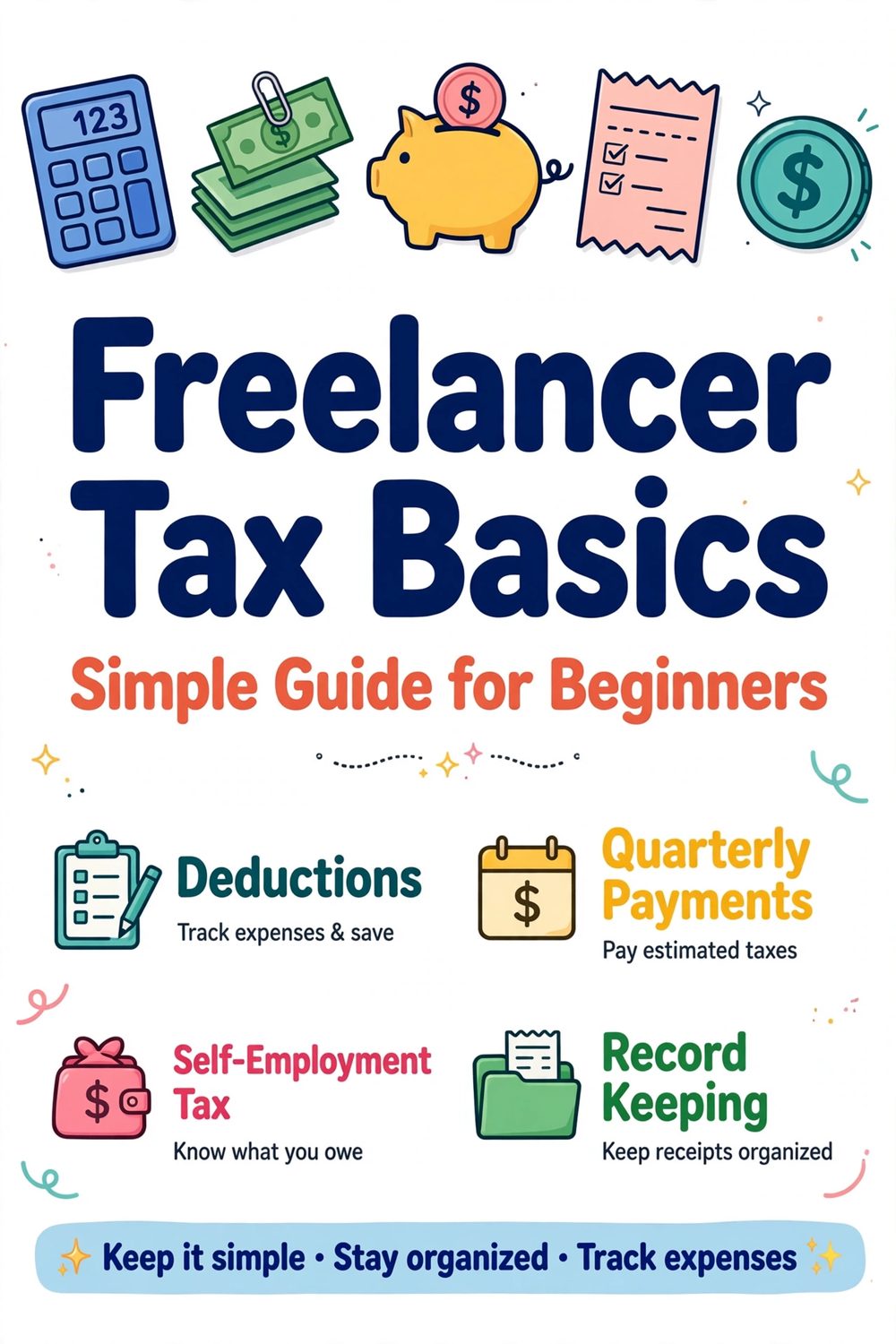
A common habit is to set aside a percentage of every payment for taxes.
- Ask a tax professional what percentage suits your situation, since it depends on your income, location, and deductions.
- Move that percentage into a separate savings account each time you get paid.
- Treat it as untouchable money.
- Adjust as your income changes.
Many freelancers choose a conservative percentage and refine it after talking with a professional. It’s far less stressful to have extra left over than to owe unexpectedly.
Step 6: Understand Estimated Payments and Deadlines
In some countries, freelancers pay taxes in installments during the year.
- Find out whether your country requires estimated payments.
- Mark deadlines in your calendar.
- Set reminders a couple of weeks before each date.
- Consider paying slightly more if your income is rising.
- Keep proof of payment.
Missing deadlines can lead to penalties and interest, so check official guidance.

Step 7: Know Your Registration and Reporting Duties
Depending on where you live, you may need to:
- Register as self-employed or as a business.
- Obtain a tax identification number.
- Collect and remit sales tax or VAT, especially for digital products sold to customers in certain regions.
- File annual returns.
- Provide forms or invoices to clients.
If you sell to customers in other countries or states, tax rules can become complicated. A professional can help you understand obligations and avoid surprises.
Step 8: Prepare for Tax Season
A Simple Year-End Checklist
- Total your income for the year.
- Total your expenses by category.
- Gather receipts and statements.
- Review mileage and home office information if relevant.
- Check payment platform summaries.
- Reconcile bank accounts.
- Organize everything in one folder.
- Schedule time with your tax professional or software.
Doing a quick review each month makes year-end easy.

Step 9: Decide Whether to Hire a Professional
Consider hiring a tax professional if:
- Your income is growing or complex.
- You sell internationally.
- You have employees or contractors.
- You’re unsure about deductions or registration.
- You’ve had notices or past errors.
- You simply want peace of mind.
The cost may be worth the time, accuracy, and stress saved, and professional fees are often deductible. Ask about experience with freelancers and online businesses.
Using AI Tools Safely
AI can help explain general tax concepts, draft questions for your accountant, and organize checklists. But it doesn’t know your exact situation, rules change, and you shouldn’t paste sensitive personal or financial details into any tool that isn’t secure. The Claude Advantage shows how to prompt effectively for planning and learning, while verifying important details with official sources.

Build a Business That Makes Taxes Easier
Good systems support everything. The AI-Powered Solopreneur offers simple systems for running a lean business, including organization habits that help at tax time. And if you’re still building your income, The Stay-At-Home Mom’s Guide to Making Money Online offers beginner-friendly ideas for earning from home.
A Monthly Tax Habit Routine
- Week 1: Record last month’s income and expenses.
- Week 2: Transfer your tax set-aside to savings.
- Week 3: Scan and file receipts.
- Week 4: Review your numbers and note questions for your tax professional.
Fifteen to thirty minutes a week can prevent a stressful scramble in spring.

Sample Records You Should Keep
Good records make every tax conversation easier. Keep these organized by year:
- Invoices and payment records for every client and sale.
- Bank and payment platform statements.
- Receipts for business expenses.
- Contracts and agreements.
- Mileage logs and home office measurements, if you claim them.
- Copies of tax returns and payment confirmations.
- Notes explaining unusual transactions, such as a refund or a large purchase.
Check how long your local rules require you to keep documents. Digital copies stored in a secure, backed-up folder are usually easiest to manage and share with a professional.
Mistakes to Avoid
- Ignoring income from small side projects.
- Mixing personal and business spending.
- Not saving for taxes.
- Losing receipts.
- Claiming questionable deductions.
- Missing deadlines.
- Waiting until the last minute.

Quick Answers About Freelancer Taxes
Do I have to pay taxes on small side income? In many places, yes, but rules and thresholds vary. Check with your local tax authority or a professional.
What percentage should I set aside? It depends on your income and location. Ask a tax professional for a recommendation.
Can I deduct my home office? Often under certain conditions, but rules differ. Keep records and ask a professional.
Do I need an accountant? Not always, but many freelancers find it valuable as income grows or situations become complex.
Tax Time Doesn’t Have to Be Scary
Freelancer taxes become manageable when you separate your money, track consistently, set aside a portion of every payment, and ask for help when you need it. Small habits now save big stress later.
This week, open a separate account for business income and set up a simple spreadsheet. Trust me, the first year you sit down at tax time with everything organized, you’ll feel remarkably calm. You’ve got this!










Leave a Reply