

The first affiliate link I ever shared made me cringe. I posted it in a group chat with all the enthusiasm of someone selling used furniture, got zero clicks, and felt vaguely embarrassed for a week. I almost quit right there. What I didn’t understand yet was that affiliate marketing isn’t about pushing products. It’s about helping people choose well, and getting paid when they do.
That’s a very different job, and a surprisingly good fit for moms. You already do it all day: you know which stroller survived three kids, which lunchbox keeps food fresh, which planner actually gets used. People trust moms’ recommendations. Affiliate marketing lets you earn a commission when your recommendation leads to a purchase.
In this guide, I’ll explain how affiliate marketing for stay-at-home moms works, what the latest platform updates mean for beginners, and a step-by-step plan to start honestly and sustainably. (Earnings vary widely, and nothing here is a promise of income.)
How Affiliate Marketing Works (In Plain English)
- You join an affiliate program run by a company or marketplace.
- You get a unique link (or code) for products.
- You share the link in a helpful post, video, email, or blog article.
- When someone buys through your link, you earn a commission, usually a percentage of the sale.
You don’t need to hold inventory, ship products, or handle customer service. The brand does that. Your job is to create trustworthy content that helps people decide.
What’s New: Platform Updates Beginners Should Know
Affiliate tools keep expanding, but so do the rules. Recent news worth knowing:
- Consistency seems to matter. A Digiday report cited in creator-economy newsletters found that TikTok Shop creators who posted 20 or more videos averaged about $74 per video, compared with about $7 for creators who posted just one. Averages aren’t promises, but the lesson is clear: one post is a lottery ticket, while 20 posts is a system you can learn from.
- YouTube is opening up shopping. Reports say YouTube’s shopping affiliate program now includes Amazon’s catalog for U.S. creators, letting them tag Amazon products directly in videos. That’s useful for longer reviews and tutorials.
- Sales data can turn posts into ads. A tool called ShopMy Spotlights finds creator posts that are already driving affiliate sales and runs them as paid ads, paying creators commission instead of a one-time fee. Results quoted in its launch case study came from the vendor, so treat them with caution, but the trend is real: content that converts gets amplified.
- Free link reach is shrinking on some platforms. Meta’s new paid business plans came with limits on link posts for non-paying Facebook Pages (reportedly about two per month), and Meta noted that posts without links make up the vast majority of feed views. That means you’ll often rely on bio links, stories, videos, and email instead of posting links in every post. Always follow each platform’s current rules.
- Authentic creators get cited. Research shared this season found that roughly 60% of the product videos cited by AI recommendation tools came from creators, versus about 10% from brands, and detailed, honest reviews seemed to matter more than polish.
- AI rules are tightening. TikTok Shop has banned AI voices standing in for live presenters, and platforms are adding AI labels. Your real face and voice are an advantage.
Is Affiliate Marketing Right for You?
Good fit if you:
- Enjoy researching and recommending products
- Are comfortable creating content regularly (writing, photos, or video)
- Can be patient. Results often take months
- Have a niche you know well
Not a great fit if you:
- Need income within a few weeks
- Don’t want to create content or talk to an audience
- Plan to promote products you wouldn’t use yourself
Step 1: Choose a Niche You Truly Know
Pick an area where you have real experience and genuine opinions. Examples for moms:
- Baby and toddler gear
- Homeschooling and learning supplies
- Meal planning, kitchen tools, and organization
- Budget-friendly home and family life
- Wellness, self-care, and fitness at home
- Pregnancy and postpartum
- Pet care
- Productivity and planners
A specific niche (“organization for small spaces”) often works better than a broad one (“home stuff”).
Step 2: Join Affiliate Programs
Start with programs related to products you already use:
- Marketplace programs from large retailers
- Brand-run programs, often found on a brand’s website under “affiliates” or “partners”
- Affiliate networks that connect creators with many brands
- Platform programs like shopping features on video and social platforms (check eligibility requirements)
Read each program’s terms carefully. Pay attention to commission rates, cookie lengths (how long a click counts), payment thresholds, and rules on where you can place links.
Step 3: Pick Your Main Platform
Choose one place to focus for the first few months:
- Blog or website: Good for evergreen content and search traffic. Slower to start, but long-lasting.
- YouTube: Great for detailed reviews and how-tos. Videos can earn for a long time.
- TikTok or short video platforms: Fast discovery and shop features, but you need to post consistently.
- Pinterest: Visual search with a long shelf life, especially for home, recipes, and kids’ crafts.
- Email newsletter: A channel you own, great for trust and repeat recommendations.
You can add more platforms later by repurposing your content.
Step 4: Create Content That Actually Helps
People buy when they trust you. Content that works well:
- Honest reviews: What you liked, what you didn’t, and who it’s for
- Comparisons: “X vs. Y: which one is better for small kitchens?”
- How-tos: “How I organize a toddler’s toy room with $30”
- Gift guides and roundups: Curated lists for specific needs
- Day-in-the-life usage: Show the product in real life
- Before and after: Real results (never exaggerate)
A simple product video formula
- Hook: A relatable problem
- Show it: The product in action
- Honest verdict: Pros and cons
- Who it’s for: And who it isn’t
- Next step: Where to find it
Step 5: Disclose Clearly and Honestly
This is non-negotiable. If you earn a commission, you need to say so clearly, in plain language near the link, and use each platform’s disclosure tools. Honest disclosure protects you legally and builds trust. Following your platform’s rules and your country’s advertising laws matters, so check the current requirements.
Step 6: Be Smart About Links
- Follow each program’s rules about where links are allowed. Some forbid links in emails or on certain platforms.
- Use bio links, link pages, and descriptions where platforms limit link posts.
- Avoid link-stuffing. A few relevant links beat a wall of links.
- Track which links get clicks so you know what content works.
Step 7: Build Your Own Audience Home
Platforms change rules often. Protect your income by collecting emails. Offer a free resource (a checklist, a printable, or a shopping guide) and invite people to subscribe. An email list lets you recommend products directly, without depending on an algorithm.
Step 8: Track and Improve
Keep a simple tracker:
- Posts published each week
- Clicks and sales per link
- Which products and formats perform best
- Time spent and earnings, so you can calculate your hourly rate
After 20 posts, look for patterns and double down on what works. Remember that early earnings may be small or zero, and that’s normal.
Realistic Expectations
- It’s usually slow at first. Many people see little income for months.
- Consistency matters. Regular posting beats occasional bursts.
- Commissions vary. Some programs pay a few percent, others much more.
- Rules can change. Programs and platforms update terms, so don’t depend on a single source.
- It rewards trust. Honest recommendations beat hype.
Mistakes to Avoid
- Promoting products you haven’t used or researched.
- Skipping disclosure.
- Spamming links in groups or comments, which can get you banned.
- Making false claims, especially about health, finances, or results.
- Putting all your eggs in one platform.
- Quitting too soon. Give your test at least 20 pieces of content.
- Falling for “get rich quick” affiliate courses that promise unrealistic income.
A 30-Day Affiliate Starter Plan
- Week 1: Choose your niche and three to five products you genuinely use. Join the matching affiliate programs.
- Week 2: Pick one main platform and create your first three pieces of content.
- Week 3: Publish consistently, add proper disclosures, and set up a simple email signup.
- Week 4: Review clicks and results, then plan the next 20 pieces of content.

Tax Reminder
Affiliate commissions are generally taxable income. In the U.S., net self-employment earnings of $400 or more trigger self-employment tax, so keep records and set aside money from each payment. A tax professional can help with your situation.
Build Affiliate Income Into a Bigger Plan
Affiliate marketing works best alongside other income streams and a clear plan. If you’d like a beginner-friendly roadmap for making money online as a stay-at-home mom, take a look at my ebook:
The Stay-At-Home Mom’s Guide To Making Money Online
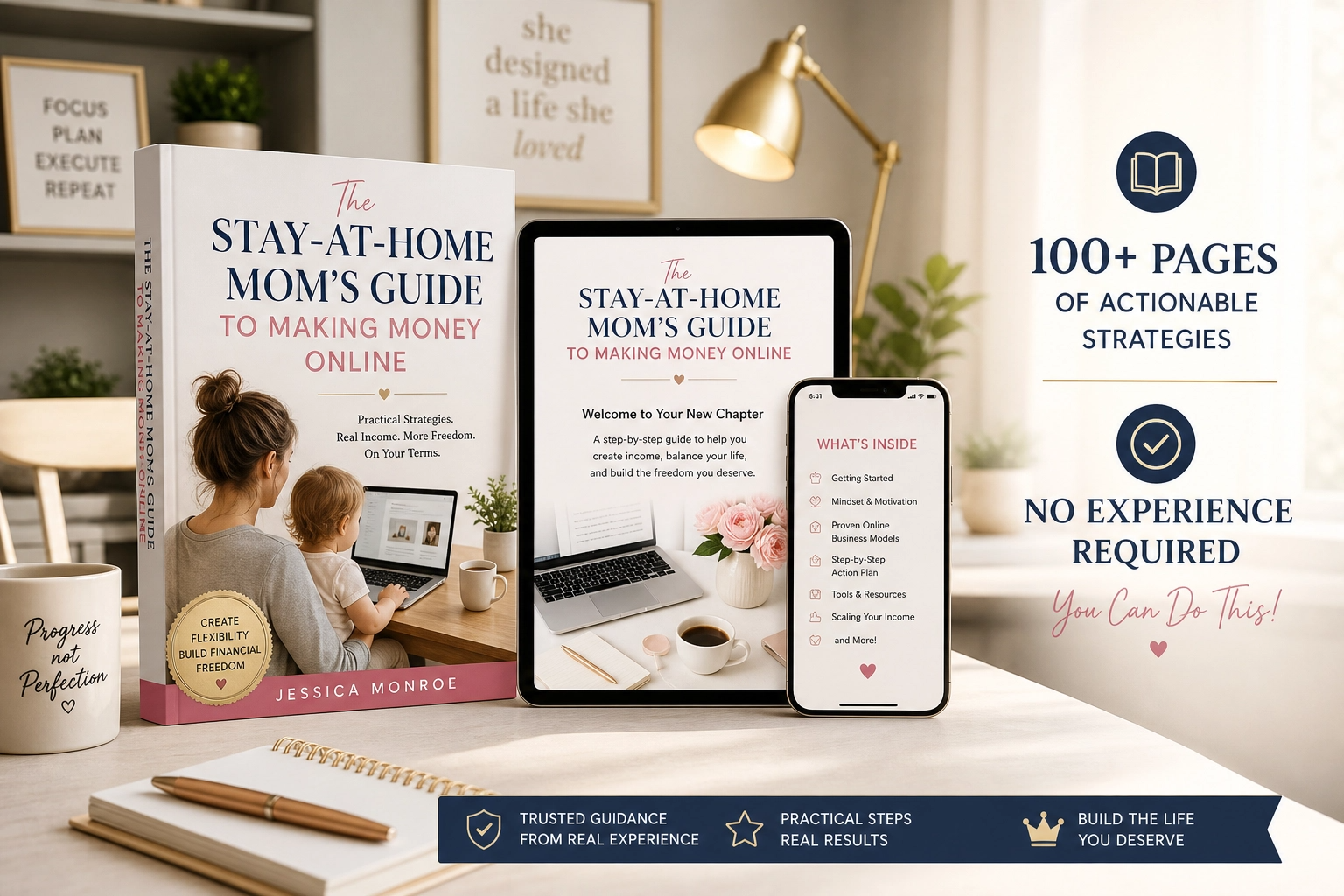
Trust me, a plan keeps you focused when results start slowly.
Final Thoughts
Affiliate marketing isn’t a shortcut, but it can be a rewarding way for moms to turn trusted recommendations into income. Choose a niche you know, share honest, helpful content, disclose clearly, build an email list, and give it enough time. Your real-life experience is your greatest asset, so start with one honest review this week.










Leave a Reply