


When I first started looking into making money from home, I did what every mom does at 10 p.m. after the kids are finally asleep: I opened my phone and typed “how much can I make online?” Within five minutes I’d seen a post promising $10,000 a month with “no experience needed” and another telling me I was already too late. Neither felt true. Both made me feel a little worse.
So let’s do what those posts never do: look at the actual numbers. Recent surveys on side hustles paint a more honest, and in some ways more encouraging, picture than the hype. Fewer Americans have a side hustle than a few years ago, but those who do are earning more, working more deliberately, and depending on the income for real needs.
In this guide, I’ll walk through the latest side hustle statistics, explain why averages can be misleading, and show what the data means for stay-at-home moms who want to earn from home. (Quick note: this is general information, not financial or tax advice, and no one can promise you a specific income.)
The Headline Numbers
Here’s what recent surveys and reports found:
- Participation has cooled. A LendingTree survey of about 2,000 Americans found 33% have a side hustle, down from 38% the year before and 44% a few years earlier. Researchers link part of the drop to a stretch when wages outpaced inflation and eased the pressure to take extra work.
- But earnings are up. In the same tracking, the typical side hustler earns about $1,242 a month, compared with roughly $473 a few years ago.
- Many people depend on it. About 61% of side hustlers say their life would be unaffordable without the extra income, and 80% say it improves their quality of life.
- It’s still widespread. A survey commissioned by Intuit QuickBooks found that nearly half of Americans (47%) earned income from a side hustle in the past year, and about 40% planned to start a new business or side hustle to build wealth.
- Millennials and Gen Z lead. Over half of Gen Z and millennial respondents in the QuickBooks survey reported side hustle income.
- Multiple jobs are at a record. One roundup, citing the Bureau of Labor Statistics, noted a record 9.3 million Americans holding more than one job.
Here’s the truth: the surveys don’t all agree, because they ask different people different questions. One tracker found only 27% participation, while another found 47%. Treat all of these numbers as pieces of a picture, not a promise.
Average vs. Median: Why the Truth Is Hiding in the Middle
This is the most important idea in the whole post, so please read it twice.
One widely cited Bankrate survey found that the average side hustle income was around $885 a month, while the median was only $200. Why such a big gap? Because a small number of people earning thousands per month pull the average up. The median tells you what a typical person earns: the middle of the pack.
Another analysis noted that the roughly $1,000 average often quoted online is heavily skewed by a small percentage of side hustlers earning $5,000 or more per month.
What does that mean for you?
- Don’t compare yourself to the top earners while you’re just getting started.
- A realistic first goal might be a few hundred dollars a month, not a few thousand.
- Income usually grows with time, skill, and focus. In surveys of serious side hustlers, those earning $500 or more a month typically spent at least five hours a week on their business.
Why People Start a Side Hustle (and Why It Matters)
According to the same surveys:
- About 32% of side hustlers say they take on extra work to keep up with cost-of-living expenses.
- Another 32% use the money for discretionary spending or saving.
- Roughly 25% rely on it to cover essential bills.
- Many cite inflation specifically as a reason for starting.
If you’re a mom looking for extra income because grocery bills have crept up, you’re in very good company.

The Honest Downsides
Let’s not skip the hard parts:
- Burnout is common. In one survey cited in a side hustle roundup, 67% of side hustlers reported experiencing burnout, and about half said the extra workload was only worth it if they earned a certain amount each week.
- Time is the biggest cost. With kids at home, your hours are limited and unpredictable.
- Taxes can surprise you. In the U.S., side hustle income is taxable even if you never receive a tax form, and net self-employment earnings of $400 or more trigger self-employment tax. (We cover this in another guide.)
- Scams target people looking for work from home. Be careful, and never pay to get a job.
What Is Working Right Now?
Here’s a quick look at popular categories, based on surveys and market reports:
- Gig and delivery work is a common side hustle but isn’t very flexible with young children.
- Online shops and e-commerce make up a large share of side hustles.
- Freelance services like virtual assistance, social media help, and writing are in steady demand. Upwork’s skills research shows consistent demand for general virtual assistance, data analytics, graphic design, and more, while demand for AI-related skills has more than doubled.
- Content creation and UGC (paid short videos made for brands) are growing, with beginners often starting around $50 to $150 per video.
- Affiliate marketing and digital products can scale without trading time for money, though they usually take longer to start earning.
We’ll go deeper on each of these in other guides.

What the Data Means for Stay-at-Home Moms
Here are my five takeaways:
- Start small and realistic. Aim for your first $100, then your first $500.
- Choose flexibility. Pick work you can pause and restart around nap times, school pickups, and sick days.
- Pick one path first. Spreading yourself across five hustles is a recipe for burnout.
- Think in skills. Skills like organization, communication, and writing carry over to many online jobs.
- Protect yourself. Learn the tax basics and the scam warning signs before you start.
A Simple Way to Pick Your Starting Point
Answer these four questions:
- How many hours a week can I realistically give? (Be honest.)
- What skills do I already have? Think organization, writing, teaching, design, customer service.
- How fast do I need income? Services pay faster. Products and affiliate income take longer.
- Do I want to be on camera? Some paths (UGC, affiliate video) need it. Others (VA work, writing) don’t.
Then choose one path and commit to 90 days.
Track Your Own Numbers
Statistics are useful, but your own data matters more. Keep a simple spreadsheet:
- Hours spent each week
- Money earned and money spent
- Income per hour
- What’s working and what isn’t
After a month or two, you’ll know much more than any survey can tell you.
Ready for a Step-by-Step Plan?
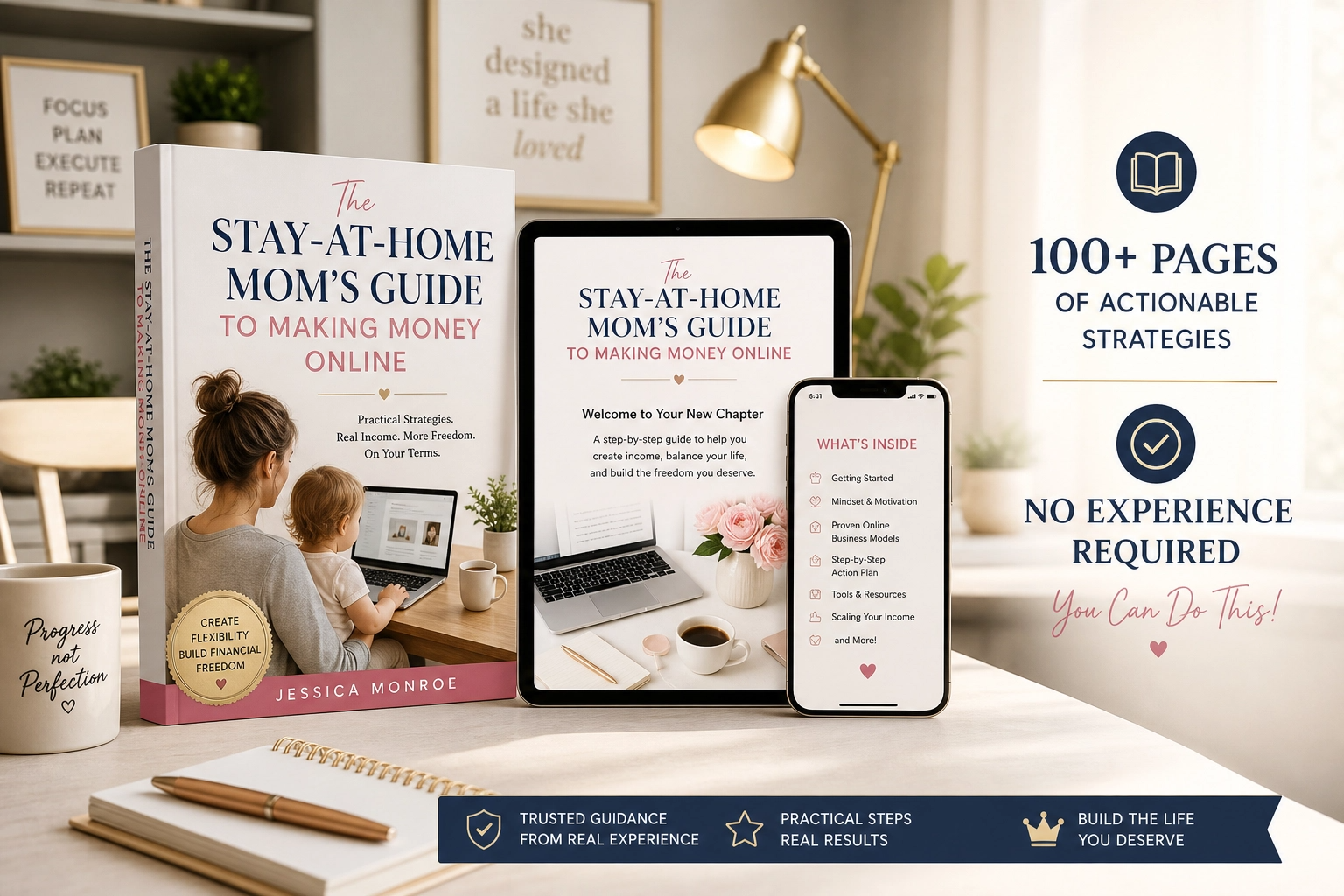
Numbers can inspire you, but you need a plan to turn them into income. If you’d like a clear, beginner-friendly roadmap made for stay-at-home moms, take a look at my ebook:
The Stay-At-Home Mom’s Guide To Making Money Online
Trust me, a plan beats scrolling at 10 p.m. every time.
Final Thoughts
The latest side hustle data tells a hopeful but honest story: fewer people are hustling, those who do are earning more, and most of them are doing it out of real need. The typical income is far below the shiny headlines, but it can still make a meaningful difference for a family. Start small, choose flexible work, protect yourself from scams and tax surprises, and let your own numbers guide you.










Leave a Reply