


The honeymoon phase of working for myself lasted about three weeks. I loved the freedom, the flexible mornings, and the lack of a commute. Then reality arrived. No one was checking whether I’d started work. No one praised my wins. Some days, my to-do list looked like a mountain, and I found myself reorganizing my bookshelf instead of tackling it. I realized something important: motivation isn’t a feeling you wait for. It’s a system you build.
If you want to stay motivated working for yourself, you’re facing one of the biggest challenges of independent work. Without a boss, a team, or a fixed schedule, you’re responsible for your own energy, focus, and momentum.
In this guide, I’ll walk you through why motivation dips, how to build structure, how to create momentum with small wins, and what to do on days when nothing feels easy.
Why Motivation Fades When You’re Self-Employed
- No external deadlines. Everything feels optional.
- Delayed results. Business growth takes time.
- Isolation. There’s no office banter or built-in support.
- Blurred boundaries. Work and home overlap.
- Uncertain income. Financial stress drains energy.
- Too many choices. You decide everything.
The honest part: Dips in motivation are normal, even for successful entrepreneurs. The goal isn’t constant excitement. It’s consistent action, even on ordinary days.

Step 1: Reconnect With Your “Why”
Your reasons keep you going when tasks feel hard.
- Write down why you’re doing this: security, freedom, family, creativity, or purpose.
- Make it specific: “I want to earn $1,500 a month so I can stay home with my kids part-time.”
- Place it where you can see it: a sticky note, vision board, or phone wallpaper.
- Revisit it weekly.
A clear reason turns “I don’t feel like it” into “I know why this matters.”
Step 2: Build a Simple Daily Structure
Structure reduces decision fatigue.
- Set consistent start and stop times.
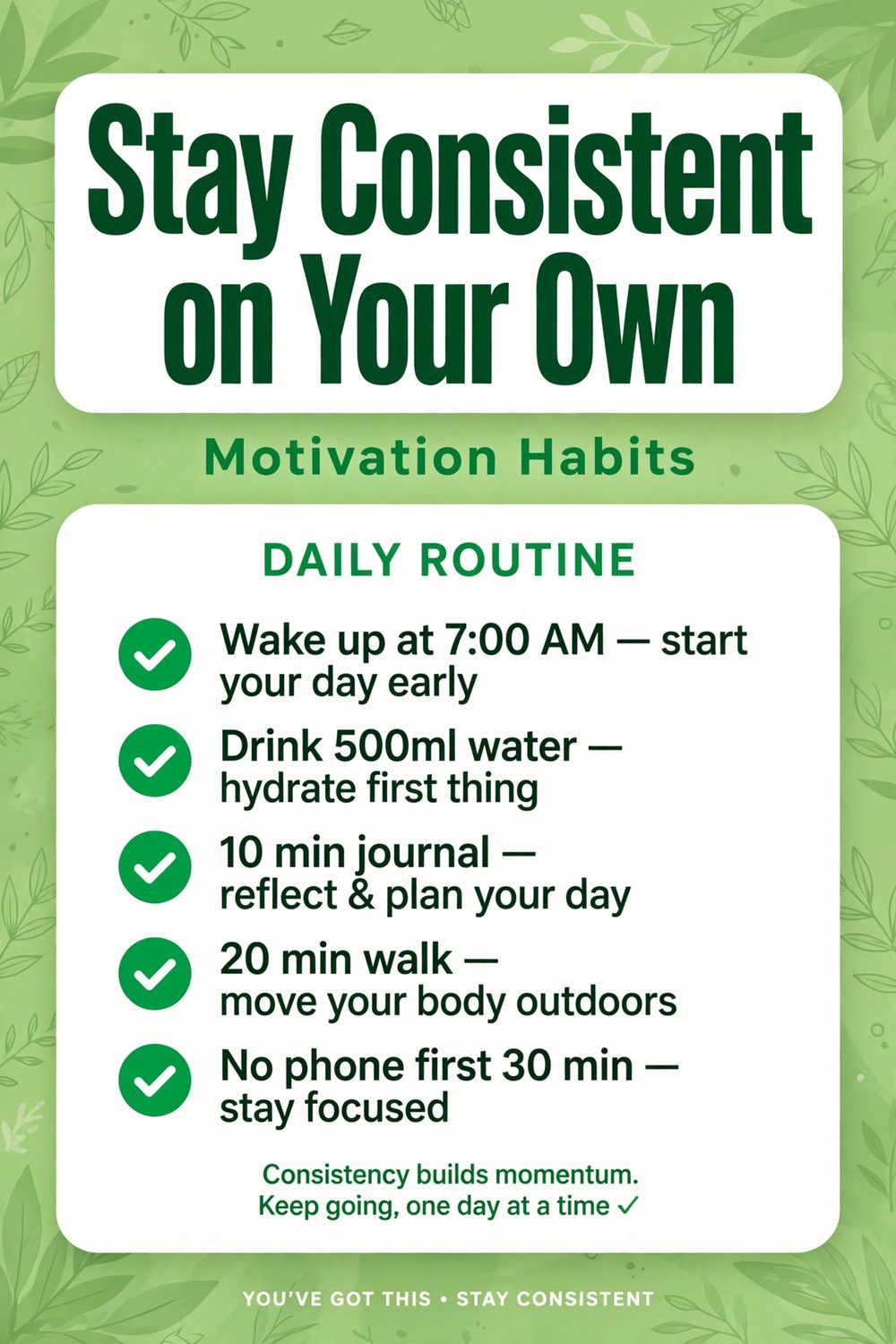
- Create a morning routine that signals work mode.
- Choose three priorities each day.
- Schedule your hardest task during your best energy hours.
- Plan breaks and lunch.
- Create an end-of-day ritual, like writing tomorrow’s priorities and closing your laptop.
The Personal Brand Blueprint can help you clarify who you’re building your business to be, which makes daily choices easier.
Step 3: Break Big Goals Into Small Steps
Overwhelming goals stall progress.
- Write your big goal, such as “Land five freelance clients.”
- Break it into milestones, like “Create a portfolio” and “Send 50 pitches.”
- Break milestones into daily actions, such as “Send five pitches.”
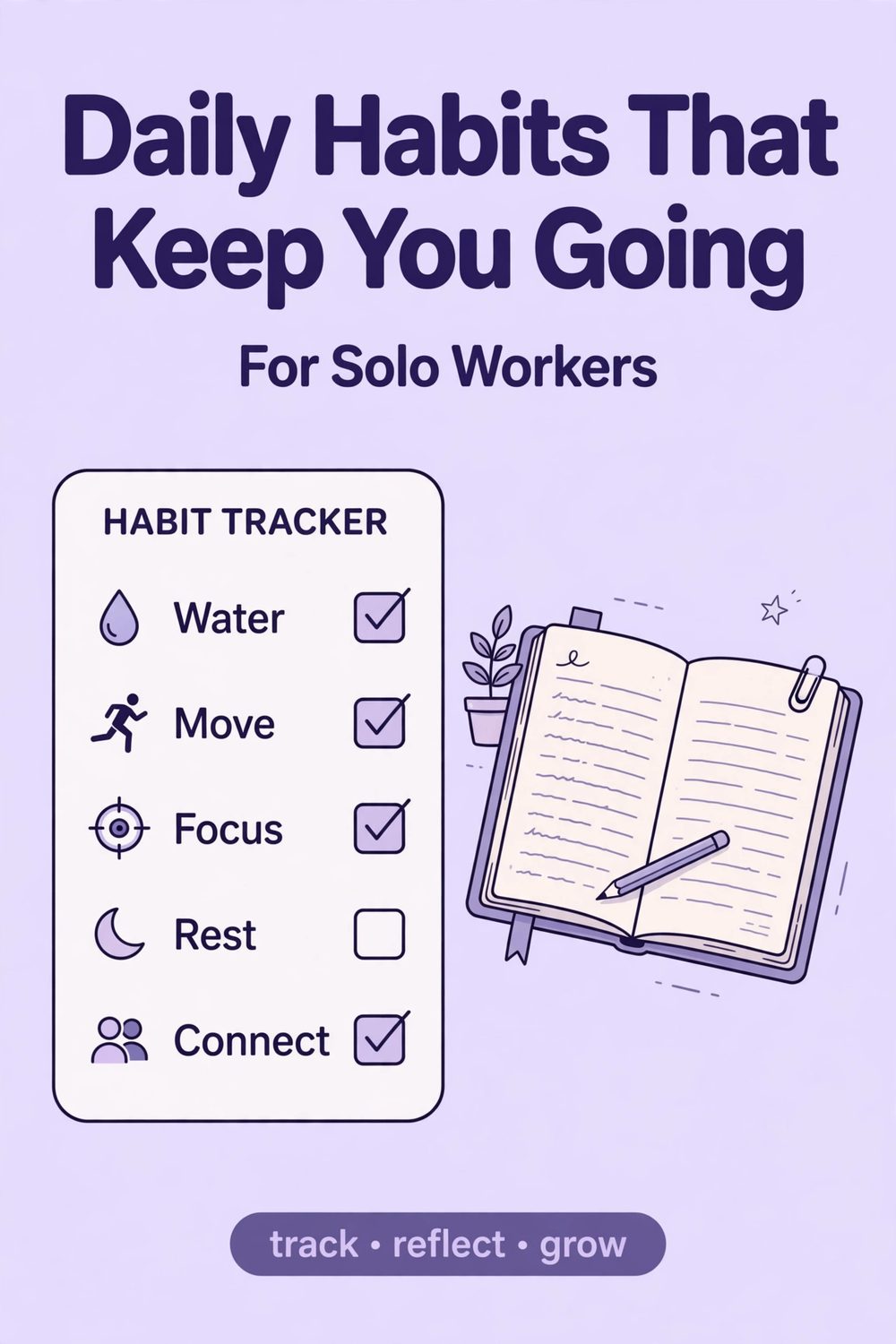
- Track your progress visually with a checklist or chart.
Small, specific actions are far easier to start than vague, giant ones.
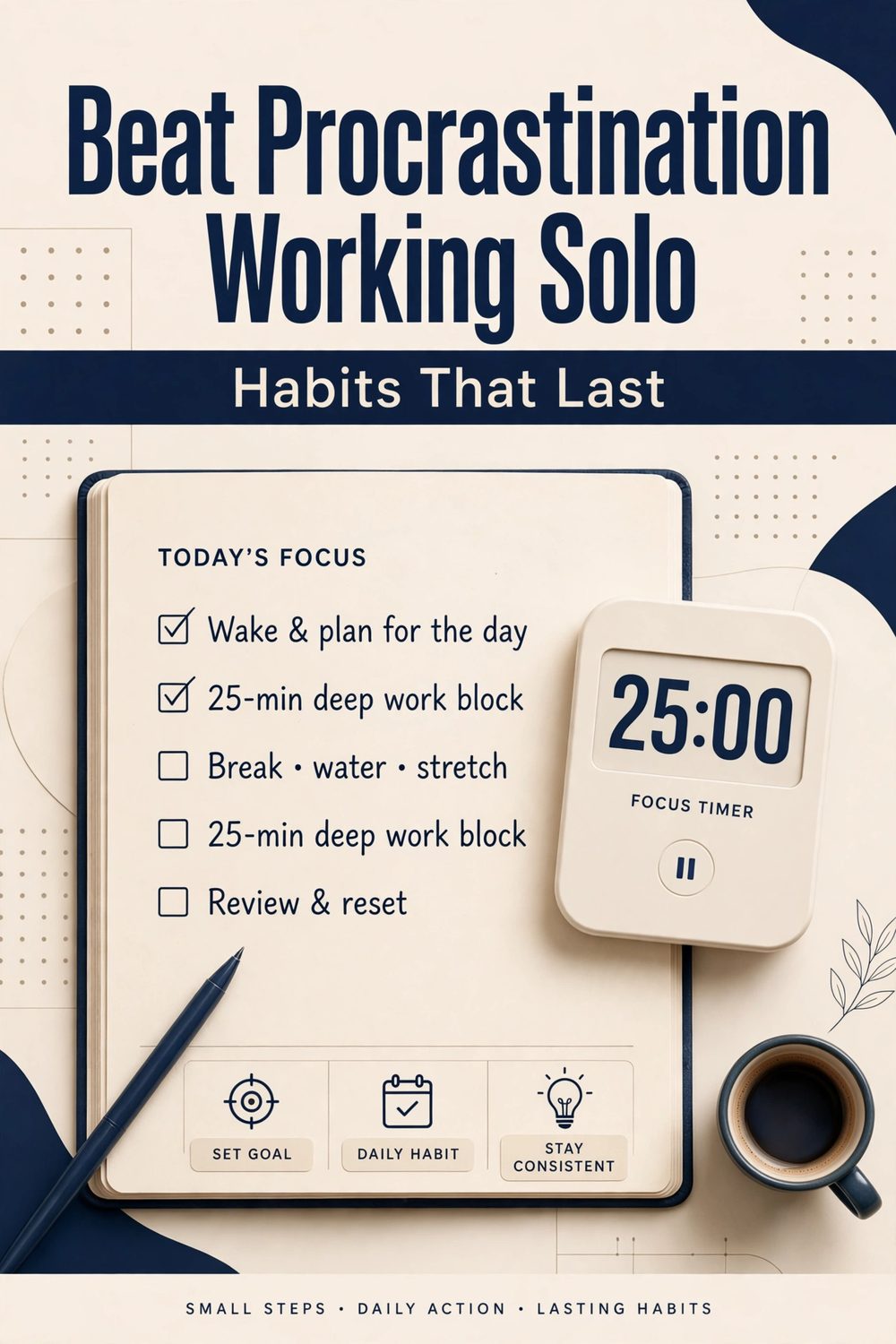
Step 4: Use the “Two-Minute Start”
When you’re avoiding a task, shrink it.
- Commit to two minutes. Open the document, write one sentence, or send one email.
- Often, you’ll keep going.
- If not, you’ve still made progress.
Starting is usually the hardest part.

Step 5: Create Momentum With Small Wins
Progress fuels motivation.
- Celebrate completed tasks, even small ones.
- Keep a “wins” list of compliments, sales, and achievements.
- Track streaks, such as days you’ve worked on your top priority.
- Share wins with a friend or community.
- Review your progress monthly to see how far you’ve come.
When motivation dips, reading your wins list can remind you that you’re capable.
Step 6: Find Accountability and Community
Isolation drains motivation.
- Join online communities of entrepreneurs or freelancers.
- Find an accountability partner for weekly check-ins.
- Attend virtual coworking sessions.
- Hire a coach or mentor if it fits your budget.
- Schedule regular calls with friends who understand your journey.
If you’re a mom building flexible income, The Stay-At-Home Mom’s Guide to Making Money Online can help you feel less alone with practical ideas and a clear path.
Step 7: Protect Your Energy
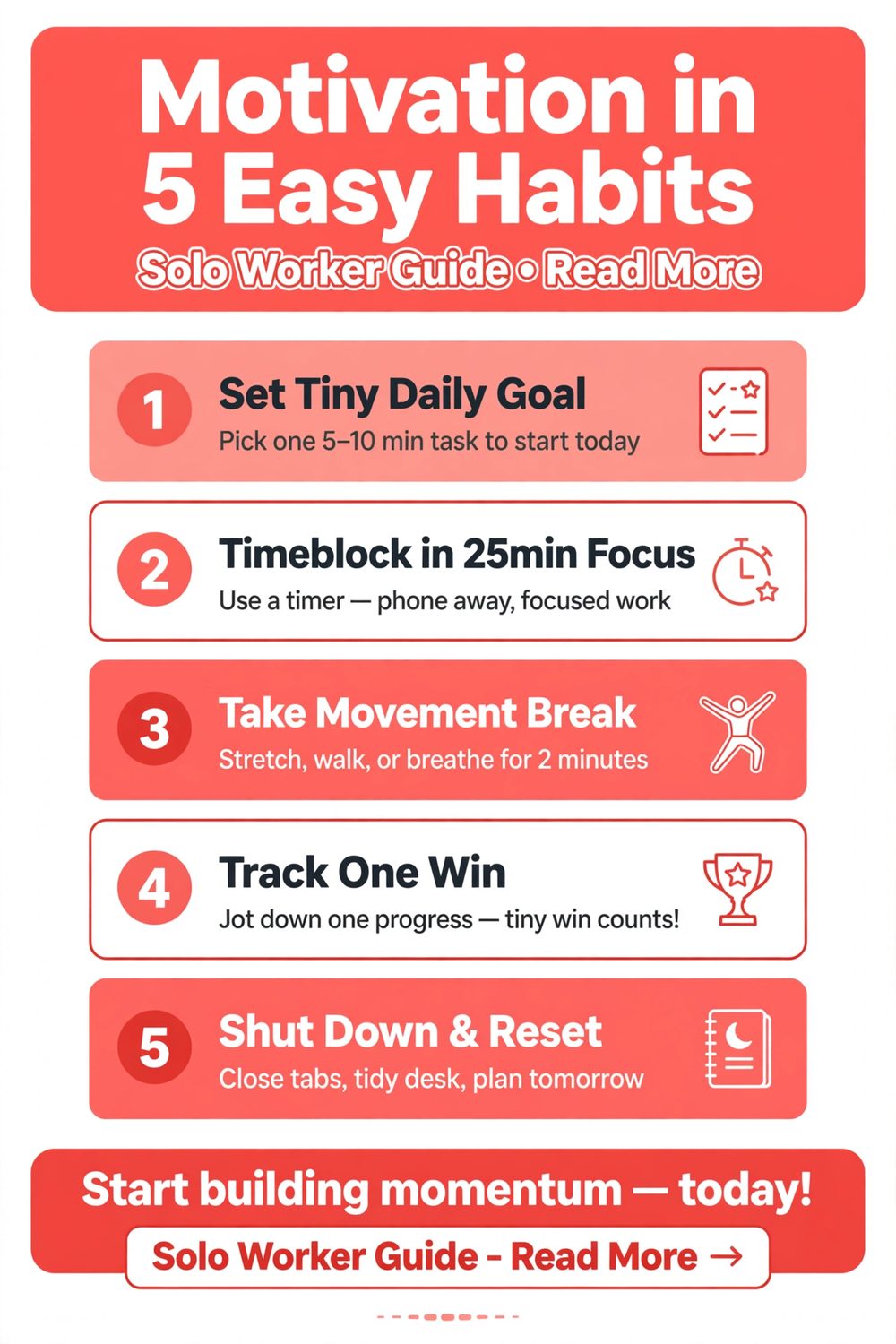
Motivation depends on physical and mental energy.
- Sleep consistently.
- Eat regular, nourishing meals.
- Move your body daily.
- Take breaks and time off.
- Limit endless scrolling.
- Spend time outside.
If you’d like gentle, educational guidance on supporting your energy and wellbeing, The Hormone Balance Blueprint is one resource, though it isn’t a substitute for medical advice. If you’re experiencing persistent low mood, exhaustion, or anxiety, please talk to a healthcare professional. And Glow Up Your Life can inspire routines that help you feel your best.
Step 8: Use Systems and Tools
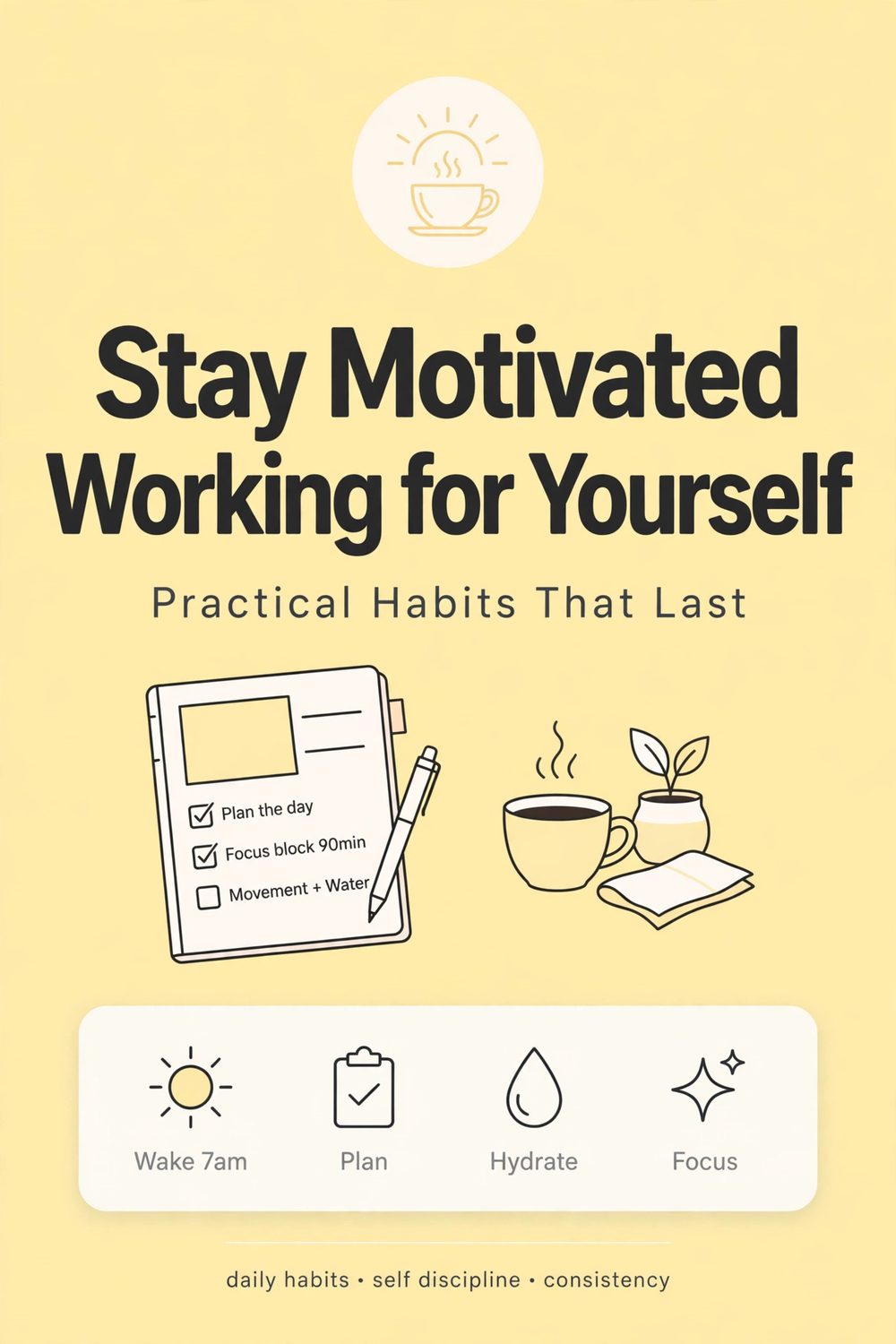
- A planner or task app to track priorities.
- A timer for focus sprints.
- Website blockers for distractions.
- Templates and checklists for repeated tasks.
- AI assistants for brainstorming, outlining, and organizing work.
The Claude Advantage shows how to prompt effectively to reduce busywork, and The AI-Powered Solopreneur offers simple systems that make daily work easier.
Step 9: Handle Setbacks and Rejection
Setbacks are part of independent work.
- Separate your worth from outcomes.
- Treat rejection as data.
- Review what you can improve.
- Take a short break when needed.
- Return with a small action.
- Talk to someone supportive.
Every established entrepreneur has stories of failed launches, lost clients, and slow months.
Step 10: Manage Money Stress
Financial worries drain motivation.
- Track income and expenses.
- Build an emergency fund gradually.
- Create a basic budget that accounts for variable income.
- Set aside money for taxes. Consult a qualified professional.
- Diversify income streams over time.
The Smart Mom’s Complete Guide to Money offers friendly, practical guidance for building financial calm.
What to Do on Low-Motivation Days
- Lower the bar. Choose one important task and do it.
- Do easy tasks like organizing files or replying to emails.
- Change your environment, such as working from a cafe or library.
- Take a walk.
- Listen to music or a podcast that energizes you.
- Rest if you need it. Sometimes recovery is the productive choice.
A 14-Day Motivation Reset
- Days 1–2: Write your “why” and choose three priorities.
- Days 3–5: Set consistent start and stop times.
- Days 6–8: Break your main goal into weekly milestones.
- Days 9–11: Find an accountability partner or community.
- Days 12–14: Review wins, adjust your plan, and schedule a rest day.
Motivation for Different Personality Types
What keeps you going depends on how you work best. Try matching your approach to your style:
- If you love structure: Use detailed planners, time blocks, and checklists, and enjoy crossing items off.
- If you thrive on variety: Rotate tasks through the day, switch locations, and use themed days like “Create Tuesday” and “Outreach Thursday.”
- If you’re socially driven: Schedule coworking sessions, accountability calls, and regular community time.
- If you’re reward-driven: Attach small, healthy rewards to milestones, like a favorite coffee after finishing a draft.
- If you’re deadline-driven: Create public commitments, such as telling a friend you’ll publish by Friday or booking a client date.
There is no single “right” system. Experiment for a couple of weeks, keep what helps, and drop what doesn’t.
When It’s More Than a Motivation Dip
Sometimes low motivation is a sign of something deeper. Pay attention if you notice:
- Persistent exhaustion that rest doesn’t improve.
- Loss of interest in things you usually enjoy.
- Trouble sleeping or concentrating for weeks.
- Feelings of hopelessness or constant overwhelm.
These signals deserve care, not more pushing. Talk with a healthcare professional or a mental health provider, and lean on trusted friends or family. If you ever feel unsafe or in crisis, contact local emergency services or a crisis line right away. Looking after your wellbeing is not a detour from your business. It’s the foundation.
A Weekly Motivation Check-In
A short weekly review keeps momentum alive. Each Friday, answer these questions in a notebook:
- What did I accomplish this week that I’m proud of?
- What drained my energy, and can I change it?
- What are my top three priorities for next week?
- Who can I reach out to for support or accountability?
- What’s one small reward I’ll give myself?
This ten-minute habit turns vague feelings into clear next steps. Over time, you’ll notice patterns in what energizes you, which makes it easier to design a work life you actually enjoy.
Mistakes to Avoid
- Waiting to feel motivated.
- Setting vague goals.
- Skipping rest.
- Comparing yourself to others.
- Working without a schedule.
- Isolating yourself.

Quick Answers About Motivation
Is it normal to lose motivation? Yes. Almost everyone experiences dips. Systems help you keep moving.
How do I stop procrastinating? Break tasks into small steps, use short timers, and start with two minutes.
Should I work every day? Not necessarily. Rest is essential, and sustainable routines beat burnout.
What if I’m not seeing results? Review your actions and numbers, adjust one thing, and keep going for a reasonable period.
Motivation Follows Action
Staying motivated when you work for yourself isn’t about willpower. It’s about meaning, structure, small wins, support, and rest. Build systems that carry you through low-energy days, and celebrate the progress you make.
Today, write down your “why” and choose three priorities for tomorrow. Trust me, one small action can be the spark that brings your motivation back. You’ve got this!










Leave a Reply