


You’ve probably started a new habit before. Maybe it was drinking more water, writing every morning, or finally exercising. You were motivated for a few days. Then life got busy, you missed a day, then another, and the habit disappeared.
It doesn’t mean you lack discipline. It means you were missing a system. And one of the simplest, most effective systems is a habit tracker.
In this guide, you’ll learn how habit tracking works, how to choose the right habits, and how to stay consistent even when you’re busy, tired, or unmotivated.
What Is a Habit Tracker?
A habit tracker is a simple tool, usually a chart or journal, where you mark each day that you complete a habit. It might be a grid of boxes, a calendar, or a page with daily check-offs.
It sounds almost too simple to work, but it does, for three reasons:
- It makes habits visible. You can see your progress at a glance.
- It creates a streak. Nobody wants to break a chain of checkmarks.
- It gives instant satisfaction. Marking a box releases a tiny hit of accomplishment, which reinforces the behavior.

Why Habits Matter More Than Goals
Goals tell you where you want to go. Habits are how you actually get there. Want to write a book? The goal is “finish a manuscript,” but the habit is “write 200 words a day.” Want to save money? The habit is “set aside $10 every day.”
Small habits repeated consistently produce enormous results over time. If you improve by just 1% each day, the gains stack up quickly. That’s why focusing on daily actions beats relying on occasional bursts of motivation.
Start With Mini Habits
Here’s the number one mistake people make: they set habits that are too big. “Exercise for an hour every day” sounds great until a hectic Tuesday hits.
Mini habits are tiny versions of your desired habit, so small that you can’t say no. Examples:
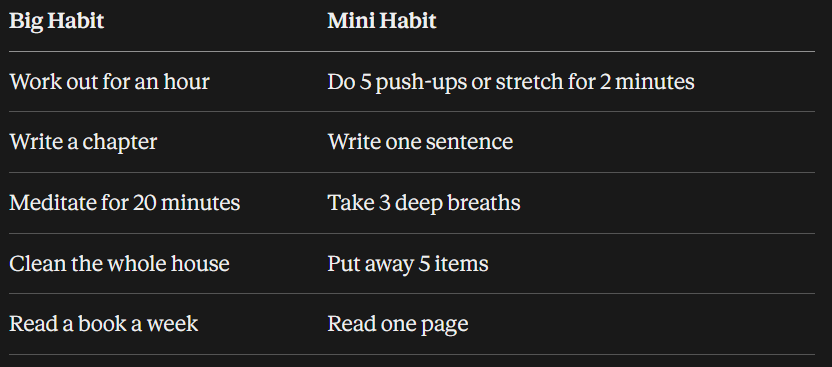
The magic is that once you start, you’ll often keep going. But even if you only do the mini version, you’ve kept the habit alive, and that’s what counts.
The Mini Habit Tracker Journal is made for this approach. It lets you track small daily actions without pressure, so building consistency feels doable instead of daunting.

Step 1: Choose 1-3 Habits to Start
Resist the urge to overhaul your life overnight. Pick one to three habits maximum. Ask yourself:
- Which habit would make the biggest difference in my life?
- Does this habit support one of my main goals?
- Can I do it in under five minutes (to start)?
If you’re not sure which habits to focus on, check in with your goals. The Top 3 Main Goals Right Now Journal can help you identify priorities, and then you can choose habits that directly support them.

Habit ideas to consider
Productivity:
- Plan tomorrow before ending the workday
- Spend 10 minutes on your most important task first
- Check email only at set times
Health:
- Drink a glass of water after waking up
- Take a 10-minute walk
- Go to bed at a consistent time
Mindset:
- Write three things you’re grateful for
- Journal for five minutes
- Read a few pages of something inspiring
Money:
- Log your spending daily
- Transfer a small amount to savings
- Review your budget weekly
Step 2: Anchor Your Habit to an Existing Routine
Habits stick best when they’re attached to something you already do. This is called habit stacking. The formula is:
After I [current habit], I will [new habit].
Examples:
- After I pour my morning coffee, I will write in my journal.
- After I close my laptop, I will write tomorrow’s top three tasks.
- After I brush my teeth, I will do two minutes of stretching.
Your existing routine acts as a built-in reminder, so you don’t have to rely on memory or willpower.

Step 3: Make It Easy and Obvious
Design your environment so that your habit is hard to forget and easy to do:
- Keep your journal on your pillow or desk.
- Place your water bottle where you’ll see it first thing.
- Set out workout clothes the night before.
- Put your habit tracker where you’ll see it daily.
The less effort it takes to start, the more likely you are to follow through.
Step 4: Track It Every Single Day
Here’s where the tracker comes in. Immediately after completing your habit, mark it off. Don’t wait until the end of the day, because you might forget or skip it.
Some tracking tips:
- Use simple marks. A check, a dot, or a colored-in box is fine.
- Track right away. The reward works best when it’s immediate.
- Be honest. Only mark days you actually did the habit.
- Look at the big picture weekly. Notice patterns in when you succeed and when you struggle.
If you also want to understand how your feelings affect your habits, pair your tracker with the Mood Tracker Journal. You may discover that your habits slip when you’re stressed or tired, which tells you when to give yourself extra support.

Step 5: Follow the “Never Miss Twice” Rule
Missing a day is normal. What matters is how you respond. The rule is simple: never miss twice in a row.
If you skip Monday, do the mini version on Tuesday, even if it takes 30 seconds. One missed day is an accident. Two is the beginning of a new (unwanted) habit.
Perfectionism is the enemy of consistency. A habit tracker with a few gaps is still far better than no habit at all.
Step 6: Review and Adjust Weekly
Once a week, spend five minutes looking at your tracker. Ask:
- Which habits am I doing consistently?
- Which ones am I struggling with?
- Is the habit too big? Should I make it smaller?
- Is the timing wrong? Could I move it to a better moment?
- Do I still want this habit?
Adjusting isn’t failing. It’s fine-tuning. If you’re consistently skipping a habit, change the habit, not your self-worth.
The Staying on Track Journal is a handy companion for these weekly reviews, giving you a place to reflect, reset, and recommit.

Step 7: Celebrate Progress
Reward yourself when you hit milestones: 7 days, 14 days, 30 days. Rewards don’t need to be big. Try:
- A favorite coffee or treat
- An hour of guilt-free reading
- A new notebook or pen
- A relaxing bath or a movie night
Celebrating tells your brain that the habit is worth repeating.
Habit Tracker Layouts You Can Try
Different formats suit different personalities:
- Monthly grid: Habits down the side, days across the top. Great for seeing the big picture.
- Weekly spread: Gives more space for notes and reflection.
- Daily page: Ideal for tying habits into a larger daily plan.
- Streak chart: Color in a box for each completed day for a visual chain.
If you like to plan your day in detail, you can combine habit tracking with the Work Day Organizer, so your habits live right alongside your tasks and priorities.
Common Habit-Tracking Mistakes
Tracking too many habits. Start with three at most. You can always add more later.
Choosing vague habits. “Be healthier” can’t be checked off. “Walk 10 minutes” can.
Relying on motivation. Build routines and cues instead of waiting to feel inspired.
Being too hard on yourself. Progress, not perfection, is the goal.
Never reviewing. A tracker is only useful if you learn from it.
Habit Tracker Ideas for Different Lifestyles
For entrepreneurs
Track daily outreach, content creation, or a 15-minute money review. The Monthly Business Tracker pairs nicely with daily habits for a full picture of your progress.

For students
Track study sessions, sleep, and water intake.
For busy parents
Track simple wins: 10 minutes of alone time, a family walk, or a tidy-up routine.
For wellness seekers
Track movement, meals, gratitude, and sleep. Consider adding the Wellness Journal to see how your habits affect your overall wellbeing.

How Long Does It Take to Build a Habit?
You’ve probably heard “21 days,” but research suggests the real number varies widely depending on the person and the habit. For many, it takes a couple of months for a habit to feel automatic. Don’t focus on a magic number; focus on showing up consistently.
Final Thoughts
You don’t need a dramatic life makeover to change your life. You need small, consistent actions, and a simple way to keep track of them. Choose one tiny habit, anchor it to your routine, and mark it off every day. Before long, your tracker will be full of checkmarks and you’ll look back at how far you’ve come.
Start your streak today. Grab the Mini Habit Tracker Journal to build consistency one small step at a time, and add the Mood Tracker Journal to learn what helps (and hurts) your progress.










Leave a Reply