


I spent my first six months of blogging writing about topics I thought were interesting. I poured hours into each post, hit publish, and heard crickets. Then a friend asked, “Did you check whether anyone is actually searching for this?” I hadn’t. When I finally learned keyword research for beginners, my traffic started to grow, not because my writing changed, but because I began writing about things people were looking for.
If you want your blog, shop, or website to be found, keyword research is one of the most valuable skills you can learn. It’s simply the process of discovering the words and phrases people type into search engines, and then creating content that answers their questions.
In this guide, I’ll walk you through what keywords are, how to find them with free tools, how to judge search intent and competition, and how to build a simple content plan.
What Is Keyword Research?
Keywords are the words and phrases people use when searching online. Keyword research helps you:
- Understand what your audience wants to know.
- Choose topics with real demand.
- Match your content to search intent.
- Decide which topics are realistic to rank for.
The honest part: SEO takes time. New sites usually need months to see results, rankings can change, and tools give estimates, not exact numbers. Use research to guide decisions, not as a guarantee.
Step 1: Understand Types of Keywords
By Length
- Short-tail keywords: One or two words, like “budget.” High volume, high competition, and unclear intent.
- Long-tail keywords: Longer phrases, like “monthly budget template for freelancers.” Lower volume, but clearer intent and easier to rank for.
By Intent
- Informational: People want to learn, such as “how to start a blog.”
- Commercial: People compare options, such as “best email marketing tools.”
- Transactional: People are ready to buy, such as “buy budget planner printable.”
- Navigational: People look for a specific site or brand.
Beginners often succeed by targeting long-tail, informational, and commercial keywords.
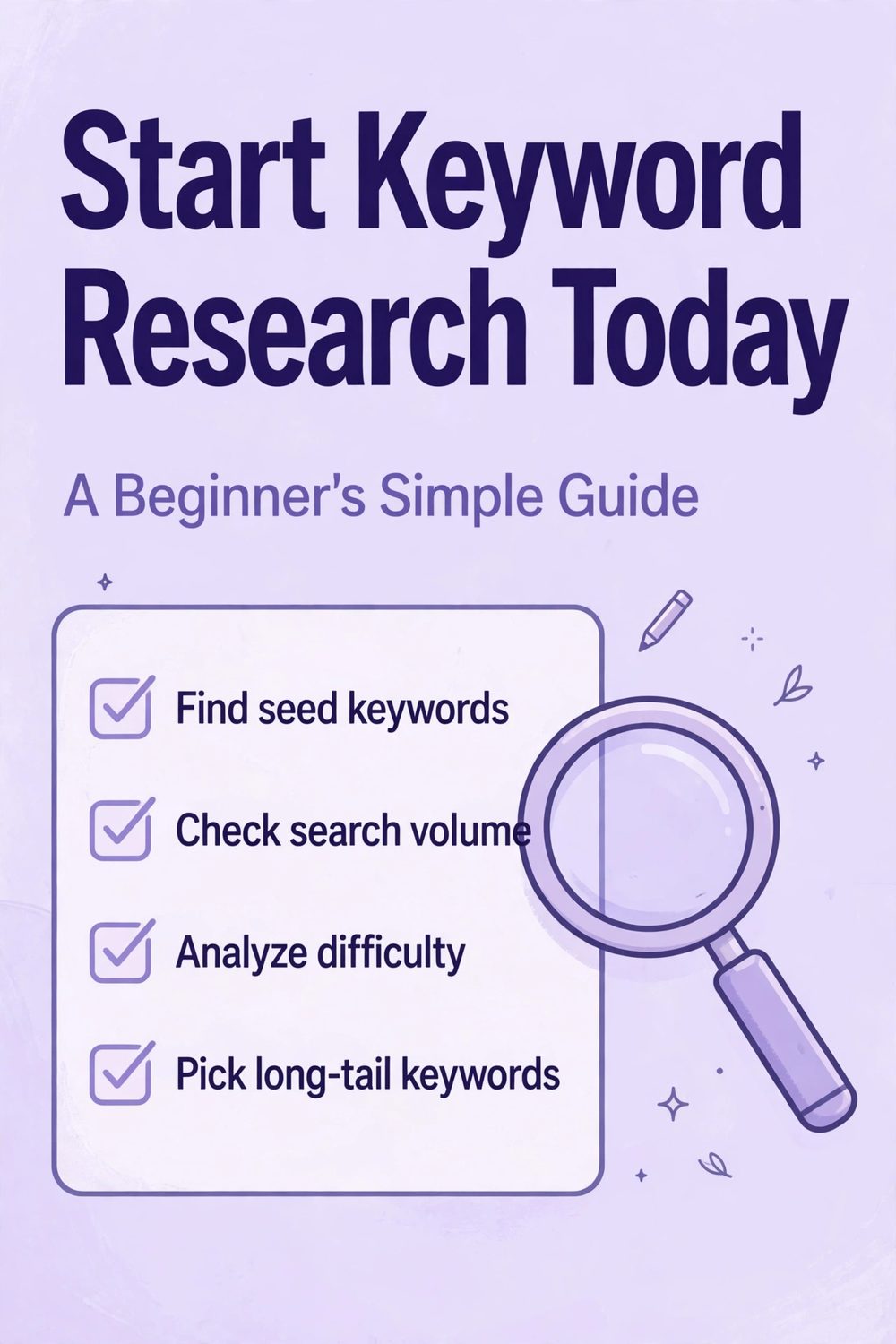
Step 2: Brainstorm Seed Keywords
Start with topics you know.
- List your main topics, such as budgeting, freelancing, or Pinterest.
- List problems your audience faces.
- List questions people ask you.
- List products, tools, and methods you can write about.
Example seed: “freelance writing.” From it, you can branch into “how to start freelance writing,” “freelance writing rates,” and “freelance writing portfolio.”
Step 3: Use Free Tools to Find Ideas
You don’t need expensive software.
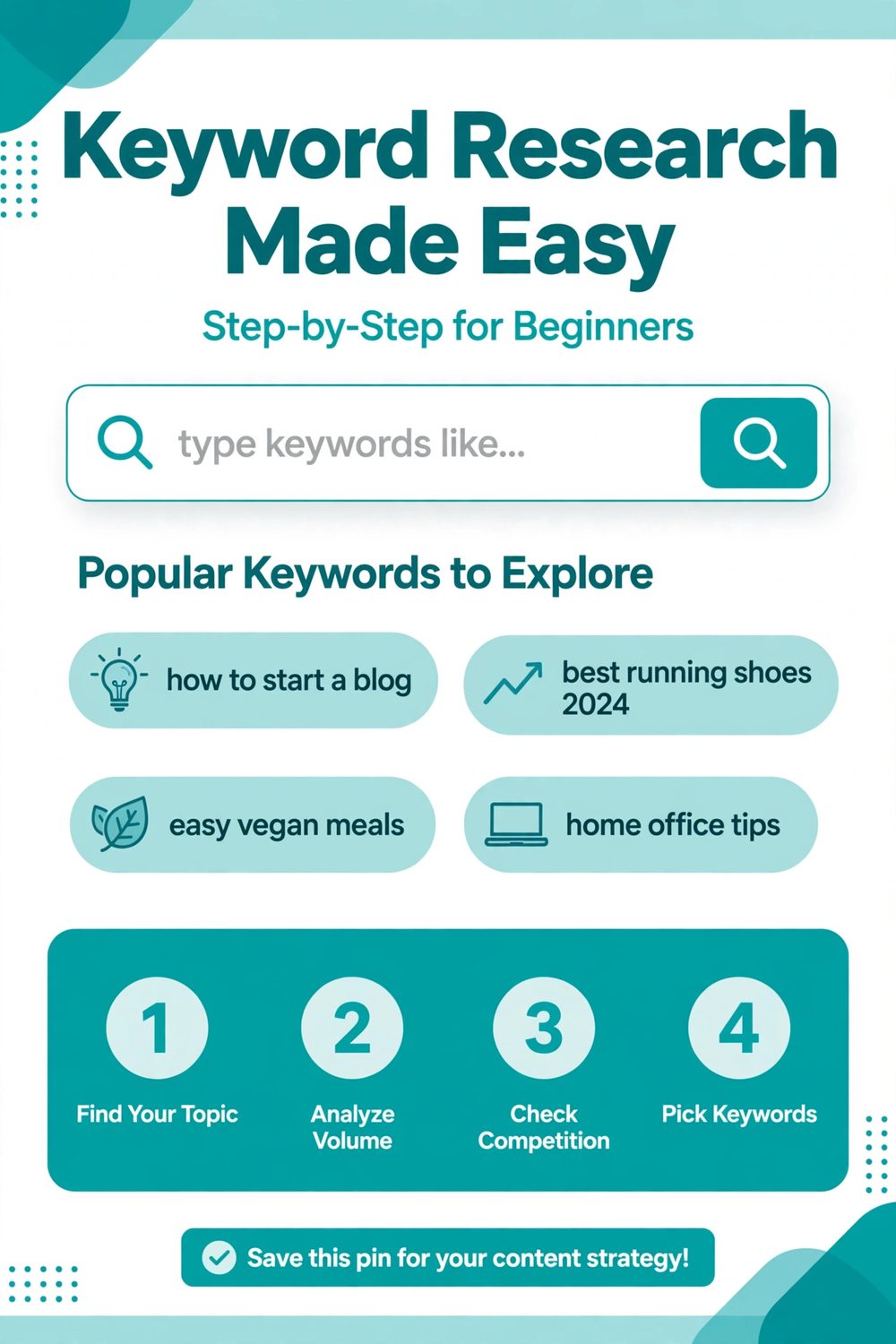
Free Ways to Find Keywords
- Search engine autocomplete: Type a seed keyword and note suggestions.
- “People also ask” boxes in search results.
- Related searches at the bottom of results pages.
- Pinterest and YouTube search suggestions.
- Free keyword tools and search console data for your own site.
- Forums, communities, and review sites to see how real people phrase questions.
- Competitor blogs and category pages to see what topics they cover.
Paid Tools (Optional)
Paid tools provide search volume estimates, difficulty scores, and competitor analysis. They can help later, but you can start with free options. Features and pricing change, so compare current options.
AI can help you brainstorm related questions and organize lists, though it can’t give accurate search volume data on its own. Always validate ideas in real search results. The Claude Advantage shows how to prompt effectively for brainstorming and organizing ideas.

Step 4: Check Search Intent
This step separates beginners from effective SEO writers.
- Search your keyword and look at the top results.
- Notice the content type: Are they lists, guides, product pages, videos, or comparisons?
- Check the angle: Beginner-friendly? Advanced? Local?
- Ask what the searcher wants and whether you can serve that need.
If top results are all product pages, a blog post probably won’t rank. If they’re how-to guides, a detailed guide fits.
Step 5: Evaluate Competition
You can’t rank for everything.
- Look at who ranks: Huge brands or smaller sites?
- Check content quality: Is it thin, outdated, or very thorough?
- Look for gaps you can fill, such as missing examples, updated information, or a better structure.
- Consider your site’s authority. New sites should aim for lower-competition, long-tail terms.
A practical approach is to choose keywords where smaller blogs and niche sites appear in the top results.

Step 6: Choose Your Target Keywords
For each article, select:
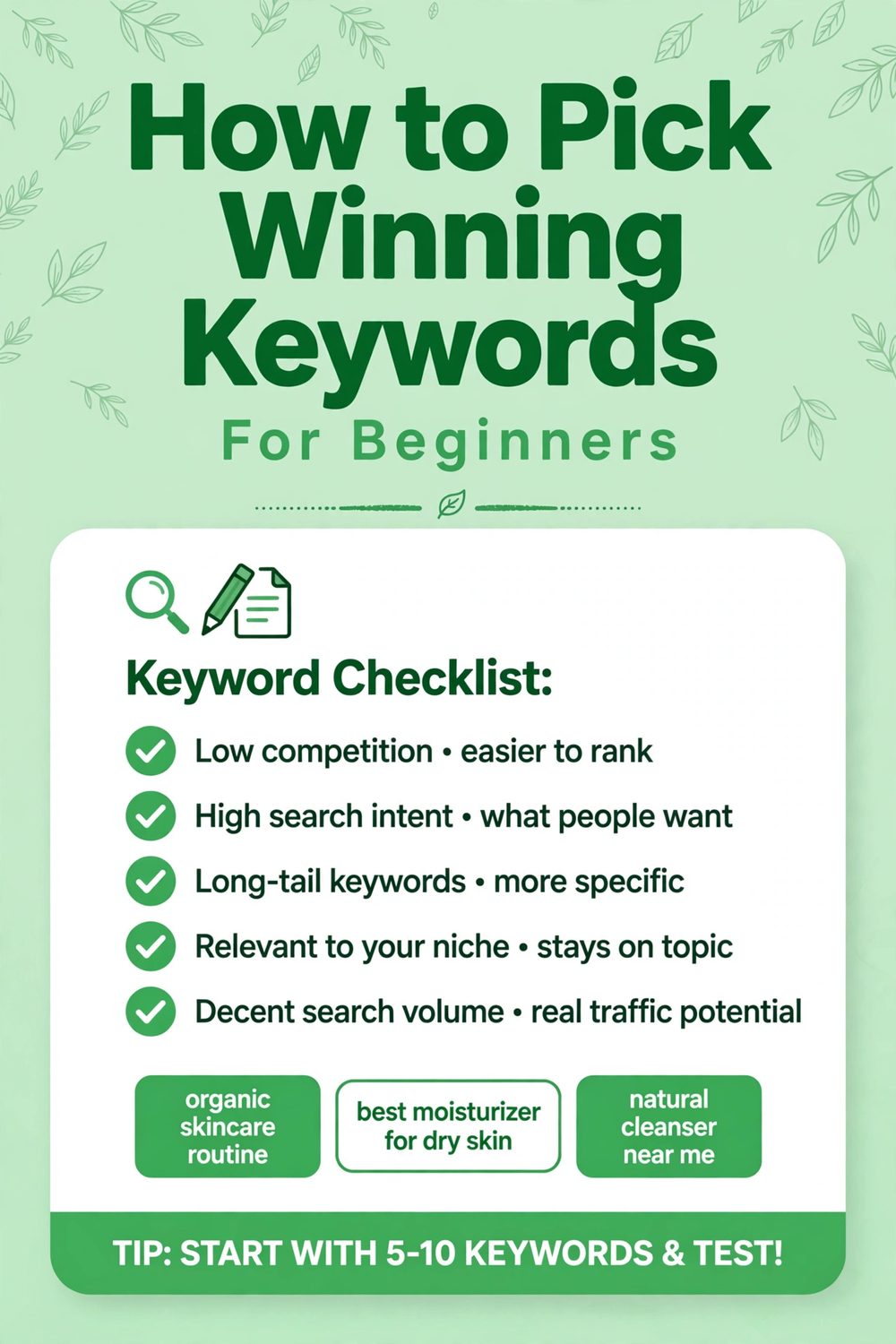
- One primary keyword that matches the topic.
- A few secondary keywords and related phrases.
- Search intent alignment.
- Business relevance: Does this topic connect to your products, services, or affiliate offers?
A Simple Scoring Method
Rate each keyword from 1 to 5 on:
- Relevance to your audience and offers.
- Search demand (or interest).
- Competition (lower is better for beginners).
- Your ability to create something better.
Choose the highest scoring keywords first.
Step 7: Organize Keywords Into Topic Clusters
Search engines reward sites that cover topics in depth.
- Pick a main topic, like “freelance writing.”
- Create a pillar post that covers it broadly.
- Write supporting posts on subtopics, like rates, portfolios, and pitching.
- Link them together with internal links.
This structure helps readers and search engines understand your expertise.
Step 8: Build a Content Calendar
Turn keywords into a plan.
- List your target keywords and topics.
- Assign publishing dates.
- Note intent, outline ideas, and internal links.
- Plan updates for older posts.
Use a spreadsheet with columns for keyword, intent, difficulty, status, and publish date.
Step 9: Apply Keywords Naturally in Your Content
- Use the primary keyword in your title, introduction, a few headings, and the URL.
- Write clear, helpful content.
- Use synonyms and related phrases.
- Write a compelling meta description.
- Add descriptive image alt text.
- Avoid keyword stuffing.
The Digital Marketing Playbook offers a beginner-friendly foundation in SEO and content marketing.
Step 10: Track and Improve
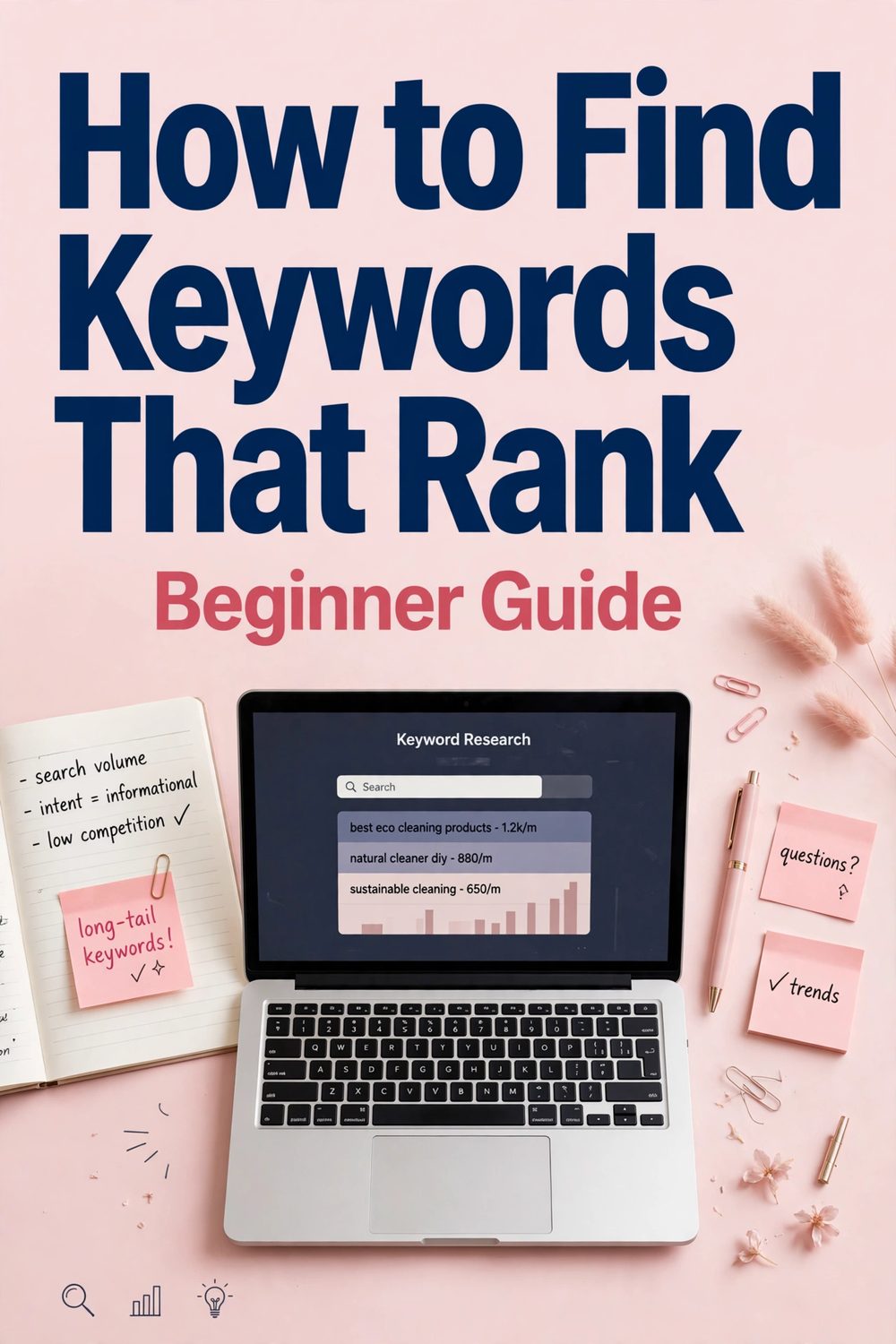
- Use free analytics and search tools to see impressions, clicks, and rankings.
- Identify posts that get impressions but few clicks and improve titles.
- Update old posts with fresh information.
- Double down on topics that perform.
Keyword Research for Other Platforms
The same ideas apply beyond Google.
- Pinterest: Use search suggestions for pin titles and board names.
- YouTube: Use autocomplete for video titles.
- Etsy and marketplaces: Study listing titles and tags.
- Amazon: Look at search suggestions for products and books.
If you’re building flexible online income, The Stay-At-Home Mom’s Guide to Making Money Online offers beginner-friendly ideas where keyword skills help.
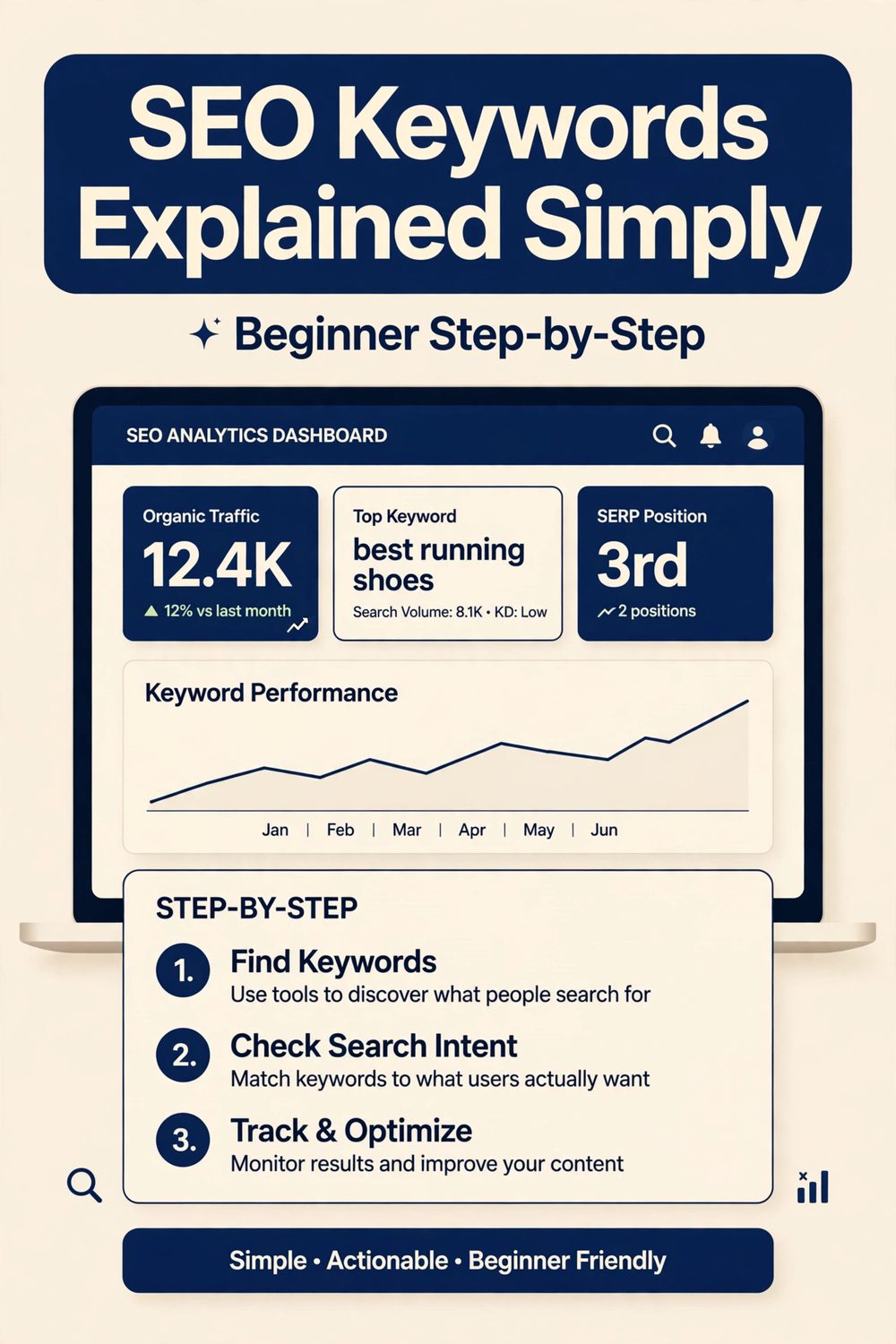
A 7-Day Keyword Research Plan
- Day 1: Brainstorm seed topics and questions.
- Day 2: Collect suggestions from autocomplete and related searches.
- Day 3: Check search intent for 20 keywords.
- Day 4: Evaluate competition and shortlist 10.
- Day 5: Score and choose your top 5.
- Day 6: Group them into clusters.
- Day 7: Create a one-month content calendar.
Money Basics
If your content earns income, track it and plan for taxes. Consult a qualified professional. The Smart Mom’s Complete Guide to Money offers friendly guidance for managing new income streams.
A Worked Example of Keyword Research
Let’s walk through a quick example for a blogger writing about budgeting for moms.
- Seed keyword: “family budget.”
- Autocomplete suggestions: “family budget template,” “family budget for beginners,” “family budget on one income.”
- Intent check: Searching “family budget template” shows templates and spreadsheets, so a free printable plus a short guide fits.
- Competition check: The top results include big finance sites, but a few smaller blogs rank for “family budget on one income.”
- Decision: Target “family budget on one income” with a detailed, example-rich post, and plan a template post later.
Notice how a small shift from a broad phrase to a specific long-tail phrase makes ranking more realistic. This is exactly how beginners can compete against much larger sites.
Common Keyword Research Challenges
- Not enough data from free tools: Use related searches, community questions, and your own analytics to fill gaps.
- Too many ideas: Score and prioritize, then publish a few strong posts before expanding.
- Keywords with unclear intent: Search them and read the top results, and skip them if the intent doesn’t match what you can offer.
- Seasonal topics: Publish early so your post has time to rank before the peak season.
- Overlapping posts: Avoid creating two posts targeting the same keyword, and merge or update instead.
Mistakes to Avoid
- Targeting very broad keywords.
- Ignoring search intent.
- Chasing only high volume.
- Keyword stuffing.
- Not updating content.
- Expecting overnight rankings.
Quick Answers About Keyword Research
Do I need paid tools? No. Many beginners start with free methods and add tools later.
How many keywords per post? One primary keyword and a handful of related phrases is enough.
How long until I see results? Many new sites take several months, depending on competition and content quality.
Is keyword research still useful with AI search? Yes. Understanding how people phrase questions helps you create content that answers them clearly.
Write for People Who Are Already Searching
Keyword research for beginners is about listening to your audience. Brainstorm seed topics, explore real search suggestions, check intent, and choose topics you can serve better than what exists.
This week, brainstorm 20 questions your audience asks and check the top results for five of them. Trust me, once you see your first post rank for a phrase you chose on purpose, you’ll never write blindly again. Let’s start researching!










Leave a Reply