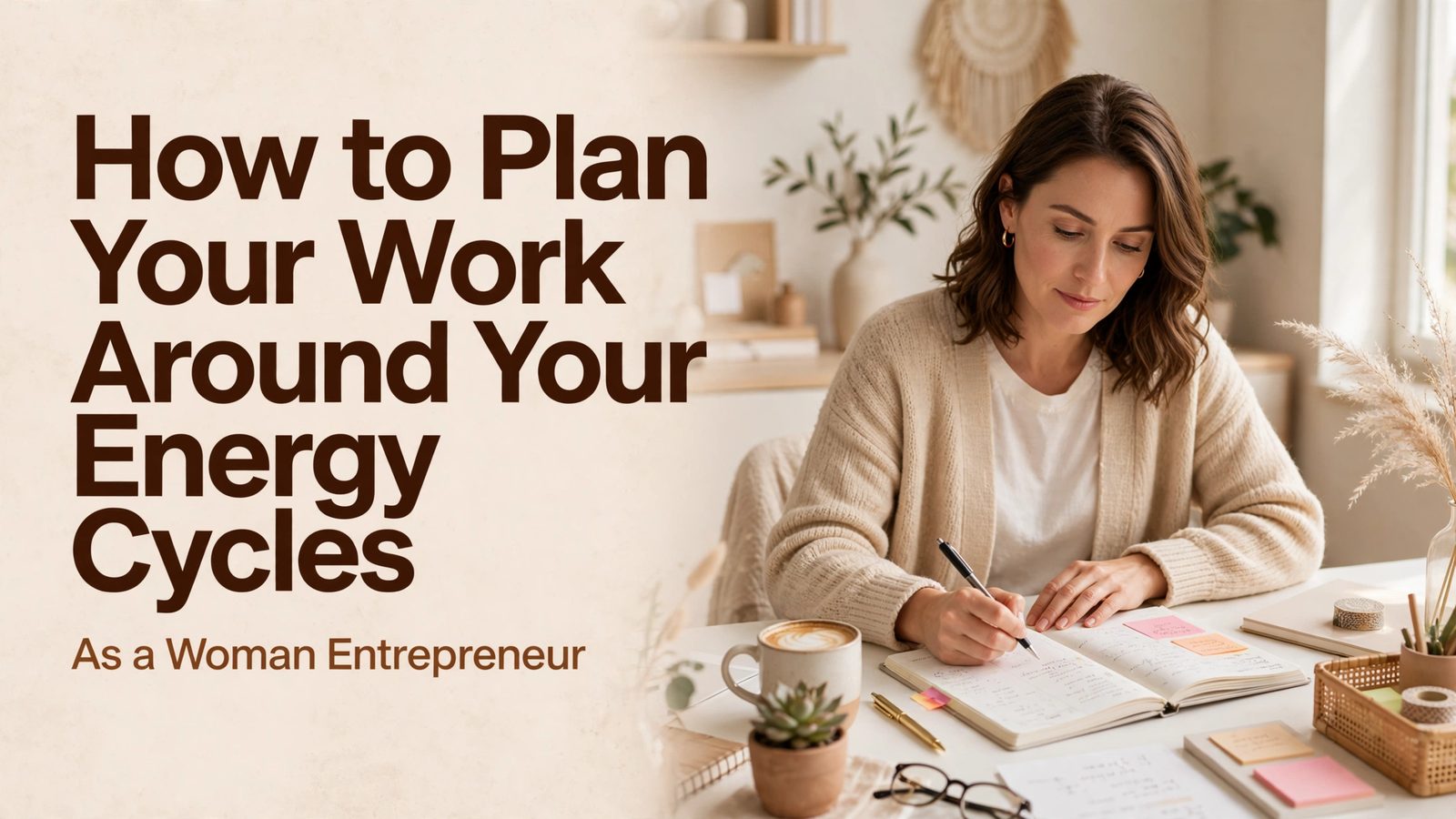
For years, I tried to run my business as though every day looked the same. Monday to Friday, same schedule, same output, same expectations. Some weeks I felt unstoppable, and other weeks I could barely focus, then criticized myself for being “lazy.” One day I started jotting short notes about my energy, mood, and focus alongside my to-do list. Within two months, I noticed patterns that I’d never seen before, and everything about my planning changed.
If you want to plan your work around your energy cycles, you’re choosing a gentler, more realistic way to run a business. Energy isn’t constant. It shifts with sleep, stress, nutrition, seasons of life, and, for many women, the menstrual cycle or other hormonal stages.
In this guide, I’ll walk you through how to notice your own patterns, match tasks to energy levels, build flexibility into your schedule, and rest without guilt.
What “Energy-Based Planning” Means
Energy-based planning means arranging your work according to when you naturally feel more or less focused, social, creative, or analytical, rather than forcing the same output every day.
Why it can help:
- Better focus. You do demanding tasks when you feel sharp.
- Less guilt. You expect natural variations.
- More sustainable pace. You avoid constant overextension.
- Better quality. Work aligns with your strengths in different moments.
The honest part: Cycle-based productivity advice online is often oversimplified, and individual patterns vary widely. Treat any general framework as a starting hypothesis, then rely on your own data and your healthcare provider’s guidance. Not everyone has a predictable cycle, and that’s perfectly valid.

Step 1: Track Your Patterns Gently
You don’t need an app or complicated chart. A simple daily note works.
What to Track (for 6 to 8 Weeks)
- Energy level (1 to 5).
- Focus (1 to 5).
- Mood in a word or two.
- Sleep quality (1 to 5).
- Tasks that felt easy or hard.
- Cycle day or life-stage notes, if you wish to track them.
- Stress and life events.
Tips
- Keep it to one minute a day.
- Track what’s useful to you, not everything.
- Look for patterns after several weeks, not days.
- Remember sleep, stress, and health influence energy as much as anything.
Many people use a notes app, a paper planner, or a habit tracker.

Step 2: Identify Your High, Medium, and Low-Energy Windows
After a few weeks, look for trends.
- High-energy windows: Times when you feel clear, motivated, and confident.
- Medium-energy windows: Steady, reliable, and good for routine tasks.
- Low-energy windows: Times when you need more rest, gentleness, and low-pressure work.
These may follow your daily rhythm (morning versus afternoon) as well as weekly or monthly patterns.
Step 3: Sort Your Tasks by Energy Type
Group tasks by the energy they require.
High-Focus or High-Visibility Tasks
- Writing, strategy, and big decisions.
- Filming videos and presenting.
- Sales calls and pitches.
- Launching and promoting.
Medium-Energy Tasks
- Client work with clear steps.
- Content production using templates.
- Email and customer service.
Low-Energy Tasks
- Admin and bookkeeping.
- Organizing files.
- Light research and reading.
- Planning and reflection.
- Rest and recovery.
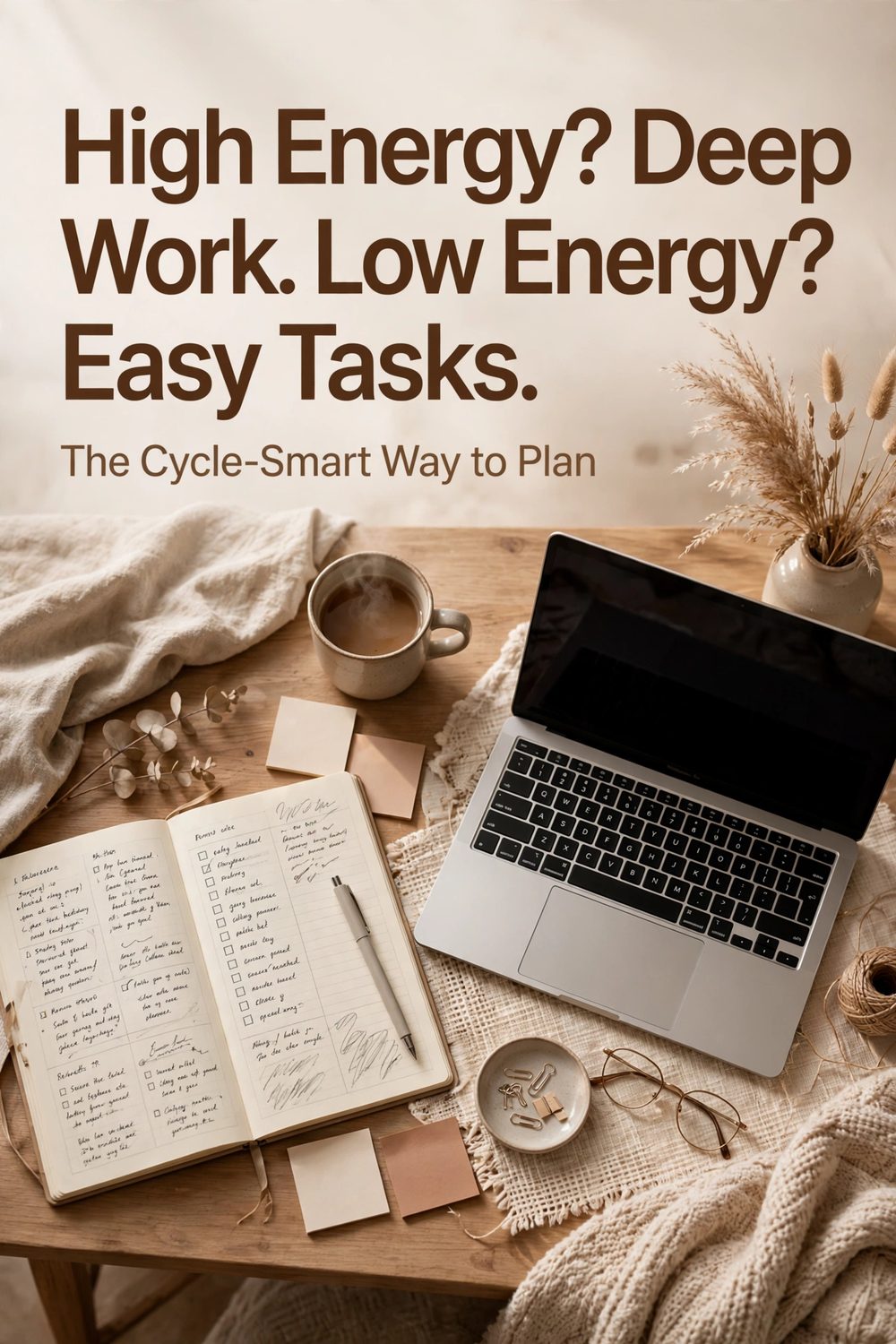
Create a simple list under each heading so you always know what fits your current energy.
Step 4: Build a Flexible Weekly and Monthly Plan
Instead of a rigid schedule, use a flexible framework.
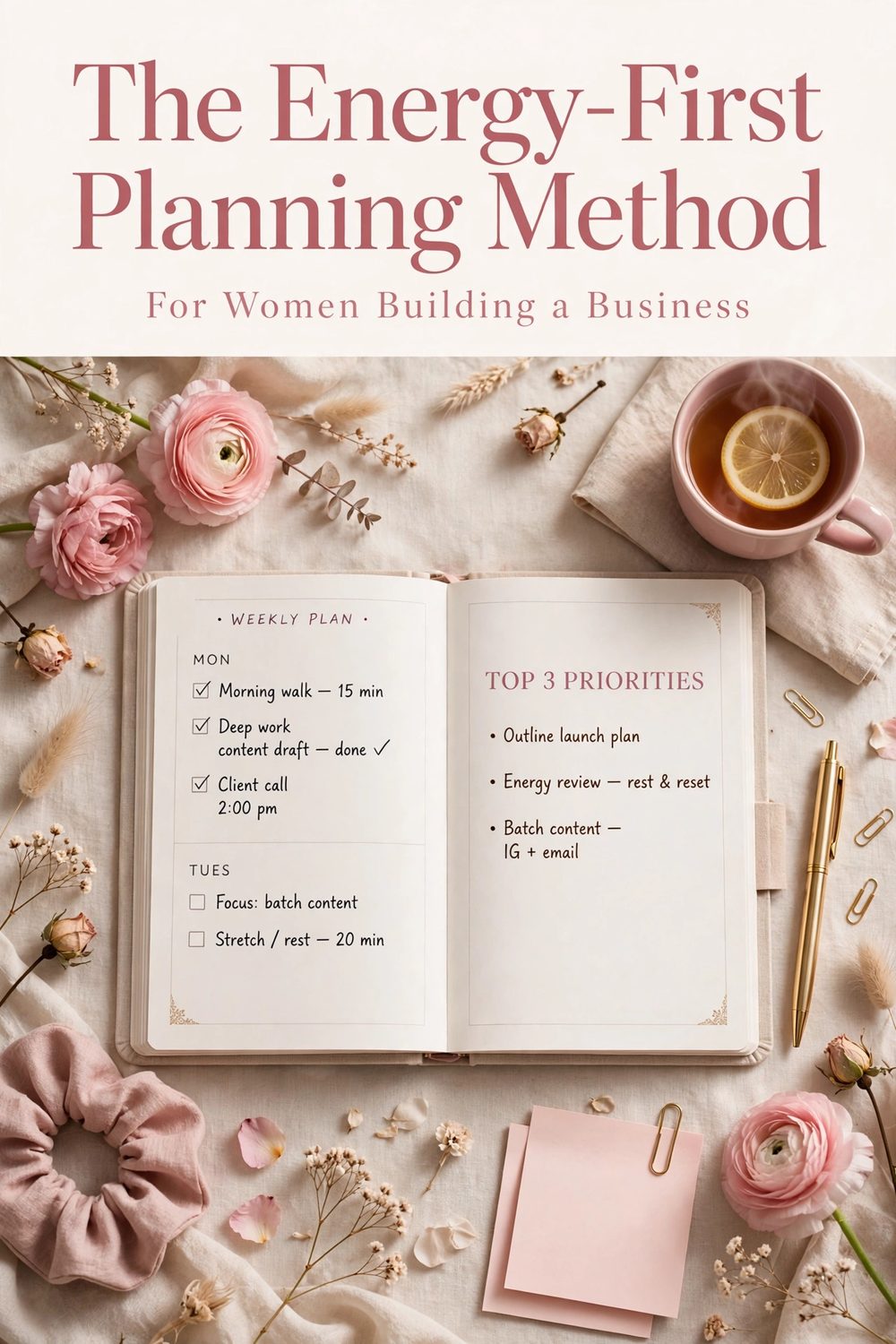
A Sample Weekly Template
- Monday: Planning and priorities.
- Tuesday and Wednesday: Deep work in your best windows.
- Thursday: Meetings, outreach, and visibility tasks.
- Friday: Admin, review, and light tasks.
- Weekend: Rest and family time.
A Sample Monthly Approach
- Higher-energy stretches: Schedule launches, filming, big pitches, and heavy creative work.
- Medium stretches: Focus on delivery, systems, and consistent output.
- Lower-energy stretches: Lean on batching you did earlier, plan, tidy, and rest.
If you plan ahead and batch content during good weeks, low-energy weeks become easier. The Digital Marketing Playbook offers beginner-friendly strategies, and the same planning ideas help you stay consistent.
Step 5: Batch and Automate Ahead of Time
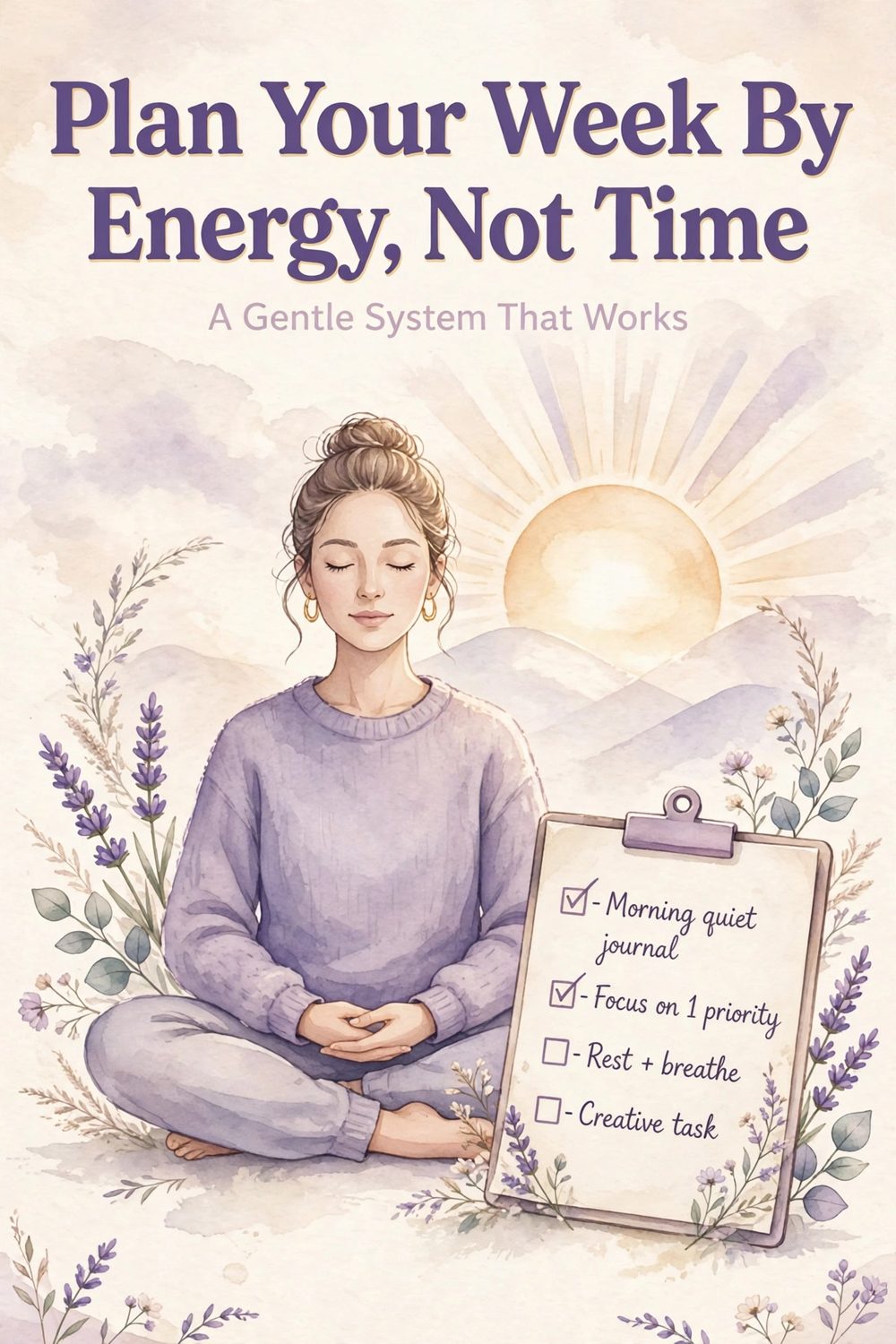
- Create content in batches during higher-energy windows.
- Schedule emails and posts in advance.
- Use templates and checklists.
- Automate repetitive tasks.
- Build buffers into deadlines.
AI can help with outlines, drafts, and planning so low-energy days require less from you. The Claude Advantage shows how to prompt effectively, and The AI-Powered Solopreneur offers simple systems for lean, flexible work.
Step 6: Communicate and Set Boundaries
- Tell clients your availability and response times.
- Build buffer days into project timelines.
- Avoid scheduling big calls on days you know tend to be harder, when possible.
- Ask family and friends for support during demanding weeks.
- Say no to projects that don’t fit your capacity.
You don’t have to share personal health details with clients. Simply set professional, clear expectations.
Step 7: Support Your Body Gently
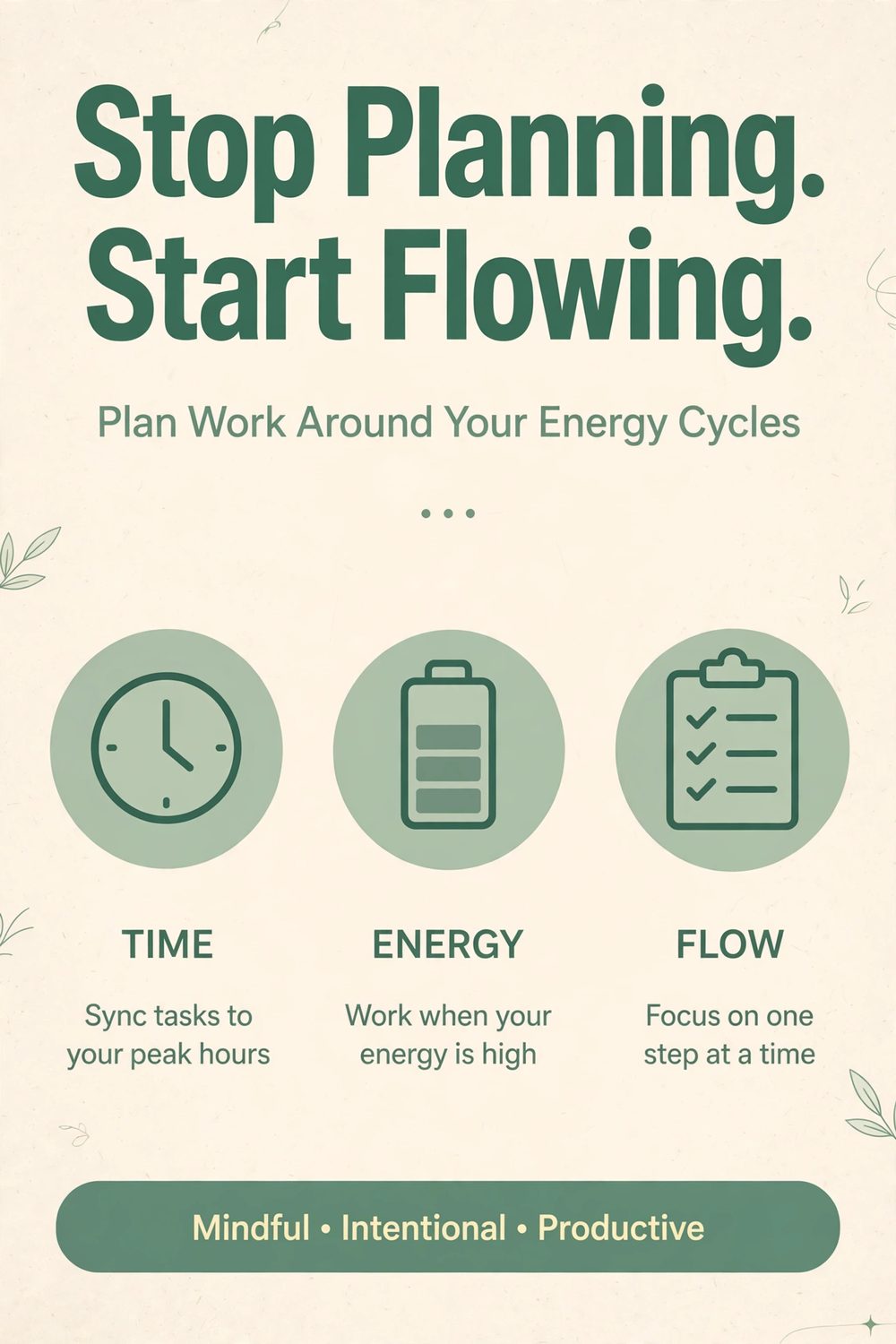
Energy depends on basic care.
- Prioritize consistent sleep.
- Eat regular, nourishing meals.
- Stay hydrated.
- Move gently most days.
- Get daylight.
- Take breaks.
- Reduce unnecessary stress.
If you’d like gentle, educational guidance on supporting your body and energy through lifestyle habits, The Hormone Balance Blueprint is one resource to explore, but it isn’t a substitute for medical advice. For concerns such as very painful or irregular periods, persistent fatigue, mood changes, or symptoms of perimenopause or menopause, please consult a healthcare professional. And Glow Up Your Life can inspire routines that help you feel your best.

Step 8: Rest Without Guilt
Rest isn’t a reward. It’s part of the work.
- Schedule rest the way you schedule meetings.
- Choose restorative activities that truly refresh you.
- Let go of “shoulds.”
- Celebrate what you did accomplish.
- Remember that sustainable pacing builds long-term success.
Step 9: Review and Adjust Monthly
- Look back at your notes.
- Ask what worked and what didn’t.
- Adjust your task sorting and schedule.
- Note changes during life events, seasons, or stress.
Patterns can shift with sleep, stress, health, and life stages, so treat your plan as a living document.

Money and Planning Basics
Predictable income reduces stress, which supports energy.
- Track income and expenses.
- Build an emergency fund.
- Set aside money for taxes. Consult a qualified professional.
The Smart Mom’s Complete Guide to Money offers friendly guidance for building stability. And for flexible work ideas, The Stay-At-Home Mom’s Guide to Making Money Online offers beginner-friendly options that fit real life.
A Sample Energy-Aware Week
- High-energy day: Write a blog post, record videos, and pitch two prospects.
- Medium-energy day: Complete client work and schedule social posts.
- Low-energy day: Update spreadsheets, tidy your inbox, plan next week, and take a long walk.
Notice that every day includes something meaningful, but the type of work changes with energy.
How to Handle Deadlines and Commitments With Variable Energy
Flexible planning doesn’t mean unreliable. These habits help you stay dependable:
- Build buffers into every deadline, adding a day or two beyond what you think you need.
- Front-load demanding work when you feel strong, and leave lighter tasks for later in the project.
- Break big deliverables into smaller milestones so no single day carries too much pressure.
- Keep an “emergency low-energy plan,” a short list of the minimum tasks that keep your business running during hard weeks.
- Communicate early if a timeline needs to shift, offering a clear new date.
Clients value predictability and honesty far more than perfection. When you plan with your energy in mind, you tend to deliver steadier work and feel better doing it.
Mistakes to Avoid
- Assuming one pattern fits everyone.
- Using planning to excuse avoiding hard tasks.
- Ignoring signs that need medical attention.
- Overpacking high-energy days.
- Skipping rest.
- Feeling guilty about natural variation.
Quick Answers About Energy-Based Planning
Do I need to track my menstrual cycle? No. You can track energy alone. Cycle tracking is optional and personal.
What if my energy is unpredictable? Track sleep, stress, and daily patterns, and build flexibility and buffers into your plans.
Is this scientifically proven? Individual patterns vary, and general claims are often oversimplified. Use this as a personal experiment, and consult a healthcare provider for health concerns.
Can I still meet deadlines? Yes. Planning ahead, batching, and building buffers help you meet commitments while respecting your energy.
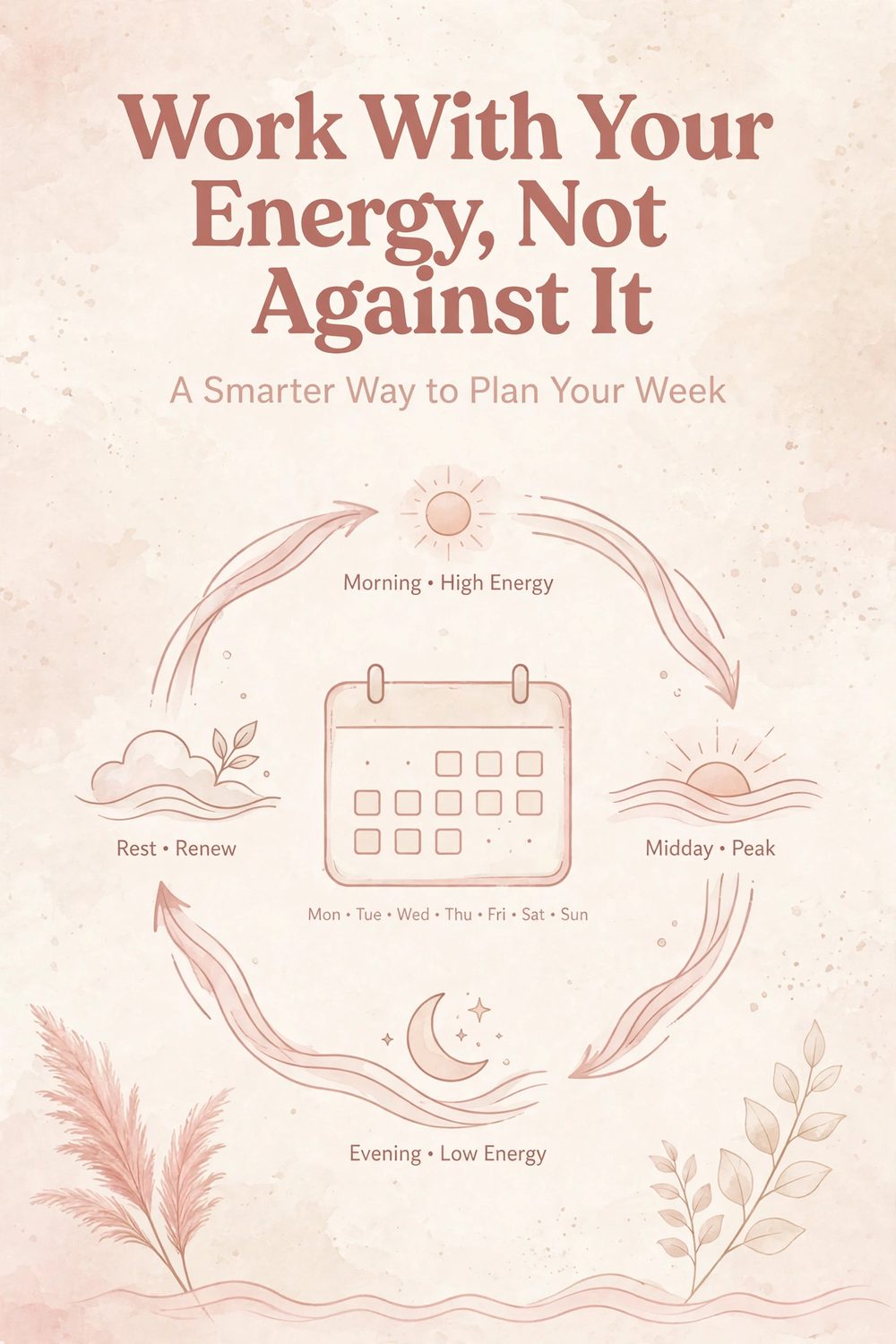
Work With Your Energy, Not Against It
Planning your work around your energy cycles is about curiosity and kindness. Notice your patterns, match tasks to energy, build flexibility, and give yourself permission to rest.
For the next four weeks, jot down a quick energy note each day and look for patterns. Trust me, once you start planning with your energy instead of fighting it, your business and your wellbeing both feel lighter. Be gentle with yourself!