

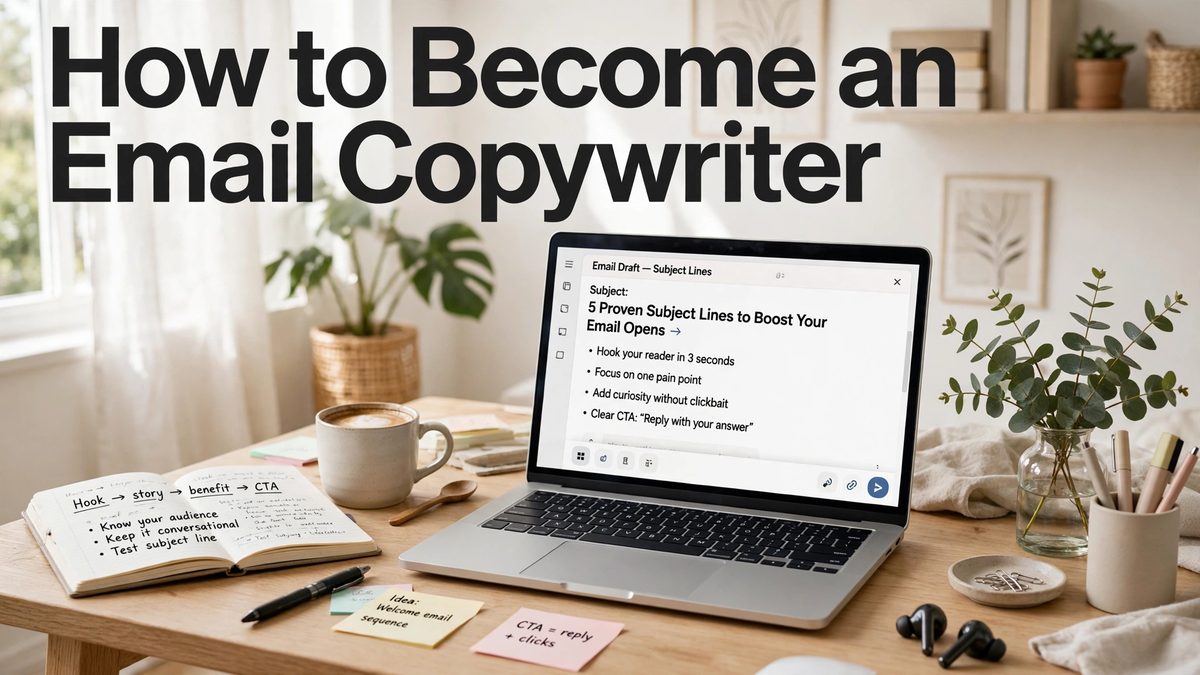
I once wrote a welcome email for a small coaching business that took me about an hour. The client sent it to her list, and within a day she told me three people had replied saying, “This sounds exactly like you!” and two had booked calls. That tiny email earned her more than the $75 she’d paid me, and it made me realize how powerful a few well-chosen sentences can be.
If you’re curious about how to become an email copywriter, you’re looking at a skill that businesses value highly. Almost every company with customers needs emails: welcome sequences, newsletters, product launches, cart reminders, and re-engagement campaigns.
In this guide, I’ll walk you through the skills, formulas, portfolio steps, pricing, and client-finding strategies that help beginners build a profitable email copywriting service.
What Does an Email Copywriter Do?
An email copywriter writes emails that inform, build relationships, and encourage readers to take action.
Common Projects
- Welcome sequences that introduce a brand and build trust.
- Newsletters with value and gentle selling.
- Product launch campaigns.
- Abandoned cart and post-purchase emails.
- Nurture sequences for leads.
- Re-engagement or win-back campaigns.
- Promotional and seasonal emails.
- Subject lines and preview text.
Why it’s a strong niche:
- Direct link to revenue. Email results are measurable, so good work stands out.
- Recurring work. Brands send emails constantly.
- Remote-friendly. You can work from anywhere.
- Scalable skills. Email copy connects to launches, funnels, and strategy.
The honest part: Results depend on the offer, list quality, and timing, not just the writing. Be careful about promising specific outcomes, and focus on clarity, strategy, and testing.
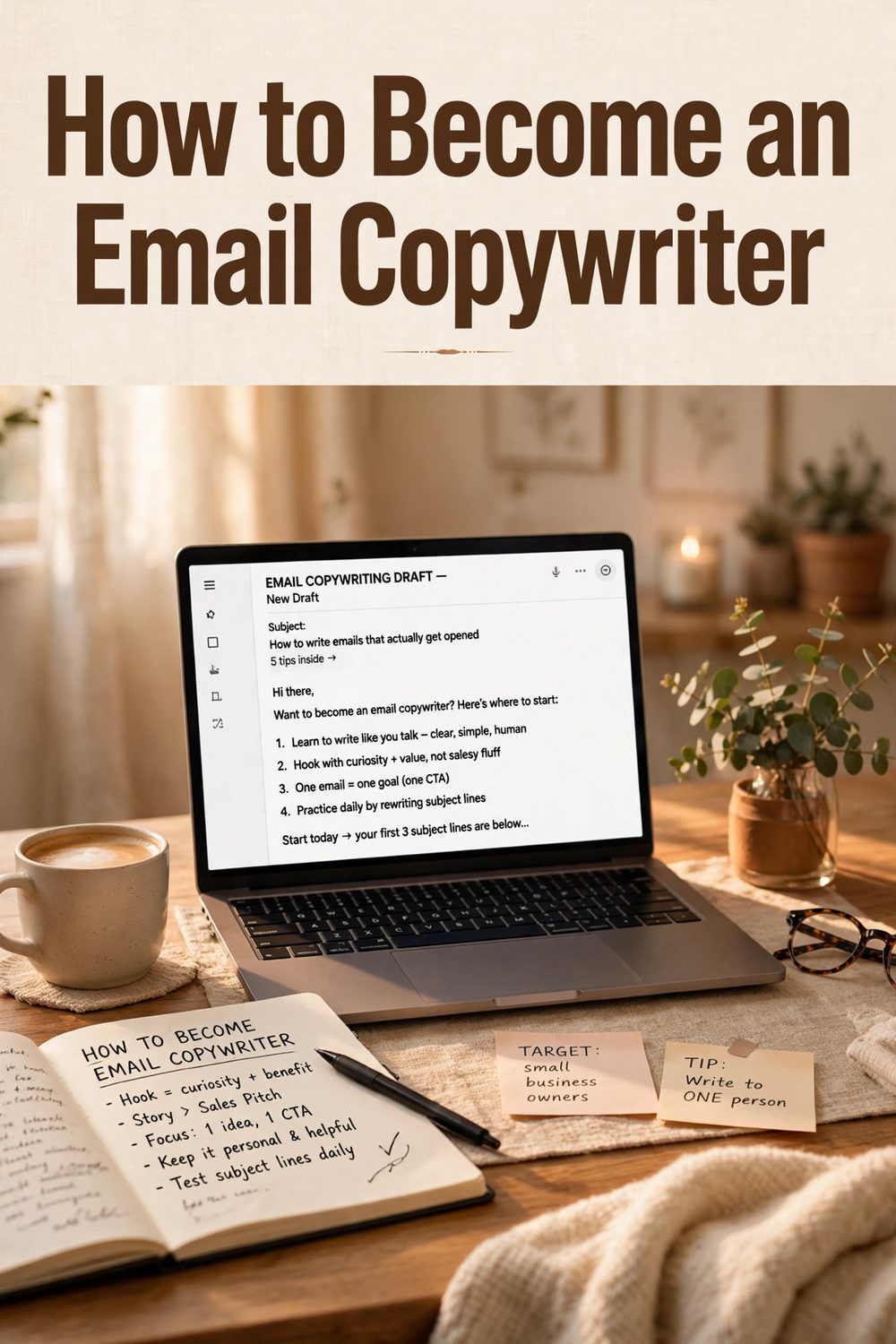
Step 1: Learn the Fundamentals of Email Copy
Core Principles
- Know your reader. Understand their problems, desires, and objections.
- One email, one goal. Each email should have a single clear action.
- Lead with value or curiosity.
- Write conversationally. Emails are one-to-one messages.
- Keep it scannable with short paragraphs and clear calls to action.
- Respect the reader’s time and inbox.
Useful Formulas
- AIDA: Attention, Interest, Desire, Action.
- PAS: Problem, Agitate, Solution.
- Story, lesson, offer: Share a short story, extract a lesson, and connect it to the offer.
- Before, after, bridge: Describe life before, life after, and how to get there.
Study great emails by subscribing to newsletters you admire and saving examples in a swipe file. Note what makes you open, read, and click.
Step 2: Master Subject Lines and Preview Text
Your email can’t work if no one opens it.
- Be clear before clever.
- Create curiosity without misleading.
- Use specifics, like numbers or timeframes.
- Keep it short, especially for mobile.
- Test variations and track open rates, understanding that privacy features can affect open-rate accuracy.
- Use preview text to add context, not repeat the subject.
Examples: “The mistake I made in my first launch,” “Your 3-step welcome plan,” or “Quick question about your goals.”

Step 3: Understand Email Strategy and Basics
Beyond writing, clients value strategic thinking.
- Segmentation: Sending different emails to different groups.
- Automation: Triggered sequences like welcome and cart emails.
- Deliverability: Avoiding spam triggers and respecting list health.
- Compliance: Following laws such as CAN-SPAM, GDPR, and local rules.
- Metrics: Open rates, click rates, conversions, and unsubscribes.
- Testing: Subject lines, calls to action, and send times.
Learn popular email platforms like MailerLite, Kit, Mailchimp, and Klaviyo through free tutorials.
The Digital Marketing Playbook offers a beginner-friendly foundation in marketing strategies that support email work.
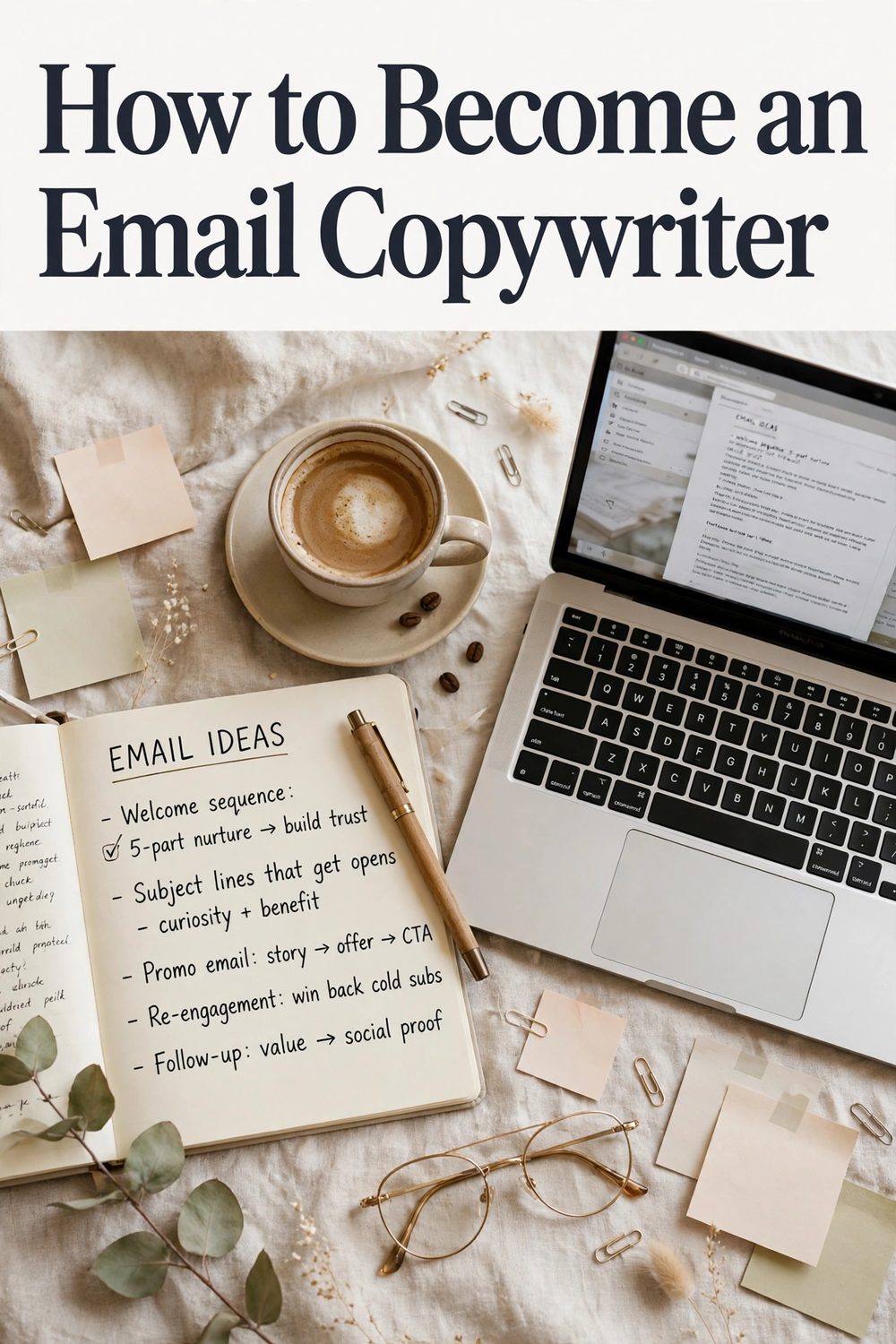
Step 4: Use AI as Your Drafting Partner
AI can speed up brainstorming and first drafts, but emails must sound human.
- Generate subject line options and choose the best.
- Draft sequences from a clear brief, then rewrite in the brand’s voice.
- Summarize interviews or notes into key messaging points.
- Check clarity and tone.
Never paste confidential client data into tools you’re not authorized to use, and always edit heavily. The Claude Advantage shows how to prompt effectively and maintain a strong voice, and The AI-Powered Solopreneur offers simple systems for running a lean freelance business.
Step 5: Build a Portfolio With No Clients
- Write sample sequences for fictional or real brands, such as a three-email welcome series.
- Rewrite existing emails you’ve received and explain your improvements.
- Start your own newsletter to show your voice and results.
- Offer a pilot project for a small business in exchange for a testimonial.
- Create short case studies: goal, approach, and results, with permission.
Clearly label samples as samples when they aren’t from real clients.
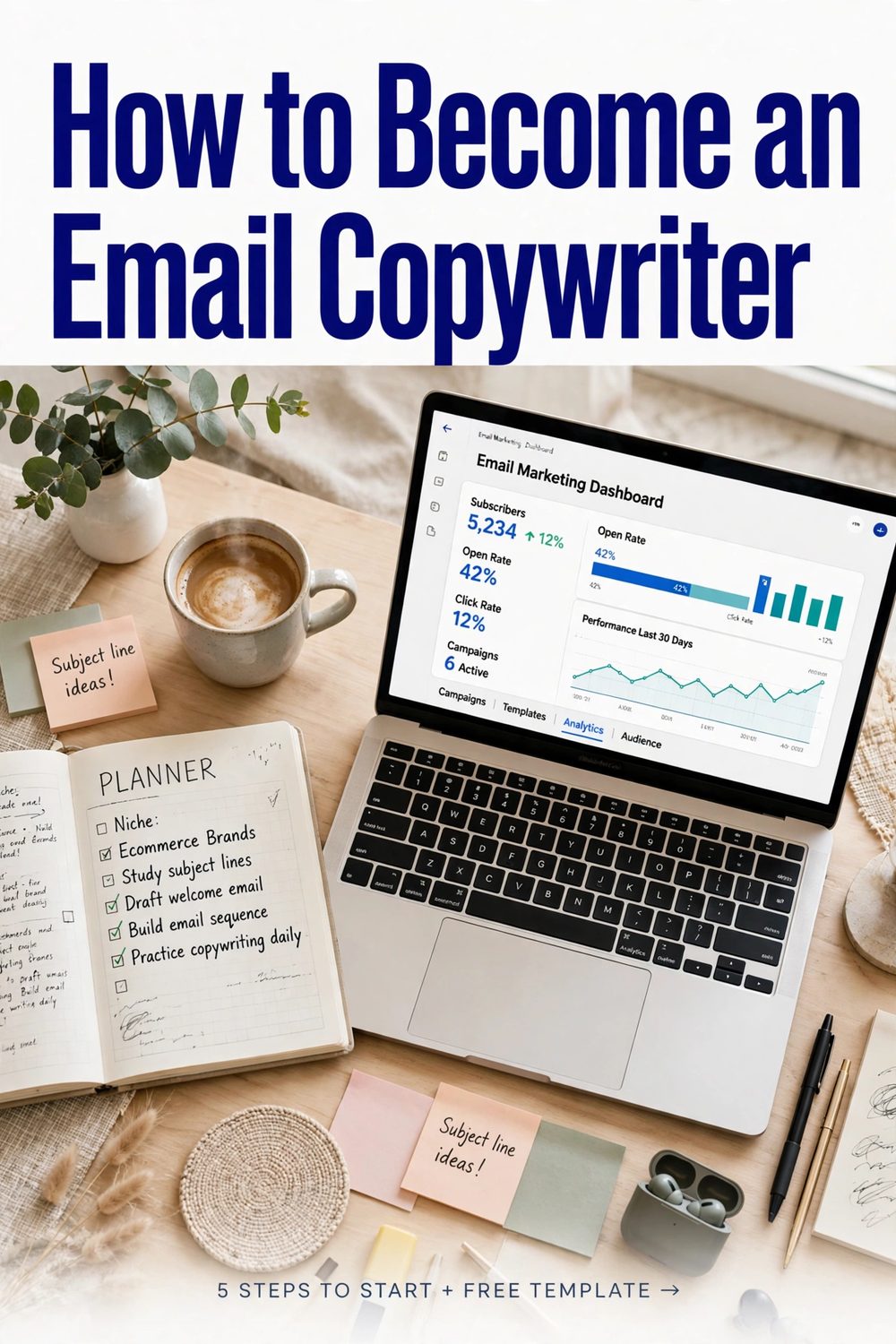
Step 6: Set Your Services and Rates
Sample Offers
- Welcome sequence: 3 to 5 emails.
- Launch email sequence: 5 to 10 emails.
- Monthly newsletter writing: 2 to 4 emails per month.
- Email audit and strategy: Review and recommendations.
- Retainer: Ongoing email creation plus reporting.
Pricing Tips
- Research market rates.
- Charge per project or monthly retainer instead of by the hour.
- Include a set number of revisions.
- Increase prices as you build proof.
- Don’t undercharge. Emails can drive meaningful revenue for clients.

Step 7: Find Clients
- Your network and social media.
- LinkedIn: Share email tips and connect with founders, coaches, and marketers.
- Online communities of creators and business owners, following rules.
- Direct outreach: Subscribe to a business’s emails, spot an improvement, and pitch politely.
- Agencies and marketing consultants who need freelance writers.
- Freelance platforms.
A Simple Pitch
- Mention a specific email or sequence you noticed.
- Point out one clear improvement, such as a stronger subject line or call to action.
- Offer a small project or a short audit.
A trusted personal brand helps you stand out. The Personal Brand Blueprint can help you shape a professional presence, and The Stay-At-Home Mom’s Guide to Making Money Online offers flexible ideas that pair well with copywriting.
Step 8: Deliver Great Work and Grow
- Start with a clear brief: audience, goals, offers, tone, and past results.
- Share outlines before full drafts for big projects.
- Deliver on time and welcome feedback.
- Review results with clients and suggest improvements.
- Ask for testimonials and referrals.
- Specialize in a niche or type of email for higher rates.
A Sample 30-Day Starter Plan
- Week 1: Learn formulas, build a swipe file, and study subject lines.
- Week 2: Write three sample sequences and start your own newsletter.
- Week 3: Create a simple portfolio and a service page.
- Week 4: Send 20 pitches, offer one pilot project, and collect feedback.

Money and Professional Basics
- Use contracts for every project.
- Track income and expenses.
- Set aside money for taxes. Consult a qualified professional.
- Invoice promptly.
The Smart Mom’s Complete Guide to Money provides friendly guidance for managing variable freelance income.
Example: A Simple Welcome Sequence Structure
Seeing a structure makes the craft less mysterious. Here’s a five-email welcome sequence you could draft for a small coaching business:
- Email 1 (immediately): Deliver the freebie, welcome the subscriber, and set expectations for what’s coming.
- Email 2 (day 2): Share the founder’s story and why the business exists.
- Email 3 (day 4): Teach one quick, useful tip that creates a small win.
- Email 4 (day 6): Share a client story or testimonial that shows the transformation.
- Email 5 (day 8): Present the main offer with a clear call to action and answer common questions.
Each email has one goal, a conversational tone, and a single next step. When you can explain your structure to a client in plain language, they see you as a strategist, not just a writer.
Testing and Reporting Results
Clients love copywriters who care about outcomes. Build simple testing habits:
- Test one element at a time, such as subject lines or the call-to-action button text.
- Wait for enough data before drawing conclusions, since small lists produce noisy results.
- Track clicks and conversions, not just opens.
- Summarize learnings in a short monthly report.
- Recommend next steps, such as trying a new angle or shortening a sequence.
Even small insights, shared clearly, show clients that your work is thoughtful and measurable, which is exactly the reputation that earns retainers and referrals.
Mistakes to Avoid
- Writing for yourself instead of the reader.
- Packing multiple goals into one email.
- Overusing hype and urgency.
- Ignoring compliance rules.
- Promising guaranteed results.
- Skipping testing.
Quick Answers About Email Copywriting
Do I need experience? No, but strong samples help. Build them with practice projects.
How much can email copywriters earn? It varies widely by niche, skills, and results. Many beginners start modestly and raise rates with proof.
Is email still effective in 2027? Yes. Email remains a reliable way for businesses to reach and sell to their audience.
Can AI replace email copywriters? AI can draft, but strategy, brand voice, and understanding customers remain highly valuable.
Your Words Can Start Conversations
Becoming an email copywriter is about understanding people, writing clearly, and helping businesses build relationships that lead to sales. Practice the formulas, build samples, and pitch with confidence.
This week, subscribe to five brands you admire and write a three-email welcome sequence for a fictional shop. Trust me, once you see someone reply to an email you wrote, you’ll feel the magic of this craft. Let’s start writing!










Leave a Reply