


When you’re running a business, it’s easy to stay in constant motion: answering messages, filling orders, posting on social media, solving problems. At the end of the month, you’re tired, but are you actually growing?
Many business owners can’t answer that question because they never stop to look at their numbers. They work hard but guess at the results.
A monthly business review changes that. Once a month, you step back, look at the data, and decide what to keep, change, or stop. It takes about an hour, and it can transform how you run your business.
In this guide, I’ll walk you through exactly how to do it, what to track, and how to turn your findings into a clear plan for next month.
Why You Need a Monthly Review
Here’s what happens when you track your business consistently:
- You see what’s working. Maybe one product brings in half your revenue while another barely sells.
- You catch problems early. A drop in sales or a rise in expenses is easier to fix when you notice it quickly.
- You make confident decisions. Data replaces guesswork.
- You stay motivated. Seeing progress, even small, feels fantastic.
- You plan better. Last month’s results shape next month’s strategy.
Without a review, you’re driving with the windshield painted black.

What to Track Each Month
You don’t need complicated software or dozens of metrics. Start with these essentials.
1. Revenue
How much money came in? Break it down by product, service, or sales channel if you can. This shows your best sellers and which channels bring results.
2. Expenses
What did you spend on supplies, software, shipping, advertising, fees, and other costs? Knowing where your money goes helps you find savings. Keeping receipts organized makes this far easier, and the Receipt Journal gives you a simple place to log purchases as they happen instead of hunting for paper slips at month-end.

3. Profit
Revenue minus expenses equals profit. This is the number that really tells you how your business is doing. A busy month with low profit isn’t a success.
4. Number of Orders or Clients
How many sales or clients did you have? Also track average order value if you sell products. Selling the same number of items at a higher price can mean more profit with less work.
5. Sales Goals vs. Actual Results
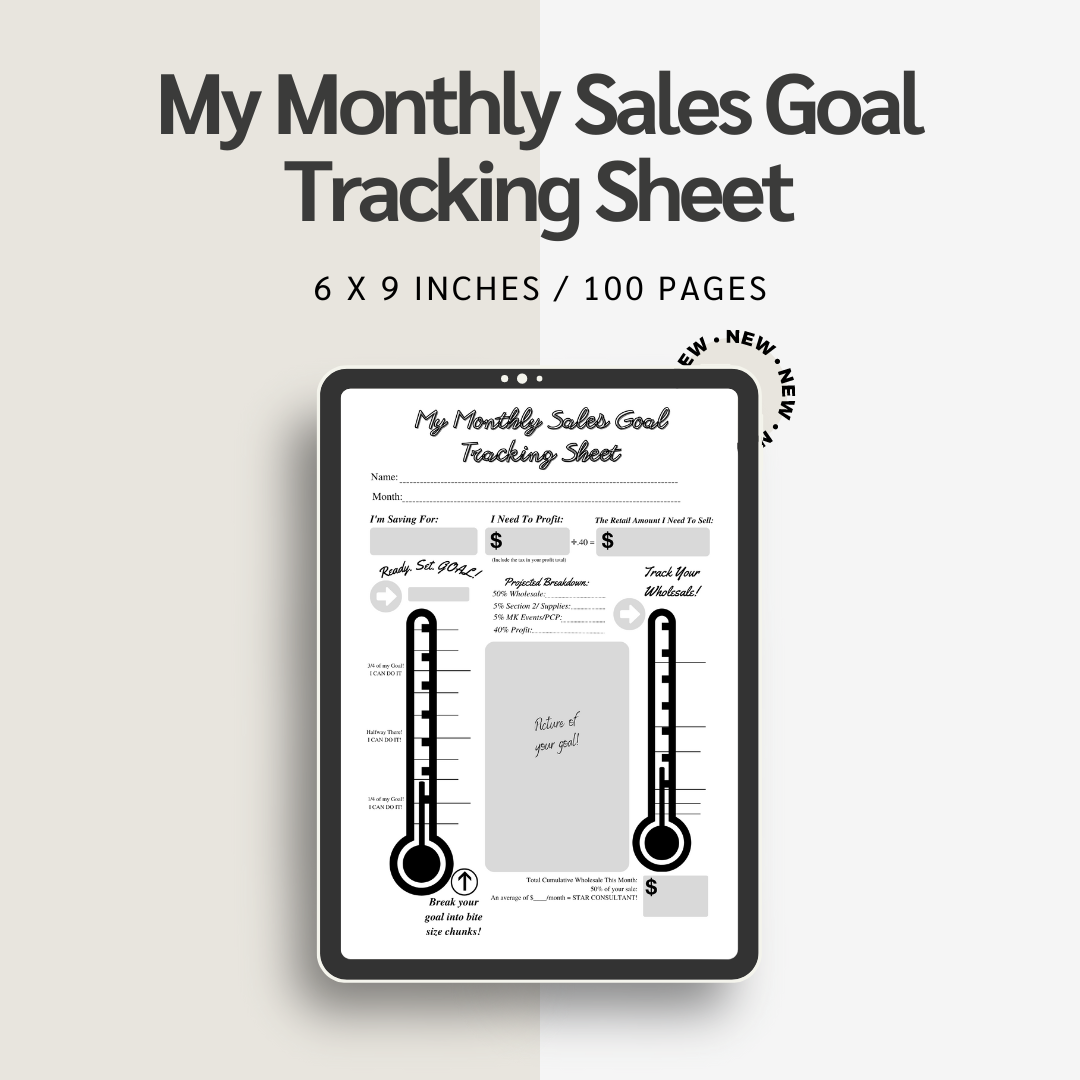
Did you hit your target? By how much did you miss or exceed it? The My Monthly Sales Goal Tracking Sheet makes this comparison easy by showing your targets and your results side by side.
6. Marketing Results
Track what you did (posts, emails, ads, promotions) and what happened (traffic, sign-ups, sales). Over time you’ll see which efforts pay off.
7. Time Spent
Where did your hours go? Sometimes the tasks that eat the most time produce the least income. Awareness is the first step toward fixing that.
8. Wins and Lessons
Numbers don’t tell the whole story. Write down your wins (a new customer, a great review, a milestone) and lessons (what you’d do differently).
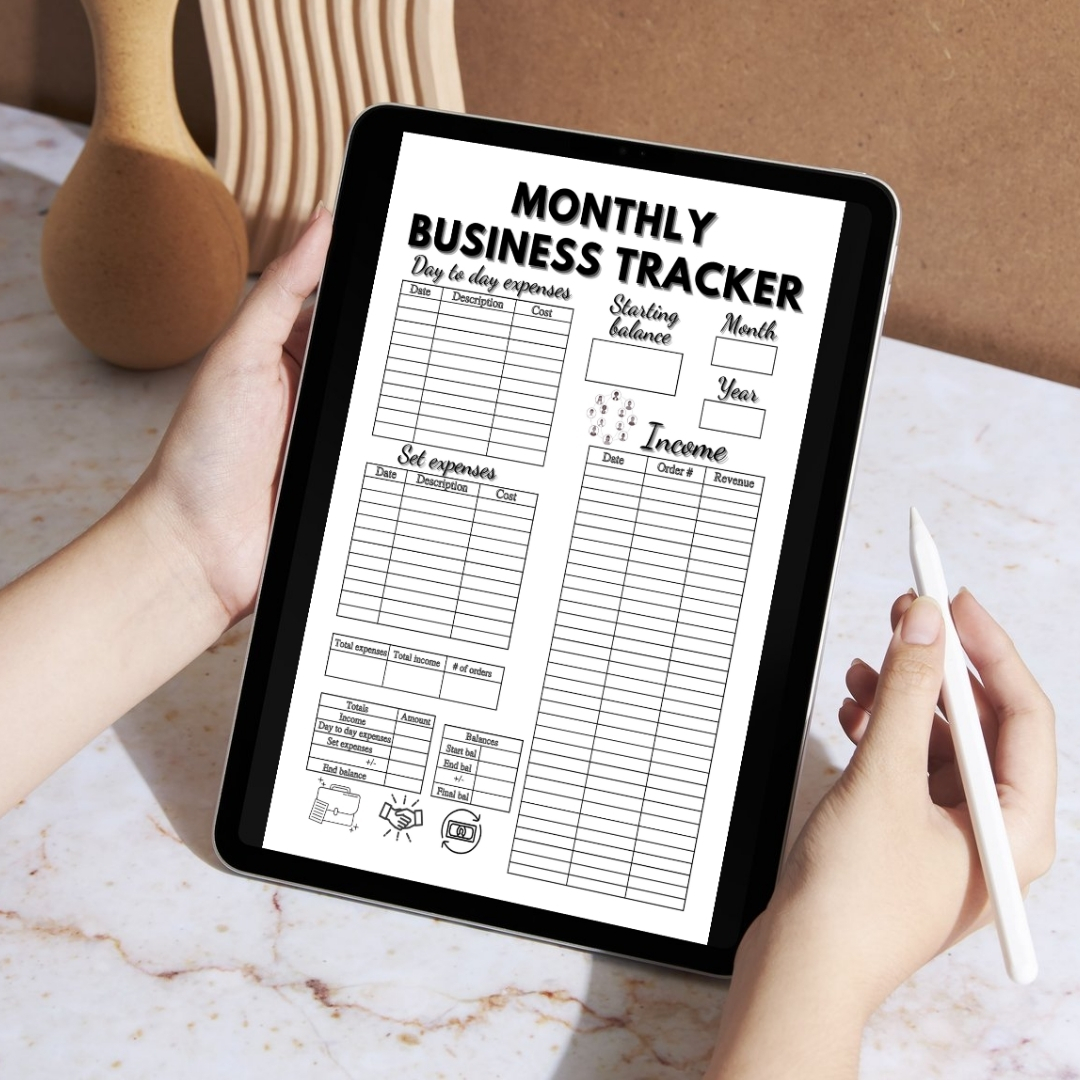
A tool like the Monthly Business Tracker pulls many of these pieces into one organized page, so your monthly review doesn’t require hunting through spreadsheets and scraps of paper.
How to Run Your Monthly Review: Step by Step
Block out 60-90 minutes on the last day of the month or the first day of the next. Treat it like an important appointment with your business.
Step 1: Gather your data (15 minutes)
Pull together:
- Sales reports from your shop or invoicing tool
- Bank and payment processor statements
- Receipts and expense records
- Social media or website stats
- Notes from your planner
Enter the numbers into your tracker. If you’ve kept up with it daily or weekly, this step goes quickly.
Step 2: Calculate the key numbers (10 minutes)
Total your revenue, expenses, and profit. Compare them to last month and to your goal. Ask:
- Did revenue go up or down? By how much?
- Which expenses grew?
- What is my profit margin?
Step 3: Spot patterns (15 minutes)
Look beyond the totals:
- What was my best-selling product or service?
- Which week or day had the most sales?
- Which marketing efforts correlated with spikes?
- What slowed me down?
Draw conclusions. For example: “My custom orders sell best when I post a behind-the-scenes video,” or “Shipping costs are eating into profit on small orders.”

Step 4: Celebrate your wins (5 minutes)
Don’t skip this! Write down everything that went well, even small things. Business ownership can feel like a never-ending to-do list, and acknowledging progress keeps you energized.
Step 5: Identify challenges (10 minutes)
What didn’t go as planned? Be honest but not harsh. Treat problems as puzzles to solve, not proof that you’re failing. For each challenge, ask: “What’s one change that could improve this?”
Step 6: Decide what to start, stop, and continue (10 minutes)
This simple framework brings clarity:
- Start: What new action should I try?
- Stop: What isn’t working and should be dropped?
- Continue: What’s working and deserves more attention?
You might decide to start an email newsletter, stop offering a low-margin product, and continue posting on the platform that brings customers.
Step 7: Set next month’s goals (15 minutes)
Choose three main targets: a revenue goal, a growth goal, and a systems or personal goal. Keep them specific and realistic. Then break them into weekly actions.
The Top 3 Main Goals Right Now Journal is a good partner here, helping you narrow down to the priorities that will make the biggest difference.

Step 8: Schedule the work (10 minutes)
Put your actions on the calendar. Goals without scheduled steps rarely happen. Use your planner, or the Work Day Organizer, to assign tasks to specific days and times.

Setting Realistic Sales Goals
If you’re unsure how to set a target, try working backward:
- Pick a revenue goal. Say $3,000 for the month.
- Determine your average sale. Suppose it’s $30.
- Divide. $3,000 ÷ $30 = 100 sales.
- Break it down. That’s about 25 sales per week, or 3-4 per day.
Now ask: How many visitors, inquiries, or leads do I need to get those sales? This gives you clear activity goals, such as posting daily or sending ten outreach messages.
Track progress weekly so you can course-correct mid-month instead of waiting until it’s over.
Keeping Your Orders Organized
A smooth order process makes tracking much easier. If you sell customized items, use consistent forms so you capture every detail. Our Order Form Journal helps you keep customer information, product specifics, and deadlines in one place, which makes your monthly numbers easier to verify.

Common Monthly Review Mistakes
Skipping the review when things are busy. That’s precisely when you need it.
Only looking at revenue. Profit and time matter just as much.
Not tracking expenses consistently. Small purchases add up. Log them as they happen.
Collecting data but never acting. Every review should end with at least one change.
Comparing yourself to others. Compare this month with your last month, not someone else’s highlight reel.
Making it too complicated. A simple tracker you use beats a fancy system you ignore.

Monthly Review Questions to Ask Yourself
- What was my biggest win this month?
- What generated the most revenue?
- Where did I waste time or money?
- What customers or clients were my favorites, and why?
- What did I learn?
- What is one thing I can do next month to make things easier?
- Am I on track for my quarterly and yearly goals?
A Simple Monthly Review Checklist
[ ] Collect sales and expense data
[ ] Record numbers in the tracker
[ ] Calculate revenue, expenses, and profit
[ ] Compare against goals and last month
[ ] Identify patterns and trends
[ ] List wins and challenges
[ ] Decide what to start, stop, and continue
[ ] Set next month’s top three goals
[ ] Schedule the first action steps
Make It a Habit
Consistency makes your review powerful. Choose a recurring date, add it to your calendar, and protect it. Make it enjoyable: play your favorite music, grab a nice drink, and sit somewhere comfortable. If you enjoy curating playlists, the Monthly Playlist Journal is a fun way to create a “review day” soundtrack.

Over a few months, your records become a treasure trove. You’ll see seasonal trends, track your growth, and plan with far more confidence.
Final Thoughts
You don’t need to be a math whiz or an accountant to understand your business. You just need to look at your numbers regularly and use what you learn. A monthly business review turns hard work into smart work, because you stop guessing and start growing on purpose.
This month, block one hour, gather your numbers, and ask: What’s working, what isn’t, and what will I do next? Then do it again next month.
Ready to track your growth? Start with the Monthly Business Tracker, add the My Monthly Sales Goal Tracking Sheet, and keep your expenses organized with the Receipt Journal.
Learn how to run a simple monthly business review. Track sales, expenses, and goals with a monthly business tracker so you can make smarter decisions and grow with confidence.










Leave a Reply