


I still remember sitting on my kitchen floor at 10:47 p.m., laptop balanced on a laundry basket, the baby monitor crackling beside me. The dishes were piled in the sink, toys were scattered across the living room, and one thought kept looping in my head: There has to be a way to help our family financially without missing the years my kids need me most.
Little did I know that exhausted night would become the starting line for everything I do today. I didn’t have a business degree, a big audience, or a fancy setup. I had a secondhand laptop, about ninety minutes of free time a day, and a stubborn refusal to believe that “stay-at-home mom” and “woman with her own income” couldn’t live in the same sentence.
If you’re reading this, I bet you’re standing in a kitchen a lot like mine. Maybe you left your job to raise your kids. Maybe daycare would cost more than you’d earn. Maybe you simply miss having a little money that’s yours. Whatever your reason, let me say this first: you are not behind, and you are not too late.
In this comprehensive guide, I’ll walk you through exactly how to make money online as a stay-at-home mom in 2026. We’ll cover how to choose the right income path, build a schedule that survives nap-time chaos, land your first paying customer, handle the money side without panic, and dodge the mistakes that cost me months of progress. Grab a coffee (a hot one, if the universe allows) and let’s get into it.
Why Stay-at-Home Moms Are Built for Online Income
Here’s the truth nobody told me when I started: motherhood is basically a crash course in business skills. Boy, was I wrong about thinking I had “nothing to offer” online.
Think about what you do in a normal week:
- Project management: You coordinate school schedules, doctor visits, meals, and activities for an entire household.
- Negotiation: If you can convince a toddler to put on shoes, you can handle a client who wants a discount.
- Budgeting: You stretch every dollar and spot a good deal from a mile away.
- Communication: You explain complicated things to people who don’t want to listen. That’s called marketing.
- Resilience: You keep going on four hours of sleep. Most business owners can’t say that.
Before you read another word, grab a notebook and do this quick skill audit. Write down ten things you’re good at, including work experience, hobbies, and “mom skills.” Circle the three you enjoy most. That list becomes the raw material for your online income, and we’ll use it in the next step.
Pro tip: Don’t dismiss skills because they feel ordinary. The things that feel easy to you are exactly what other people pay to have done for them.

Step 1: Choose One Income Path (Not Five)
My biggest early mistake was signing up for everything at once. I started a blog on Monday, opened a print-on-demand shop on Tuesday, and bought a course on Wednesday. By Friday I’d earned nothing and felt completely scattered. Big mistake.
The fix is simple: pick one path and give it 90 days of focus. Here are the most beginner-friendly options for stay-at-home moms in 2026.
1. Freelance Services and Virtual Assistance
You sell your time and skills: admin support, customer service, email management, bookkeeping, writing, or design. This path usually has the fastest route to your first dollar because you don’t have to build a product first.
2. Digital Products
Planners, printables, templates, checklists, and ebooks. You create something once and sell it again and again. It takes longer to start earning than freelancing, but it’s the closest thing to “passive” income because the work doesn’t scale with your hours.
3. Blogging and Affiliate Marketing
You write helpful content, attract readers through Google or Pinterest, and earn commissions or sell your own offers. It’s a slow burn, but it builds an asset you own.
4. Print-on-Demand
You upload designs to products like mugs and shirts, and a partner handles printing and shipping. Low risk, but competitive, so you need a clear niche.
5. Online Tutoring or Coaching
If you have teaching experience, a language skill, or professional expertise, you can sell it by the hour or in packages.
6. Social Media Management
Small businesses desperately need consistent posting and don’t have time to do it. If you already live on your phone, you might get paid for it.
How to choose: Look at your circled skills from earlier and ask three questions. Which path uses a skill I already have? Which one fits the hours I realistically have? Which one can I start with less than $100? The path that wins all three is your starting point.

Step 2: Build a Mom-Proof Schedule
Let me be honest: the “wake up at 5 a.m. and crush your goals” advice wasn’t written for us. When my kids were little, my schedule changed daily, and anyone who tells you otherwise has never met a toddler with a fever.
What worked for me was the ninety-minute rule: ninety focused minutes a day beats five scattered hours a week. Here’s how to build yours.
- Find your three windows. Look at your day and spot the pockets: nap time, early morning before the house wakes up, quiet time after school, or the hour after bedtime. Most moms have at least two.
- Assign tasks to windows. Use high-energy windows for creating (writing, designing, outreach) and low-energy windows for admin (emails, scheduling, tidying files).
- Write a “minimum viable day.” This is your 20-minute version for chaotic days. Maybe it’s sending two outreach messages or writing one paragraph. You protect the habit even when life explodes.
- Batch similar tasks. Write all your posts on Tuesday. Answer all emails at 2 p.m. Switching between tasks eats time you don’t have.
- Plan the night before. Spend five minutes writing tomorrow’s top three tasks. You’ll avoid wasting your precious window deciding what to do.
Here’s what I learned: consistency matters more than intensity. A mom who works ninety minutes a day for six months will beat a mom who works twelve hours one weekend and then burns out.

Step 3: Set Up Your Tools on a Shoestring
You do not need a $2,000 setup to make money online. When I started, I used a basic laptop and free tools, and I upgraded only when income justified it. Here’s a lean starter kit:
- A reliable laptop or tablet and decent Wi-Fi. This is the one non-negotiable.
- Canva: The free version handles most beginner design needs. I eventually upgraded to Canva Pro ($119/year) and now use it for about 90% of my designs, but I waited until I had paying customers.
- Google Workspace (free tier): Docs, Sheets, and Drive cover your writing, tracking, and file storage.
- A payment method: PayPal or Stripe for services, or a platform like Gumroad if you’re selling digital products.
- A free email platform: Services like MailerLite or ConvertKit have free starter plans. Start collecting emails on day one. Your list is the one audience you truly own.
- A calendar or planner: Block your ninety minutes like a doctor’s appointment.
Pro tip: Never buy a tool because it’s trendy. Buy it when a specific problem is costing you time or money.
Step 4: Land Your First Dollar Within 30 Days
The first dollar online changes everything. It proves this is real. Here’s the simple process I recommend.
- Define one clear offer. “I help busy dentists manage their inbox for a flat monthly fee” beats “I do admin stuff.” Specific offers sell.
- Tell people. Message ten to twenty friends, former coworkers, and family contacts. Don’t ask for a favor; explain what you offer and who it helps. Warm contacts are your fastest first clients.
- Show up consistently. Post about your work three times a week in the place your ideal customers hang out, whether that’s Facebook groups, LinkedIn, Pinterest, or Instagram.
- Send direct outreach. Pick five potential customers a day and send a short, friendly message.
- Price low at launch, but not free. A small introductory price attracts yes-answers while still filtering out time-wasters. Raise it after your first few testimonials.
Here’s an outreach message you can borrow:
“Hi [Name], I noticed [specific thing about their business]. I help [type of business] with [specific service], and I’d love to help you [specific result]. I’m opening three spots this month at an introductory rate. Would it be helpful if I sent over details?”
Short, warm, specific. Send it, then send it again tomorrow to someone new. Rejection is part of the process, and honestly it stings less every time.

Step 5: Handle the Money Side Like a Pro
I used to get nervous sweats thinking about taxes and business structure! Let me save you the worry by keeping it simple.
- Open a separate bank account for your online income. It keeps your finances clean and makes tax time dramatically easier.
- Track every dollar in and out with a simple spreadsheet. Record the date, source, and amount.
- Set aside a portion for taxes. Online income is generally taxable, and rules vary by country and state, so talk to a local tax professional about how much to save. Putting money aside from every payment keeps April from becoming a nightmare.
- Use invoices and written agreements for service work. Clear terms protect you and your client.
Scam warning: Please protect yourself. Real jobs and clients never ask you to pay to be hired, cash a check and send money back, or buy equipment from a “recommended vendor.” If a “work from home” opportunity promises huge income for almost no effort, walk away. Legitimate income takes real work.
Step 6: Avoid the Mistakes That Cost Me Months
I wish someone had told me these before I learned them the hard way:
- Waiting until you feel ready. You won’t. Launch imperfect, then improve.
- Chasing every shiny idea. Pick one path, commit for 90 days, then evaluate.
- Skipping your email list. Social platforms change their rules overnight. Your list doesn’t.
- Comparing your chapter one to someone else’s chapter twenty. Those mom-bloggers posting big months started somewhere small, too.
- Working with zero boundaries. Decide your work hours and protect them, or the business will bleed into family time, which defeats the whole purpose.
- Quitting at month two. Most online income starts slowly and then accelerates. The quitters never see the acceleration.
Step 7: Learn Faster With the Right Guides
You can absolutely piece this together from free videos and blog posts. I did. But I’ll be straight with you: it took me far longer than it needed to, because I spent months learning things in the wrong order. A clear roadmap would have saved me hours I never got back.
If you want to skip the trial and error, these three ebooks are where I’d start:
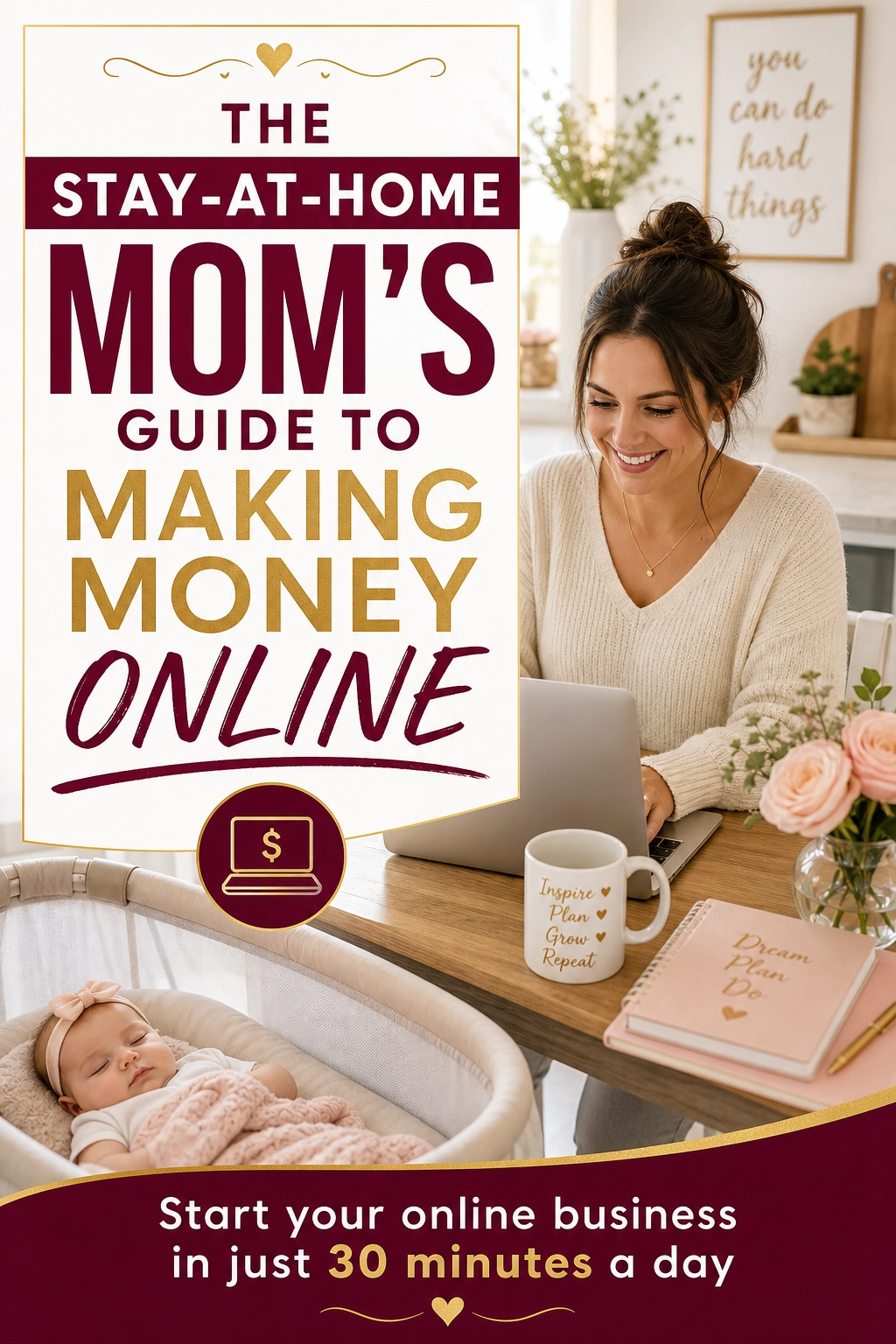
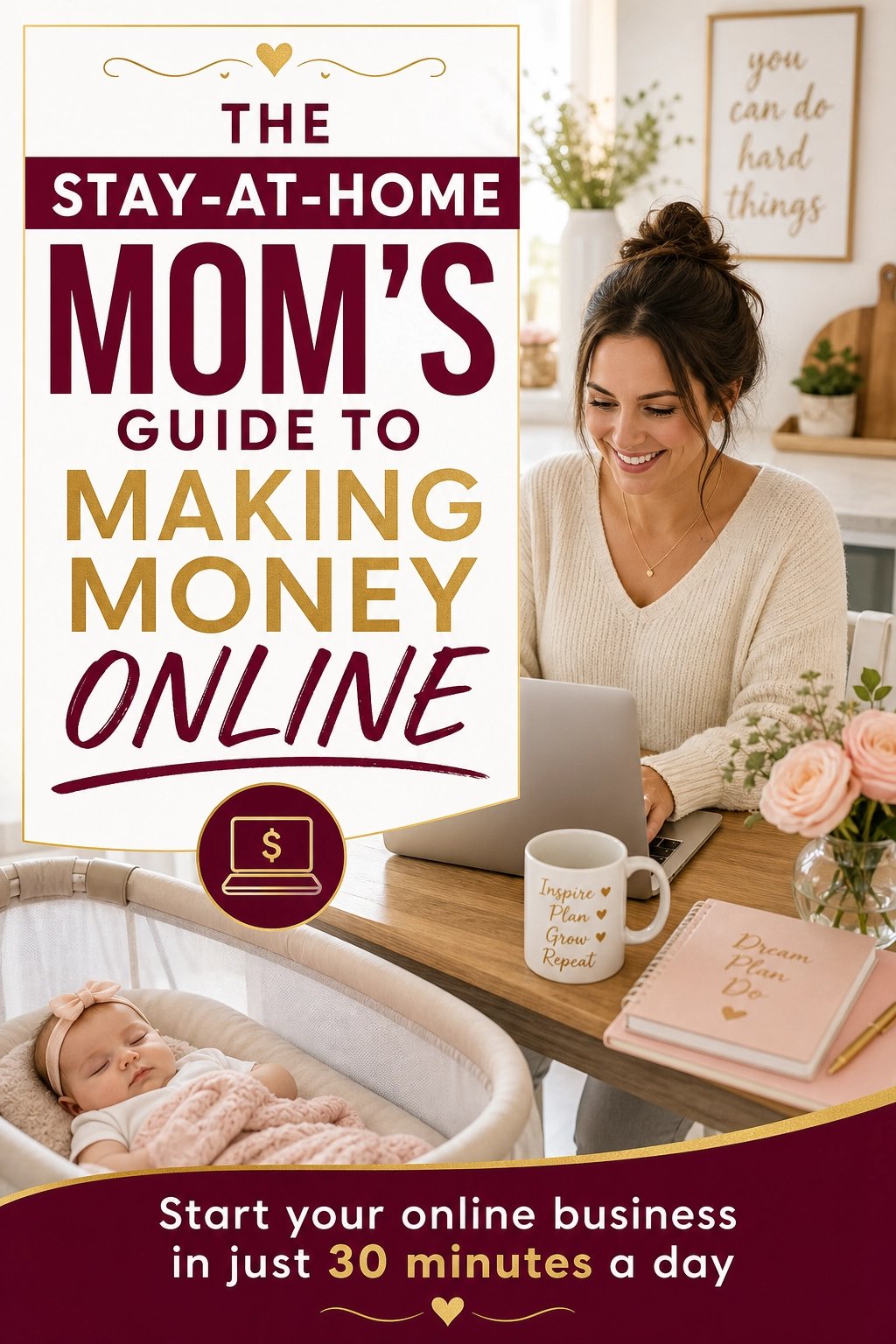
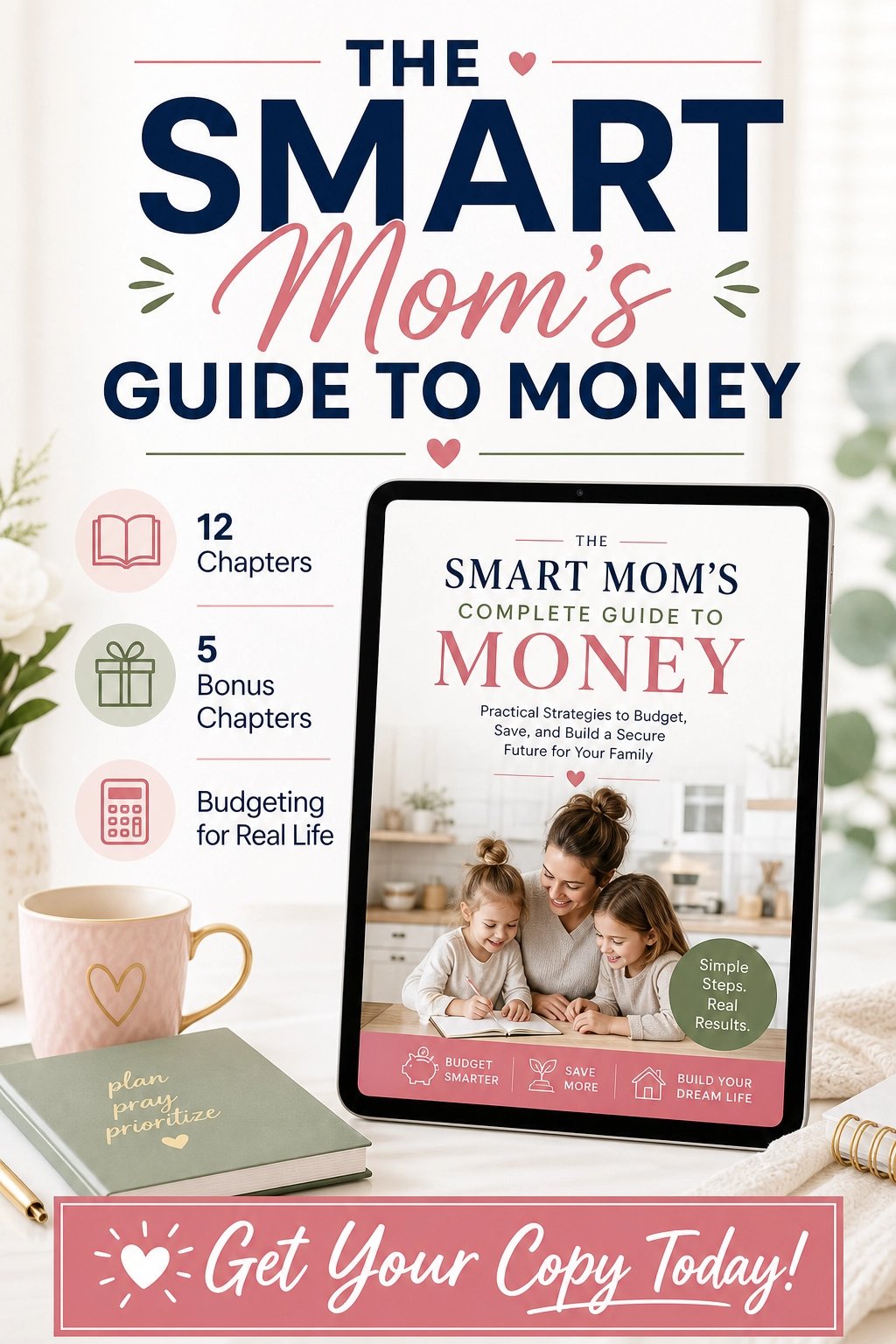
1. The Stay-At-Home Mom’s Guide to Making Money Online This is the ebook I wish I’d had on that kitchen floor. It’s written specifically for moms who need practical ways to turn small pockets of time into real income. If this article lit a spark, this guide is your next step.
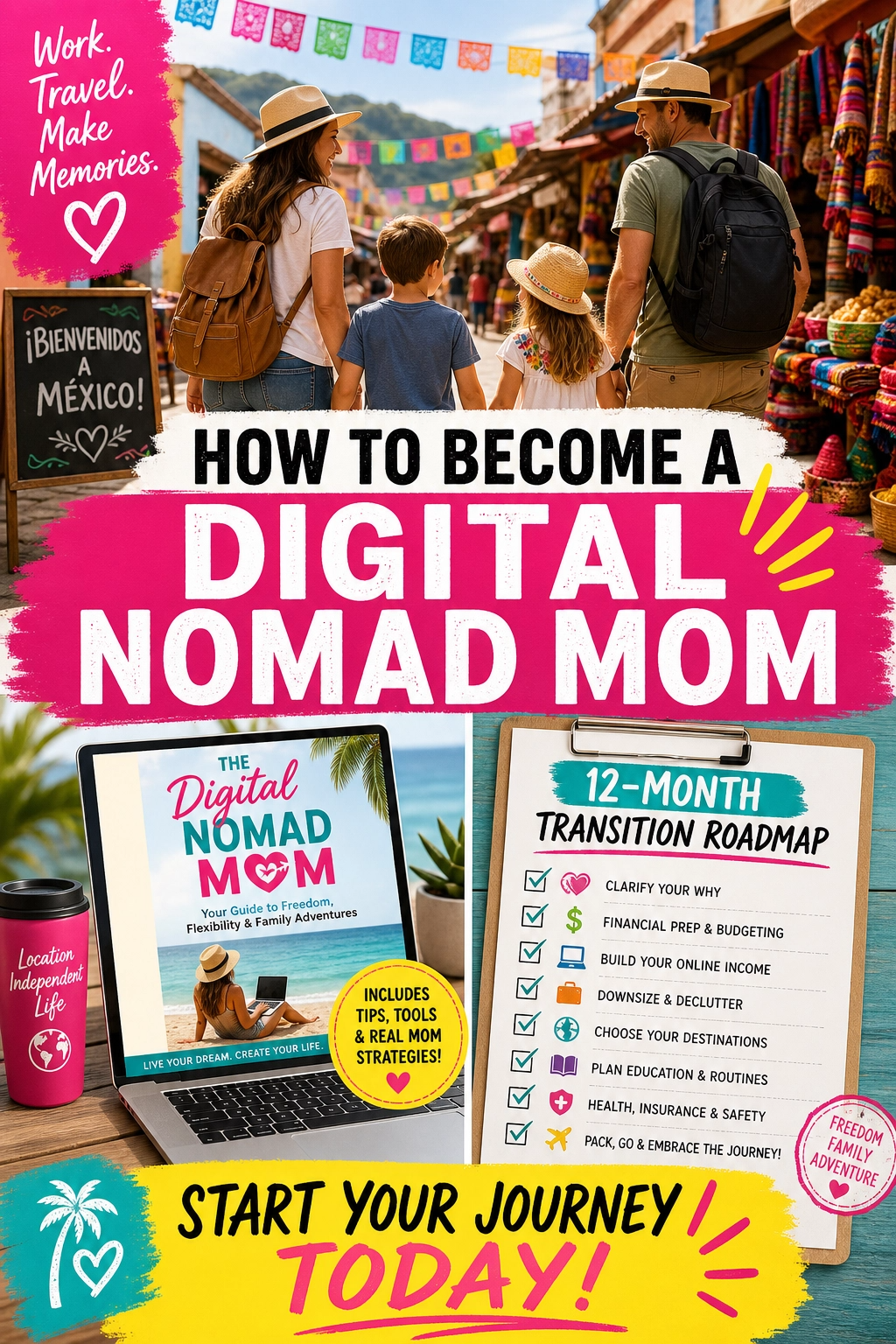
2. The Digital Nomad Mom If you dream of location freedom and a flexible life built around your family, this guide shows how to build a mobile, online-first income that travels with you.
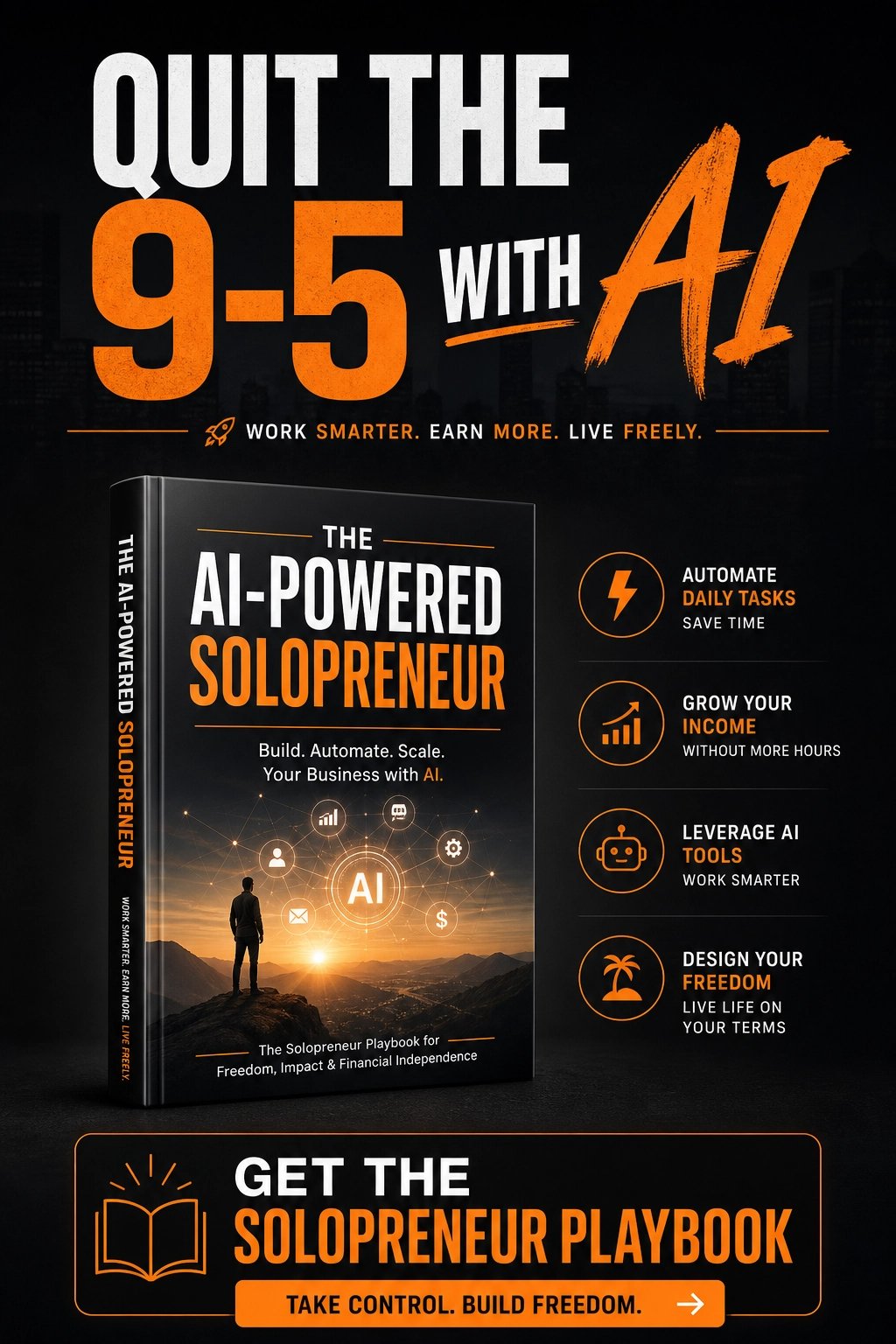
3. The AI-Powered Solopreneur Time is the stay-at-home mom’s scarcest resource. This ebook shows how to use AI tools to do the work of a small team, so your ninety minutes go much further.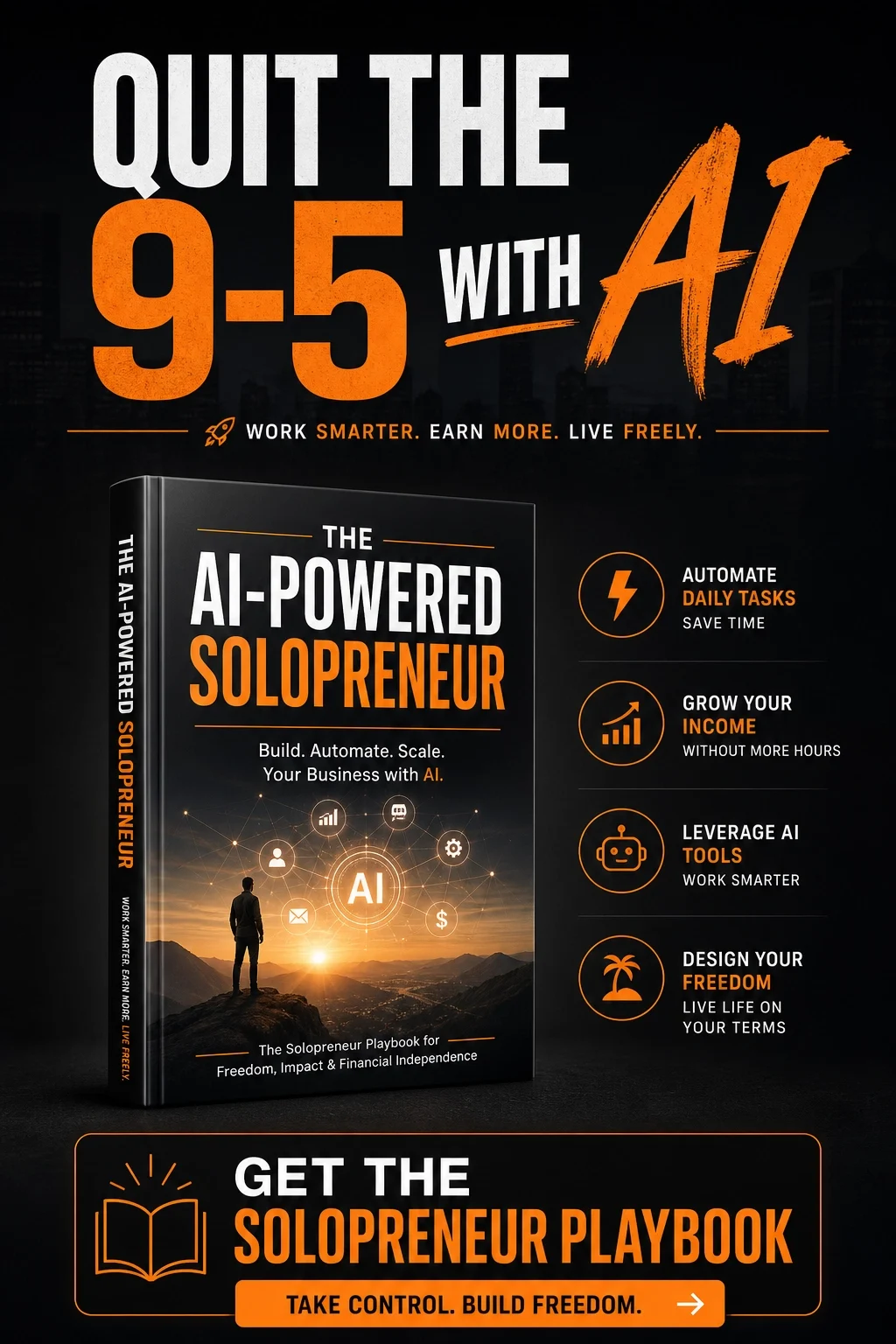
Trust me on this: a small investment in the right guide is cheaper than months of guessing. These are instant-download ebooks you can read on your phone during pick-up lines or after bedtime. Pick the one that matches where you are today and start reading tonight.
Your Next Step Starts Today
Making money online as a stay-at-home mom isn’t about finding a magic secret. It’s about choosing one path, protecting ninety minutes a day, and showing up long enough for momentum to build. You already have the skills, the determination, and the why. What you need now is a plan and the courage to begin before everything feels perfect.
Pick your income path today. Block your ninety minutes on tomorrow’s calendar. Send your first outreach message, and grab a guide that gives you the roadmap so you’re not building alone. Six months from now, you’ll wish you’d started today. I promise, future-you is already grateful.
Your kitchen floor moment might just be the start of something beautiful. Go get it, Lady Boss.






Leave a Reply