

Let me be honest about something before we start: “passive income” is one of the most overused, oversold phrases on the internet. Almost nothing is truly passive at the beginning. But here’s the good news. Digital downloads come closer to passive than most side hustles I’ve tried, because once the product exists and the listing is live, delivery happens automatically.
I remember when I first understood this. I had spent about three weekends creating a small printable bundle. It felt like a lot of work for something I wasn’t sure anyone would want. Then, weeks later, I woke up to a sale notification from the night before. I hadn’t done anything. The file had simply gone out while I slept. That was the moment the phrase “create once, sell many times” stopped being a slogan and became real for me.
In this guide, I’ll walk you through how to build passive income with digital downloads in 2026: what “passive” honestly means, which products work, how to create them, where to sell, how to drive steady traffic, and how to build a library that grows over time.
What “Passive” Really Means With Digital Downloads
Here’s the truth: digital downloads are front-loaded work. You put in the effort up front, and then the income can continue with far less effort. But it’s not zero effort.
What you still need to do:
- Answer occasional customer questions
- Refresh listings and images now and then
- Keep making new products
- Do some ongoing marketing
- Track income and handle taxes
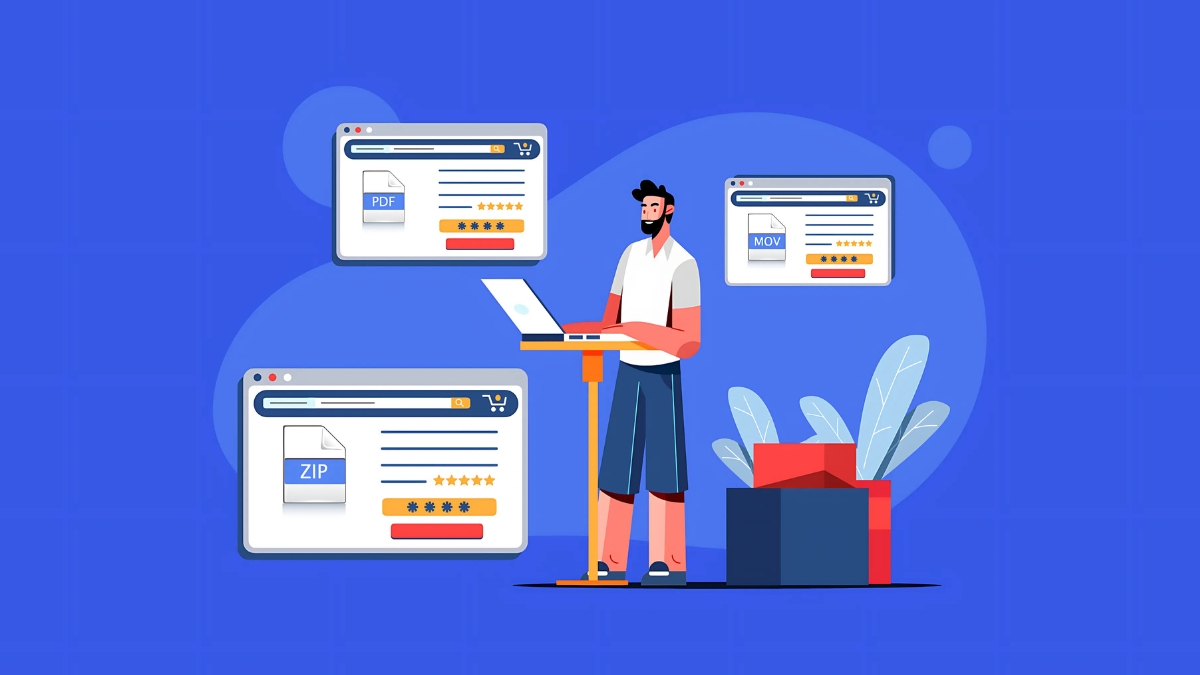
What you no longer need to do:
- Ship anything
- Manage inventory
- Pay for stock in advance
- Be online at the moment of sale
I like to call it “leveraged income” rather than “passive income.” It’s honest, and it sets better expectations. Results vary a lot from seller to seller, and no one can promise a specific number.
Step 1: Pick a Product Type That Fits Your Skills
Not every digital product suits every person. Here are the main types, along with who they tend to suit best.
Popular Digital Download Categories
- Printables: planners, trackers, checklists, wall art, and party decor
- Templates: Canva templates for social media, resumes, invoices, and media kits
- Clip art and digital paper: graphics for crafters, teachers, and small business owners
- Ebooks and guides: short, focused how-to resources
- Digital planners and journals: for tablet note-taking apps
- Worksheets and educational materials
- Stock photos and mockups (if you enjoy photography or design)
- Courses and workshops: larger projects that take more time
Which Should You Choose?
- Love organizing? Try planners and trackers.
- Love art or design? Try clip art, digital paper, or templates.
- Love teaching? Try worksheets or mini courses.
- Love writing? Try guides and ebooks.
If you’re leaning toward graphics, browse the Omnimart24h clip art collection to see how different sets are themed, described, and packaged. Studying what already exists is a smart way to spot gaps and improve on what you see.

Step 2: Find a Niche With Real Demand
I made the mistake early on of creating what I thought was cute instead of what buyers were searching for. Save yourself the trouble.
Simple Demand Check
- Search marketplaces like Etsy and see whether similar products have sales and reviews.
- Use keyword tools to see search volume.
- Check Pinterest for related pins and saves.
- Look at seasonal cycles. Some niches spike at back-to-school, holidays, or New Year planning time.
- Read reviews on competitor products to find unmet needs.

Niches That Tend to Do Well
- Teachers and homeschoolers
- Small business owners and side hustlers
- Students and productivity fans
- Parents and family organization
- Wellness and self-care
- Weddings, events, and parties
Step 3: Create a High-Quality Product
Quality is what earns reviews, and reviews earn future sales.
Your Creation Checklist
- Solve a specific problem (for example, “budget tracker for irregular income”)
- Keep the design clean and easy to use
- Test it yourself as if you were the buyer
- Use licensed fonts and elements only
- Export in the right formats (PDF, PNG, SVG, or editable Canva links as needed)
- Include clear instructions

Some sellers create sets around a visual theme, such as watercolor backgrounds. A product like the Geometric Watercolor Shapes digital paper pack shows how a single, cohesive style can be presented for multiple uses, like classroom displays, slides, and worksheets. That kind of “one style, many uses” thinking makes a digital product more valuable to buyers.
Pro tip: Create a bundle, not a single item. A cohesive pack of ten related pieces feels like a bargain and increases your average order value.
Step 4: Choose Where to Sell
Each platform has trade-offs.
Marketplaces (Built-In Traffic)
- Etsy: huge buyer base for printables and digital goods
- Creative Market: curated marketplace for design assets
- Teachers Pay Teachers: ideal for educational resources
Independent Platforms
- Gumroad, Payhip, and similar tools: simple checkout and file delivery
- Your own website: more control and better margins, but you must bring the traffic

My Approach
I started on a marketplace because the audience was already there. Later, I added my own site so I wasn’t relying on a single platform. Never put all your eggs in one basket. Platform rules and algorithms can change without notice.
Step 5: Write Listings That Sell
Great listings do two jobs: they help people find you, and they persuade people to buy.
Listing Essentials
- Keyword-rich title: put your main phrase first
- Clear first image: make the product obvious at thumbnail size
- Mockups: show the product in use
- Detailed description: what’s included, file types, sizes, and how to use it
- Honest terms: what buyers can and can’t do with the files
- Friendly tone: invite questions
Here’s what I learned the hard way: Vague descriptions produce vague results. When I started listing exact file counts, formats, and use cases, my buyer questions dropped and my conversion improved.

Step 6: Drive Steady, Long-Term Traffic
The best passive income comes from traffic sources that keep working after you post.
Evergreen Traffic Channels
- Search on marketplaces: optimize titles and tags and keep listings fresh
- Pinterest: pins can bring visitors for months or even years
- Blog content and SEO: helpful articles can attract steady organic visitors
- Email list: the one audience you truly own
- YouTube tutorials: videos can stay relevant for a long time
Build an Email List Early
Offer a free sample product in exchange for an email address. Then send occasional helpful messages and announce new releases. When platforms change their rules, your list stays with you.

Step 7: Expand Your Product Library
One product rarely creates meaningful income. A library of products does.
Growth Strategies
- Create variations: new colors, sizes, and themes of a proven bestseller
- Make bundles: combine related products at a slight discount
- Follow the seasons: release holiday and back-to-school items early
- Update older products with fresh photos and improved descriptions
- Retire underperformers and learn from them
A simple system: aim to release a set number of new products each month. Consistency compounds.
Step 8: Handle the Business Side
Yes, it’s still a business.
- Track income and expenses from day one
- Understand your local tax and registration rules. I used to get nervous sweats about this, but a short consult with a local accountant made everything clearer.
- Protect your work with clear licensing terms and watermarked previews
- Respect others’ copyrights. Never use brand names, characters, or unlicensed images
- Keep customer service friendly and prompt

Common Mistakes to Avoid
- Expecting instant income. Most shops need months to build momentum.
- Selling one-off products with no follow-up
- Ignoring SEO and keywords
- Overpricing or underpricing without testing
- Skipping licensing details
- Giving up before data can guide you
Start Building Your Library Today
Building passive income with digital downloads in 2026 is a realistic, flexible path when you approach it with clear eyes. Choose a product type that suits your skills, validate demand, create something genuinely useful, list it with care, and market it through channels that keep working over time. Then repeat, one product at a time. By staying consistent and treating your shop like a real business, you’ll be well-equipped to build a library that earns while you’re busy living your life. Start with one small product this week and hit publish!








Leave a Reply