


Did you know that over 60% of new digital marketing agencies fail to break past six figures in their first three years — not because the work isn’t good, but because nobody taught them how to actually scale the business side? I learned that the hard way.
When I first started taking on freelance marketing clients, I was thrilled just to land my first $500 project. I remember refreshing my inbox every five minutes, terrified the client would ghost me before I even sent the invoice. Fast forward to today, and what started as a one-woman side hustle answering emails from my kitchen table has grown into a digital marketing business bringing in over $8,000 a month — with systems, a small team, and clients who come back month after month instead of disappearing after one project.
Boy, was I wrong about how this industry actually works. I used to think growth meant “get more clients.” It doesn’t. Growth means building a business that runs without you being the bottleneck for every single task. In this comprehensive guide, I’ll walk you through everything you need to know about growing a digital marketing business online — from finding your niche to scaling your services, pricing with confidence, and building the systems that let you grow past the “one-woman show” stage.
Why Digital Marketing Is Still One of the Best Online Businesses to Build
Let me share something that surprised me when I first dug into the numbers: global digital ad spend is projected to keep climbing well past $700 billion, and small businesses everywhere are desperate for help they can’t hire in-house. That’s not a shrinking market — that’s opportunity knocking, loudly.
Here’s the truth: every single business, from your local bakery to a Shopify brand doing seven figures, needs someone who understands SEO, social media, email marketing, and paid ads. They just don’t have the time (or honestly, the skill) to do it themselves. That’s where you come in.
Why this business model works so well for women building income online:
- Low startup costs — you genuinely can start with a laptop and Wi-Fi
- Fully location-independent (I’ve worked from three different countries this year alone)
- Scales through retainers, not just one-off projects
- You can specialize in a niche you actually enjoy
- High demand across every single industry, forever
Pro tip: don’t wait until you feel “expert enough” to start. I took on my first client while I was still learning Facebook Ads from YouTube tutorials at 11 p.m. You learn by doing, not by waiting.

Step 1: Pick a Profitable Niche (Don’t Skip This)
Here’s what I learned the hard way — I spent my first year marketing myself as a “digital marketing generalist” who could do everything for everyone. Big mistake. Nobody trusts a generalist with their budget. Clients want a specialist who gets their industry.
When I finally niched down to helping online coaches and course creators with email marketing and paid social, everything changed. My close rate on discovery calls literally tripled.
Questions to ask yourself when choosing your niche:
- What industry do I already understand (past job, hobby, personal experience)?
- What service can I deliver results in fastest — SEO, paid ads, social media, email marketing, content?
- Who has money to spend on marketing (hint: skip industries notorious for tight budgets)?
- What client type do I actually enjoy working with?
Profitable niches to consider:
- E-commerce and Shopify brands (always investing in ads and email)
- Online coaches, consultants, and course creators
- Local service businesses (dentists, med spas, real estate agents)
- SaaS and tech startups
- Wellness, fitness, and beauty brands
Trust me on this: the riches really are in the niches. A specialized “Etsy shop SEO specialist” will out-earn a “does everything for everyone” marketer every time.
Step 2: Choose Your Core Service Offer
I wish someone had told me this sooner — you don’t need to offer ten services to build a real business. In fact, offering too much is what keeps most solo marketers stuck at $2,000–$3,000 months. Pick one or two services you can genuinely deliver amazing results in, and build your whole brand around being the go-to person for that.
High-demand digital marketing services:
- SEO & content marketing — helping brands rank organically and drive free traffic
- Paid social & Google ads management — running and optimizing ad budgets
- Email marketing & automation — building funnels, sequences, and newsletters
- Social media management — content calendars, community management, growth strategy
- AI-powered marketing services — using AI tools to create content, ad copy, and campaigns faster (this is where I’m seeing the biggest demand explosion right now)
Here’s what I learned the hard way about pricing: charging by the hour caps your income and punishes you for getting faster. Once I switched from hourly billing to monthly retainers and project-based packages, my income doubled without taking on a single new client. Retainers also give you predictable, recurring revenue — which is the real secret weapon behind agencies that actually scale.
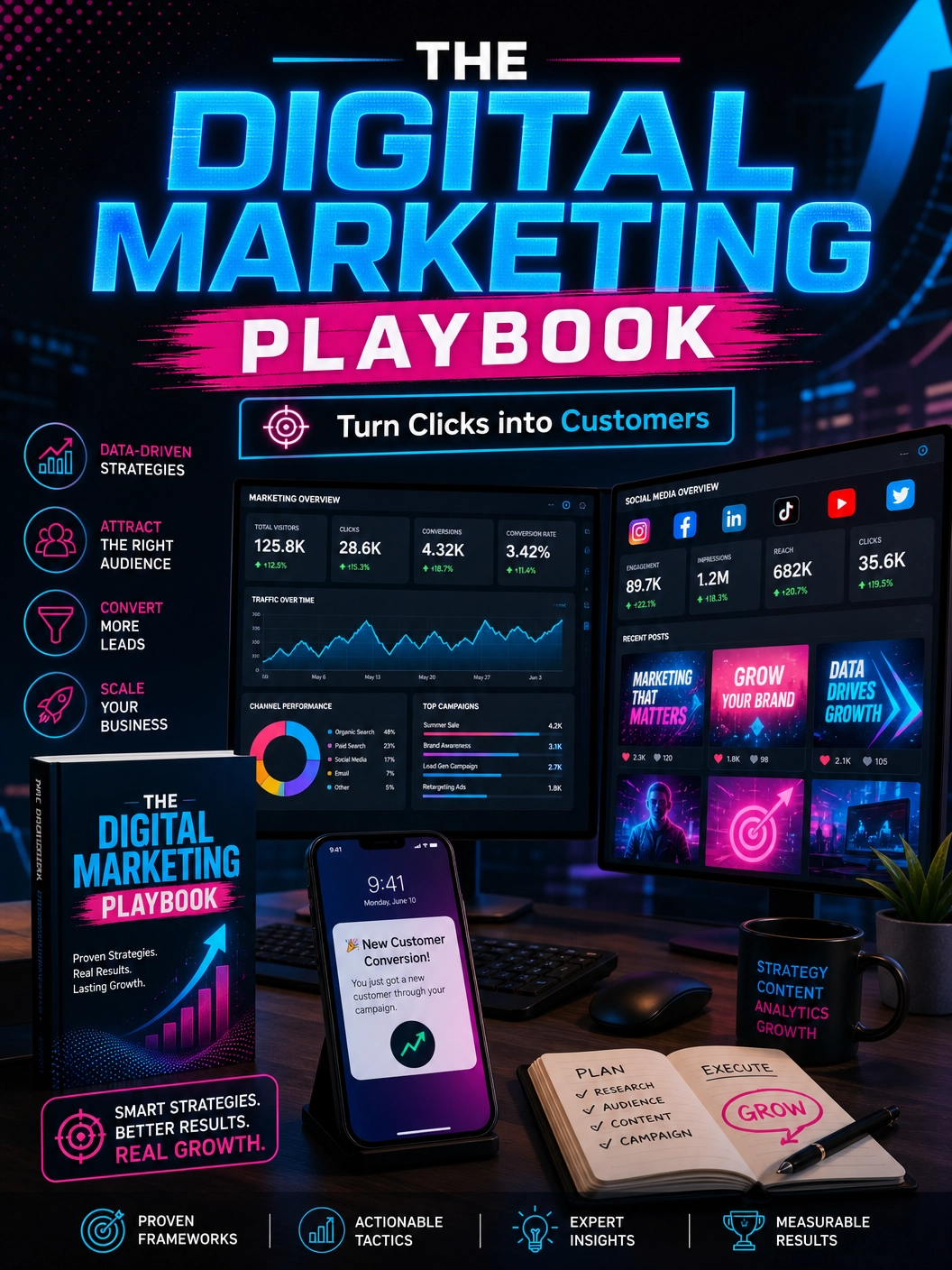
If you want a step-by-step framework for building out your service menu, packaging your offers, and pricing with confidence across every channel — SEO, content, social, email, and paid ads — my Digital Marketing Playbook ebook walks through exactly how I structured mine, plus how I’m layering AI into my workflow to deliver faster without burning out.
Step 3: Build a Client-Getting System (Not Just One-Off Hustling)
When I first started, my “marketing strategy” was posting randomly on Instagram and hoping someone would DM me. Little did I know how much time that was wasting. A real client-getting system runs on repeat, even when you’re not actively hustling.
Here’s the system that actually works:
- Build a simple, professional website or landing page — this is your digital storefront, and clients do check
- Create a lead magnet — a free checklist, audit, or mini-guide that gets prospects into your email list
- Post consistently on one platform — LinkedIn and Instagram both work well for service businesses; pick one and go deep instead of spreading thin
- Offer free audits or mini-consultations — this is how I landed most of my early clients; showing value upfront builds instant trust
- Ask every happy client for a referral or testimonial — referrals became my #1 client source once I started asking on purpose instead of hoping it happened naturally
Pro tip: cold outreach still works in 2026, but personalization is everything. A generic “I can help grow your business” DM gets ignored. A specific, researched message referencing something real about their brand gets responses.

Step 4: Deliver Results That Keep Clients Coming Back
Getting a client is only half the battle — keeping them is where the real recurring income lives. I used to get nervous sweats thinking about reporting results to clients, terrified they’d fire me if a campaign underperformed. Here’s what changed everything: transparent, regular communication.
How to keep retention high:
- Send monthly (or biweekly) performance reports, even the imperfect ones
- Set realistic expectations upfront — under-promise, over-deliver
- Schedule a recurring check-in call so clients feel heard
- Document your processes so results aren’t dependent on your memory
- Celebrate small wins with clients, not just big ones
Here’s what I learned the hard way: clients rarely leave because of one bad month. They leave because they feel ignored or in the dark. Communication is genuinely your retention superpower.
Step 5: Use AI to Scale Without Burning Out
I’ll be honest — when AI tools first exploded, I was skeptical they’d actually help a service-based business like mine. I was so wrong. AI has become my secret weapon for scaling without hiring a huge team too soon.
Ways I use AI in my digital marketing business:
- Drafting first versions of ad copy and social captions (then editing in my brand voice)
- Generating content calendars and topic ideas in minutes instead of hours
- Summarizing client analytics into plain-English insights for reports
- Speeding up SEO research and keyword clustering
- Creating first drafts of email sequences and landing page copy
This is honestly the single biggest shift I’ve made in my workflow this year, and it’s why I put together a whole resource on it — my Digital Marketing Playbook covers exactly how to fold AI into every channel (SEO, content, social, email, and paid ads) so you can serve more clients without working more hours. If you’re building or scaling a marketing business right now, this is the shortcut I wish I’d had two years ago.

Step 6: Build Systems So You’re Not the Bottleneck
Game-changer moment for me: realizing that every task I did manually, over and over, was a task I could turn into a repeatable system — and eventually hand off.
Systems every growing digital marketing business needs:
- Standard Operating Procedures (SOPs) for onboarding new clients
- Templates for proposals, contracts, and reports
- A project management tool (Trello, ClickUp, or Asana) to track deliverables
- A client onboarding sequence so new clients feel taken care of from day one
- A simple financial system to track income, expenses, and taxes (quarterly estimated taxes snuck up on me my first year — don’t let them sneak up on you too)
Once your systems are documented, hiring your first contractor or virtual assistant becomes so much less scary. I brought on my first freelance social media manager once I had a documented process for her to follow, and it freed up almost 10 hours a week for me to focus on strategy and sales instead of execution.
Step 7: Know When (and How) to Raise Your Prices
Here’s the truth nobody tells new marketers: your first-year pricing should not be your forever pricing. I stayed underpriced for way too long because I was scared of losing clients. When I finally raised my rates by 30%, I lost exactly zero clients — and picked up better ones going forward.
Signs it’s time to raise your prices:
- You’re consistently fully booked with a waitlist
- You’re delivering measurably better results than when you started
- Your current rates don’t reflect your actual expertise anymore
- You’re saying yes to clients out of fear instead of excitement
Raise your rates for new clients first, then revisit existing retainers at renewal time with plenty of notice. Most good clients understand — and the ones who don’t usually weren’t the right fit anyway.
Final Thoughts
Growing a digital marketing business online isn’t about doing everything for everyone — it’s about niching down, building real systems, using the AI tools available to you, and treating client relationships like the long game they are. Start with one service, one niche, and one solid client-getting system, then layer in the rest as you grow. The agencies and freelancers scaling fastest right now aren’t necessarily the most talented marketers — they’re the ones who built a business, not just a job for themselves.
If you want the full step-by-step playbook — covering SEO, content, social, email, paid ads, and AI, all in one place — grab my Digital Marketing Playbook ebook. It’s the exact framework I use to run and grow my own marketing business, minus years of trial and error.









Leave a Reply