


Every few months, a small business owner emails me a version of the same message: “I’m posting on social media, I have a website, I tried ads once, and nothing is adding up. Where do I even start?” When I look at what they’re doing, it’s rarely laziness. It’s the opposite. They’re doing a bit of everything, with no order, no focus, and no way to tell what’s working.
The good news is that digital marketing doesn’t need to be complicated. It needs a sequence. And right now, the sequence has some new ingredients. Customers discover businesses through traditional search, AI answers, short video, communities, creators, and email, often all in the same week. AI Mode searches are longer and more specific. Ad costs are rising and tracking is messier. Platforms are limiting free link reach, so owning your audience matters more than ever.
In this guide, I’ll give you a 90-day digital marketing plan from scratch: a week-by-week roadmap that builds your foundation first, then your content, then your channels, then your systems, so you’re not guessing.
The Modern Customer Journey (In Plain English)
People don’t follow a straight line anymore. A typical path might look like this:
- They see a helpful video, a creator recommendation, or a community answer.
- They ask a search engine or AI assistant a detailed question.
- They check your website, reviews, and social profiles.
- They sign up for your email list or follow you.
- They buy, often after several touchpoints.
- They leave a review or recommend you.
Your job is to be helpful and consistent at each step. That’s what this plan builds.
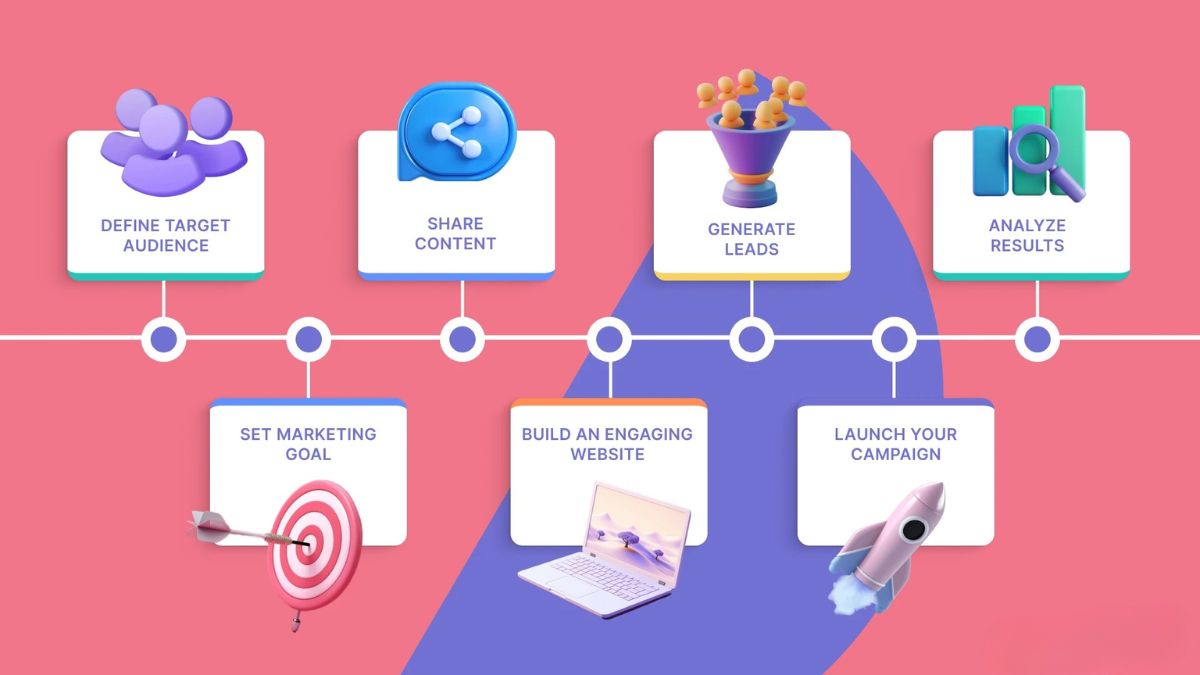
Before You Start: Set Your Foundation
Write down:
- Your business in one sentence: who you help and how.
- Your ideal customer: the person you serve best.
- Your main goal for 90 days: leads, sales, bookings, or email subscribers, with a number.
- Your weekly time and monthly budget.
- Your break-even cost per customer, even as an estimate.
Create a simple tracker with weekly columns for traffic, leads, customers, spend, and notes.
Phase 1: Foundation (Weeks 1-3)
Goal: Make sure people can find you and trust you.
Week 1: Clarify and audit
- Search your business name and your main service in a private window, and screenshot what you see.
- Ask a few AI assistants what they say about you and your topic.
- Review your website for clarity: does the homepage say who you help and what to do next?
- Check your Google Business Profile, directory listings, and social bios for accuracy and consistency.
- Collect 20 questions customers ask.
Week 2: Fix the basics
- Improve your homepage headline and main call-to-action.
- Make sure your site is secure, fast on mobile, and not accidentally blocking search engines.
- Set up analytics, define key events, and add UTM links to everything you control.
- Add a “How did you hear about us?” question to your forms.
- Update listings and turn on notifications for reviews and suggested edits.
Week 3: Build your home base
- Set up an email signup with a simple lead magnet.
- Create or improve one landing page with a single goal, proof, and a short form.
- Write your welcome email sequence (three to five emails).
- Gather testimonials and case studies you already have.
Checkpoint: Your website, listings, and tracking are in good shape, and you have a way to capture emails.

Phase 2: Content (Weeks 4-6)
Goal: Answer real questions in the places people look.
Week 4: Plan your content
- Group your customer questions into themes.
- Choose one pillar topic and five supporting questions.
- Pick your main content format: articles, short videos, or both.
- Decide your realistic weekly publishing rhythm.
Week 5: Create your pillar content
- Write or film a thorough guide to your pillar topic, with first-hand examples, proof, and a clear, direct answer in the opening.
- Add an FAQ and descriptive headings.
- Fact-check every statistic and claim.
- If you use AI for drafts, keep the draft-and-approve habit: you edit, verify, and own the final version.
Week 6: Repurpose and publish
- Cut the pillar content into short videos, social posts, and an email.
- Publish the supporting answers over the next days.
- Link related pages together.
- Share one piece where your audience gathers, following each community’s rules.
Checkpoint: You’ve published a pillar piece plus several supporting pieces, and sent at least one email to your list.
Phase 3: Channels (Weeks 7-9)
Goal: Test the channels most likely to work for you.
Week 7: Choose one primary and one test channel
Use your audience and goals to choose:
- Search and local: if customers actively look for what you offer
- Short video: if your product or expertise is visual or easy to demonstrate
- Pinterest: if you sell ideas, inspiration, or visual products
- LinkedIn: if you serve other businesses
- Creators: if trust and social proof drive your category
- Paid ads: if you have a tested offer, working tracking, and budget to test
Pick one main channel and one small test channel, not five.
Week 8: Launch your tests
- Set your test budget and rules in advance: duration, success metric, stop rule, and scale rule.
- Create three variations of your main message: different hooks or offers.
- Launch a small paid test or a creator partnership, if it fits.
- Ask happy customers for reviews.
Week 9: Learn and adjust
- Review early results by cost per lead and cost per customer, not just clicks.
- Pause the weakest variation and make two new ones.
- Check your landing page conversion rate and fix the biggest leak.
- Compare your dashboards to your actual sales records.
Checkpoint: You’ve tested at least one channel with clear rules and learned which message works best.

Phase 4: Systems and Growth (Weeks 10-13)
Goal: Make your marketing repeatable.
Week 10: Automate the basics
- Turn on your welcome sequence and a lead follow-up workflow.
- Add a post-purchase email with a review request.
- Segment your list by interest or stage.
- If you use AI agents or integrations, limit their access, require approval for anything that spends money or contacts people, and review what they do.
Week 11: Strengthen your authority
- Pitch one podcast, newsletter, or local publication.
- Create one linkable asset, like a template, mini-survey, or case study.
- Answer questions honestly in one or two communities.
- Update older content with fresh facts and proof.
Week 12: Review your numbers and budget
- Calculate your actual cost per customer by channel.
- Compare it with your break-even number.
- Decide what to scale, what to fix, and what to stop.
- Reallocate budget using a core, growth, and test split.
Week 13: Plan the next 90 days
- Choose one big goal for the next quarter.
- Pick one new skill or channel to learn.
- Update your content calendar.
- Review your tools and cancel what you don’t use.
- Write down three lessons from this quarter.
Checkpoint: You have working systems, data you trust, and a plan for what comes next.
The Weekly Rhythm
Once you’re moving, keep a steady cadence:
- Monday: Review last week’s numbers and set three priorities.
- Tuesday and Wednesday: Create and publish content.
- Thursday: Engage: reply to comments, emails, reviews, and community questions.
- Friday: Test and optimize one thing, then update your tracker.

The Metrics That Matter
- Leads and customers by source
- Cost per lead and cost per customer
- Conversion rate on your main page
- Email subscribers and click-through rate (rather than open rate)
- Review count and rating
- Branded search growth
- Revenue and profit from marketing-driven customers
Mistakes to Avoid
- Doing everything at once.
- Skipping the foundation and going straight to ads.
- Publishing unedited AI content.
- Chasing perfect attribution.
- Giving agents or automations unchecked access.
- Quitting before the data arrives.
- Ignoring email.

Get the Full Playbook
This plan gives you the structure. If you’d like a deeper, step-by-step guide to building a complete digital marketing system, from strategy to content to channels to measurement, take a look at my ebook:
The Digital Marketing Playbook
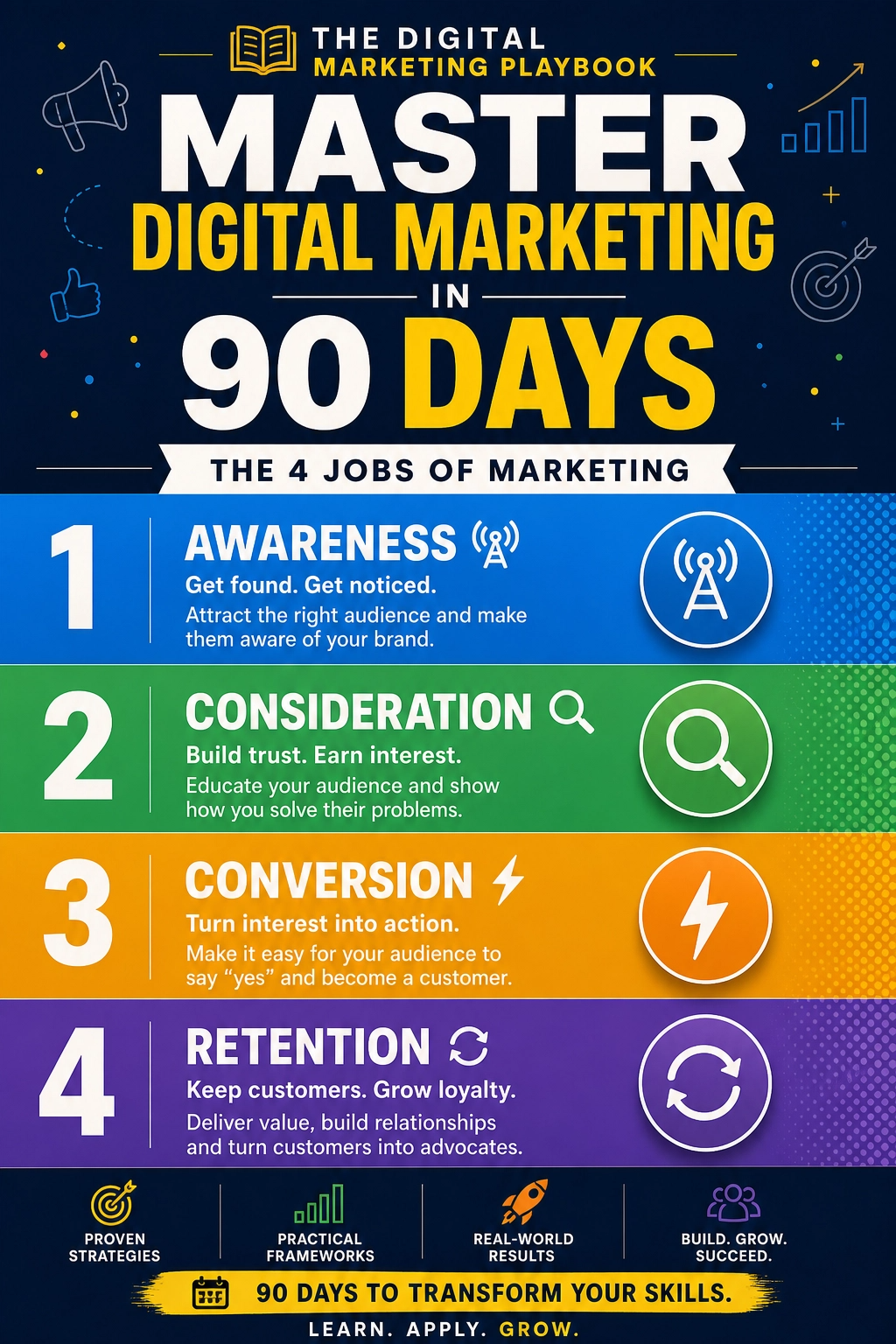
Trust me, a clear playbook turns scattered effort into steady results.
Final Thoughts
You don’t need a huge budget or a big team to do digital marketing well. You need a clear message, a solid foundation, helpful content, a couple of well-tested channels, and a simple way to measure what’s working. Follow the sequence, review your numbers honestly, and keep improving. In 90 days, you’ll know more about your customers than you did in the last year.










Leave a Reply