

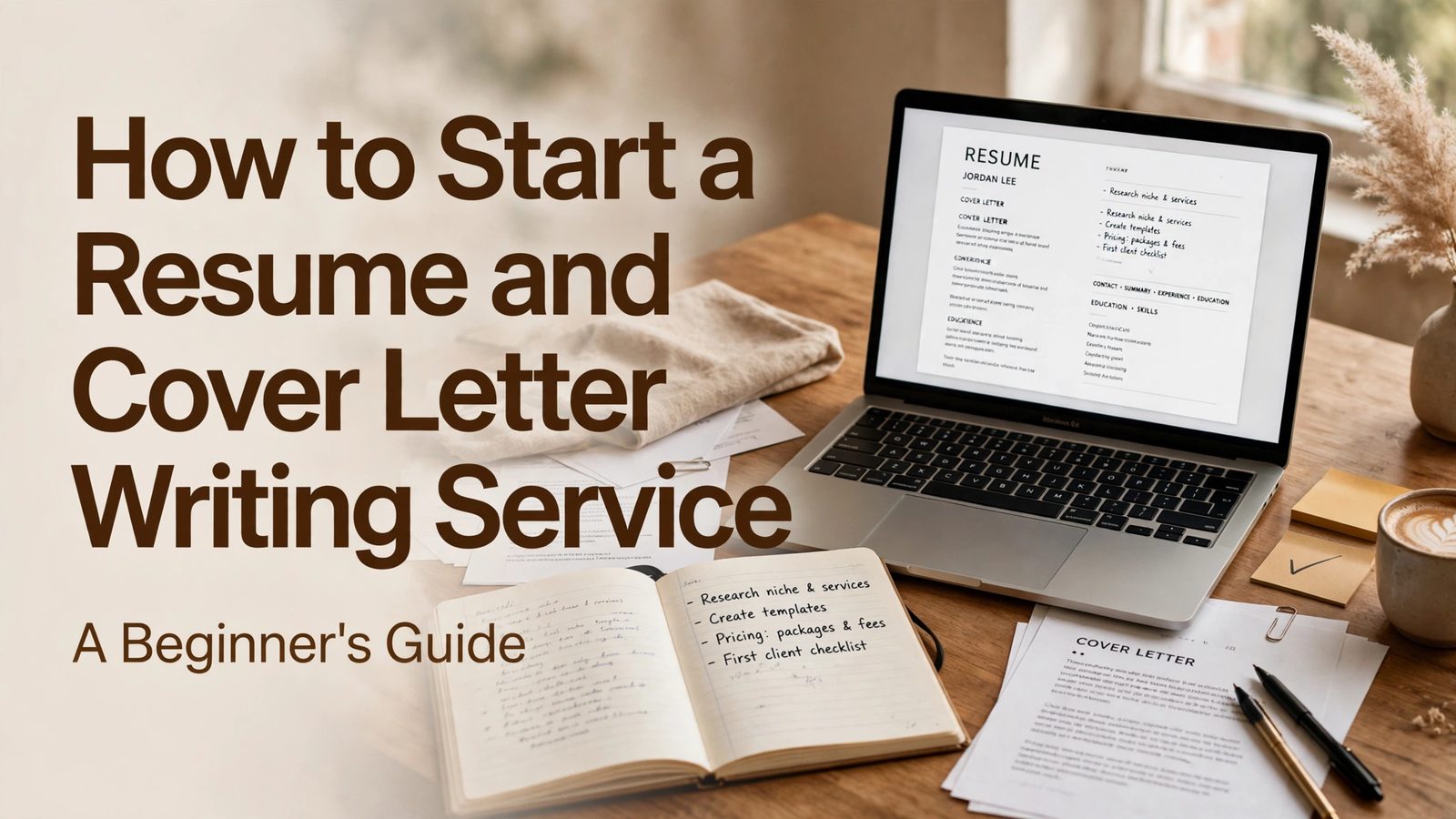
A few years ago, a friend showed me her resume. She’d spent a decade managing a busy family restaurant, handling payroll, training staff, and cutting costs, yet her resume read like a list of chores. “I just answer phones and schedule people,” she said. We spent one evening rewriting it around results, and two weeks later she had three interview invitations. She said, “It’s the same me, but now people can see it.”
If you want to start a resume writing service, you’re offering something deeply valuable: helping people present their strengths clearly when they need it most. Job seekers often struggle to talk about themselves, and a skilled writer can bridge the gap.
In this guide, I’ll walk you through the skills, services, pricing, and ethics of building a resume and career document business from home.
Why Resume Writing Is a Solid Service
- Constant demand. People change jobs, switch careers, and return to work.
- High perceived value. A strong resume can open doors.
- Low startup cost. A laptop and templates are enough.
- Flexible. You can work around your schedule.
- Room to specialize in industries or career stages.
The honest part: You can’t guarantee interviews or jobs, and clients may have unrealistic expectations. Be clear about what you do, which is communication and positioning, not outcomes you can’t control.

Step 1: Learn the Craft
Core Resume Skills
- Understanding structure: headings, summaries, experience, skills, and education.
- Writing achievement-focused bullets rather than duty lists.
- Using keywords that match job descriptions and applicant tracking systems.
- Tailoring content to a role or industry.
- Formatting clearly and consistently.
- Proofreading carefully.
Ways to Learn
- Study sample resumes in different industries.
- Take free courses on resume writing and career coaching basics.
- Read job descriptions and note repeated skills and phrases.
- Practice rewriting your own resume and those of friends.
- Learn how applicant tracking systems commonly parse documents.
Step 2: Understand What Clients Need
Different clients have different goals.
- Entry-level job seekers who need help showcasing education and potential.
- Career changers who must connect past experience to new roles.
- Moms returning to work who want to present gaps and transferable skills confidently.
- Mid-career professionals seeking promotions.
- Executives who need leadership-focused documents.
- Remote job seekers who want to highlight digital skills.
If you’re a mom or have experience re-entering work, that story can become your niche. The Stay-At-Home Mom’s Guide to Making Money Online offers flexible income ideas that complement a career-writing service.
Step 3: Define Your Services and Packages
Sample Services
- Resume writing or rewriting.
- Cover letter writing.
- LinkedIn profile optimization.
- Thank-you note and follow-up templates.
- Interview preparation guides.
- Career document bundles.
- Resume reviews and feedback sessions.
Sample Packages
- Starter: A resume refresh with one revision.
- Standard: Resume plus cover letter and LinkedIn headline and summary.
- Premium: Full career document package with interview preparation notes.
Be clear about turnaround times, number of revisions, and what clients need to provide.
Step 4: Create a Client Intake Process
Great documents begin with great questions.
- Send a questionnaire about roles, achievements, skills, goals, and target jobs.
- Collect the current resume and any job postings of interest.
- Hold a short call to ask follow-up questions.
- Ask for numbers where possible: team size, revenue, savings, or time reduced.
- Clarify the client’s tone and preferences.
Documenting this process makes your service repeatable and professional.
Step 5: Use AI Carefully and Ethically
AI can help brainstorm bullet points, tighten wording, and check consistency. But resumes must be truthful, and clients’ private information deserves protection.
- Never invent or exaggerate achievements.
- Verify facts with the client.
- Don’t paste sensitive personal data into tools you aren’t authorized to use.
- Edit for the client’s real voice.
The Claude Advantage shows how to prompt effectively for drafting and editing while keeping control of quality and honesty.
Step 6: Build a Portfolio With No Clients
- Create sample resumes for fictional profiles in different industries.
- Offer a few discounted pilot projects to friends in exchange for testimonials.
- Write a before-and-after example with permission or a fictional case.
- Publish helpful tips on LinkedIn or a blog.
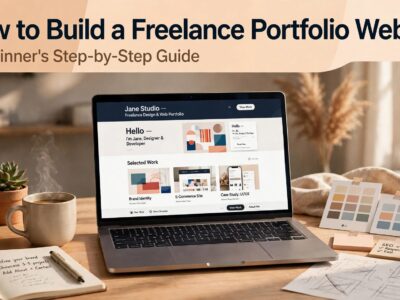
- Create a simple portfolio page with your approach and sample documents (with all personal details removed or fictional).
Step 7: Set Your Prices
Pricing varies by experience, niche, and region.
- Research competitors and market rates.
- Price by package, not by hour.
- Charge more for executive or complex cases.
- Offer add-ons such as LinkedIn updates and rush delivery.
- Raise prices as demand and testimonials grow.
Step 8: Find Your First Clients
- Your network: Friends, family, and former coworkers.
- LinkedIn: Share resume tips and connect with job seekers.
- Local communities, such as career centers, alumni groups, and women’s groups, following any rules.
- Online communities for job seekers and remote workers.
- Freelance platforms.
- Partnerships with career coaches, recruiters, and community organizations.
The Digital Marketing Playbook offers beginner-friendly strategies for attracting clients, and The Personal Brand Blueprint can help you present yourself as a trusted career partner.

Step 9: Deliver Great Work
- Meet deadlines and communicate clearly.
- Explain your choices so clients understand the strategy.
- Provide files in editable and PDF formats.
- Offer a limited revision window.
- Give tips for using the documents, such as customizing for each application.
- Follow up to ask how things are going and request testimonials.
Protect Privacy and Professionalism
- Keep client information confidential.
- Use secure file sharing.
- Have a simple service agreement covering scope, payment, and revisions.
- Be honest about limits. You can’t guarantee interviews or offers.
- Avoid unqualified legal or immigration advice.
A 30-Day Launch Plan
- Week 1: Learn resume basics and create sample documents.
- Week 2: Define packages, prices, and an intake form.
- Week 3: Build a simple portfolio page and LinkedIn profile.
- Week 4: Reach out to 20 potential clients and offer one pilot project.
Money Basics
- Track income and expenses.
- Invoice promptly.
- Set aside money for taxes. Consult a qualified professional.
The Smart Mom’s Complete Guide to Money offers friendly guidance for managing freelance income.
Sample Before-and-After Bullet Rewrites
Showing how you transform weak bullets into strong ones is a powerful way to demonstrate your skill. Here are examples you can adapt:
- Before: “Responsible for customer service.”
After: “Resolved 40+ customer inquiries daily with a consistently high satisfaction rating.” - Before: “Helped with scheduling.”
After: “Coordinated schedules for a 12-person team, reducing conflicts and last-minute changes.” - Before: “Worked on social media.”
After: “Planned and published weekly content that increased page engagement over six months.”
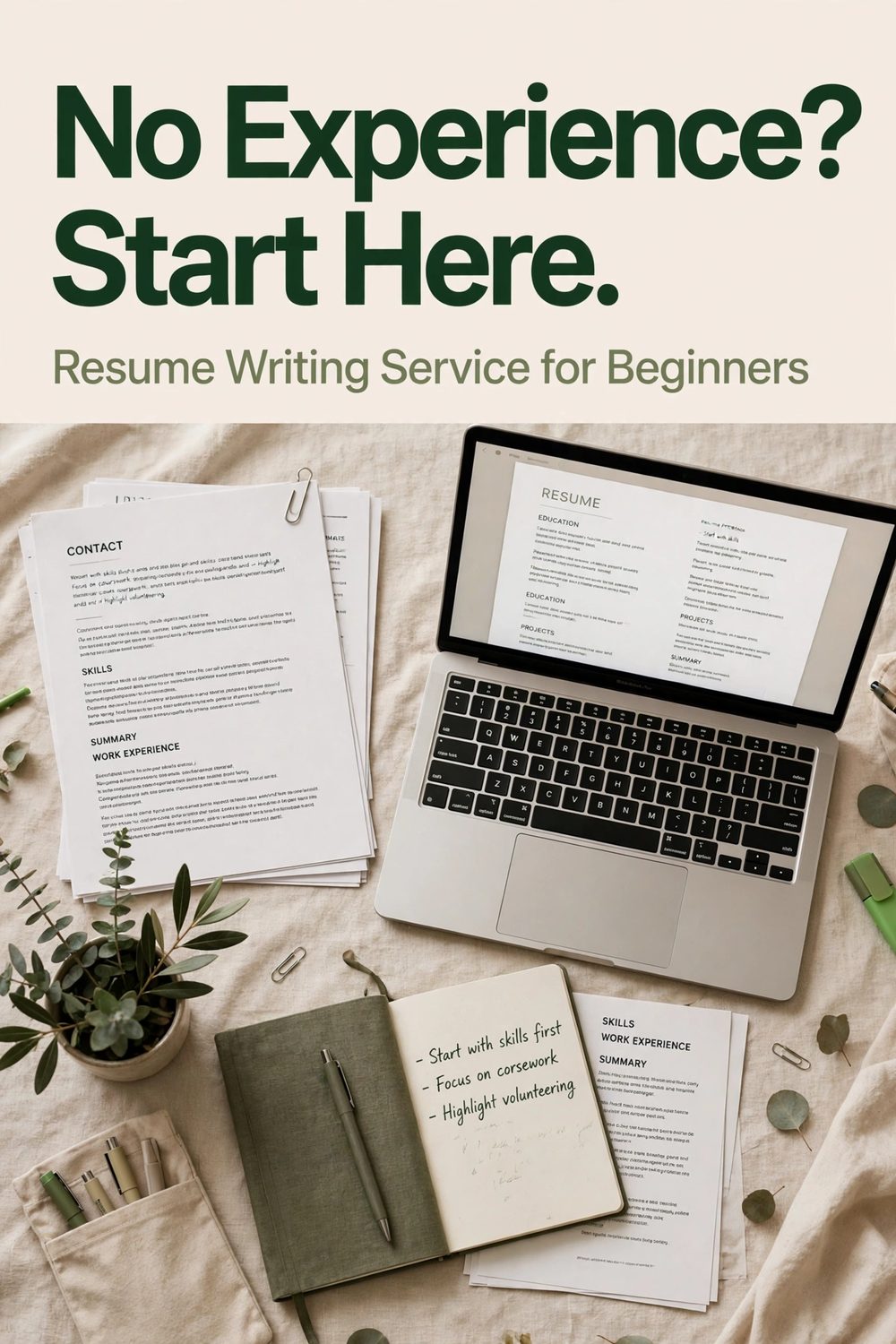
Notice that the improved versions use strong verbs, specific details, and outcomes. Always confirm numbers with the client so every claim is accurate.
Helping Clients Handle Career Gaps and Changes
Many clients worry about gaps or unusual career paths. Here’s how you can help them present their story honestly:
- Normalize the situation. Gaps happen for caregiving, health, relocation, or study.
- Focus on skills gained through volunteering, freelancing, or caregiving, where relevant.
- Use a skills-forward format when it fits the client’s story.
- Prepare a brief, confident explanation the client can use in interviews.
- Never hide or falsify dates. Clarity and honesty build trust.
When you help clients see their experience in a new light, you give them more than a document. You give them confidence to walk into interviews feeling prepared.
Mistakes to Avoid
- Using one template for everyone.
- Exaggerating achievements.
- Promising job offers.
- Skipping intake questions.
- Ignoring confidentiality.
- Underpricing.
Quick Answers About Resume Writing Services
Do I need certification? Not always, but credentials can build trust. Skills and samples matter most.
How much can I earn? It varies widely by niche, experience, and pricing.
How long does one resume take? Often a few hours including questionnaire review, drafting, and revisions.
Can I work with international clients? Yes, but learn local resume conventions for each country.
Help People Tell Their Stories
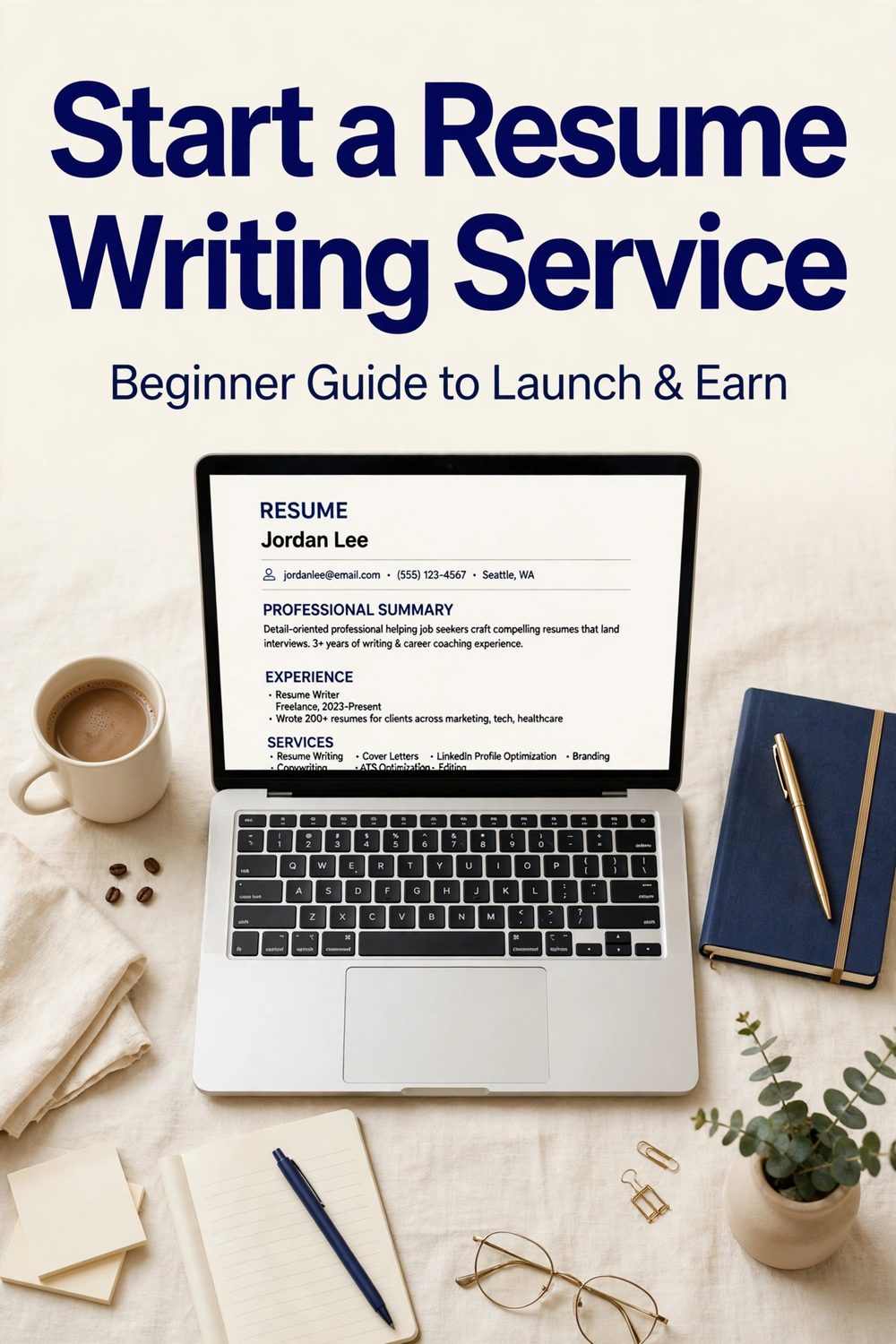
Starting a resume writing service is about listening carefully, highlighting real strengths, and helping people feel confident. Learn the craft, create a clear process, build proof, and reach out.
This week, rewrite your own resume as practice and offer to help one friend. Trust me, the moment a client says, “That sounds like me on my best day,” you’ll know this work matters. You’ve got this!









Leave a Reply