


There’s nothing quite like the feeling of a well-earned vacation: new surroundings, no alarm clocks, time to relax and reconnect. But there’s also nothing quite like the feeling of coming home to a credit card statement that makes your stomach drop.
The good news is that you don’t have to choose between a great trip and financial peace of mind. With a vacation budget, you can plan the getaway you want, save for it ahead of time, and enjoy every moment without the guilt.
In this guide, I’ll walk you through the process step by step, from deciding how much to spend to tracking your costs while you travel.
Note: This article offers general information and is not personalized financial advice.
Why You Need a Vacation Budget
A vacation budget helps you:
- Know your limit before you book anything
- Save in advance instead of borrowing
- Prioritize what matters most to you
- Avoid surprise costs by planning for the details
- Enjoy your trip without constant money worry
- Prevent post-vacation regret and debt
Think of it as giving every dollar a job so you can spend freely, within your plan, once you’re there.

Step 1: Decide What You Can Afford
Start with your overall number. Look at your finances and ask:
- How much can I realistically save before the trip?
- Do I have extra income or a bonus coming?
- Are there other goals (like an emergency fund) that need to come first?
- How much am I comfortable spending in total?
If you’re not sure, work backward from your timeline. For example, if you want to travel in eight months and can save $150 a month, your budget is about $1,200. That helps you choose a destination and travel style that fit.
If you prefer to start with a dream destination, research costs first, and then decide whether to adjust the time of year, length of stay, or style of travel.
Step 2: Choose Your Trip Basics
Make a few key decisions that will shape your budget:
- Destination: Some places cost much more than others.
- Travel dates: Off-season and midweek travel are usually cheaper.
- Trip length: Fewer days can mean major savings.
- Number of travelers: Costs multiply with each person, though some, like lodging, can be shared.
- Travel style: Budget, comfortable, or luxury.
Write these down so you can create a realistic estimate.

Step 3: List All Your Expected Expenses
The most common vacation budgeting mistake is forgetting categories. Use this list as a starting point.
Before the trip
- Transportation (flights, gas, train tickets)
- Lodging deposits
- Passports, visas, or travel documents
- Travel insurance
- Vaccinations or health needs
- Luggage, clothing, or gear
- Pet care or house sitting
- Time off work, if unpaid

During the trip
- Lodging: Hotel, rental, or campsite
- Local transportation: Taxis, rideshares, rental cars, parking, public transit
- Food and drinks: Meals, snacks, groceries, coffee
- Activities: Tours, tickets, admission fees
- Shopping and souvenirs
- Tips and gratuities
- Phone and data costs
- Baggage fees
- Miscellaneous: Laundry, toiletries, emergencies
After the trip
- Photo printing or albums
- Replacing gear
- Bills that come due while you’re away
The Vacation Budget planner gives you a structured way to list these categories, estimate costs, and compare your plan with actual spending, so nothing gets overlooked.

Step 4: Research Real Costs
Replace guesses with real numbers. Check:
- Airline and hotel prices for your dates
- Average meal costs in your destination
- Attraction ticket prices
- Public transportation fares
- Parking or rental car costs
Travel websites, official tourism pages, and recent traveler reviews can help you estimate daily costs. Add a buffer of 10-15% for surprises. Prices change, and unexpected expenses pop up.
Step 5: Set a Daily Spending Allowance
Once big costs like transportation and lodging are covered, divide the remaining budget by the number of days. This gives you a daily allowance for food, activities, and extras.
Example: If you have $600 left for a 6-day trip, that’s $100 per day. Some days you’ll spend more (a special dinner), and others less (a free beach day). A daily target helps you balance them.
Step 6: Create Your Savings Plan
Now figure out how to fund your trip. Break your total into smaller steps:
Trip total ÷ number of weeks until departure = weekly savings goal
Example: $1,500 ÷ 30 weeks = $50 per week.
Open a dedicated savings account or sub-account labeled “Vacation Fund” so the money doesn’t blend with everyday spending. Automate transfers so saving happens without thinking.
Track your progress with the Savings Goals Journal, which lets you log each deposit and watch your vacation fund grow. Visual progress is incredibly motivating, and by the time you pack your suitcase, you’ll feel proud.

Ways to boost your vacation fund
- Cut a few expenses temporarily (takeout, subscriptions)
- Sell unused items
- Pick up extra work or freelance projects
- Redirect bonuses or tax refunds
- Try a savings challenge
- Use cash-back rewards (only if you pay balances in full)
Step 7: Book Smart
Once your budget is set, look for ways to stretch it:
- Be flexible with dates. Compare prices for different days and months.
- Book early, but watch for price drops.
- Use alerts for flights and hotels.
- Consider alternative lodging, such as rentals with kitchens that let you cook some meals.
- Travel in the shoulder season, when crowds and costs are lower.
- Look for bundles or package deals.
- Check cancellation policies before booking.
- Compare total costs, including fees and taxes.
- Use points or miles, if you have them.

Step 8: Plan Food and Activities Wisely
Food and activities can quickly eat up your budget. Keep it manageable:
- Mix it up: Enjoy a few memorable restaurant meals and balance them with picnics, groceries, or street food.
- Search for free activities: Parks, beaches, walking tours, and museums with free days.
- Prioritize your top experiences. Decide what you truly want to do and spend on those first.
- Buy attraction passes only if they save money based on what you plan to visit.
- Pre-book popular tours to avoid higher last-minute prices.
If you’re a planner, a trip itinerary alongside your budget keeps everything organized. You can also use the Work Day Organizer to schedule pre-trip tasks like booking, packing, and arranging coverage at work.

Step 9: Track Spending During the Trip
Keeping an eye on spending while traveling doesn’t mean obsessing. Make it easy:
- Check in daily. Spend two minutes each evening recording what you spent.
- Keep receipts or snap photos of them. A Receipt Journal can be a tidy way to log purchases if you like a paper trail.
- Use cash for daily spending if it helps you stay within limits. Put your daily allowance in an envelope.
- Watch your running total against your budget.
- Adjust as you go. If you overspend one day, plan a lighter one the next.

Step 10: Review After the Trip
When you’re back, compare your plan with reality:
- Where did you spend more or less than expected?
- What was worth every penny?
- What would you skip or change next time?
- Did you stay within budget?
Make notes for future trips. Over time, you’ll become a skilled traveler and a skilled budgeter.
Sample Vacation Budget
Here’s an example for a 5-day trip for two people:
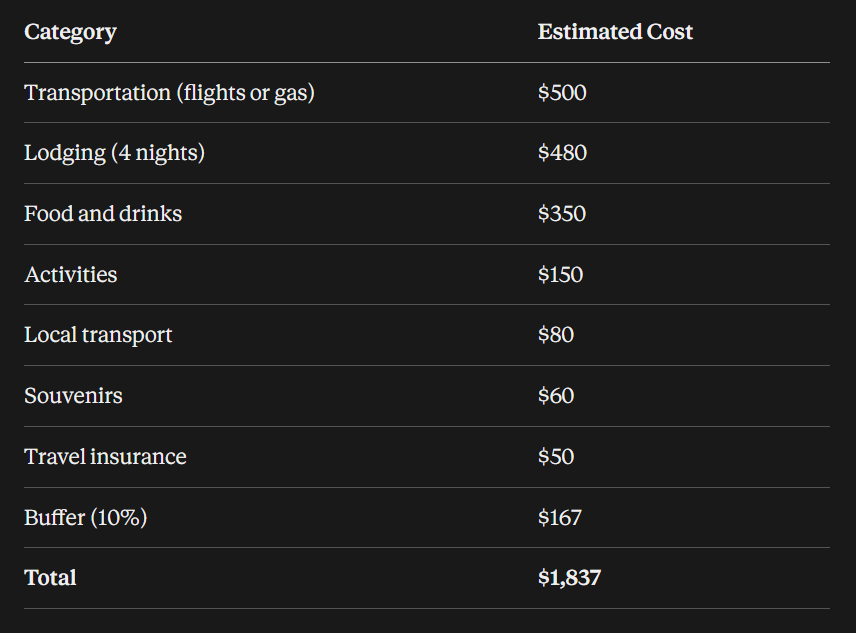
Your numbers will differ based on where you go and how you travel. The key is to have a plan.
Budget-Friendly Vacation Ideas
If you’re on a tight budget, consider:
- Staycation: Be a tourist in your own city.
- Road trip: Drive to a nearby state or region.
- Camping or cabin getaway
- Visiting friends or family
- Off-season travel
- Long weekend trips instead of full weeks
- House-swap or home exchange
A great trip isn’t about spending the most. It’s about creating memories and recharging.

Vacation Planning for Entrepreneurs
If you run a business, taking time off requires extra planning:
- Pre-schedule content and customer communication.
- Set an out-of-office message and clear return date.
- Close orders early, or pause your shop, if needed.
- Plan for lost income by saving a bit extra.
- Delegate or automate essential tasks.
A break helps prevent burnout and often brings fresh ideas. Check out our upcoming guide on avoiding burnout for more.
Common Vacation Budget Mistakes
Forgetting small expenses. Tips, parking, and baggage fees add up.
Underestimating food costs. Eating out for every meal is pricey.
Not saving in advance. Debt can make memories feel less sweet.
Skipping the buffer. Unexpected costs happen.
Overbooking activities. Leave room for rest and spontaneity.
Ignoring exchange rates and fees on international trips.
Not tracking spending. It’s easy to lose count.

Vacation Budget Checklist
[ ] Decide on your total budget
[ ] Choose destination, dates, and trip length
[ ] List all expense categories
[ ] Research actual costs
[ ] Add a 10-15% buffer
[ ] Calculate your weekly savings goal
[ ] Open a vacation savings account
[ ] Track your progress
[ ] Book wisely
[ ] Track spending on the trip
[ ] Review and learn afterward
Final Thoughts
A vacation budget isn’t a limit on your fun. It’s the foundation that makes your fun worry-free. When you know what you can spend and have saved for it ahead of time, you can relax and truly enjoy your time away.
Start by choosing a number, researching real costs, and setting up your savings plan. Soon, your dream trip will feel less like a wish and more like a date on the calendar.
Ready to plan your getaway? Use the Vacation Budget planner, track your savings with the Savings Goals Journal, and keep your receipts organized with the Receipt Journal.










Leave a Reply