


Starting a side hustle is exciting. You make your first sale, your first dollar, your first “ka-ching” moment. But then something happens: the money seems to disappear. You earned $1,000 last month, yet you’re not sure where it went or whether you actually made a profit.
You’re not alone. Many side hustlers are great at creating products and finding customers but never build the money habits that turn income into lasting financial progress.
The good news: you don’t need an accounting degree or hours every week. Seven simple habits can bring clarity, confidence, and growth to your side hustle finances.
Disclaimer: This article provides general information, not tax, legal, or financial advice. Rules vary by location and situation, so please consult a qualified professional for guidance specific to you.
Habit 1: Separate Business and Personal Money
If you take just one thing from this article, let it be this: keep your business money separate from your personal money.
Why it matters:
- Clarity: You can see exactly how your business is doing.
- Simplicity: Tracking income and expenses is much easier.
- Tax time: Records are cleaner, and deductions are easier to document.
- Professionalism: It helps you treat your hustle like a real business.
How to do it:
- Open a separate checking account (or at least a dedicated card) for business use.
- Route all business income to that account.
- Pay business expenses from it.
- Move money to your personal account as a “paycheck” rather than dipping in randomly.
If you can’t open a separate account right away, create a clear system for marking business transactions, and aim to separate them as soon as possible.

Habit 2: Track Every Dollar In and Out
You can’t improve what you don’t measure. Make a habit of recording your income and expenses regularly.
Track income
Record every sale, payment, or tip: the date, the source, and the amount.
Track expenses
Log supplies, packaging, shipping, software, fees, advertising, and anything else you spend for your business. The Receipt Journal provides an easy format to log purchases and keep your receipts organized, so you’re not scrambling at tax time.

Make it a routine
Choose a weekly “money minute” appointment, such as Sunday evening, to update your records. Ten to fifteen minutes is often enough if you stay consistent.
Habit 3: Know Your Numbers Monthly
Tracking is the first step. Reviewing is where insights happen. Once a month, look at:
- Total income
- Total expenses
- Profit (income minus expenses)
- Your best-selling products or services
- Your biggest expenses
- Progress toward your goal
A tool like the Monthly Business Tracker pulls these numbers into one place so you can see trends at a glance. Ask: What’s working? What’s costing too much? What should I do more or less of next month?

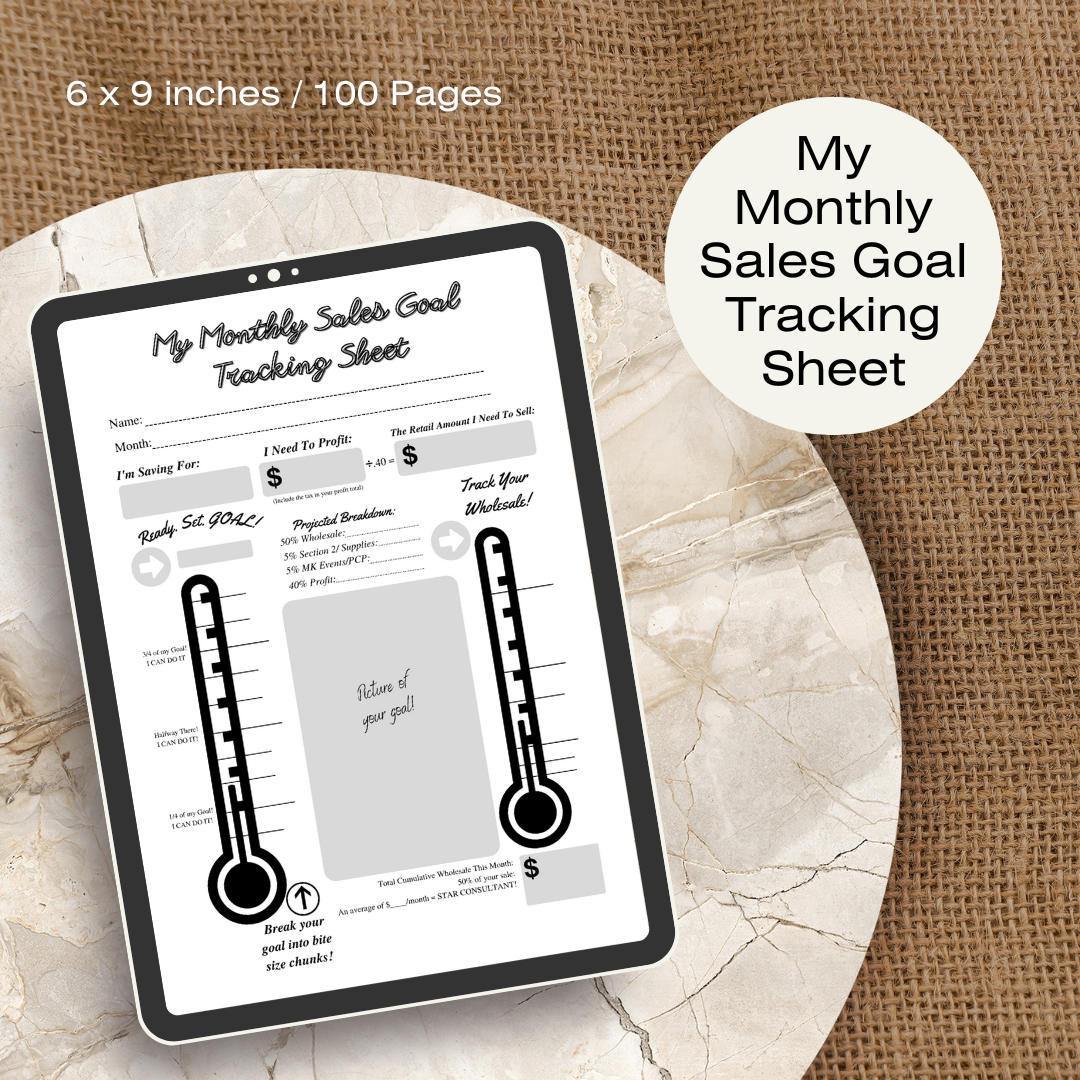
Setting a sales target helps too. The My Monthly Sales Goal Tracking Sheet lets you compare your goal with actual results throughout the month, so you can adjust before the month ends.
Habit 4: Price for Profit (Not Just Revenue)
Many side hustlers undercharge because they forget to include all their costs, or because they’re afraid customers will say no. But pricing too low means working hard for little reward.
Calculate your true costs
For each product or service, include:
- Materials and supplies
- Packaging
- Shipping (if you cover it)
- Platform and payment fees
- A portion of software or equipment costs
- Your time (yes, your time has value)
Add a profit margin
After covering costs, decide how much profit you want. Many sellers aim for a healthy margin, but the right number varies by business. A good place to start is to compare your price with similar offers in your market and make sure you’re not underselling yourself.
Review prices regularly
Costs change. Review your prices every few months, and adjust when your expenses rise. Your future self will thank you.

Habit 5: Pay Yourself (and Plan for Taxes)
Pay yourself regularly
It’s tempting to pour every dollar back into the business or spend it as it comes in. Instead, decide how much of your profit you’ll take as a “paycheck,” and transfer it on a schedule. Start with a modest, consistent amount, and increase as the business grows.
Set money aside for taxes
Depending on where you live and how you’re classified, you may owe taxes on your side hustle income, and no employer is withholding them for you. A common practice is to set aside a percentage of each payment in a separate account so you’re not surprised later. The right percentage depends on your situation, so ask a qualified tax professional or check your local tax authority’s guidance.
Keep records
Good records, including receipts, invoices, and monthly summaries, make everything easier.
Habit 6: Save Consistently (Business and Personal)
Side hustle income can be irregular, which makes saving a must. Build two types of savings:
Personal savings

An emergency fund, plus any short-term goals like travel or big purchases. The Savings Goals Journal helps you set specific targets and track progress, and the Savings Money Journal is a great companion for ongoing deposits.

Business savings
Money set aside for slow months, equipment replacements, new inventory, or growth opportunities.
How to make it stick
- Save a percentage of every payment you receive (for example, 10%).
- Automate transfers when possible.
- Label accounts by purpose.
- Celebrate milestones.
Even small, regular deposits add up over time.
Habit 7: Reinvest Wisely and Set Clear Goals
Reinvesting in your business can accelerate growth, but only when it’s intentional. Before spending, ask:
- Will this help me earn more or save time?
- What’s the expected return?
- Can I afford it without hurting my personal finances?
- Is there a cheaper way to start?
Examples of smart reinvestment:
- Better tools that speed up production
- A course that teaches a skill you need
- Improved packaging or branding
- Advertising that you’ve tested on a small scale
- Systems that save time, like order forms or templates. The Order Form Journal is one example of an inexpensive tool that can make order handling smoother.

Set clear financial goals
Define what you want your side hustle to do for you: cover a monthly bill, fund a vacation, replace part of your income, or grow into a full-time business. Write down numbers and deadlines, and review them monthly. The Top 3 Main Goals Right Now Journal is a handy place to keep these goals visible.

Putting the Habits Into a Weekly Routine
It’s much easier to follow money habits when they’re part of your schedule. Here’s a simple weekly rhythm:
Daily (5 minutes):
- Record sales and expenses
- Save receipts
Weekly (15-20 minutes):
- Update your tracker
- Match records to bank statements
- Transfer your planned savings
- Check progress toward your sales goal
Monthly (45-60 minutes):
- Review income, expenses, and profit
- Pay yourself
- Set aside tax and business savings
- Adjust prices or spending as needed
- Plan next month’s goals
Quarterly:
- Review your overall direction
- Check your tax set-aside
- Decide on investments or changes
Add these to your calendar. The Work Day Organizer can help you slot “money minutes” into your regular workday so they actually happen.

Mindset Matters: Your Relationship With Money
Many of us carry beliefs about money that hold us back: “I’m bad with numbers,” “Charging more is greedy,” “I’ll deal with finances later.” These thoughts can sabotage good habits.
Try reframing:
- “I’m learning to understand my numbers.”
- “Fair pricing allows me to serve customers well and sustain my business.”
- “A little attention each week prevents big problems later.”
If money stress feels overwhelming or emotional, writing about it can help. The Self Therapy Journal offers prompts for exploring thoughts and feelings that may be influencing your choices.

Common Money Mistakes Side Hustlers Make
Mixing accounts. It creates confusion and extra work.
Ignoring small expenses. They add up fast.
Underpricing. You deserve to be paid fairly for your time and skill.
Forgetting taxes. Set money aside early.
Not paying yourself. Your effort has value.
Reinvesting everything. Keep a cushion.
Avoiding the numbers. Facing them reduces stress over time.
Waiting until it’s “big enough” to get organized. Start now, however small.
Money Habits Checklist
[ ] Separate business and personal accounts
[ ] Record income and expenses weekly
[ ] Save receipts
[ ] Review numbers monthly
[ ] Price for profit
[ ] Pay yourself on a schedule
[ ] Set aside money for taxes
[ ] Save for emergencies and business needs
[ ] Set clear financial goals
[ ] Review and adjust quarterly
Final Thoughts
Building a profitable side hustle isn’t only about making sales. It’s about managing what comes in and what goes out. These seven habits don’t require perfection or a lot of time, just consistency. Start with one or two this week, and add more as they become routine.
Your side hustle can be a real source of income, confidence, and freedom. Give it the financial foundation it deserves.
Ready to take control of your money? Start with the Receipt Journal, track your growth with the Monthly Business Tracker, and build your savings with the Savings Money Journal.










Leave a Reply