


Did you know that over 70% of consumers say they trust a recommendation from an individual person more than a brand? I remember the exact moment that stat clicked for me. I’d spent years quietly posting on social media with zero strategy, wondering why my “brand” — if you could even call it that — went nowhere. Then I watched a woman with a fraction of my knowledge but a crystal-clear personal brand land a five-figure coaching launch in a single week. Boy, was that a wake-up call.
That’s when I finally understood: your personal brand isn’t your logo, your color palette, or even your follower count. It’s the reputation people have of you when you’re not in the room. Once I got intentional about mine, everything shifted — brand deals started coming to me instead of me chasing them, and I built multiple income streams around the one thing that’s genuinely un-copyable: me.
If you’ve ever thought “I’m not interesting enough to have a personal brand” or “isn’t that just for celebrities and influencers?” — trust me, I thought the exact same thing before I started. In this comprehensive guide, I’ll walk you through everything you need to know about building a personal brand from scratch and, more importantly, turning it into real, sustainable income in 2026.
What a Personal Brand Actually Is (And Why It’s Your Biggest Asset)
Here’s the truth: a personal brand is simply the consistent story, values, and expertise you’re known for. It’s the answer to the question, “What do people think of when they think of me?” Whether you’re building a business, freelancing, or growing a following, your personal brand is the thing that makes people choose you over the dozens of other options out there.
Here’s what I learned the hard way: you don’t need to be the most talented or most experienced person in your field to build a strong personal brand. You need to be the most consistent and clear about what you stand for. I’ve watched people with less experience than me build bigger businesses simply because their brand was easier to understand and trust.

The core pillars of a strong personal brand:
- Your niche — the specific problem you help people solve or the specific audience you serve
- Your story — the personal experience that makes you credible and relatable
- Your voice — the consistent tone and personality people recognize instantly
- Your visuals — colors, fonts, and imagery that make your content instantly recognizable
- Your values — what you stand for, which naturally repels the wrong audience and attracts the right one
Game-changer realization for me: a personal brand isn’t built through a fancy logo. It’s built through showing up consistently with the same message until people start associating that message with you.
Step 1: Get Crystal Clear on Your Niche and Story
I made a big mistake early on — I tried to be relatable to everyone. Fitness tips one week, business advice the next, then a random cooking post. My growth stalled hard because nobody could figure out what I actually stood for.
Here’s what actually works: get specific. Not “I help women,” but “I help busy moms build a side income without sacrificing family time.” The riches really are in the niches, and personal branding is no exception.

Ask yourself these questions to find your angle:
- What problem do I have real experience solving, even if I’m not a “guru” yet?
- What personal story led me here, and is it relatable to the people I want to help?
- What do people already come to me for advice about, without me even asking?
Pro tip: Your story doesn’t need to be dramatic to be powerful. Some of the most effective personal brands are built on simple, relatable journeys — “I was overwhelmed and broke, here’s what changed” resonates with far more people than a highlight reel of perfection.
Step 2: Build Your Content Foundation
When I first started, I was obsessed with looking “polished” before I posted anything. Fast forward to today, and I can tell you that consistency beats polish every single time. What actually matters early on is building a system you can sustain long-term.

Here’s what I recommend focusing on first:
- Choose your primary platform. Instagram, TikTok, LinkedIn, YouTube, or a blog — pick based on where your ideal audience already spends time.
- Define your content pillars. I use 4–5 recurring themes (personal story, education, behind-the-scenes, client wins, opinion/hot takes) so I’m never scrambling for ideas.
- Batch create. I plan and film an entire week of content in one sitting — this has been a genuine game-changer for staying consistent without burning out.
- Nail your visual consistency. A simple, repeatable color palette and font pairing (I use Canva Pro, $119/year) makes your content instantly recognizable in a crowded feed.
Pro tip: don’t wait until you feel “expert enough” to start posting. I wish someone had told me sooner that showing up as a “few steps ahead” guide is often more relatable — and more trusted — than trying to sound like a distant expert.
Step 3: Grow Trust, Not Just an Audience
Here’s what I wish someone had told me sooner: 3,000 people who trust you deeply will make you money faster than 30,000 people who barely know your name. A personal brand lives and dies by trust, not vanity metrics.

Things that genuinely moved the needle for me:
- Sharing real behind-the-scenes moments, including the messy, unfiltered parts of the journey
- Being consistent with my message across every single platform I show up on
- Engaging authentically in comments and DMs instead of treating followers like a number
- Collaborating with other personal brands in adjacent niches to reach new, aligned audiences
- Showing results and testimonials whenever I genuinely helped someone, no matter how small the win
Big mistake I made early on: I hid my failures because I thought they’d hurt my credibility. The opposite happened — sharing the messy middle of my journey is consistently what my audience connects with most.
Step 4: The Monetization Playbook — How Personal Brands Actually Make Money
Okay, this is the part everyone’s really here for. Let me share the real income streams that work once your personal brand starts gaining traction.
1. Coaching and Consulting
Once people trust your expertise, they’ll pay for direct access to it. Whether it’s 1:1 coaching calls or group consulting, this is often the fastest way to monetize a growing personal brand because it doesn’t require a large audience — just a highly engaged one.
2. Brand Partnerships and Sponsorships
Companies want to align themselves with trusted voices, not just big numbers. A strong, clear personal brand makes you a far more attractive partner than a generic account, even at a smaller following size.
3. Affiliate Marketing
This became one of my easiest income streams because it leverages the trust you’ve already built — recommending tools, products, and resources you genuinely use, with a commission on every sale through your link.
4. Speaking and Media Opportunities
As your brand grows, podcasts, panels, and speaking events open up. These rarely pay huge amounts at first, but they compound your visibility and credibility significantly.
5. Digital Products
Here’s the truth: this is where personal brand income becomes truly scalable. Once you understand exactly what your audience struggles with, you can package your expertise, process, or framework into an ebook, template, or course — and sell it directly, without needing a single brand deal or algorithm’s approval.
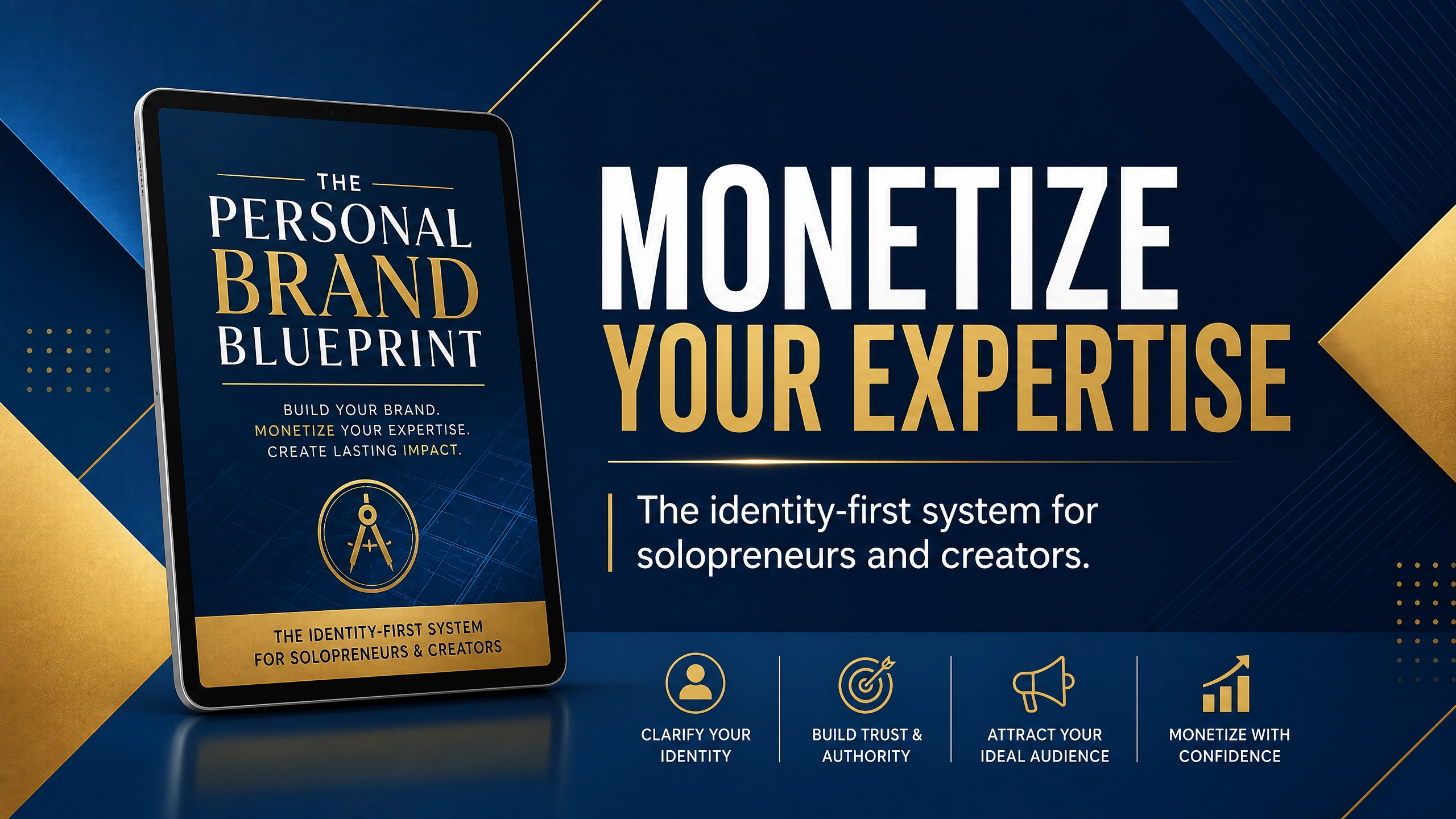
If you’re serious about building this side of your income, I put together everything I’ve learned into one complete resource — the exact framework I used to go from an unclear, inconsistent presence to a personal brand that generates income on its own. It’s called The Personal Brand Blueprint, and it’s the guide I genuinely wish existed when I was piecing all of this together through years of trial and error. It walks you through everything in this post step-by-step, plus the positioning frameworks and monetization templates I personally use.
BUY EBOOK!
Step 5: Treat It Like a Real Business From Day One
I used to get nervous sweats thinking about the “business side” of all this, but trust me, a little structure early on saves you massive headaches later.
- Open a separate bank account for your personal brand income, even before it feels “official”
- Track every payment and expense, even small ones — a simple spreadsheet is enough to start
- Set aside a percentage of income for taxes, since this is typically self-employment income
- Use simple contracts or written agreements for every paid collaboration or client
- Revisit and refine your positioning every few months as your brand and audience mature

Step 6: Scale Beyond One Platform and One Income Stream
Once you’ve built genuine trust and traction, this is where the real financial freedom kicks in. Diversifying protects you from algorithm changes and platform risk — trust me, you do not want to learn that lesson the hard way.
- Repurpose your best-performing content across two to three platforms
- Build an email list early — it’s the one audience you truly own, no algorithm required
- Layer multiple income streams (coaching + affiliates + digital products) so no single stream carries all the weight
- Revisit your rates and offers regularly as your credibility and results grow
Building a personal brand is genuinely one of the most valuable long-term investments you can make, because unlike a platform or a job title, it’s the one asset that follows you everywhere. It won’t happen overnight, and there will be stretches where growth feels painfully slow — I promise you, that’s completely normal, not a sign you’re doing something wrong.
By getting clear on your niche and story, showing up consistently with real trust-building content, and layering multiple income streams instead of relying on one, you’ll be well on your way to building a sustainable, income-generating personal brand in 2026. If you want the exact roadmap, positioning frameworks, and monetization templates I used to build mine, grab The Personal Brand Blueprint — it’s everything in this post, plus a whole lot more, in one place.
You May Also Like:



Leave a Reply