


Did you know that over 60% of solopreneurs now say they couldn’t run their business without AI tools? I definitely didn’t know that stat when I was drowning in spreadsheets, half-written emails, and a content calendar that existed only in my dreams.
Let me take you back about a year and a half. I was running my little online shop completely solo — no team, no VA, just me, my laptop, and a to-do list that never got shorter. I was doing everything by hand: writing product descriptions one painful sentence at a time, manually scheduling every single social post, answering the same customer questions over and over. I was busy, sure. But I wasn’t actually growing. Big mistake.
Then I started experimenting with AI tools — not to replace myself, but to become a one-woman team that could genuinely compete with businesses ten times my size. Fast forward to today, and I’m running my entire solopreneur business with a fraction of the hours I used to put in, while my revenue has actually gone up. That’s the power of becoming what I like to call an AI-powered solopreneur.
In this comprehensive guide, I’ll walk you through exactly what an AI-powered solopreneur is, why this business model is exploding right now, and how you can start using AI to build (or scale) your own solo business — even if you’re not “techy” at all.
What Is an AI-Powered Solopreneur?
Here’s the truth: a solopreneur has always meant “one person running a whole business.” What’s changed is that AI now lets that one person operate like a full team — a marketer, a designer, a customer service rep, and a strategist, all rolled into one.
When I first heard the term “AI-powered solopreneur,” I honestly rolled my eyes a little. It sounded like another buzzword. But once I actually started layering AI tools into my daily workflow, I realized this isn’t hype — it’s a genuine shift in what’s possible for someone building a business alone.

An AI-powered solopreneur typically uses AI for things like:
- Content creation (blog posts, social captions, product descriptions)
- Customer support (chatbots, auto-responses, FAQ handling)
- Business planning (market research, competitor analysis)
- Design and branding (logos, mockups, graphics)
- Admin and operations (scheduling, email management, bookkeeping)
The result? You get the leverage of a team without the payroll. Trust me, as someone who used to get nervous sweats just thinking about hiring and managing people, this model has been a total game-changer for me.
Why This Business Model Is Booming Right Now
I remember when “starting a business” meant needing capital, a team, and years of grinding before you saw real traction. That’s simply not the reality anymore, and here’s why the AI-powered solopreneur trend is exploding:
- AI tools are cheaper and more accessible than ever. Many powerful tools have free tiers or affordable monthly plans.
- The skills gap has shrunk. You don’t need to know how to code, design, or write copy professionally anymore — AI can help fill those gaps.
- Consumers expect fast, personalized service, and AI helps solo business owners deliver that at scale.
- Remote and location-independent work is now the norm, which pairs perfectly with lean, AI-assisted businesses.
I wish someone had told me this earlier: you don’t need to wait until you can “afford a team” to run a business that feels big. You can build that leverage yourself, starting today.
Getting Started: The AI Solopreneur Toolkit
When I first started building out my AI-powered workflow, I felt overwhelmed by all the options. So let me save you that headache and share the core categories of tools that actually move the needle.
1. AI Writing & Content Tools
This is your bread and butter if your business involves any kind of content — blog posts, emails, product listings, or social captions.
- Use AI to draft first versions of blog posts, then edit in your own voice
- Generate product descriptions in bulk for Etsy or online shop listings
- Draft email sequences for your list in minutes instead of hours
Pro tip: Never publish AI content exactly as generated. Always add your personal stories, your voice, and your specific experience — that’s what actually builds trust with your audience.
2. AI Design Tools
- Canva’s AI features (I use Canva Pro for about 90% of my visual content)
- AI logo and branding generators for a professional look on a startup budget
- AI mockup generators, especially handy for print-on-demand or digital product sellers
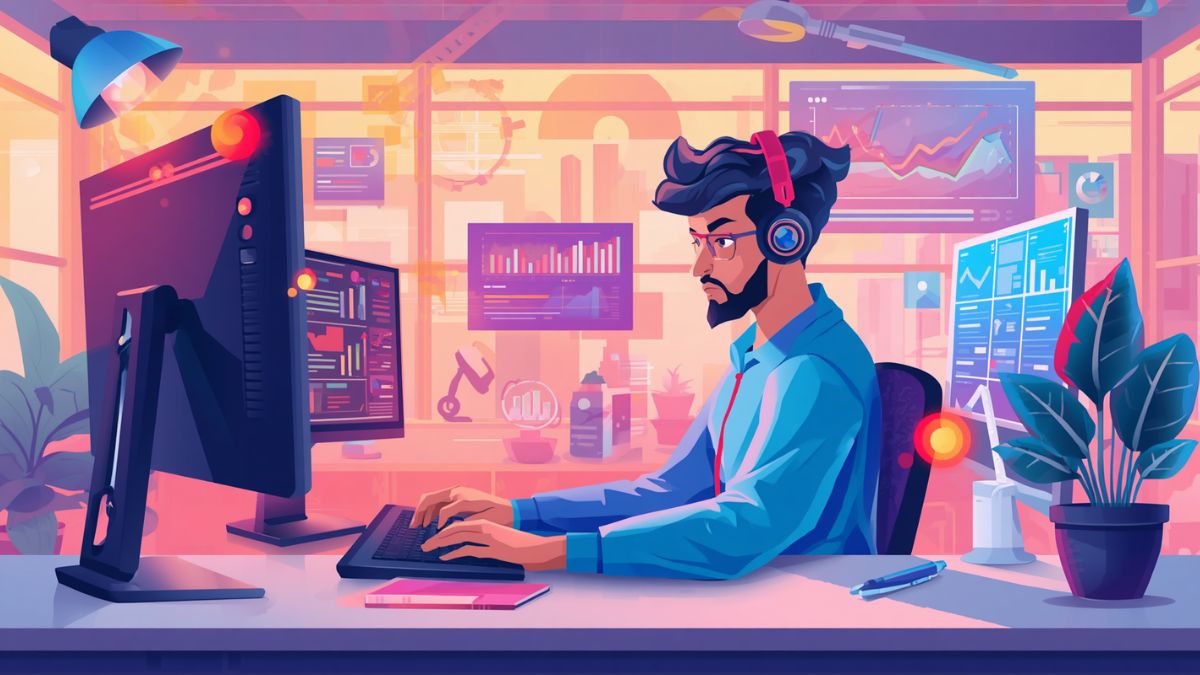
3. AI Research & Strategy Tools
- Market and competitor research assistants
- Keyword and SEO research tools
- AI-powered trend spotting for your niche
4. AI Customer Service & Admin Tools
- Chatbots for FAQs on your website or shop
- AI email assistants that draft replies for you
- Scheduling and calendar assistants that save you back-and-forth emails
Here’s what I learned the hard way: trying to adopt every tool at once will burn you out fast. Pick one category, master it, then move to the next.
Step-by-Step: Building Your AI-Powered Solo Business
Let me walk you through the exact process I’d recommend if you’re starting from scratch (or restructuring an existing solo business).
Step 1: Audit Your Current Workflow
Before adding any AI tool, write down everything you do in a typical week. I know this sounds tedious, but it’s essential. You need to see where your time actually goes before you can automate or delegate it to AI.
Step 2: Identify Your Biggest Time Drains
Look at your list and circle the three tasks that eat the most hours but don’t require your unique expertise. For me, that was content writing, social scheduling, and answering repetitive customer emails.

Step 3: Choose One AI Tool per Time Drain
Don’t try to overhaul everything overnight. Pick a single AI tool for each pain point and commit to using it consistently for two to three weeks before adding more.
Step 4: Build Simple AI-Assisted Systems
This is where the magic happens. Instead of using AI tools as one-off helpers, turn them into repeatable systems:
- A content system: AI drafts → you edit → scheduling tool posts
- A customer service system: chatbot handles FAQs → you handle the rest
- A research system: AI pulls trend data monthly → you plan content around it
Step 5: Track Your Time and Revenue
Here’s what surprised me the most: within about two months of implementing these systems, I was working roughly 15 fewer hours a week — while my monthly revenue actually increased. That’s the real ROI of becoming an AI-powered solopreneur.
Common Mistakes to Avoid
Boy, was I wrong about a few things when I started. Learn from my mistakes so you don’t repeat them:
- Relying on AI without adding your own voice. Generic AI content doesn’t build a loyal audience — your personality does.
- Trying to automate everything at once. This leads to overwhelm and half-finished systems.
- Ignoring quality control. Always review AI-generated content and outputs before they go live.
- Forgetting the “human” in your business. People still buy from people. AI should support your relationship with your audience, not replace it.
- Not investing in learning. A little time spent learning how to prompt AI tools effectively pays off massively down the line.
Real Results: What Changed for Me
I want to be honest with you, because that’s the whole point of this blog. Becoming an AI-powered solopreneur didn’t make me rich overnight, and it’s not a magic button. But it did fundamentally change how sustainable my business feels.

Before: I was working 50+ hours a week, constantly behind on content, and honestly close to burnout.
After: I now work closer to 30–35 hours a week, my content is more consistent than it’s ever been, and I’ve had the mental space to actually plan for growth instead of just surviving week to week.
If you’ve been feeling stretched too thin running your business solo, I promise you’re not alone — and there is a better way to do this.
Want the Complete Playbook?
Everything I’ve shared here is really just the surface. If you want the full, step-by-step system I personally use to run my business as an AI-powered solopreneur — including the exact tools, prompts, and workflows I rely on every week — I put it all together in one place.
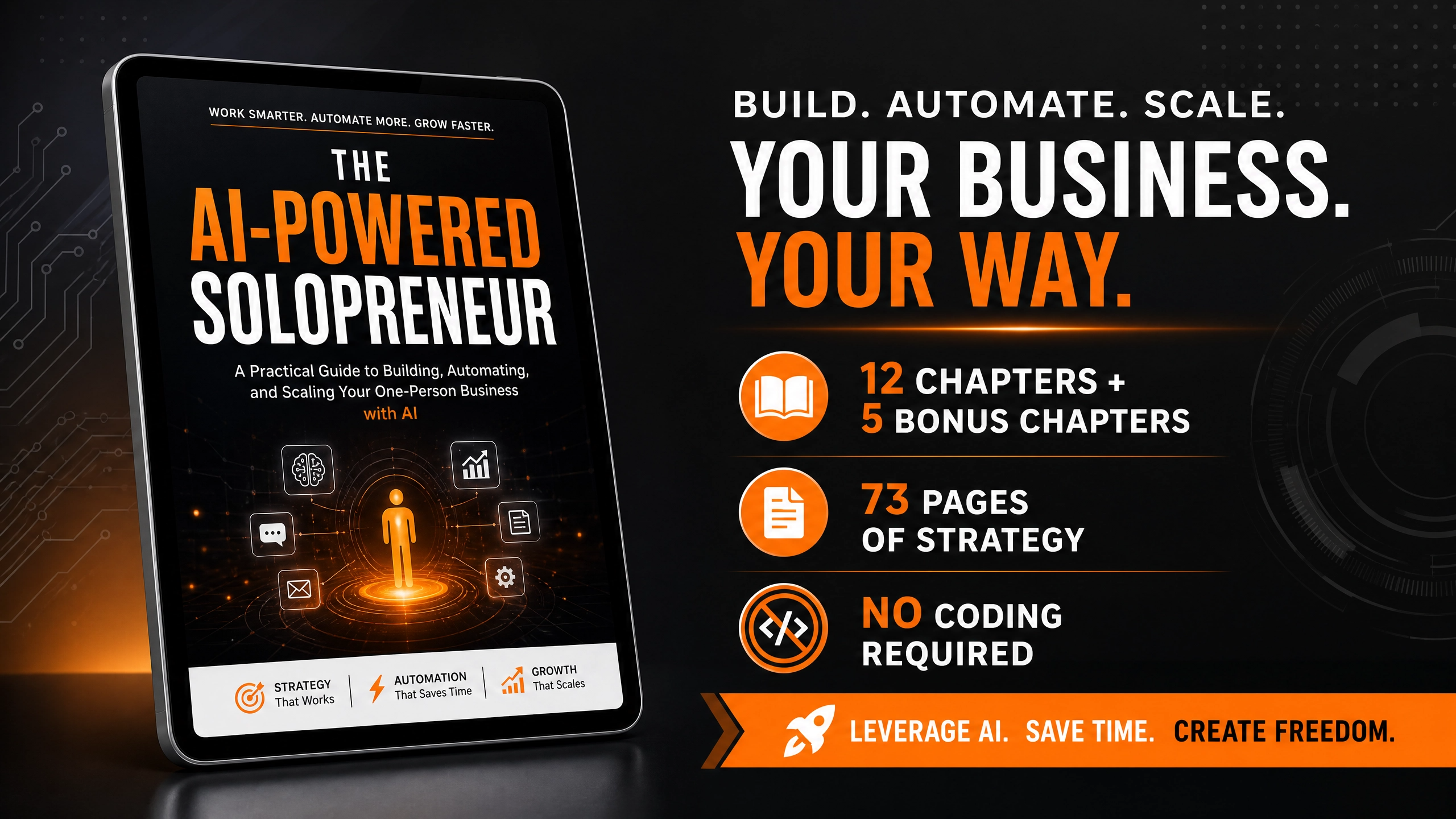
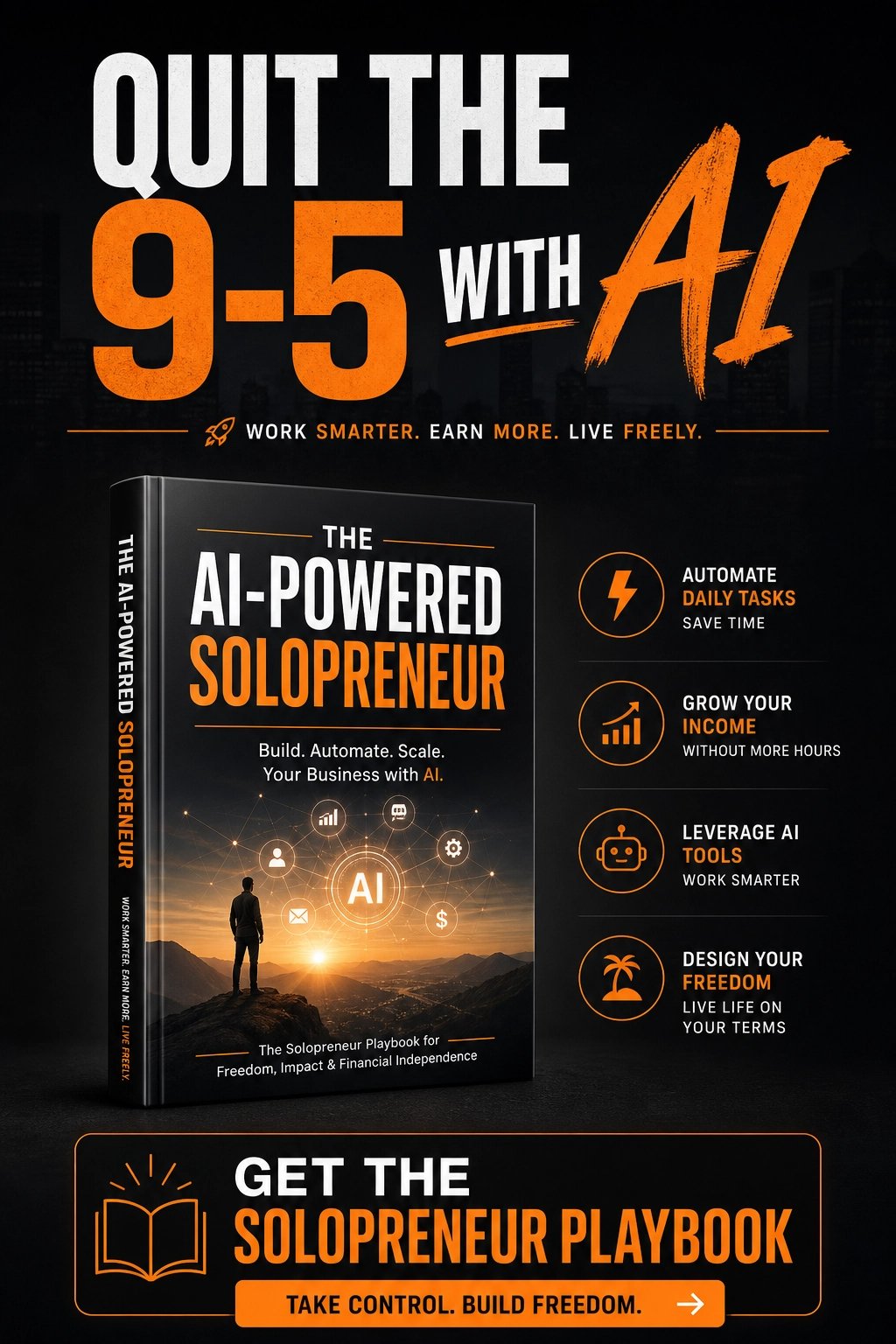
Check out The AI-Powered Solopreneur ebook. It’s the resource I wish I’d had when I was first starting out, and it walks you through building your own lean, AI-assisted business from the ground up.
Building a business alone doesn’t mean you have to do everything the hard way. The AI-powered solopreneur model is proof that one person, armed with the right tools and systems, can build something that feels — and performs — like a much bigger operation.
Start small. Pick one time-draining task, bring in one AI tool, and build from there. You’ll be amazed at how much more sustainable (and profitable) your solo business can become.






Leave a Reply