


The fridge is full, but somehow there’s “nothing to eat.” You open a few cabinets, sigh, and order takeout, again. Meanwhile, half the vegetables you bought last week are quietly wilting in the crisper drawer.
If this sounds familiar, you don’t need more willpower or fancier recipes. You need a system: a simple grocery list and a little meal prep. These two habits can save you hours each week, trim your grocery bill, reduce waste, and take the daily “what’s for dinner?” stress off your plate.
In this guide, I’ll show you how to plan meals, build a smart grocery list, and prep food in a way that works for busy women, working moms, and entrepreneurs.
Why Planning Your Groceries and Meals Matters
It saves money. Shopping with a list reduces impulse purchases, and planning meals around what you already have cuts waste.
It saves time. Fewer trips to the store, fewer last-minute decisions, and faster weeknight dinners.
It reduces stress. Knowing what’s for dinner removes a daily decision and a daily worry.
It supports healthier choices. When healthy options are ready, you’re less likely to default to fast food.
It reduces food waste. You buy what you’ll actually use.
Even small improvements add up. A few minutes of planning can pay off all week.

Step 1: Check What You Already Have
Before making a list, take a quick inventory of your fridge, freezer, and pantry. This takes about five minutes and prevents buying duplicates.
Ask yourself:
- What needs to be used up soon?
- What staples am I low on (rice, oil, spices, canned goods)?
- What can I build meals around?
Plan at least one or two meals around ingredients you already have.
Step 2: Plan Your Meals for the Week
You don’t need a Pinterest-perfect plan. Aim for simple, repeatable meals.
A flexible approach
- Choose 4-5 dinners. Leave room for leftovers and a flex night.
- Pick 2 easy breakfasts you can rotate.
- Pick 2-3 lunches, often built from dinner leftovers.
- Add snacks you’ll actually eat.
Tips for easier planning
- Theme your nights: Meatless Monday, Taco Tuesday, Pasta Wednesday, Sheet-pan Thursday, Pizza or flex Friday.
- Cook once, eat twice. Make extra to repurpose, like roasted chicken one night and chicken wraps the next.
- Check your calendar. Plan quick meals for busy evenings and bigger cooking for slower days.
- Rotate favorites. A list of 10-15 reliable meals is plenty.
- Include something new occasionally to keep things interesting.
If you’re also tracking how food affects your energy and mood, the Diet Journal (Editable Canva Template) pairs nicely with your meal plan so you can see what works best for you.

Step 3: Build a Smart Grocery List
Now turn your plan into a list. Write down every ingredient you need, minus what’s already in your kitchen.
Organize by store section
Grouping items by the layout of your store saves time and prevents backtracking. Common categories:
- Produce
- Meat and seafood
- Dairy and eggs
- Bakery and bread
- Pantry and canned goods
- Frozen foods
- Snacks and drinks
- Household and personal items
The Grocery List Journal provides a ready-made layout for this, so you can jot down items by category and keep your lists in one place. Many people love flipping back to previous lists to reuse favorites.

Add quantities
Writing “2 lbs chicken” or “1 bag spinach” prevents overbuying and underbuying.
Keep a running list
Keep your list on the fridge or in your bag. When you run out of something, write it down immediately so you don’t forget at the store.

Step 4: Shop Smart
Shop with a plan
- Never shop hungry. It leads to impulse buys.
- Stick to your list. Allow a small “fun” budget if you like.
- Set a budget and track it as you go.
- Compare unit prices to find true value.
- Check store flyers or apps for deals on items you need.
- Consider pickup or delivery. Online ordering can reduce impulse purchases and save time.

Choose the right time
Shop when stores are less crowded, like early mornings or weekday evenings. Fewer people means a faster trip.
Money-saving tips
- Buy produce in season
- Choose store brands for staples
- Buy in bulk for items you use often
- Freeze extras (bread, meat, berries)
- Avoid pre-cut or pre-packaged items when they cost more
If you’re working toward bigger financial goals, track your grocery savings with a tool like the Savings Money Journal. Even $20 a week saved on groceries adds up to over $1,000 a year.

Step 5: Prep Your Food
Meal prep doesn’t mean spending your entire Sunday cooking and eating identical meals all week. It simply means doing some tasks ahead of time so weeknights are easier.
Three levels of meal prep
Level 1: Ingredient prep (easiest)
- Wash and chop vegetables
- Cook grains like rice or quinoa
- Boil eggs
- Marinate proteins
- Portion snacks
Level 2: Partial meals
- Cook a big batch of protein
- Make sauces and dressings
- Assemble soup or casserole bases
- Prepare overnight oats or breakfast jars
Level 3: Full meals
- Cook and portion complete meals
- Freeze individual servings
- Make freezer-friendly dishes ahead
Start with Level 1 and add more as it fits your schedule.

A simple 90-minute prep session
- Preheat the oven and roast a tray of vegetables.
- Start grains on the stove.
- Bake or cook protein (chicken, tofu, beans).
- Chop raw veggies for snacks and salads.
- Make a sauce or dressing.
- Pack into containers and label with dates.
Put on music or a podcast to make it enjoyable. If you like creating playlists, the Monthly Playlist Journal is a fun way to build a “meal prep Sunday” soundtrack.

Storage tips
- Use airtight, clearly labeled containers
- Refrigerate cooked food promptly
- Follow safe storage guidelines. Most cooked leftovers are best eaten within 3-4 days, and frozen meals keep longer
- Freeze portions you won’t eat soon
- Keep an “eat me first” shelf in your fridge
Step 6: Schedule It
Meal planning only works if you make time for it. Treat it like an appointment:
- Planning session: 15-20 minutes (Friday or Saturday)
- Shopping: 45-60 minutes (weekend or a set weekday)
- Prep: 60-90 minutes (Sunday)
Add them to your weekly schedule with the Work Day Organizer, or block time in your calendar. When it’s on the calendar, it’s far more likely to happen.

Sample Weekly Meal Plan
Here’s a simple example:
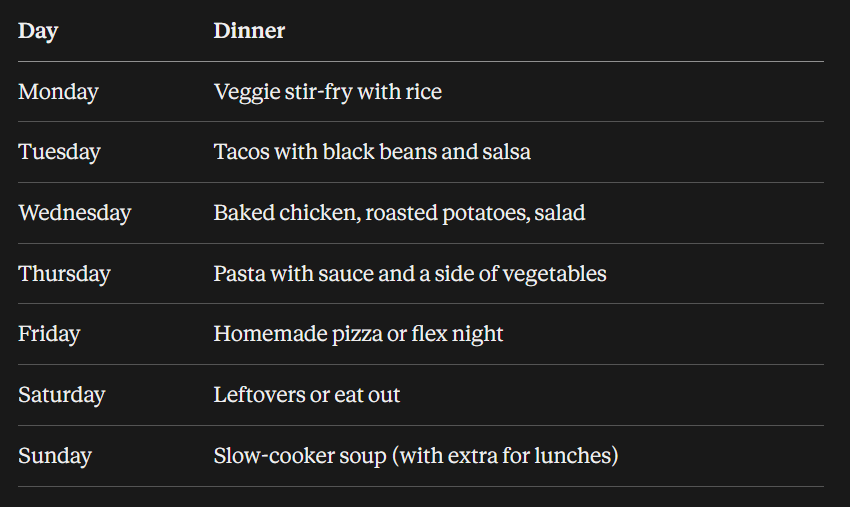
Use whatever fits your tastes, culture, and budget.
Meal Prep Tips for Specific Situations
For busy working parents
- Involve the kids in simple tasks
- Choose 15-minute meals for weeknights
- Use a slow cooker or sheet pan
- Prep snacks and lunchbox items together
For entrepreneurs and work-from-home folks
- Pack lunch like you’re going to the office so you actually take a break
- Keep healthy snacks in sight
- Block lunch on your calendar
For singles or couples
- Cook larger batches and freeze portions
- Buy smaller packages or split bulk purchases
- Rotate leftovers creatively
For tight budgets
- Build meals around beans, eggs, rice, oats, and frozen vegetables
- Plan around store sales
- Limit single-use convenience foods
- Track spending weekly
Reduce Food Waste
- Plan “use it up” meals like soups, stir-fries, and frittatas.
- Freeze bread, meat, fruit, and cooked grains.
- Store produce properly to extend freshness.
- Check your fridge before shopping.
- Repurpose leftovers. Yesterday’s roast chicken is today’s chicken salad.
Less waste means more money in your pocket.

Common Mistakes (and Fixes)
Overplanning. Start with 3-4 planned dinners.
Buying ingredients for recipes you won’t cook. Plan realistically around your schedule and energy.
Forgetting to check what you have. Do a quick inventory first.
Shopping without a list. Always write it down.
Prepping too much food. Start small to avoid waste.
Ignoring your preferences. Cook food you actually enjoy.
Not having backup plans. Keep a few quick meals on hand for chaotic days.

Weekly Meal Planning Checklist
[ ] Check fridge, freezer, and pantry
[ ] Plan 4-5 dinners plus breakfasts and lunches
[ ] Write a grocery list by category
[ ] Set a budget
[ ] Shop (or order online)
[ ] Prep ingredients or meals
[ ] Label and store properly
[ ] Review what worked for next week
Final Thoughts
Grocery lists and meal prep aren’t about perfection. They’re about creating a little margin in your week: less stress, fewer last-minute decisions, and more money and time for the things you enjoy. Start with one small step this week, like writing a list before you shop or prepping a few ingredients, and build from there.
Ready to simplify mealtime? Grab the Grocery List Journal, pair it with the Diet Journal (Editable Canva Template), and watch your savings grow with the Savings Money Journal.










Leave a Reply