

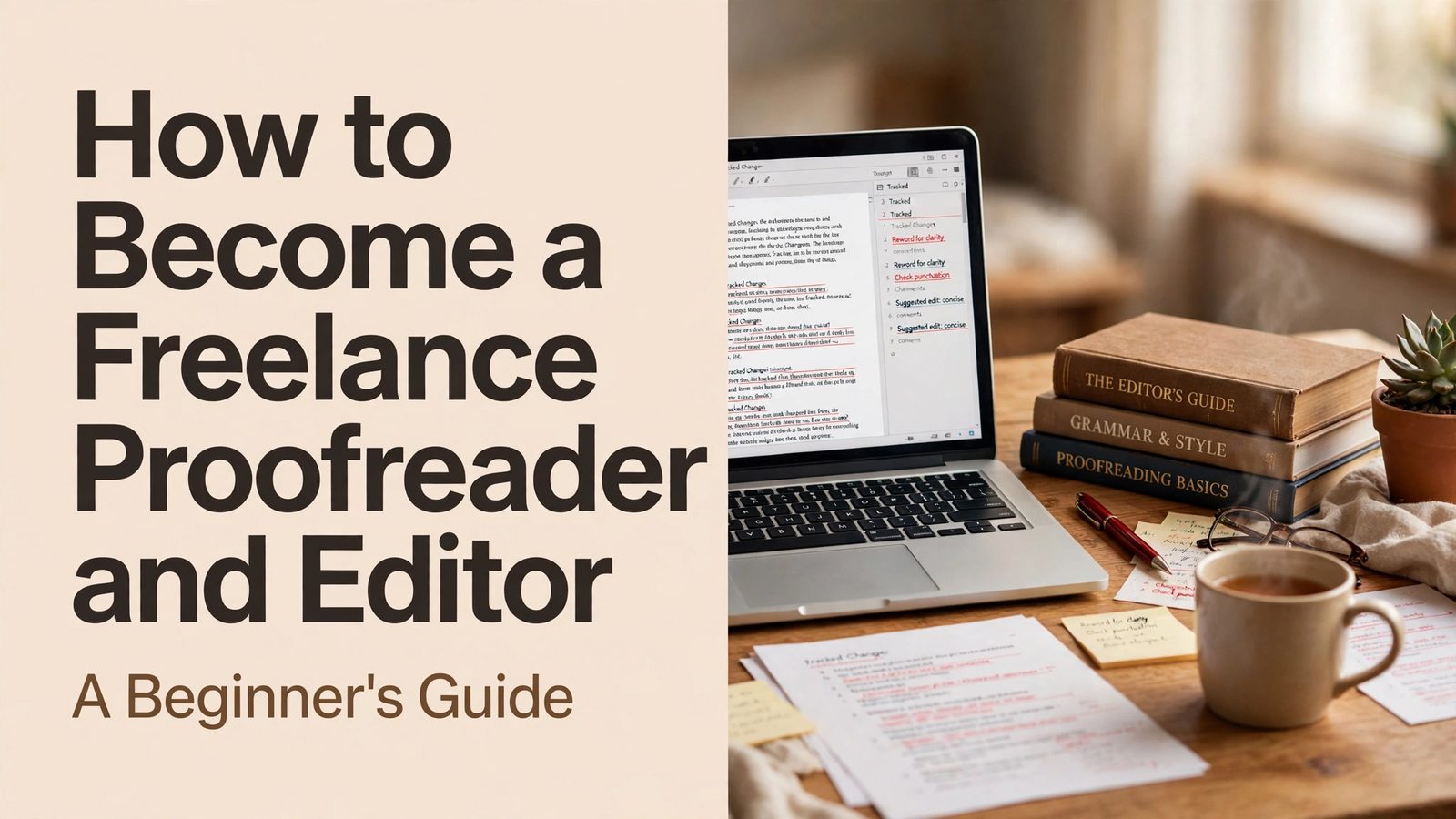
I’ve always been the friend who spots typos on restaurant menus. For years, I thought it was a slightly annoying hobby. Then a blogger I knew asked me to read a post before publishing, and I caught eleven errors, including a missing word that changed the meaning of an entire paragraph. She sent me $30 and a message that said, “You just saved my reputation.” That’s when I realized my quirk could be a business.
If you want to become a freelance proofreader or editor, you’re offering a service every writer, business, and publisher needs. Clear, polished writing builds trust, and many people lack the time or distance to polish their own work.
In this guide, I’ll walk you through the difference between proofreading and editing, the skills and tools you need, how to price your services, and how to find clients.
Proofreading vs. Editing
Understanding the levels of editing helps you define your services.
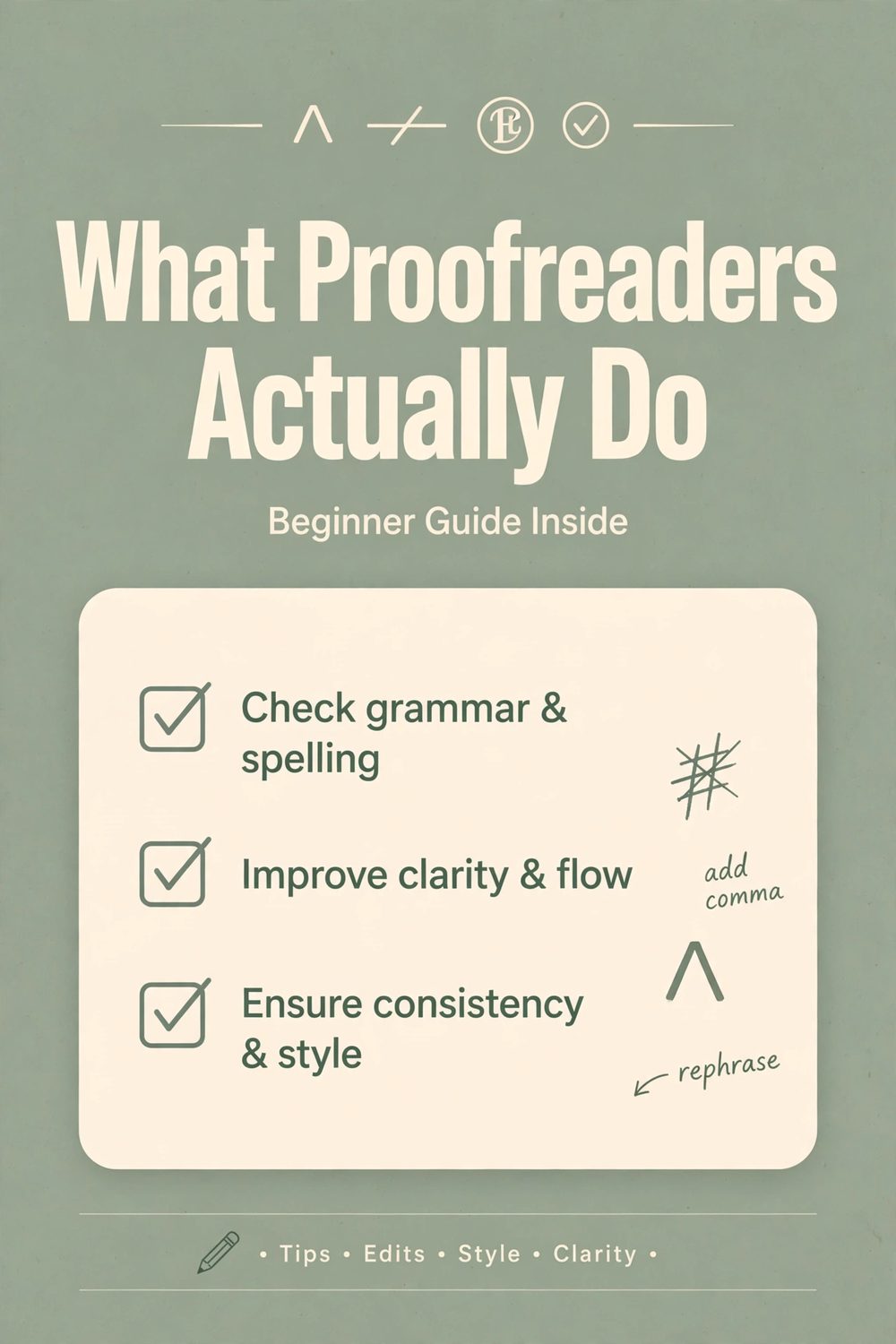
- Proofreading: The final check for spelling, grammar, punctuation, formatting, and consistency before publication.
- Copyediting (line editing): Improving clarity, flow, style, word choice, and consistency, while correcting errors.
- Developmental editing: Big-picture feedback on structure, content, pacing, and arguments.
- Fact-checking and formatting support: Verifying information and styling according to a guide.
Many beginners start with proofreading and light copyediting before expanding.
Why this work appeals:
- High demand. Bloggers, authors, students, businesses, and agencies need polished text.
- Low startup costs. A computer and reference tools are enough.
- Flexible work. You can choose projects and hours.
- Skill-based income that can grow with experience.
The honest part: The work requires deep focus, deadlines can be tight, and clients may expect perfection. Clear scope and honest communication protect you.
Step 1: Build Your Skills
Core Skills
- Excellent grammar, spelling, and punctuation.
- Understanding style guides such as AP, Chicago, or MLA.
- Consistency checking for capitalization, spelling variants, and formatting.
- Reading closely and patiently.
- Respecting the author’s voice.
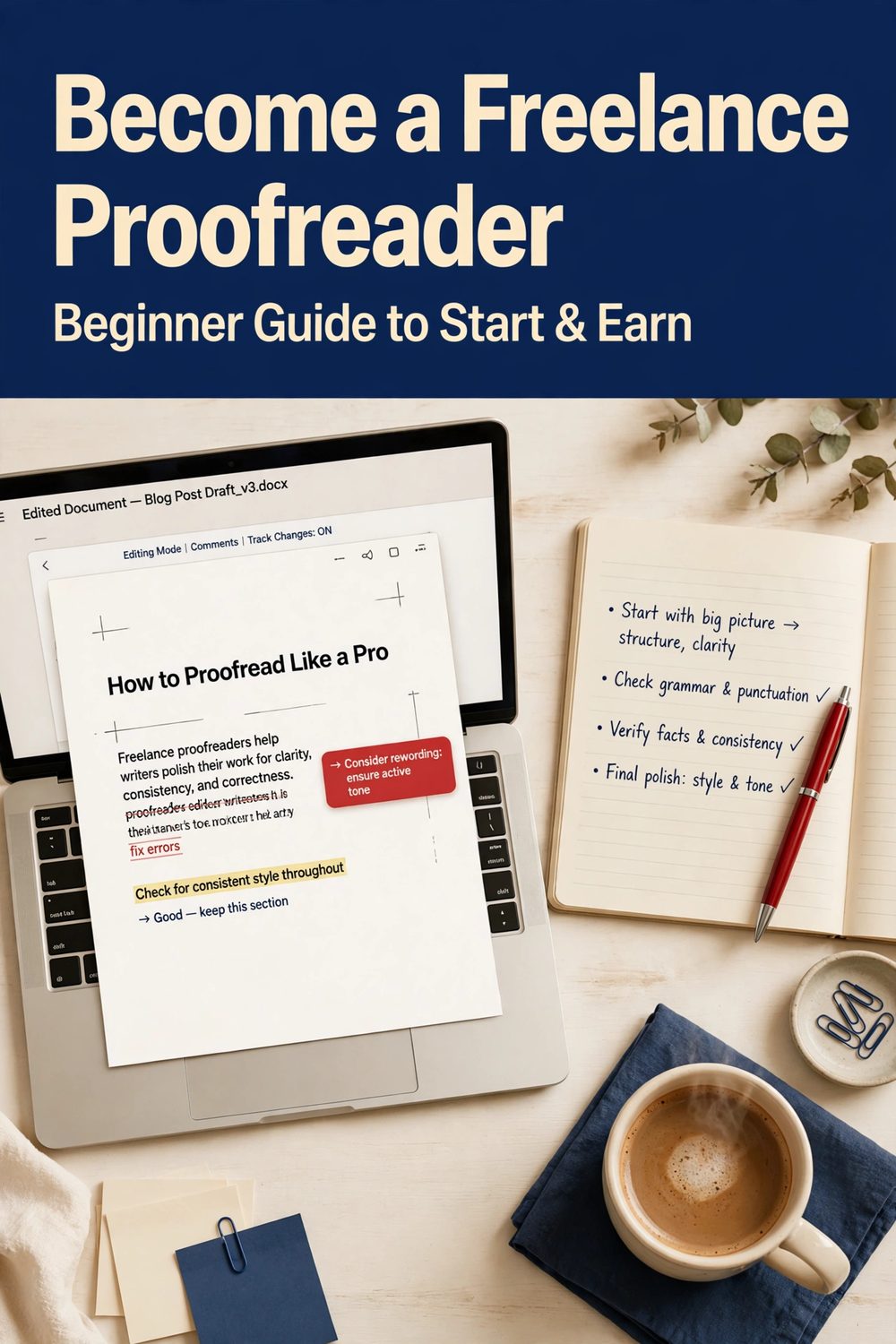
- Basic tech skills with word processors and track changes.
Ways to Learn
- Take a proofreading or copyediting course from a reputable program.
- Study a style guide thoroughly.
- Practice on public-domain texts or sample documents with errors.
- Read grammar and usage references.
- Join editor communities to learn from experienced professionals.
Step 2: Choose Your Style Guide and Language Variety
Different industries use different standards.
- Academic writing often uses APA, MLA, or Chicago.
- Journalism often uses AP style.
- Business and web content may follow a custom style sheet.
- Fiction often follows Chicago with a custom style sheet.
- Language variety: American, British, Canadian, or Australian English.
Clearly state which styles and variants you work with.
Step 3: Learn the Tools of the Trade
- Word processors with track changes and comments.
- Grammar and style checkers as helpers, not replacements.
- Reference sources: dictionaries and style guides.
- PDF markup tools for proofreading PDFs.
- Text-expansion and macro tools for repeated edits.
- Project management tools for deadlines.
AI can help check consistency, suggest alternate phrasing, and summarize style rules, but it can miss context or introduce errors. Always review carefully, and protect client confidentiality. The Claude Advantage shows how to prompt effectively and responsibly for editing support.
Step 4: Choose a Niche
Specialists often earn more and find work more easily.
- Blogs and web content.
- Business documents and marketing copy.
- Academic papers and dissertations (follow academic integrity rules).
- Fiction and nonfiction books.
- Resumes and cover letters.
- Ecommerce product descriptions.
- Technical or specialized fields, if you have expertise.
Pro tip: Choose a niche you enjoy reading. You’ll spend many hours with the material.
Step 5: Build a Portfolio and Proof
- Create before-and-after samples from public-domain text or your own writing.
- Offer a few discounted pilot projects in exchange for testimonials.
- Take a recognized editing test if available.
- Write a sample editing letter showing how you communicate feedback.
- Create a simple portfolio page with services, samples, and contact details.
Protect any confidential information when showing past work.
Step 6: Set Up Your Process
A consistent workflow builds quality and trust.
- Receive the document and brief.
- Confirm scope, style guide, and deadline.
- Do a first pass for major issues.
- Do a second pass for details.
- Create a style sheet noting decisions.
- Deliver the edited file with tracked changes and a clean version.
- Include a short summary of patterns you noticed.
- Allow a limited follow-up for questions.
Step 7: Price Your Services
Pricing models vary.
- Per word: Common for proofreading and copyediting.
- Per page: Common for academic work.
- Per hour: Useful for variable projects.
- Per project: Good for books and large documents.
Pricing Tips
- Research current market rates.
- Charge more for heavy editing than for light proofreading.
- Add rush fees.
- Offer sample edits to help clients understand your style.
- Raise rates as your skills and testimonials grow.
Step 8: Find Clients
- Your network and social media.
- LinkedIn: Connect with writers, marketers, and business owners.
- Writer and author communities, following rules.
- Freelance platforms.
- Agencies and publishers who hire freelancers.
- Universities and writing centers where allowed.
- Direct outreach: Pitch businesses with typos or inconsistencies on their sites, politely and helpfully.
The Digital Marketing Playbook offers beginner-friendly strategies for attracting clients, and The Personal Brand Blueprint can help you present yourself as a trusted professional.
Step 9: Communicate Feedback With Kindness
Editing can feel personal for authors.
- Praise strengths as well as note corrections.
- Explain changes briefly.
- Offer suggestions, not commands, when voice is involved.
- Respect the author’s choices.
- Keep communication professional and warm.

A 30-Day Starter Plan
- Week 1: Study a style guide and practice on sample texts.
- Week 2: Create two or three portfolio samples.
- Week 3: Set up your service page, pricing, and contract.
- Week 4: Pitch 20 potential clients and offer one pilot project.
Money and Professional Basics
- Use a contract covering scope, payment, and confidentiality.
- Track income and expenses.
- Set aside money for taxes. Consult a qualified professional.
The Smart Mom’s Complete Guide to Money offers friendly guidance for managing freelance income, and The Stay-At-Home Mom’s Guide to Making Money Online provides flexible ideas that pair well with editing.

Sample Editing Checklist
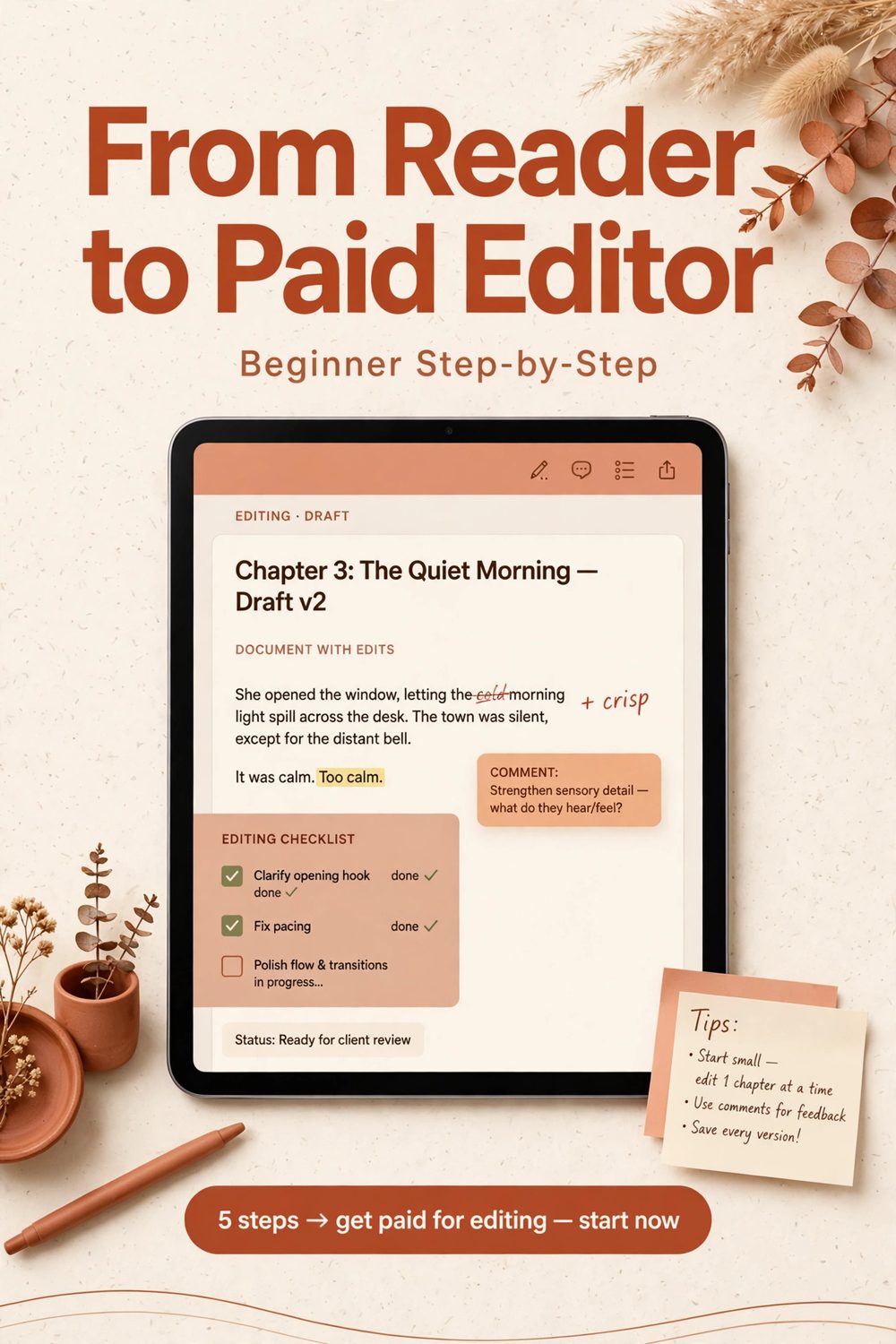
A checklist keeps your work consistent and thorough. Here’s a simple one for a blog post or article:
- Spelling and typos, including names and brands.
- Punctuation, such as commas, apostrophes, and quotation marks.
- Grammar, including subject-verb agreement and tense consistency.
- Capitalization and hyphenation according to the style guide.
- Numbers and dates formatted consistently.
- Links and references checked for accuracy.
- Headings and formatting consistent throughout.
- Repeated words and phrases reduced.
- Facts that look doubtful flagged for the author.
Run the checklist at the end of each pass. It’s easy to focus on one kind of error and miss another, and a written list protects you from that trap.
Handling Difficult Clients and Feedback
Not every project goes smoothly. A few habits make challenging situations easier:
- Set scope clearly in writing, including what level of editing you’ll provide.
- Charge for extra rounds beyond the agreed revisions.
- Explain your edits briefly when a client questions a change.
- Stay calm and professional if a client disagrees with a style choice, and offer to follow their preference when it’s reasonable.
- Know when to say no to projects outside your expertise, such as heavily technical or legal documents.
Clear boundaries and kind communication help you build long relationships with clients who appreciate your care.
Mistakes to Avoid
- Accepting vague scopes.
- Overediting an author’s voice.
- Missing deadlines.
- Relying only on software.
- Underpricing.
- Ignoring confidentiality.
Quick Answers About Freelance Proofreading
Do I need a degree? Not always. Skills, training, and samples matter most.
How much can proofreaders earn? It varies widely by niche, speed, and experience.
Can AI replace proofreaders? AI helps with basic checks, but human judgment, context, and style knowledge remain valuable.
How do I stay accurate? Use checklists, take breaks, and do multiple passes.
Your Eye for Detail Is a Gift
Becoming a freelance proofreader and editor is about careful reading, respectful communication, and consistent quality. Build your skills, create samples, set clear scopes, and find clients who value polish.
This week, proofread a short article and write a one-page summary of the changes. Trust me, once a client says “You made my writing shine,” you’ll know this work is worth every careful read. Let’s get editing!










Leave a Reply