


Here’s the story I wish I’d heard before I started: most one-person businesses don’t fail because the owner isn’t smart or talented. They stall because the owner is trying to do everything at once, with no order, no system, and no finish line. I know, because I did exactly that. I bought the tools, joined the groups, saved the posts, and stayed “almost ready” for months.
What finally worked was a simple 90-day structure: first get clear, then build a foundation, then sell, then systemize. And now, with AI able to draft, summarize, and organize at a speed no one-person business had before, that structure is easier to follow than ever. Industry reports keep pointing to the same shift: solopreneurs are using AI to cut admin work, scale without hiring too soon, and compete with much bigger teams.
In this guide, I’ll give you a 90-day plan to build an AI-powered one-person business, with weekly tasks, prompts, and checkpoints. You can use it whether you’re starting from zero, leaving a job, or turning a side hustle into something real.
Before You Start: Three Principles
- AI is your first team, and you’re the manager. AI drafts, researches, and organizes. You decide, approve, and build relationships.
- Packages beat hours. The more you can define your offer, scope, and price, the easier it is to sell and to systemize.
- Systems beat willpower. Build routines that work even when you’re tired.
Also keep a simple tracker (a spreadsheet is fine) with these columns: week, tasks completed, conversations held, income, hours worked, energy level (1 to 10).

Phase 1: Clarity (Weeks 1-3)
Goal: Choose your direction and prove people want it.
Week 1: Decide what kind of business you’re building
- Write one sentence: “In three years, my business will have ___ people.” If the answer is one, you’re building a solo company. If it’s more, plan hiring triggers early.
- List your skills, experiences, and results you’re proud of.
- List the problems people already ask you for help with.
- Ask AI to help you brainstorm: “Based on these skills and problems, suggest ten service or product ideas for a one-person business, with the likely customer and a rough effort level for each.”
Week 2: Choose one paid problem
- Shortlist two or three ideas.
- Write who the customer is and what painful problem they’d pay to solve.
- Use AI to draft interview questions, then talk to at least five to ten real potential customers. Ask what they’ve tried, what they paid, and what frustrated them.
- Save the exact phrases they use. You’ll reuse them in your marketing.

Week 3: Write your offer
Complete this sentence: “I help [specific customer] achieve [specific result] in [timeframe] through [your approach].”
Then define:
- What’s included and what’s not
- The price (a first estimate)
- The timeline
- What you need from the customer
Checkpoint: You have one clear offer and quotes from real conversations.
Phase 2: Foundation (Weeks 4-6)
Goal: Build the simple systems you need to sell and deliver.
Week 4: Set up your lean stack
- Choose one AI assistant and set up a project or saved instructions with your brand voice, offer, and audience.
- Set up a place for files, a scheduling link, an invoicing method, and a professional email address.
- Create a simple customer tracker in a spreadsheet.
- Keep your tool list short. Add tools only when a real problem appears.
Week 5: Create your home base
- Build a one-page website: headline, who you help, your offer, proof or story, a way to contact you, and an email signup.
- Write a short, honest bio with your real name and photo.
- Create a simple lead magnet, such as a checklist or template, that helps your ideal customer.
- Use AI to draft, then rewrite in your voice and add your own examples.
Week 6: Handle the unglamorous basics
- Look into your legal structure and tax requirements for your location, and consult a qualified professional.
- Create a simple contract or agreement template that covers scope, payment, deadlines, ownership of work, confidentiality, and AI use.
- Open a separate business account if appropriate and set up basic bookkeeping.
- Turn on two-factor authentication on your key accounts.
Checkpoint: A basic website, a tracker, a contract template, and a payment method are ready.

Phase 3: Sell (Weeks 7-10)
Goal: Get your first paying customers and learn from them.
Week 7: Build your draft-and-approve loops
Set up three loops where AI drafts and you approve:
- Follow-up emails after calls
- Content ideas and drafts based on customer questions
- Proposals using your offer template
Schedule a 20 to 30 minute daily approval block. Nothing goes out unreviewed.
Week 8: Start conversations
- Make a list of 30 people who might need your offer or know someone who does.
- Send personal, specific messages. Don’t copy and paste generic pitches.
- Share three helpful posts or short videos answering real questions.
- Aim for several genuine conversations each week.
Week 9: Make your first offers
- Offer your package to the people who’ve shown interest.
- Consider a founding-client price in exchange for feedback and a testimonial, if it fits your market.
- Track how long each step really takes.
Week 10: Deliver and document
- Deliver excellent work to your first client or two.
- Record yourself doing key steps, then ask AI to turn transcripts into checklists or standard operating procedures. Review and correct them.
- Ask for a testimonial and, with permission, build a mini case study.
Checkpoint: You have at least one paying customer (or a clear list of reasons why not, which is also valuable information), plus proof and documented steps.
Phase 4: Systemize and Grow (Weeks 11-13)
Goal: Make your business repeatable and sustainable.
Week 11: Productize and refine
- Review what customers loved, what confused them, and where you spent too much time.
- Tighten your package: clearer scope, better process, updated price.
- Update your website and sales conversation with real results and quotes.
Week 12: Start one compounding asset
Choose one asset that keeps working without your direct hours: an email newsletter, a template pack, a short course, or a guide. Outline it, draft with AI, and then add your stories, proof, and expertise. Assets take time to pay off, so treat this as a long-term investment.
Week 13: Set your guardrails and next 90 days
- Decide a capacity limit: how many projects you’ll take per month.
- Write your hiring trigger: for example, turning down profitable work for several months in a row.
- Run a mini “vacation fire drill” by planning a day offline and noting what would break.
- Join or create a peer group so you’re not building alone.
- Review your tracker. What worked? What didn’t? What will you do more of?
Checkpoint: A repeatable offer, a plan for your next quarter, and a support system.
A Weekly Rhythm You Can Keep
- Monday (30 min): Plan the week and set your top three priorities.
- Tuesday to Thursday: Deep work in the morning, client conversations and approvals in the afternoon.
- Friday (45 min): Review your tracker, celebrate wins, update your prompts and rules, and plan next week.

Starter Prompts to Save
- Customer research: “Based on these interview notes, summarize the top five problems, the exact words customers used, and what they’ve already tried.”
- Offer builder: “Help me turn this service into a fixed-price package. Suggest scope, exclusions, and three pricing tiers, and flag any assumptions.”
- Sales page draft: “Write a simple sales page outline for this offer, using these customer phrases. Don’t invent testimonials or results.”
- SOP creator: “Turn this transcript into a step-by-step checklist with quality standards and common mistakes.”
- Devil’s advocate: “Give me five reasons this plan could fail and the cheapest ways to test each one.”
Mistakes to Avoid
- Skipping customer conversations. Don’t build in a vacuum.
- Buying tools before defining the process.
- Letting AI send things unreviewed.
- Underpricing because AI makes work faster. Charge for the outcome.
- Ignoring contracts and ownership of work.
- Comparing yourself to the million-dollar solo stories. Those are exceptions.
- Burning out. Protect rest and build human support.
Metrics to Track
- Conversations held per week
- Offers made and accepted
- Revenue and average project value
- Hours worked per project
- Customer satisfaction and testimonials
- Email subscribers
- Your energy score
Start Your Build With a Clear Roadmap
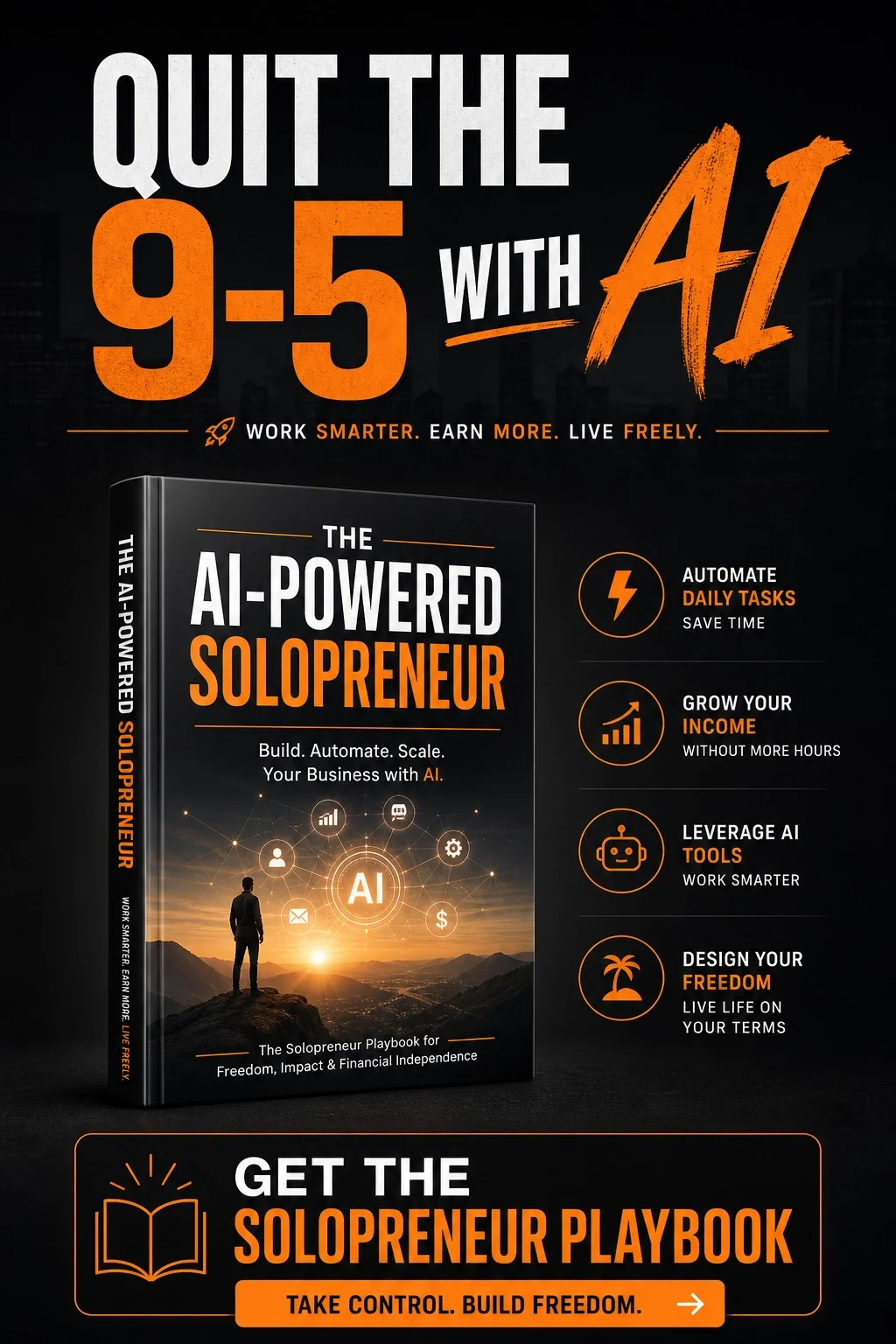
This plan gives you the structure. If you want a deeper, step-by-step guide to building an AI-powered one-person business, from choosing your offer to setting up your systems and tools, take a look at my ebook:
Trust me, having a roadmap beside you turns “someday” into a plan.
Final Thoughts
You don’t need a big budget, a team, or a perfect plan to build a one-person business. You need a clear offer, real conversations, simple systems, and the discipline to keep going for 90 days. Let AI handle the drafting and the repetition, keep your judgment and relationships at the center, and protect your energy along the way. Start with Week 1 today, and let the next 90 days tell you what’s possible.










Leave a Reply