I was the kid who read bedtime stories with different voices for every character, and I never thought it could turn into income. Then a friend who ran a small online course asked me to record the narration for her lessons. I recorded in a closet full of coats, uploaded the audio, and she paid me $60. Hearing my voice guide hundreds of students felt strangely wonderful.
If you’re curious about a voice-over side hustle, you’re exploring a field that blends performance, technology, and business. Voice actors narrate audiobooks, videos, ads, courses, explainer videos, and podcasts, and many beginners start from a simple home setup.
In this guide, I’ll walk you through types of voice-over work, how to build a budget-friendly home studio, how to practice and create demos, how to price, and how to find clients.
Types of Voice-Over Work
- Explainer and corporate videos.
- Online courses and e-learning.
- Audiobooks.
- Commercials and ads.
- Podcast intros and ads.
- Video games and animation (highly competitive).
- IVR and phone systems.
- Documentary and educational narration.
Why people try it:
- Flexible, remote work.
- Low startup costs compared with other creative businesses.
- Fun and creative.
- Room for specialization.
The honest part: The field is competitive, and most voice actors don’t start with big contracts. Audio quality, practice, and marketing matter. Also, AI voice technology is changing the industry, and you should read contracts carefully for terms about how your voice can be used.

Step 1: Practice and Develop Your Voice
Skills to Build
- Clear articulation and pacing.
- Breath control.
- Warm, natural delivery.
- Reading scripts naturally without sounding stiff.
- Adjusting tone for different styles: friendly, authoritative, energetic, or calm.
- Consistency across long recordings.
Ways to Practice
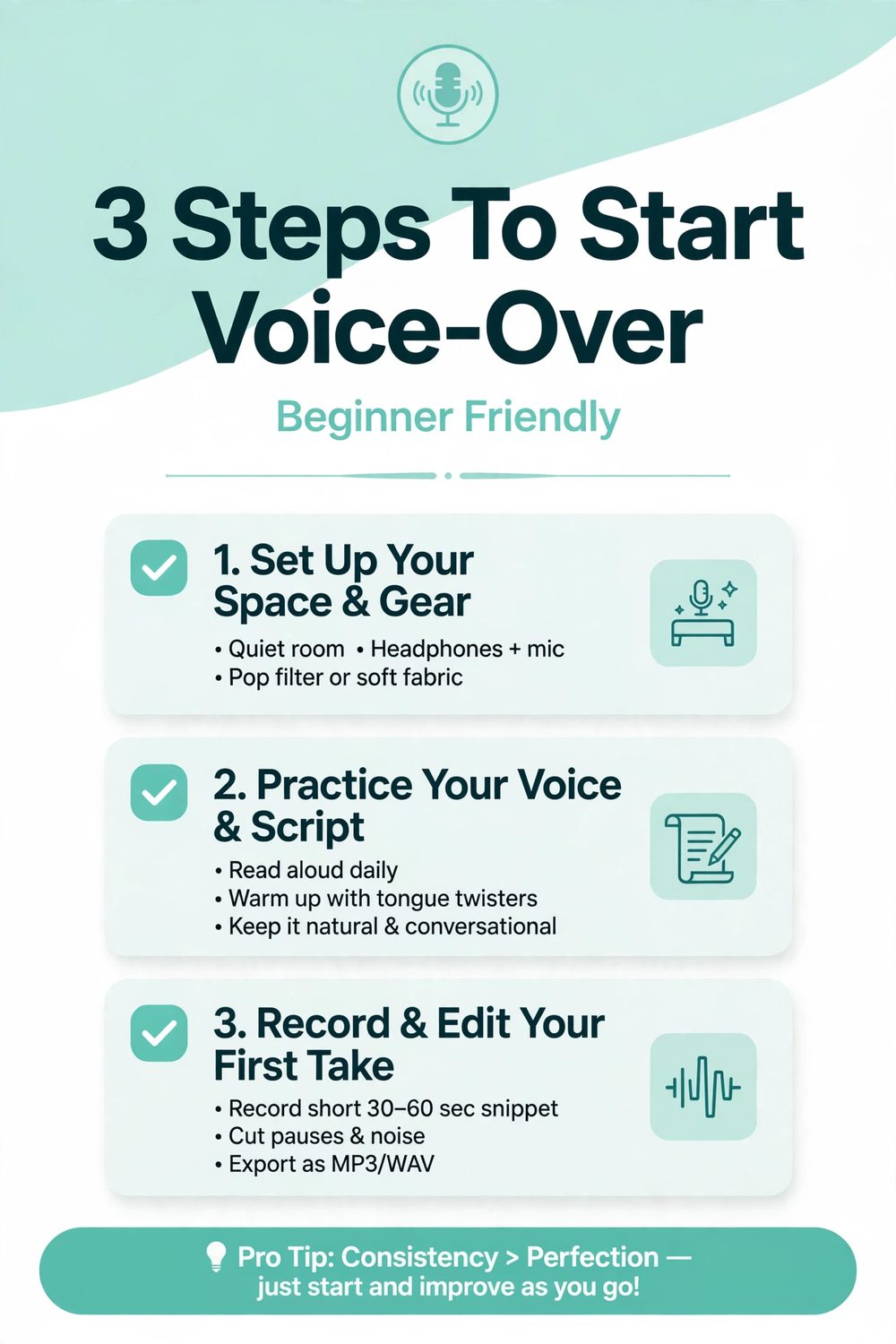
- Read aloud daily for 15 to 20 minutes.
- Record yourself and listen back critically.
- Imitate styles you admire, without copying specific people.
- Take workshops or coaching if you want structured feedback.
- Practice vocal health: hydrate, rest, and avoid straining your voice.
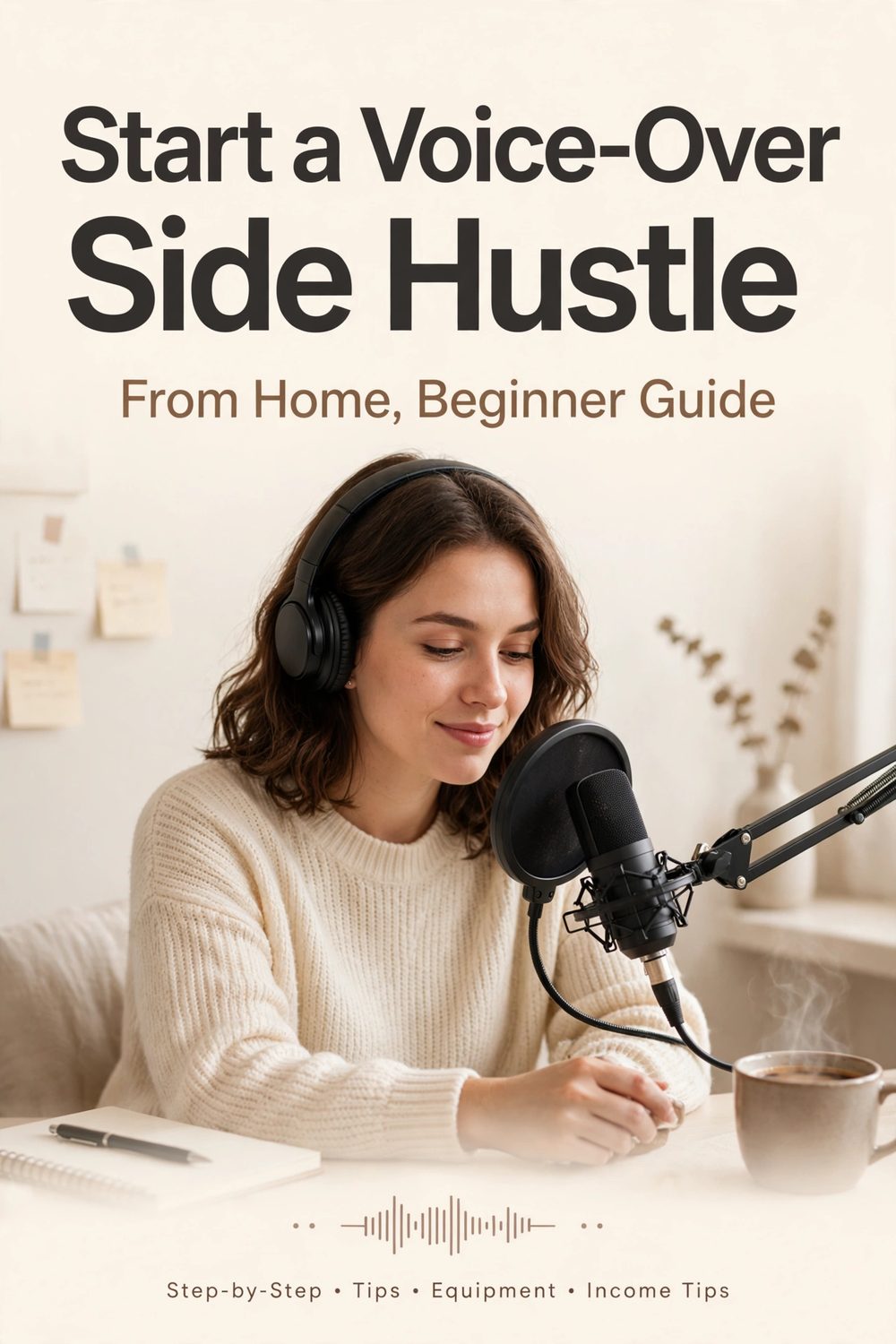
Step 2: Build a Budget Home Studio
You don’t need a professional studio to start.
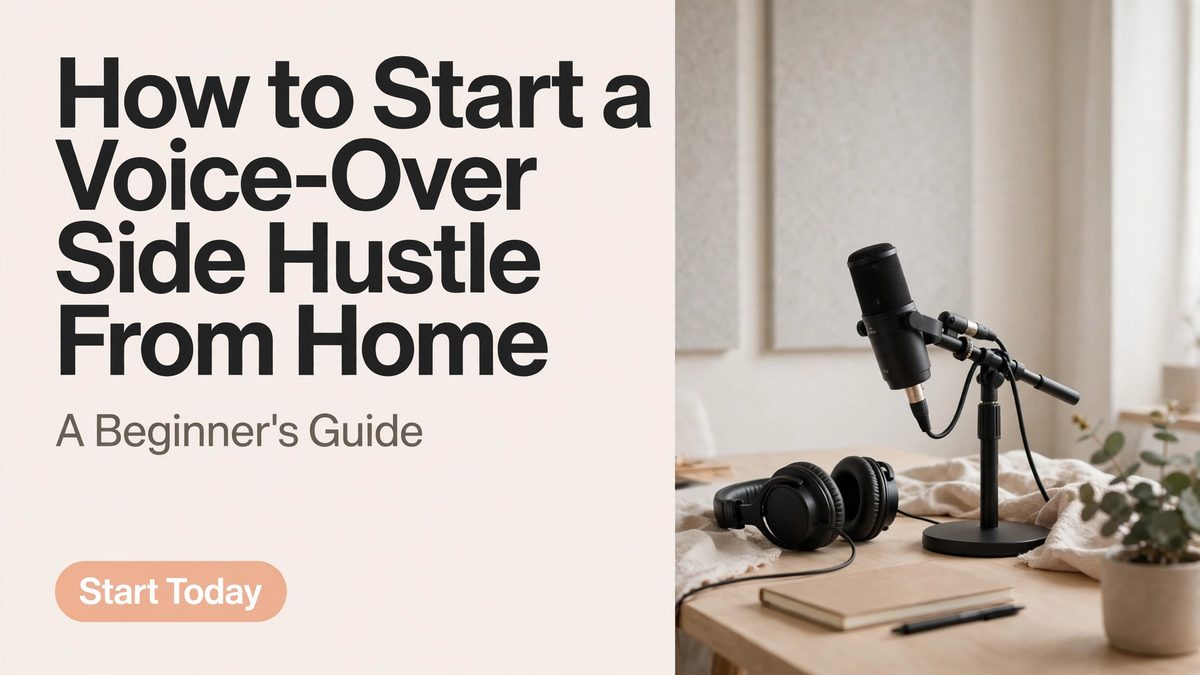
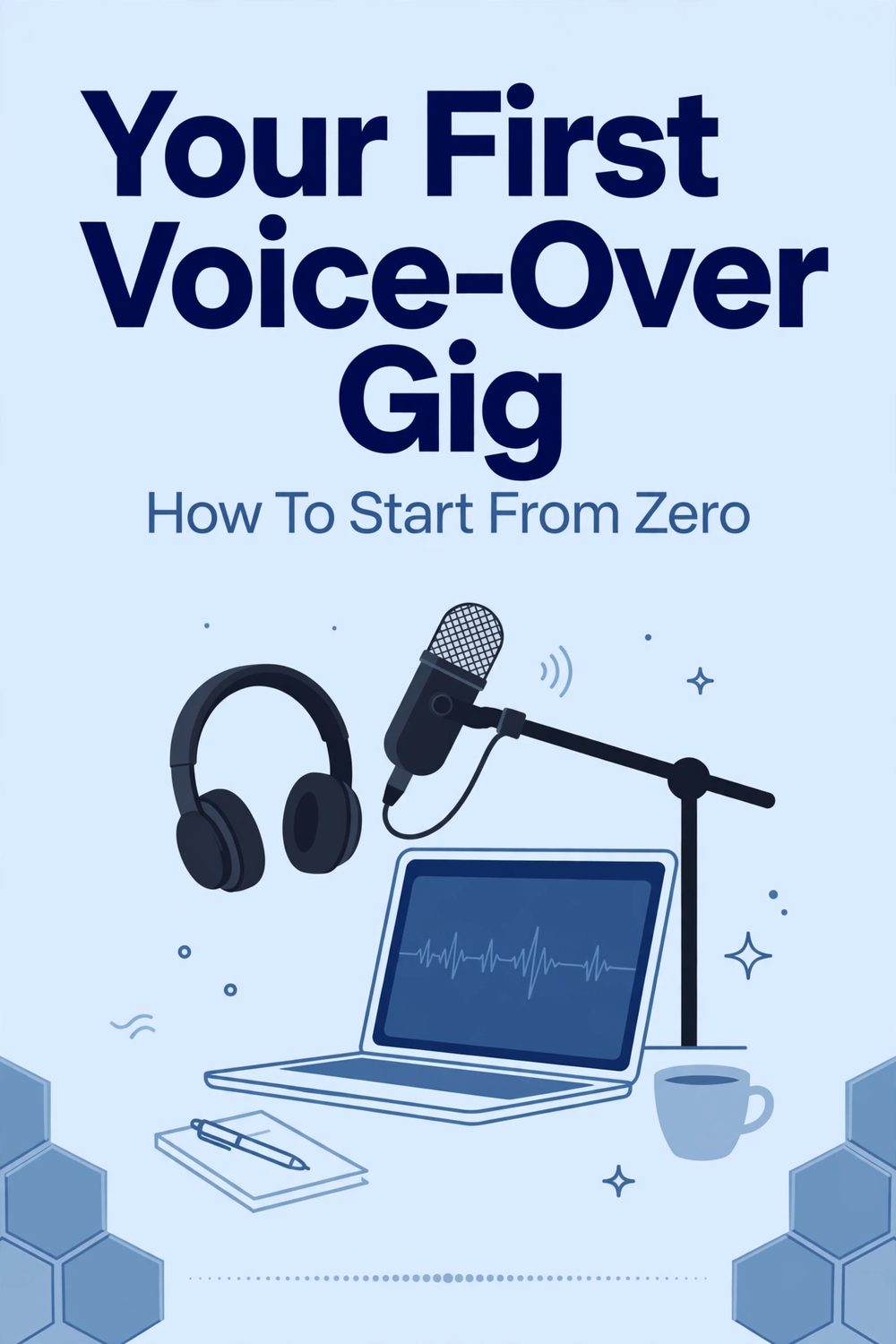
Basic Equipment
- A decent USB or XLR microphone.
- A pop filter to reduce harsh “p” sounds.
- Headphones for monitoring.
- A quiet, treated space. A closet filled with clothes, blankets, or foam can reduce echo.
- A microphone stand or boom arm.
- A computer and recording software.
Setup Tips
- Turn off noisy appliances.
- Record at a consistent distance from the mic.
- Test recordings and listen for echo and background noise.
- Use clean file naming and backups.
Good audio often matters more than a perfect voice. Many clients reject recordings with echo or noise.

Step 3: Learn Basic Audio Editing
- Trim mistakes and long pauses.
- Reduce background noise.
- Balance volume.
- Add basic compression and equalization gently.
- Export in required formats such as WAV or MP3.
Free tutorials can teach you the basics. If editing isn’t your strength, you can outsource it later.
Step 4: Create a Demo Reel
A demo is your audio business card.
- Choose a niche, such as e-learning, commercial, or audiobook narration.
- Select or write short scripts appropriate to that niche.
- Record several short clips, each showing a different style.
- Edit them into a demo of 60 to 90 seconds.
- Keep it clean, natural, and well-paced.
- Make separate demos for different genres.
Avoid using copyrighted material without permission. Write your own scripts or use texts that are free to use.
Step 5: Use AI Tools Carefully
AI can help you draft scripts, plan practice routines, and organize your business. It can also change how voices are used, so read contracts carefully and understand any clauses about synthetic voices or training data. The Claude Advantage shows how to prompt effectively for scripts, outreach messages, and planning.
Step 6: Choose Where to Find Work
- Freelance and voice-over marketplaces.
- Direct outreach to course creators, small businesses, and podcasters.
- Audiobook platforms that accept new narrators.
- Local businesses needing phone greetings or ads.
- Social media: Share samples and connect with creators.
- Referrals and networking.
Each marketplace has its own rules, fees, and audition processes, so read terms carefully.

Step 7: Set Your Rates
Voice-over pricing varies by usage, length, and market.
- Per finished minute or per word for narration.
- Per project for commercials and corporate videos.
- Usage fees for broadcast or paid ads.
- Per finished hour for audiobooks, sometimes with revenue-share options.
- Rush and revision fees.
Pricing Tips
- Research current rate guides and market norms.
- Ask about usage: where and for how long the audio will be used.
- Set minimum project fees.
- Include a clear revision policy.
- Raise rates as your skills and client list grow.
Step 8: Market Yourself
- Create a simple website with demos and contact information.
- Share samples on social media.
- Join voice-over communities, following rules.
- Pitch businesses that clearly need voice-over, such as course creators and small video producers.
- Ask for testimonials.
- Keep your branding consistent.
The Digital Marketing Playbook explains beginner-friendly strategies for attracting clients, and The Personal Brand Blueprint can help you define a recognizable voice-over brand.
Step 9: Deliver Professionally
- Follow the script exactly unless told otherwise.
- Provide clean audio files in the requested format.
- Offer a short retake for pronunciation or timing issues.
- Communicate clearly.
- Meet deadlines.
- Keep recordings backed up.
Protect Your Voice and Your Rights
- Read contracts carefully, especially about usage rights, exclusivity, and AI use.
- Don’t give away unlimited rights for low fees.
- Keep records of agreements.
- Protect your vocal health.
- Avoid scams that ask you to pay for guaranteed work.
A 30-Day Starter Plan
- Week 1: Practice daily and research niches.
- Week 2: Set up your recording space and record test clips.
- Week 3: Create your demo and a simple website.
- Week 4: Pitch 20 potential clients and apply to a few marketplaces.
Money Basics
- Track income and expenses.
- Invoice promptly.
- Set aside money for taxes. Consult a qualified professional.
The Smart Mom’s Complete Guide to Money offers friendly guidance for managing side-hustle income, and The Stay-At-Home Mom’s Guide to Making Money Online offers flexible ideas for earning from home.
Sample Practice Routine for New Voice Actors
Consistent practice builds skill faster than occasional long sessions. Try this weekly routine:
- Monday: Read a commercial-style script, aiming for warmth and energy.
- Tuesday: Read an explainer or e-learning script in a clear, friendly tone.
- Wednesday: Record a short narration with a storytelling feel.
- Thursday: Practice character voices or different emotions with a short passage.
- Friday: Listen to the week’s recordings, choose the best one, and note what to improve.
- Weekend: Rest your voice, and listen to professional work in your target niche.
Keep a simple log of what you practiced and what you learned. Over a few months, you’ll notice your pacing, tone, and confidence improving.
Auditioning Without Burning Out
Auditions can be discouraging, so approach them with a plan:
- Read the brief carefully and follow instructions exactly.
- Record a clean, short sample instead of overthinking.
- Submit on time and keep a record of what you sent.
- Limit yourself to a reasonable number each day.
- Don’t take silence personally. Most auditions don’t lead to bookings, even for experienced actors.
- Learn from feedback when you receive it.
Treat auditioning as practice that happens to come with opportunities. A steady, patient approach keeps your voice and your motivation healthy.
Mistakes to Avoid
- Poor audio quality.
- Overacting or sounding stiff.
- Skipping contract details.
- Unclear usage rights.
- Underpricing.
- Expecting overnight bookings.
Quick Answers About Voice-Over Work
Do I need a special voice? No. Clear, natural, and reliable delivery matters more than a unique sound.
How much can I earn? It varies widely by niche, experience, and usage.
Do I need expensive equipment? No. A good microphone and quiet space are usually enough to start.
Will AI replace voice actors? AI is changing parts of the market, but human performance, trust, and creativity remain valuable in many projects.
Your Voice Can Tell Stories
Starting a voice-over side hustle is about practice, good audio, and professional communication. Build your skills, set up a simple studio, create a demo, and reach out to clients who need your voice.
This week, record a 60-second script and listen critically. Trust me, once a client says, “Your voice is perfect for this,” you’ll feel a thrill. Let’s start recording!