


Should you raise your prices? Hire help or keep doing it all yourself? Say yes to that new client or protect your time? Launch now or wait until it’s “perfect”?
If you’ve ever spent days (or weeks) going back and forth on a decision, you know how exhausting indecision can be. It drains your energy, stalls your progress, and leaves you stuck in a loop of “what if.”
The good news: decision-making is a skill, and you can get better at it. In this guide, I’ll share practical decision-making tips, simple frameworks, and a journaling method that will help you choose faster and with more confidence.
Why Decisions Feel So Hard
Before we fix it, let’s understand what’s happening. Decisions feel difficult for a few reasons:
- Fear of making the wrong choice. We imagine worst-case scenarios and freeze.
- Too many options. More choices sound great, but they often lead to overwhelm.
- Lack of clarity. If you don’t know what you want, every option looks equally good or equally bad.
- Seeking perfection. Waiting for the “perfect” answer means you never move.
- Decision fatigue. After dozens of small choices, your brain runs out of fuel for big ones.
Notice that none of these have to do with intelligence. They’re all about how we approach the process, and that’s fixable.

The Cost of Not Deciding
Not deciding is still a decision, and usually it’s the most expensive one. Delays cost you:
- Time: Hours spent worrying instead of acting
- Money: Missed opportunities and stalled projects
- Energy: Mental clutter that weighs on everything else
- Confidence: Every delay reinforces the belief that you can’t trust yourself
A good-enough decision made today almost always beats a perfect decision made next month.
Step 1: Clear Your Head First
You can’t think clearly when your mind is crowded. Before you tackle the decision, spend five minutes getting everything out of your head. Write about the decision itself, what you’re afraid of, and what’s on your mind generally.
The Brain Dump Worksheets are great for this. Once the noise is on paper, the real question often becomes much easier to see.

Step 2: Define the Decision Clearly
Vague decisions create vague answers. Write the decision as a clear question:
- ❌ “What should I do about my business?”
- ✅ “Should I add a second product line this quarter?”
Then ask: What’s the deadline? Many decisions have a natural time limit. If you don’t have one, give yourself one. A decision without a deadline can drag on forever.
Step 3: Know What Matters Most
Your values and goals are the best compass you have. Ask yourself:
- What am I trying to achieve right now?
- Which option aligns best with my top priorities?
- What do I want to feel in six months?
If your priorities are fuzzy, work on them first. The Top 3 Main Goals Right Now Journal helps you define your focus so that choosing between options becomes much simpler. If a choice doesn’t support your top three goals, it’s probably a “no” or a “not now.”

Step 4: Use a Simple Decision Framework
Here are five easy tools to try. Pick the one that fits your situation.
1. The Pros and Cons List
The classic. Draw two columns and list the benefits and drawbacks of each option. To make it more powerful, rate each item from 1 to 5 based on how important it is. Add up the scores to see which side is heavier.
2. The 10-10-10 Rule
Ask yourself: How will I feel about this decision in 10 minutes? In 10 months? In 10 years? This helps you separate short-term discomfort from long-term impact.
3. The Regret Test
Imagine you chose each option. Which one would you regret not trying? Often, regret comes from inaction, not from taking a chance.
4. The Two-Way Door Test
Is the decision reversible? If you can easily undo it (like testing a new price for a month), make it quickly. Save your deep deliberation for one-way doors, which are hard to reverse (like signing a long-term lease).
5. The Gut Check
Flip a coin: heads for option A, tails for option B. While the coin is in the air, notice which side you’re hoping for. Your reaction often reveals your true preference.
Step 5: Set Limits on Research
Information is useful up to a point. After that, it creates confusion. Decide in advance how much research you’ll do:
- Small decisions: 10-15 minutes
- Medium decisions: One or two hours, or a day
- Big decisions: A few days to a week
When time is up, decide with what you know. Remember, you’ll almost never have 100% of the information. Aim for around 70%, and trust yourself to adjust along the way.

Step 6: Write It Down With a Decision Journal
One of the best ways to improve your decision-making is to keep a record. A decision journal lets you capture:
- The decision you’re facing
- The options you considered
- Your reasoning
- How you feel about each choice
- The outcome (reviewed later)
Over time, you’ll spot patterns: where you overthink, where you rush, and where your instincts are reliable.
The Make a Decision Journal gives you a structured place to work through choices step by step, from listing your options to recording what you learned afterward. It turns decision-making from a stressful spiral into a clear, repeatable process.

Step 7: Take Action Quickly
Once you decide, move. Write down your first step and schedule it. The longer you wait after deciding, the more doubt creeps back in.
Put it on your calendar or in your daily planner. The Work Day Organizer helps you turn a decision into a concrete action for today. If the decision is “I’m going to raise my prices,” your first step could be “update my price list by 3 p.m.”

Step 8: Review the Outcome
After some time passes, look back at your decision. Ask:
- What happened?
- Was the result what I expected?
- What did I learn?
- What would I do differently next time?
Notice that the question isn’t “Was I right?” It’s “What can I learn?” Even decisions that don’t turn out perfectly build your judgment for the future.
Decision-Making Tips for Business Owners
Running a business means making dozens of decisions daily. Here’s how to keep them manageable:

Create default rules. Decide once how you’ll handle common situations (refund requests, custom orders, discounts) and stop reconsidering each time. Standardizing things like your Order Form Journal can remove many small decisions from your day.
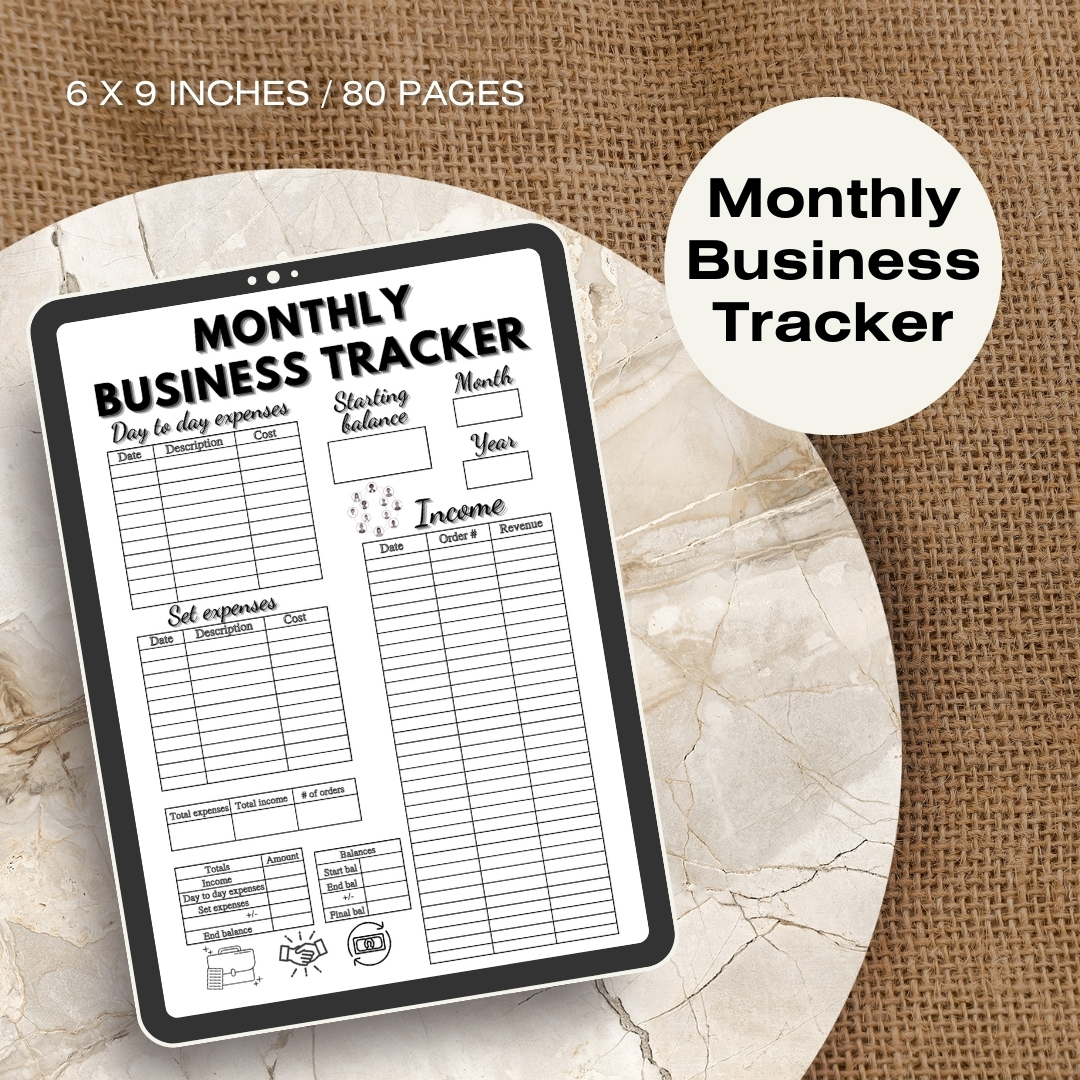
Use data when you have it. Your numbers can guide big choices. A Monthly Business Tracker shows you what’s working so you can double down on winners instead of guessing.
Delegate low-stakes decisions. If a choice won’t significantly affect your results, let someone else decide, or let it go.
Batch decisions. Make similar decisions in one sitting, like choosing all your content topics for the month at once.
Don’t decide when you’re depleted. Tired, hungry, or stressed? Wait until you’re rested if the decision isn’t urgent.
Decision-Making Tips for Everyday Life
- Plan meals ahead to avoid the daily “what’s for dinner” debate.
- Limit your options. Choose from two or three, not twenty.
- Create routines for mornings and evenings so fewer choices are needed.
- Set a timer. Give yourself five minutes for small decisions.
- Ask a trusted friend for perspective, but remember the final choice is yours.

How to Stop Second-Guessing Yourself
You’ve made the decision, but now doubt shows up. Here’s how to handle it:
- Remind yourself why you chose it. Reread your notes.
- Accept that no option is risk-free. Every choice involves trade-offs.
- Focus on making your decision work rather than proving it was perfect.
- Limit “what if” thinking. Set a short window to process doubts, then move on.
- Practice self-compassion. If it doesn’t work out, you learned something. That’s not failure.
If doubt comes with heavier emotions like anxiety or fear, journaling can help. The Self Therapy Journal offers prompts for exploring what’s really behind your hesitation.

Quick Decision-Making Checklist
Before you decide, run through these questions:
[ ] Have I clearly defined the decision?
[ ] Does it align with my top goals?
[ ] Do I have enough information (about 70%)?
[ ] Is this reversible?
[ ] What’s the worst realistic outcome, and could I handle it?
[ ] Which option would I regret not choosing?
[ ] What’s my first step?
Final Thoughts
Great decision-makers aren’t people who never make mistakes. They’re people who decide, learn, and adjust quickly. Clear your mind, define the question, check it against your priorities, use a simple framework, and then act.
Start practicing with small choices, and your confidence will grow. Soon the big decisions will feel a lot less scary.
Ready to decide with confidence? Try the Make a Decision Journal, clear your head with the Brain Dump Worksheets, and keep your priorities in focus with the Top 3 Main Goals Right Now Journal.










Leave a Reply