

The first video I ever posted got eleven views. Nine were me checking if it uploaded correctly. I remember staring at the number and thinking, “Maybe this just isn’t for me.” If you’ve ever felt that way, I want you to hear something: the people you see with huge audiences almost all began with a tiny one, a messy first video, and a lot of quiet doubt.
The good news is that the path has become more accessible in some ways. Brands are building whole creator departments, not just running one-off campaigns. A survey summary for the creator economy found brands increasing their creator investment and giving creators dedicated budget lines. Smaller creators with honest audiences are in demand, and tools for earning have multiplied. At the same time, platforms are rewarding original, real people and penalizing mass-produced content.
In this guide, I’ll give you a beginner’s roadmap to start a KOL and influencer career from zero: choosing a niche, picking a platform, creating content, building proof, and landing your first brand collaboration. (Income varies widely and isn’t guaranteed. Most creators earn little at first.)
What the Job Really Is
A KOL or influencer career isn’t just posting. It’s a small business with four parts:
- Content: creating things people want to watch, read, or hear.
- Audience: earning trust and attention over time.
- Partnerships: working with brands, platforms, and customers.
- Business: pricing, contracts, taxes, and growth.
Here’s the truth: the creators who last treat it like a craft and a business, not a lottery ticket.
Step 1: Choose a Niche You Can Sustain
Your niche is the intersection of what you know, what you enjoy, and what an audience wants. Examples:
- Skincare for a specific skin type
- Budget meals for busy families
- Gadgets and tech reviews
- Fitness for beginners
- Parenting tips for first-time moms
- Money and saving tips
- Travel on a small budget
- Local food reviews
- Study tips and career advice
Write one sentence: “I help [specific people] [get specific result or enjoyment] with [type of content].”
A narrow focus makes it easier for people to remember you and for brands to understand where you fit.
Step 2: Pick One Main Platform
You can’t do everything well at the start. Match the platform to your content:
- Short video platforms: good for discovery, reviews, and entertainment
- Instagram: strong for visual lifestyle, Reels, and community
- YouTube: strong for in-depth tutorials, reviews, and long-term search traffic
- Facebook and community groups: still important in some markets
- LinkedIn: strong for professional and B2B expertise
Commit to one main platform for 90 days. Add a second later by repurposing the same ideas.
Step 3: Create a Content System
Good creators use repeatable formats. Try this:
- Pick three content pillars: for example, educate, review, and personal story.
- Plan 10 ideas for each pillar based on real questions people ask.
- Use a simple video formula: hook in the first two seconds, show the main point, give proof or an example, then a short call to action.
- Batch your work: film several pieces in one session.
- Post consistently, at a rhythm you can keep. A Digiday report cited in newsletters found TikTok Shop creators who posted 20 or more videos averaged far higher earnings per video than one-time posters, which suggests consistency matters.
Step 4: Be Original and Honest
Platforms are favoring real people and original work:
- YouTube said Shorts recommendations will prioritize original content and reduce reach for reposted videos.
- Instagram has begun labeling and limiting undisclosed AI-generated profiles.
- Audiences say they prefer real creators.
So show your real face and voice, share your real experience, and avoid copying other creators. If you use AI tools for ideas, scripts, or editing, keep your voice and judgment in control, label AI content where required, and never fake reviews or results.
Step 5: Learn the Basics of Growth
- Study your top posts. Which hooks, topics, and formats get more watch time and saves?
- Reply to comments. Early engagement builds community and gives you new ideas.
- Collaborate with creators at your level to share audiences.
- Use clear titles, captions, and keywords so search can find you.
- Don’t buy followers or engagement. Fake numbers hurt trust and can get you banned or rejected by brands.
Step 6: Build Proof Before You Pitch
Brands want evidence that you can help them:
- Audience insights: location, age range, and interests from your platform analytics
- Performance examples: your best posts and what they achieved
- Testimonials or comments from viewers who bought or tried something because of you
- A small portfolio of content in your niche
Even without brand deals, you can create sample product reviews or tutorials to show your style, labeled honestly.

Step 7: Create a Simple Media Kit
Include your niche, a short bio, your platforms and key numbers, audience information, sample content, your services, and how to contact you. (See our guide on building a media kit.)
Step 8: Land Your First Collaborations
- Start with brands you already use and love.
- Look for small and local businesses that don’t have creator programs yet.
- Join legitimate creator or affiliate programs (never pay to join).
- Pitch with specifics: how you’d feature the product and what you’d deliver.
- Consider commission or product-plus-fee deals to start, but don’t work for free forever.
Brands are moving toward performance-based pay, with newsletters reporting that around half of creator deals now include performance components. That can be good if you track results.
Step 9: Protect Yourself and Follow the Rules
- Disclose sponsored content using platform tools and local advertising rules.
- Verify products before you promote them, especially in categories like cosmetics, supplements, and health. In Vietnam, the amended advertising law has defined influencer responsibilities, and influencers promoting false or misleading products can be held jointly liable.
- Use written agreements for paid work.
- Watch for scams: fake brand deals that ask you to pay, buy products first, or deposit a check and send money elsewhere.
- Protect your privacy and your family’s safety.
Step 10: Treat It Like a Business
- Track income and expenses.
- Set money aside for taxes where applicable.
- Open a separate account for creator income.
- Plan more than one income stream over time: brand deals, affiliate commissions, your own products, and services.
Mistakes to Avoid
- Waiting until you feel ready.
- Posting randomly with no niche.
- Chasing viral trends that don’t fit you.
- Buying followers or fake engagement.
- Promoting products you haven’t used.
- Skipping contracts and disclosure.
- Quitting after a few weeks.
Your 90-Day Plan
- Days 1-14: Choose your niche and platform. Post your first 10 pieces of content.
- Days 15-30: Study your results, improve your hooks, and start replying to every comment.
- Days 31-60: Post consistently, collaborate with two peers, and build your media kit.
- Days 61-90: Pitch 15 relevant brands, take your first collaborations, and review what you’ve learned.
Build Your Career on a Complete Roadmap
If you’d like a deeper, step-by-step guide to building a KOL or influencer career, from your first post to your first brand deal, take a look at my ebook:
The Complete Beginner’s Guide to Building a KOL/Influencer Career
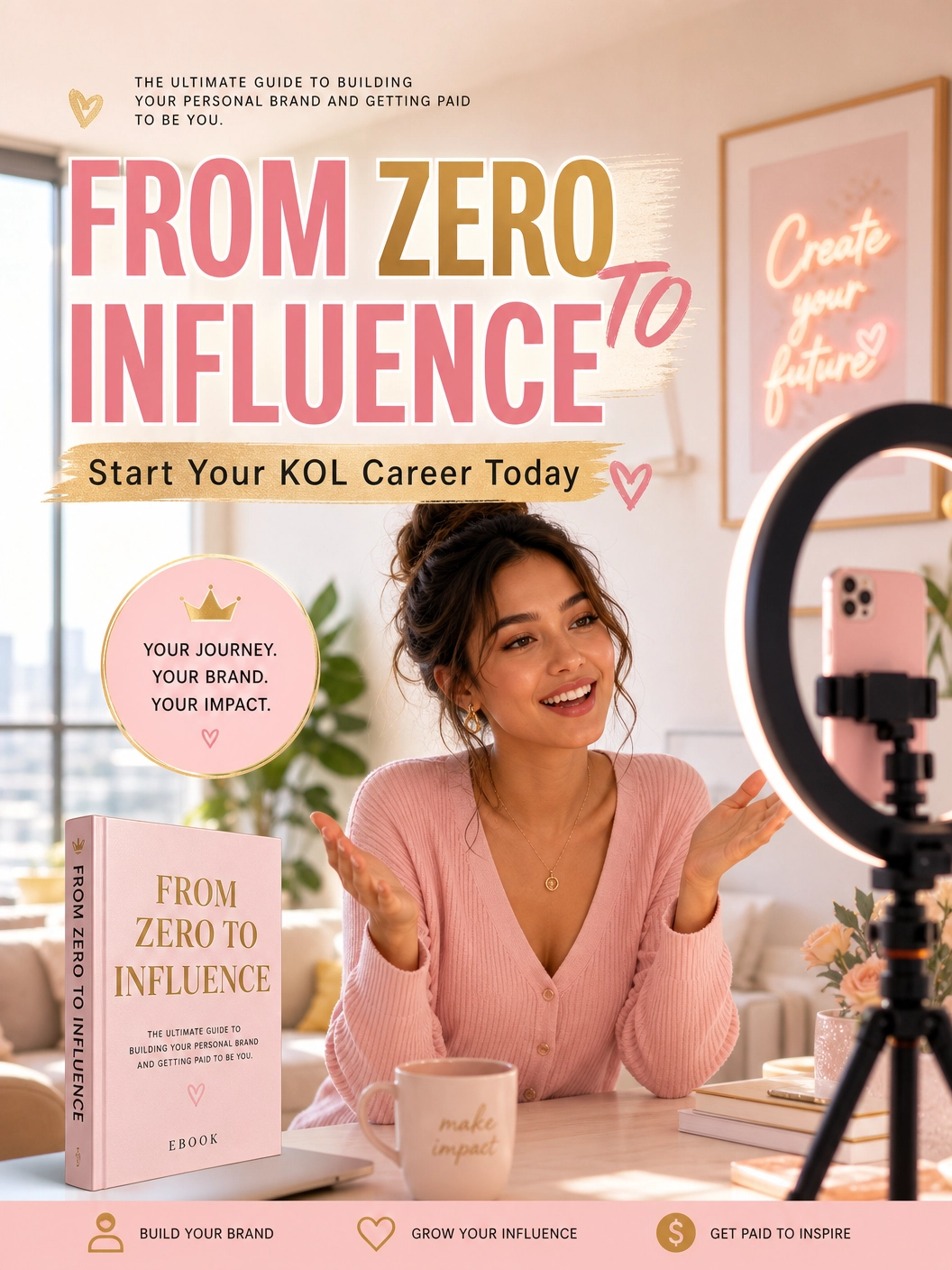
Trust me, a roadmap makes the first 90 days feel a lot less overwhelming.
Final Thoughts
You don’t need a huge following to start. You need a clear niche, honest content, steady practice, and the patience to build trust. Every big audience began with a tiny one, and a quiet first video isn’t a failure. It’s day one.


Leave a Reply