


One month, I earned more than I ever had from my online work. The next month, a client paused a project, another paid late, and my income was about a third of the month before. I stared at my budget spreadsheet and realized something uncomfortable: it had been built for a steady paycheck. My income wasn’t steady. My bills were.
If your online income comes in uneven waves, you’re not doing anything wrong. That’s how freelancing, creating, selling, and affiliate income often work. But a normal budget can feel like it’s lying to you when your earnings go up and down. The answer isn’t to give up on budgeting. It’s to build a system designed for irregular income.
The timing matters. The Fed recently raised interest rates, inflation has been running above its target (recent reports put it around 3.6%), and grocery and gas costs are squeezing many households. At the same time, some FDIC-insured online high-yield savings accounts are paying more than 4%, and Bankrate research found that about 81% of Americans haven’t increased their emergency savings recently. A card that carries a balance might charge an average of around 22% APR, according to one consumer debt summary, so unplanned borrowing is expensive.
In this guide, I’ll explain how to manage money with irregular income as a mom: how to build a baseline budget, separate your accounts, save for taxes and emergencies, and smooth out the ups and downs. (I’m not a financial advisor. This is general information, not personal advice, and you may want to talk with a qualified professional.)
The Core Idea: Build Around Your Lowest Reliable Month
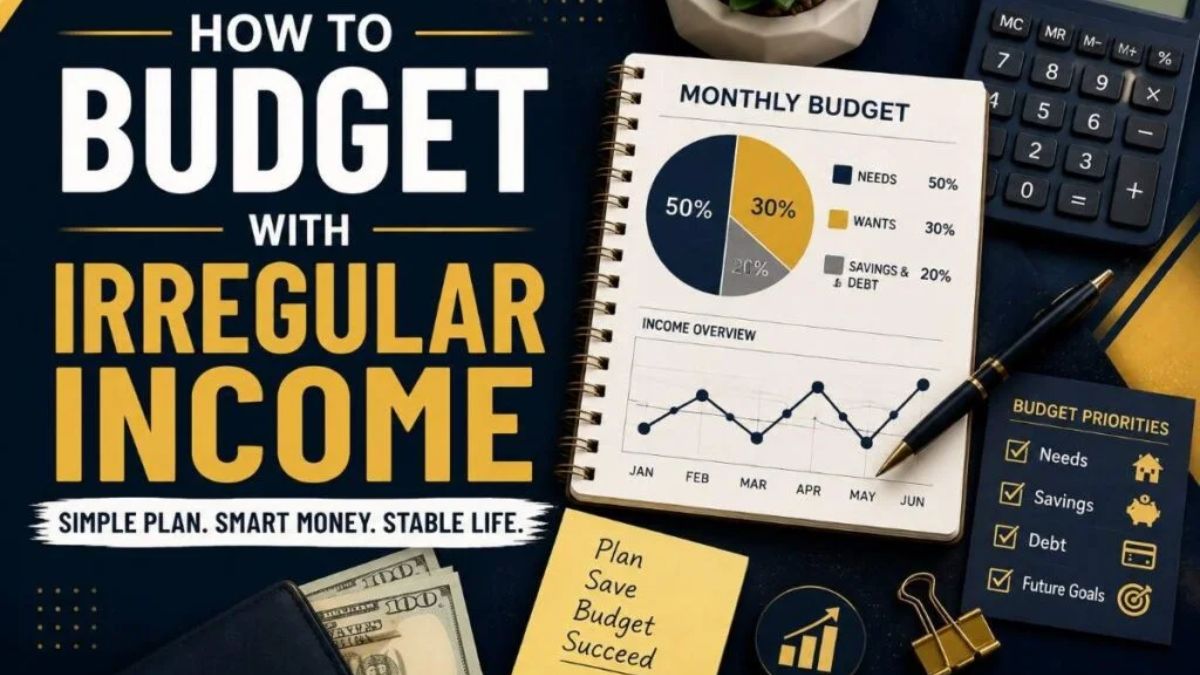
With irregular income, don’t plan around your best month. Plan around your baseline: the amount you can count on in a typical or low month. Everything above it goes to a plan.
How to find your baseline
- Look back at the last six to twelve months of income, if you have them.
- Identify your lowest months and your typical (average of the lower half) months.
- Choose a conservative baseline you’d feel comfortable relying on.
- If you’re brand new, use a modest estimate and adjust after a few months.
Step 1: Separate Your Accounts
Mixing business and personal money makes everything harder. A simple setup:
- Business income account: all client payments and sales land here.
- Tax savings account: a separate savings account for taxes.
- Personal checking account: where you pay household bills.
- Emergency fund: a separate high-yield savings account.
- Optional sinking fund account: for irregular expenses.
Pay yourself a set amount from the business account to your personal account on a regular schedule, like a paycheck.
Step 2: Pay Yourself a Baseline “Paycheck”
Instead of spending whatever shows up:
- Set a fixed monthly (or biweekly) transfer from your business account to your personal account, based on your baseline.
- In better months, leave extra money in the business account as a buffer.
- In slower months, the buffer covers the gap, so your personal budget stays steady.
This turns uneven income into a predictable personal paycheck.
Step 3: Set Aside Taxes From Every Payment
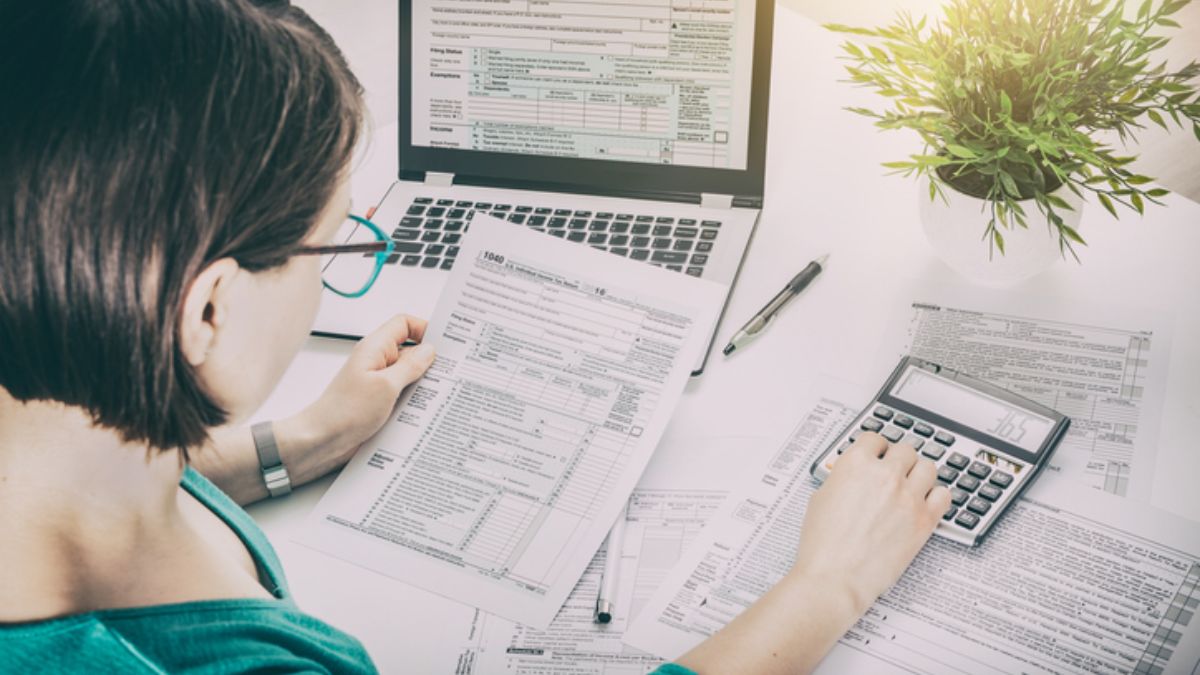
For U.S. moms with self-employment income, taxes are one of the biggest surprises. Key points:
- Self-employment tax applies if your net earnings are $400 or more.
- Quarterly estimated payments are generally required if you expect to owe $1,000 or more in federal tax for the year.
- A common rule of thumb from tax professionals is to set aside roughly 25% to 30% of net earnings. Your actual share depends on your income, deductions, and other tax situation, so confirm with a tax preparer.
- Move the tax money immediately into your separate tax savings account every time you’re paid.
Treat that money as if it already belongs to the tax agency.
Step 4: Build a Starter Emergency Fund
Irregular income makes a cushion even more important:
- Start small: many people begin with a few hundred dollars to one month of essentials.
- Move toward three to six months of essential expenses as your income stabilizes. Some freelancers aim higher because their income is less predictable.
- Keep it in a safe, accessible place, such as an FDIC-insured online high-yield savings account. Rates are variable and can change.
- Automate small transfers every time you’re paid.
If you carry high-interest credit card debt, many people balance a small starter emergency fund with debt payoff so a surprise doesn’t land back on the card.
Step 5: Use a “Floor and Ceiling” Budget
Instead of one budget, create two:
- Floor budget: your absolute essentials (housing, utilities, groceries, transportation, insurance, minimum debt payments, childcare).
- Ceiling budget: your baseline plus what you’d add in a good month: savings, debt payoff, fun, and goals.
In low months, you run the floor budget. In good months, you spend up to the ceiling and send the rest to savings, debt, and taxes.

Step 6: Use Sinking Funds for Irregular Expenses
Many “surprise” expenses are predictable. Set aside a little each month for:
- Car maintenance and registration
- Insurance premiums
- Back-to-school costs
- Holidays and birthdays
- Medical and dental costs
- Business expenses like software renewals or equipment
- Quarterly tax payments
Divide each yearly cost by 12 and transfer that amount monthly.
Step 7: Manage Debt Carefully
With rising interest rates, high-interest debt is especially painful:
- List your debts, balances, and APRs.
- Pay at least the minimum on time, every time. Automate it.
- Put extra money toward the highest-APR debt (avalanche) or the smallest balance (snowball), whichever you’ll stick with.
- Avoid using credit cards to cover everyday costs during slow months unless you have a plan to pay them off.
- Ask lenders about hardship programs if you’re struggling.
Step 8: Save in the Right Places
- Short-term savings and emergency funds: FDIC-insured high-yield savings accounts, where you can access money easily.
- Retirement: if you’re self-employed, ask a professional about retirement account options for the self-employed. Many financial writers recommend securing your own retirement saving before heavily funding children’s accounts.
- Avoid risking money you’ll need soon in volatile investments.

Step 9: Track and Review Monthly
Spend 30 minutes at the end of each month:
- Total income and where it came from
- Taxes set aside
- Spending vs. your floor and ceiling budgets
- Savings and debt payments
- Business expenses
- One adjustment for next month
Note your lowest-income months. They’ll help you refine your baseline.
Step 10: Plan for Slow Seasons and Late Payments
- Keep a buffer in your business account.
- Invoice promptly, and set clear payment terms.
- Ask for deposits on larger projects.
- Follow up politely on late payments.
- Diversify income streams so one client or platform doesn’t control your cash flow.
- Keep a short list of backup ways to earn quickly, like a small service you can offer or items you can sell.

Mistakes to Avoid
- Budgeting around your best month.
- Spending tax money.
- Mixing business and personal accounts.
- Skipping an emergency fund.
- Relying on credit cards in slow months.
- Never reviewing your numbers.
- Underpricing, which makes the whole system harder.
Your 30-Day Money Setup Plan
- Week 1: Gather your income history and find your baseline.
- Week 2: Open separate accounts and name them clearly.
- Week 3: Set up your baseline “paycheck” transfer and your tax set-aside percentage.
- Week 4: Build your floor and ceiling budgets, list your sinking funds, and start a small emergency fund transfer.
Build Your Money System Into a Bigger Plan
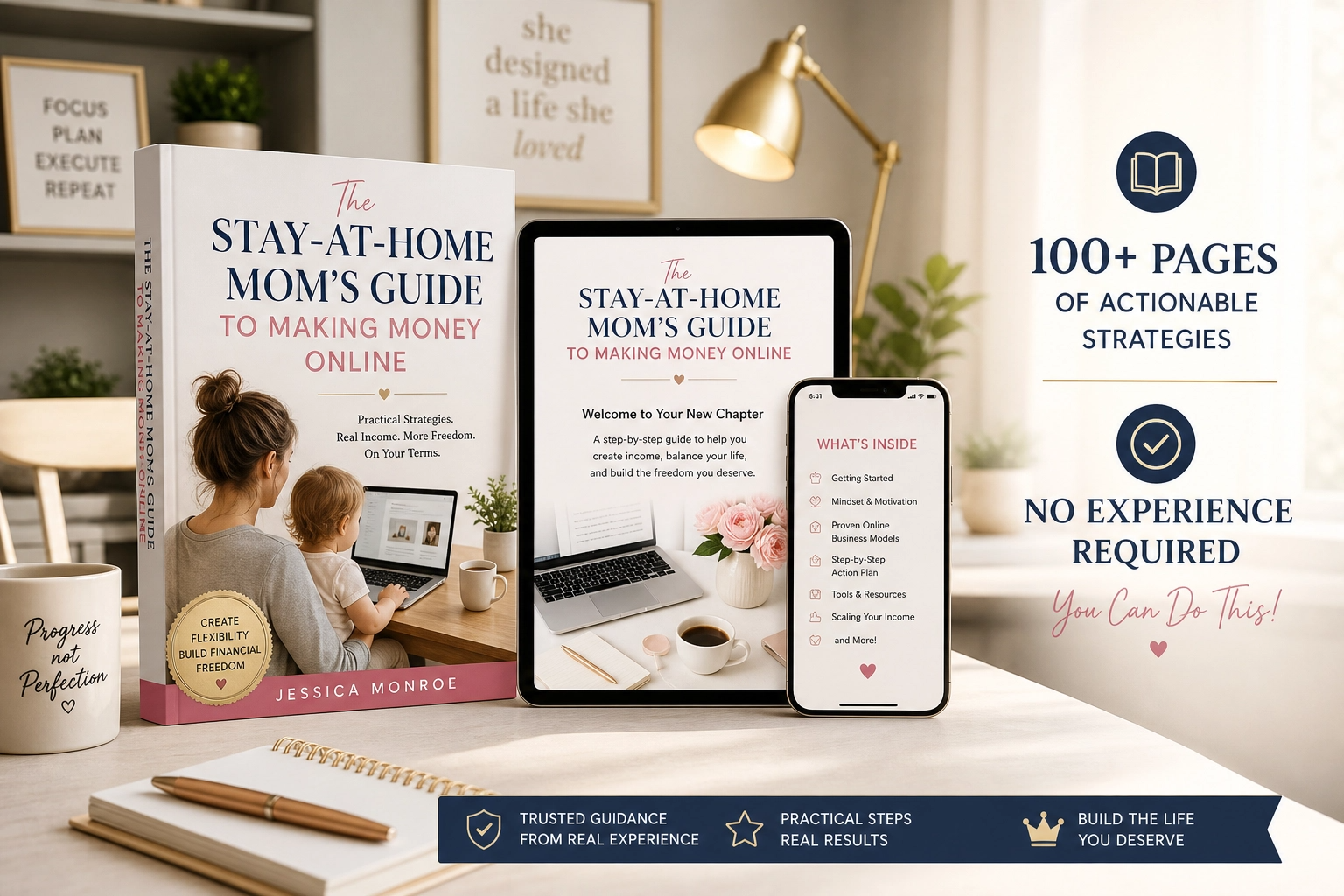
A steady money system is the foundation of a steady online business. If you’d like a beginner-friendly roadmap made for moms, take a look at my ebook:
The Stay-At-Home Mom’s Guide To Making Money Online
Trust me, when your money has a plan, slow months stop feeling like emergencies.
Final Thoughts
Irregular income is a challenge, not a verdict. Build around your baseline, separate your accounts, pay yourself a steady “paycheck,” set aside taxes from every payment, and grow a cushion at a pace you can sustain. With a system designed for ups and downs, you can keep your family steady while your business grows.









Leave a Reply