

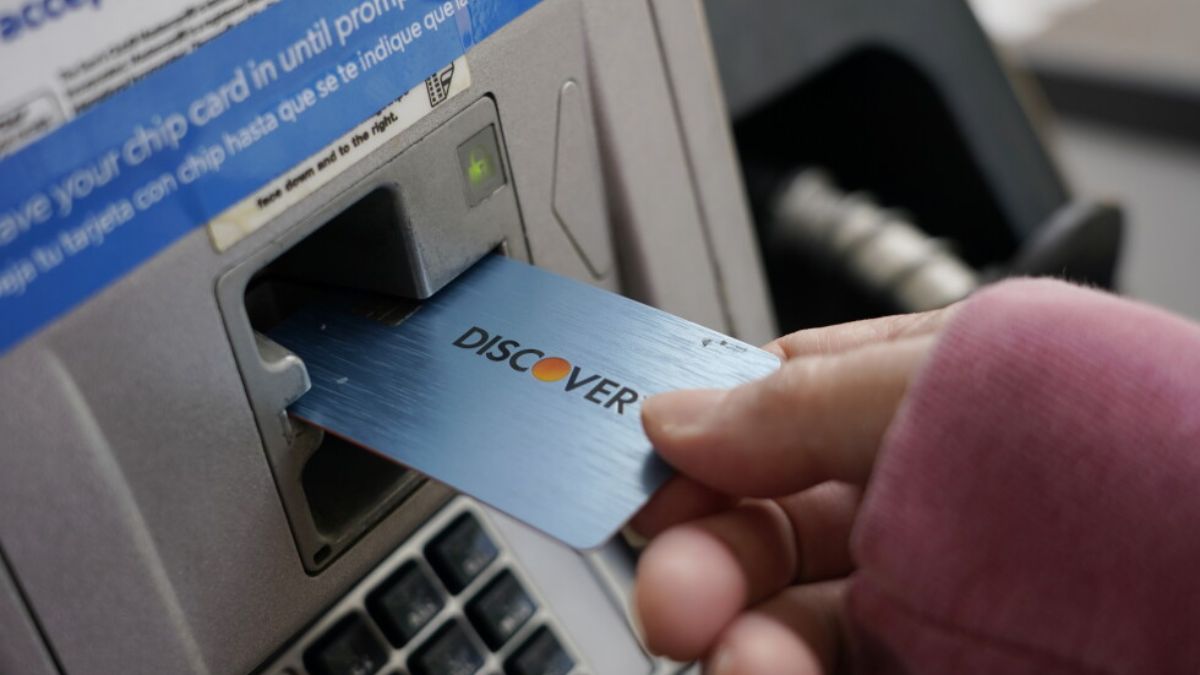
There’s a particular kind of dread that comes with opening a credit card statement. I know it well. For a while I avoided mine entirely, telling myself that if I didn’t look, the number couldn’t hurt me. (Spoiler: the interest kept growing whether I looked or not.) The day I finally sat down with every statement, a highlighter, and a very large cup of tea was the day things began to change. It wasn’t fun, but it was the first time I felt in control.
If you’re carrying a balance, please hear this: you are far from alone, and you can make a plan. The latest numbers from the Federal Reserve Bank of New York show that American households collectively owe about $18.8 trillion in debt, including roughly $1.26 trillion on credit cards. And with the Fed recently raising interest rates, card debt may cost more than before.
In this guide, I’ll walk you through what the latest credit card debt data shows, why it matters for moms, and a step-by-step payoff plan you can start today. (I’m not a financial advisor, and this is general information, not personal advice. If you’re struggling, consider reaching out to a nonprofit credit counselor.)
What the Latest Data Shows
Here are the highlights from the New York Fed’s quarterly report on household debt and credit and related coverage:
- Total household debt: about $18.8 trillion
- Mortgages: roughly $13.1 trillion
- Credit cards: about $1.26 trillion
- Auto loans: about $1.71 trillion
- Student loans: about $1.65 trillion
- Home equity lines of credit: about $459 billion
- New delinquencies for auto loans and credit cards remain at elevated levels, according to New York Fed researchers.
- Card balances follow a seasonal pattern. They typically rise at the end of the year as holiday spending hits, and fall in the first part of the year as people pay down balances. The New York Fed reported record card balances of about $1.28 trillion after a recent holiday season.
- The pain is uneven. Analysts describe a “K-shaped” pattern, in which a subset of consumers, primarily subprime borrowers, drives most of the increase in delinquencies, while prime borrowers show only slight deterioration.
And on cost: one recent consumer debt summary put the average APR on cards that accrue interest at about 22%, with average card debt per consumer around $6,600. (Those figures come from a secondary source, so verify them, but they show how costly carrying a balance can be.)
Here’s the truth: high-interest debt grows faster than most savings accounts can. Even with high-yield savings paying more than 4% at some banks, a card charging about 22% will usually outrun it.
Why Credit Card Debt Hits Moms Hard
- Kids create unpredictable expenses: medical bills, school costs, activities, and childcare gaps.
- Many moms manage household spending and feel the pressure first.
- Rising grocery and gas costs can push families to cover basics on credit.
- Emotions and shame can lead to avoidance, which makes things worse.
There’s nothing shameful about debt. It’s a math problem with a plan.
Step 1: Face the Numbers
Gather every statement and write down:
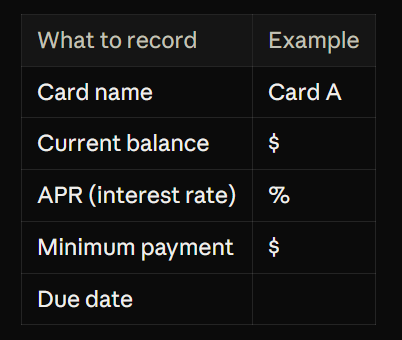
Add up the balances. That’s your total. Some people feel a wave of relief just from knowing the real number.
Step 2: Stop the Bleeding
Before you pay down debt, try to stop adding to it:
- Identify what’s driving the balance. Is it groceries, emergencies, or lifestyle spending?
- Switch temporarily to debit or cash for everyday spending.
- Remove saved cards from shopping sites and apps.
- Pause nonessential subscriptions.
Step 3: Always Pay at Least the Minimum, On Time
Late payments can bring fees, penalty rates, and credit score damage. Set up autopay for the minimum on every card, and add calendar reminders. Then put every extra dollar toward your target card.
Step 4: Choose Your Payoff Method
The avalanche method
Pay the minimums on all cards, then throw extra money at the card with the highest APR. When it’s gone, move to the next highest. This usually saves the most in interest.
The snowball method
Pay the minimums on all cards, then put extra money toward the card with the smallest balance. When it’s paid off, roll that payment to the next smallest. This builds momentum and motivation.
Which is better? Mathematically, the avalanche often wins. Psychologically, the snowball can keep people going. The best method is the one you’ll stick with.

Step 5: Find Extra Money
Look for small, repeatable wins:
- Cancel subscriptions you don’t use.
- Reduce takeout and meal-plan around what’s on sale.
- Sell kids’ outgrown clothes, toys, and baby gear.
- Take on a small side gig: tutoring, a weekend shift, freelance work.
- Use tax refunds or bonuses for debt rather than spending.
- Check whether bills like insurance and phone plans can be reduced.
Step 6: Consider Tools That Might Lower Your Interest (With Caution)
Some options may help, but each has trade-offs. Read the fine print.
- Call your card issuer. Ask about a lower rate, a hardship program, or a payment plan. It costs nothing to ask.
- Balance transfer cards. Some offer a low or 0% introductory rate for a set time, usually with a transfer fee. Make sure you can pay off the balance before the promotional period ends, and avoid running up the old card again.
- Debt consolidation loan. A fixed-rate personal loan may lower your interest rate if you qualify, but watch for fees and don’t treat it as a license to spend more. Rates on personal loans can be high.
- Nonprofit credit counseling. A reputable nonprofit agency can review your budget and may offer a debt management plan. Look for accredited organizations, and be careful about high fees.
- Avoid scams. Be wary of companies that guarantee to erase debt, charge large upfront fees, or tell you to stop communicating with your creditors.

Step 7: Protect Your Credit While You Pay Down
- Pay on time, every time. Payment history is a major factor in credit scores.
- Keep your balances low relative to your limits. A common rule of thumb is to stay below about 30% utilization, and lower is generally better.
- Think before closing old cards. Closing can affect your credit history and utilization.
- Check your credit reports for errors. You’re entitled to free reports through the official federal site.
- Avoid applying for lots of new credit at once.
Step 8: Build a Small Buffer So You Don’t Slide Back
If an emergency hits and you have no cushion, it can land on the card again. Many people pay down debt while building a small starter emergency fund, often a few hundred to one month of essentials, then increase it as the debt shrinks. Start with an amount that feels realistic for your situation.
What If You Can’t Make the Minimums?
- Contact your issuer right away. Many have hardship options.
- Prioritize essentials first: housing, utilities, food, transportation, and insurance.
- Seek nonprofit counseling.
- Talk to a professional about your options if you’re considering bankruptcy or debt settlement, since both have significant consequences.
A Sample Payoff Plan
Imagine three cards:
- Card A: $1,200 at 26% APR
- Card B: $3,000 at 22% APR
- Card C: $500 at 19% APR
You can afford $300 per month in total payments, with minimums totaling $140. Using the avalanche method, you’d pay the minimums on B and C and put the extra $160 on Card A until it’s gone, then roll everything onto Card B, then Card C. Using the snowball method, you’d target Card C first for the quick win. Either way, you keep paying the minimums and attack one target at a time. (This is an illustration with made-up numbers, not a prediction.)
Mistakes to Avoid
- Ignoring statements.
- Paying only the minimum for years. It can take a very long time to pay off a balance that way.
- Moving debt around without a plan. Transfers and consolidations only help if you stop adding new debt.
- Raiding retirement accounts without understanding the taxes and penalties.
- Taking on payday loans or similar high-cost loans.
- Giving up after one setback. Progress is rarely a straight line.

Your 30-Day Debt Kickstart
- Week 1: List every card, balance, and APR. Set up autopay for minimums.
- Week 2: Choose your payoff method and find your first $50 to $100 extra.
- Week 3: Call your top-APR card issuer and ask about a lower rate.
- Week 4: Review your progress, check your credit report, and celebrate each win.
Build a Money System That Keeps Debt Away
Paying off debt is just one chapter. The goal is a system that keeps you from going back: a budget that works, a safety net, and goals that excite you. If you’d like a step-by-step guide made for moms, take a look at my ebook:
The Smart Mom’s Complete Guide to Money

Trust me, once you have a plan, the number on that statement stops feeling like a verdict.
Final Thoughts
Credit card debt is common, expensive, and fixable. Face the numbers, stop adding to the balance, pick a payoff method, and keep going one card at a time. You don’t need to be perfect. You just need to start and stay consistent. Your future self, and your kids, will thank you for it.










Leave a Reply