


For my first year in business, my pricing strategy was basically a shrug. A client would ask, “How much do you charge?” and I’d mentally calculate hours, divide by guilt, and throw out a number. Some projects went way over, some went way under, and every month I ended up with the same problem: I was fully booked and still not earning what I wanted.
If you sell your time, you have a ceiling. There are only so many hours in a week, and no amount of hustle changes that. This is exactly why so many solopreneurs are moving toward productized services: clearly defined offers with a set scope, price, and timeline. And AI makes productizing easier than ever, because it can handle the repetitive parts of delivery, so each package takes less of your time.
In this guide, I’ll show you how to productize your service with AI, step by step, with examples, pricing guidelines, and mistakes to avoid.
Why Solopreneurs Are Productizing
Recent solopreneur coverage highlights a simple idea: if every dollar depends on your hours, you’re running a job. Packaged services, digital products, and other assets change that equation. Here’s why productizing works:
- Clear offers are easier to sell. “Brand Starter Kit in 10 days for a fixed price” beats “I do branding.”
- Fixed scope protects your time. No more endless revisions or surprise extras.
- It’s repeatable. The more you repeat a process, the better your systems and templates become.
- It makes AI useful. AI is far more effective on structured, repeatable work.
- It supports growth. Once the process is stable, you can raise prices, add helpers, or turn parts of it into products.
As more solo owners plan to bring in freelancers or contractors, productized services also make delegation easier, because the work is already defined.
What Is a Productized Service?
A productized service is a service packaged like a product. It has:
- A specific outcome (what the customer gets)
- A defined scope (what’s included and excluded)
- A fixed price
- A set timeline
- A repeatable process
Examples:
- Freelance designer: “Social media template pack: 10 branded templates, delivered in one week.”
- Bookkeeper: “Monthly books cleanup and report for freelancers.”
- Copywriter: “Website homepage rewrite: one page, two rounds of edits, 7 days.”
- Coach: “Four-week signature offer launch plan.”
- Consultant: “Pricing audit: a recorded review plus a one-page action plan.”
- Virtual assistant: “Inbox and calendar management with weekly summary.”
Step 1: Find Your Most Requested Service
Look at the past six to twelve months. Which request do clients ask for most? Which projects went smoothly, felt energizing, and delivered clear results? Choose one. This is your starting point.
If you’re not sure, use AI as a thinking partner:
“Here’s a list of my past projects and what clients paid: [paste]. Identify patterns, tell me which projects were most repeatable and profitable per hour, and suggest which one could become a fixed-price package.”
Step 2: Define the Outcome in Plain Language
Write one sentence that a customer would say about your service:
“I get [specific result] without [specific pain] in [timeframe].”
Example: “I get a clear, ready-to-use onboarding email sequence without staring at a blank page, in two weeks.”

Step 3: Map Your Process
Write down every step you take from first contact to delivery:
- Inquiry and discovery
- Intake form or questionnaire
- Research or analysis
- First draft or first version
- Feedback and revisions
- Final delivery
- Follow-up and testimonial request
Now mark each step with one of three labels:
- Human: needs your judgment, taste, or relationship
- AI-assisted: AI drafts, you review
- Automated: can run with a form, template, or tool
Step 4: Add AI to the Repetitive Steps
Here’s where the time savings appear. Common places AI can help:
- Intake: Create a smart questionnaire and have AI summarize responses into a project brief.
- Research: Summarize competitors, audience feedback, or documents (then verify important facts).
- First drafts: Proposals, outlines, emails, social posts, reports, and templates.
- Quality checks: Ask AI to review your work against a checklist before delivery.
- Delivery documents: Turn notes into a polished summary or presentation.
- Follow-up: Draft thank-you notes, review requests, and upsell emails.
Every AI output still passes through your review. That’s the draft-and-approve principle: AI writes, you approve.

Step 5: Set Scope Boundaries
Boundaries are what make a package profitable. Define:
- What’s included (deliverables, number of revisions, meetings)
- What’s not included (extra pages, rush work, ongoing support)
- What you need from the client (materials, feedback deadlines)
- What happens if they’re late (timeline shifts, pause fees)
Put these in a simple one-page agreement.
Step 6: Price the Package
Pricing is part math, part confidence. A simple approach:
- Estimate how many focused hours the package takes now (with AI support).
- Decide a target hourly value you want to earn.
- Multiply, then compare with what the result is worth to the customer.
- Check what similar offers cost in your market.
- Set a price that reflects the outcome, not just your hours.
Pro tip: Price based on value, not on the minutes AI saves you. If your process is faster, that’s your reward for building a good system.
Consider offering three tiers:
- Basic: The core deliverable.
- Standard: The core plus an extra round or bonus.
- Premium: The core plus support, priority timing, or add-ons.
Step 7: Create Your Delivery Toolkit
Build reusable assets:
- A client intake form
- A welcome email
- A project timeline template
- A prompt library for your AI-assisted steps
- A quality checklist
- A final delivery template and a testimonial request
Once built, each new client takes much less effort.

Step 8: Write a Simple Sales Page
Include:
- A headline stating the outcome
- Who it’s for (and who it’s not for)
- What’s included, step by step
- The timeline and price
- Proof: testimonials or mini case studies
- A clear call to action (book, buy, or inquire)
AI can help draft the page, but add your own stories and real results.
Step 9: Test With a Few Clients
Sell your first three to five packages and learn from them. Track:
- How long each step actually takes
- Where clients get confused
- Which part of AI assistance works best
- What clients love most
Refine the package based on what you learn.
Step 10: Add a Compounding Asset
Once your package works, turn your knowledge into something that sells while you sleep: a template shop, a mini-course, a guide, a paid newsletter, or a membership. Many solo business ideas, such as digital templates, niche newsletters, and courses, fit this model nicely.
A word of caution: assets often take time before they earn. A productized service can fund the building phase.

Product Ideas for Solo Businesses
- Fixed-price audits (pricing, website, social, funnel)
- Template packs (proposals, pitch decks, content calendars)
- Done-for-you setup services (email sequences, automation, dashboards)
- Workshops and short cohorts
- Monthly retainers with a clearly defined menu
- AI workflow setup for local businesses
Common Mistakes to Avoid
- Making the package too broad. Vague offers are hard to sell.
- Underpricing because AI makes it faster. Charge for outcomes.
- Skipping the contract. Always define scope and ownership in writing.
- Automating before the process is stable. Do it manually a few times first.
- Sending AI work unchecked. Review everything.
- Having no hiring trigger. Decide in advance when you’ll turn down work or bring in help.
Your 30-Day Productizing Plan
- Week 1: Choose your service and write your outcome sentence.
- Week 2: Map your process and decide where AI helps.
- Week 3: Build your intake form, templates, and one-page agreement.
- Week 4: Create your sales page and offer it to three people.
Build Your Offer With Confidence
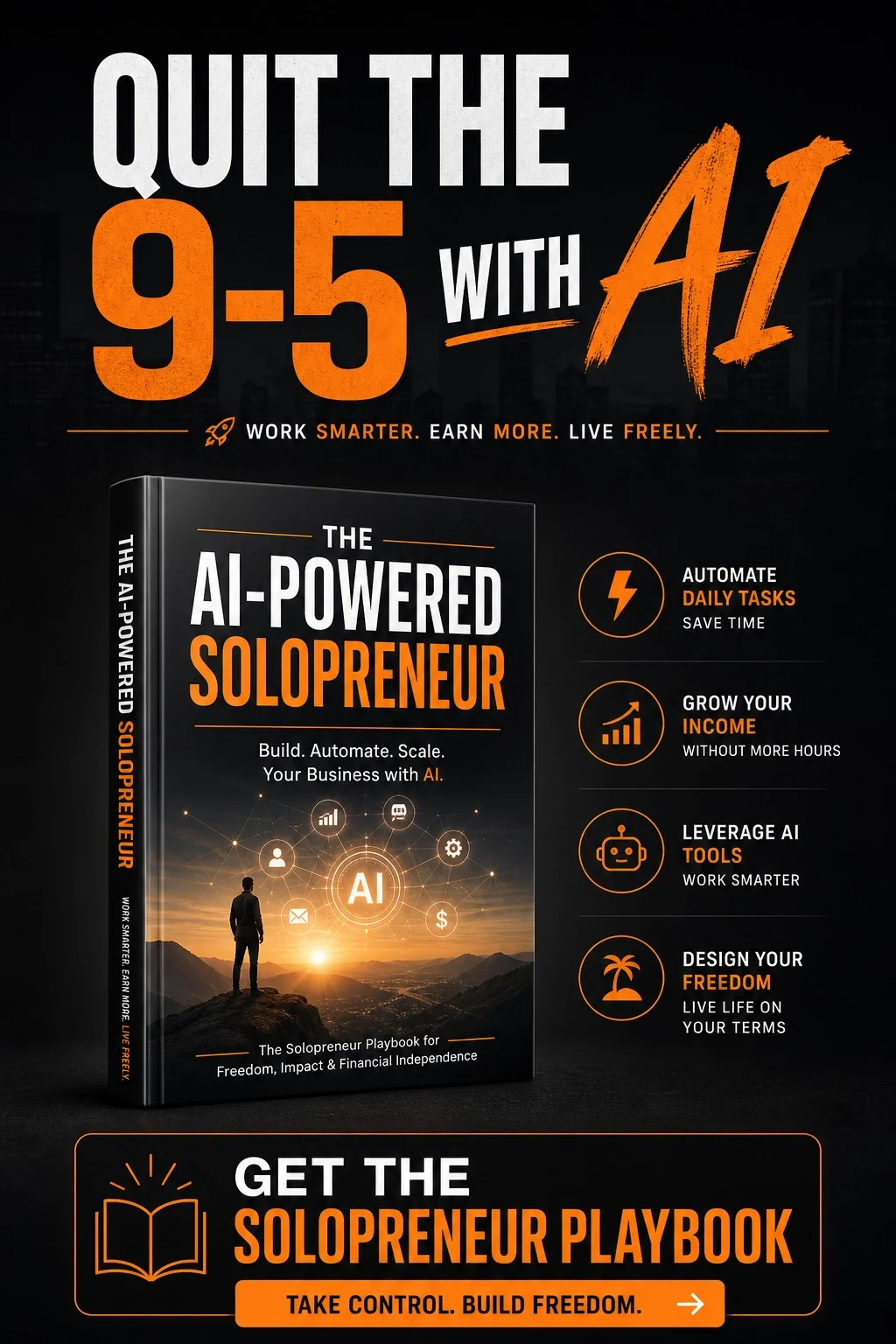
If you’d like a step-by-step guide for turning your skills into clear offers and using AI to deliver them efficiently, check out my ebook:
Trust me, a good package changes how you feel about your business.
Final Thoughts
Productizing is one of the smartest moves a solopreneur can make. It turns a fuzzy service into a clear offer, protects your time, and makes AI far more useful. Choose one service, define the outcome, set the scope, price it for value, and test it. You may be surprised how much easier selling, delivering, and growing become.








Leave a Reply