

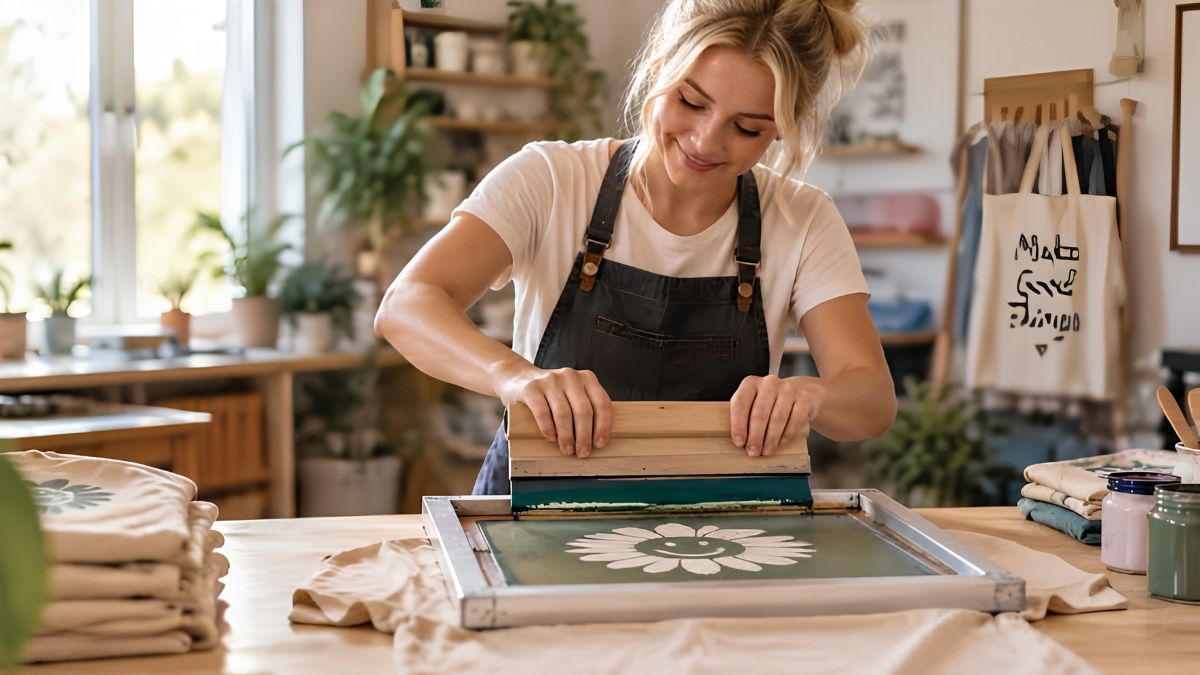
Let me tell you about the moment I almost gave up before I even started. I was scrolling through business ideas online, and every single one seemed to require money I didn’t have: inventory, equipment, a website developer, a marketing budget. My savings account looked like a sad little puddle, and I honestly thought entrepreneurship was for other people.
Then I stumbled onto print on demand, and the thing that hooked me was one simple fact: you can start without buying inventory. No boxes of unsold shirts in your closet. No thousands of dollars tied up in stock. You only pay a production cost when a customer has already paid you.
Now, I want to be honest with you right from the start. “No money” doesn’t mean “no effort,” and it doesn’t mean “instant income.” Print on demand takes time, learning, and consistency. But if you’re willing to invest your energy instead of your cash, you can absolutely launch a real business on a shoestring budget.
In this comprehensive guide, I’ll show you how to start a print on demand business with no money (or as close to zero as possible) in 2026. We’ll cover free tools, free platforms, smart sample strategies, and low-cost marketing so you can build momentum without draining your bank account.
What “Starting With No Money” Really Means
Let’s set realistic expectations so you don’t get discouraged.
What can be free
- Opening accounts with print on demand partners
- Designing with free tools
- Setting up an Etsy shop (Etsy charges small listing fees, which we’ll discuss)
- Learning through free content and communities
- Marketing on Pinterest, TikTok, and Instagram
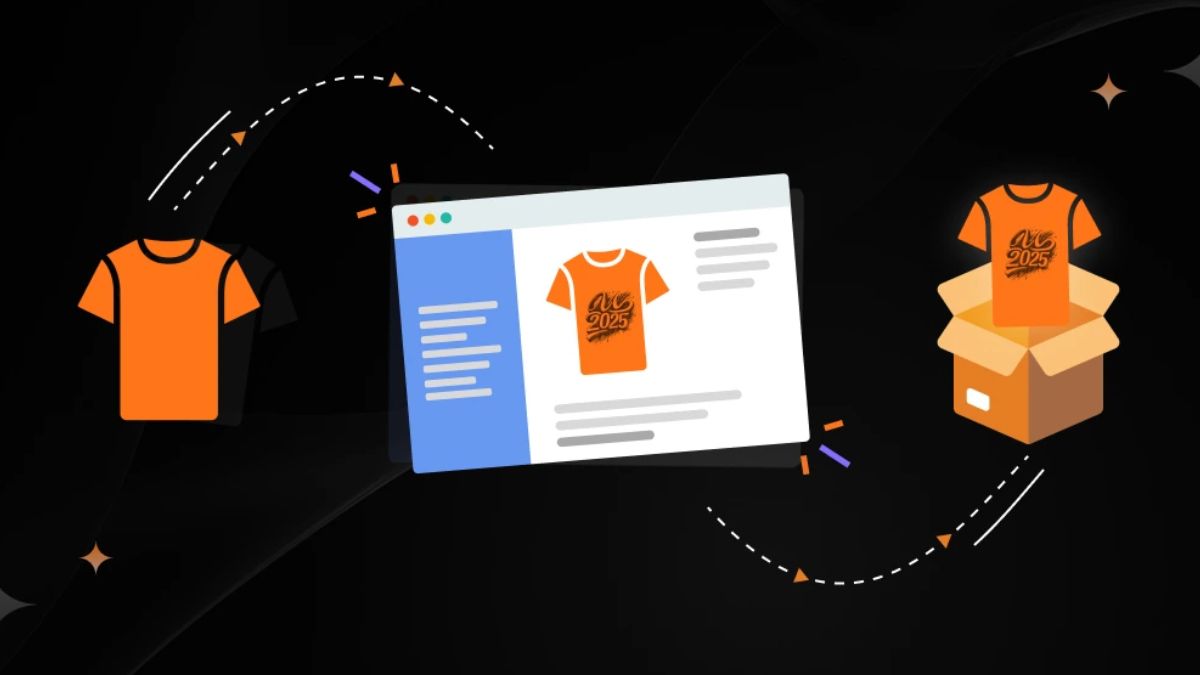
What might cost a little
- Etsy listing fees: A small fee per listing
- Sample orders: Highly recommended before you sell
- Optional upgrades: A paid design plan, a domain name, or advanced tools
Here’s the truth: you can start with almost nothing, but budgeting a small amount for samples and listing fees will save you from expensive mistakes later. Even $30 to $50 can go a long way if you spend it wisely.
Step 1: Choose a Low-Cost Business Model
The most budget-friendly way to begin is with a marketplace-based print on demand shop, such as Etsy, connected to a free POD account.
Why marketplaces beat starting a standalone store (at first)
- Built-in traffic: You don’t need a big ad budget to be found.
- No monthly website fee: Etsy charges per listing rather than a monthly subscription, so you can start small.
- Faster validation: You’ll learn what sells before investing in your own site.
Later, once you have proof that your designs sell, you can build a Shopify store or a custom website to own your brand long-term.
Step 2: Pick a Niche Using Free Research
You don’t need paid software to find a niche. Free research is powerful if you know where to look.
Free niche research tools
- Etsy search autocomplete: Type a keyword and note the suggestions.
- Pinterest search and trends: See what people save and search.
- Google Trends: Compare interest over time.
- TikTok and Instagram hashtags: Check community size and engagement.
- Reddit and Facebook groups: Read what passionate people talk about.
Criteria for a good beginner niche
- Passionate audience with identity-driven interests
- Multiple sub-niches you can narrow into
- Products people buy as gifts
- Room for at least 30 design ideas
Pro tip: Avoid ultra-competitive, generic niches like “funny quotes.” Go narrower, like “funny quotes for nurses working night shift.” Specific beats broad, especially when you have a small budget.
Step 3: Open Free Accounts With Your POD Partners
Here’s where the “no inventory” magic happens. Both platforms I recommend let you open an account without paying upfront.
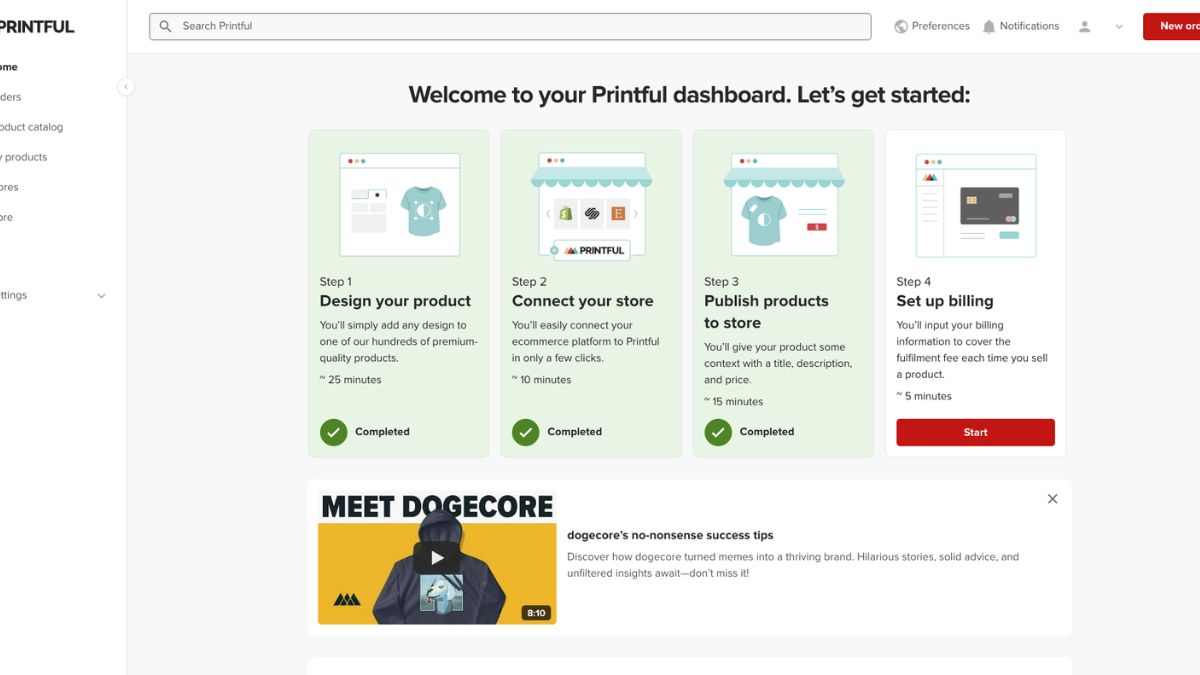
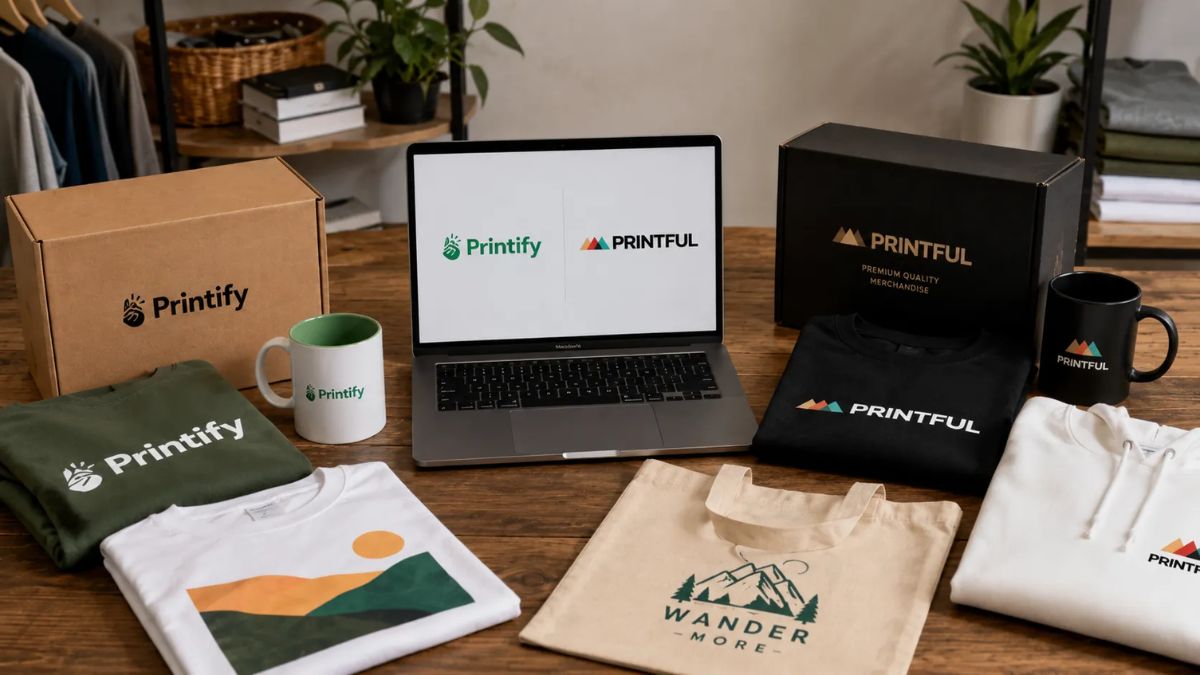
Printful
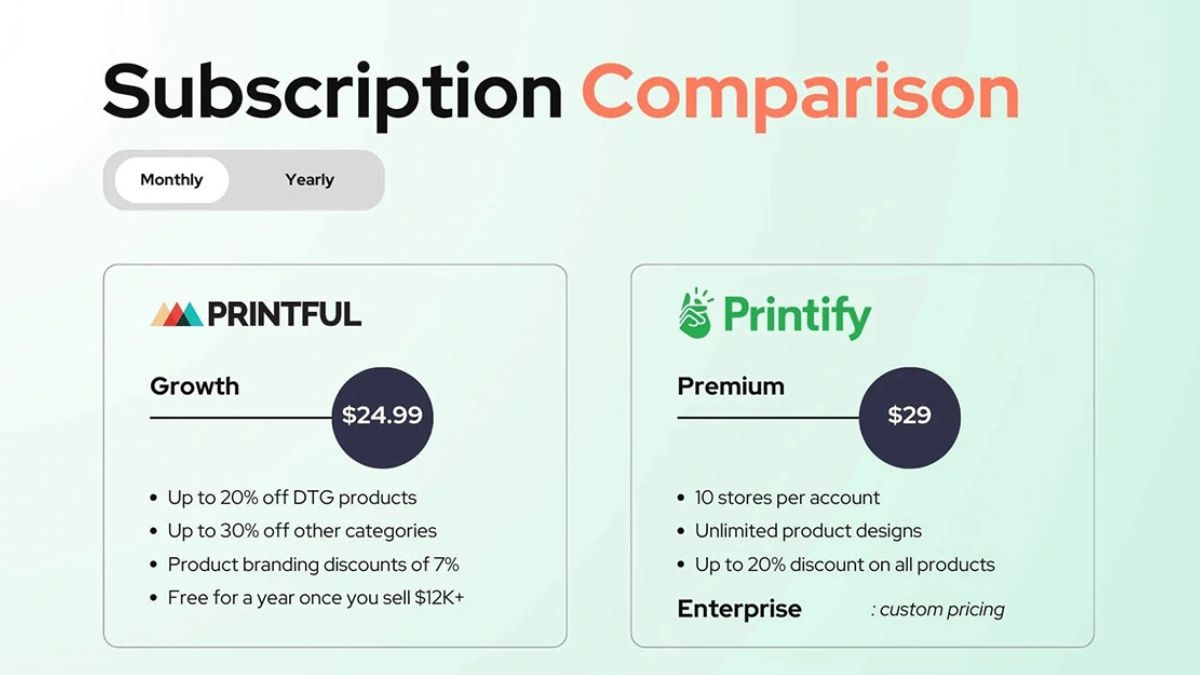
Printful has no required monthly fee to begin. You pay production and shipping costs only when an order is placed. It’s known for consistent quality, a strong mockup generator, and branding options as you grow.
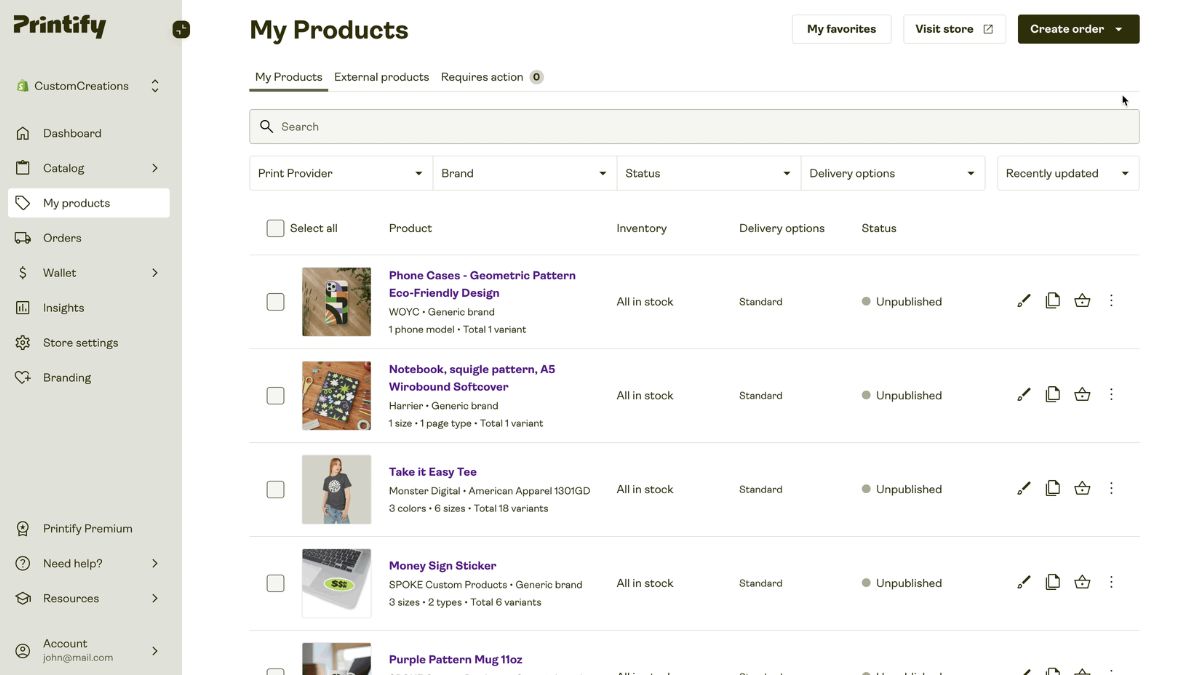
Printify
Printify offers a free plan, so you can create products and connect your store without an upfront subscription. There’s also a paid plan with product discounts if your sales volume grows, but you don’t need it to start. Check their site for current details.
Opening both accounts costs you nothing, and it lets you compare products and prices later. Create your free Printful account and create your free Printify account today so you’re ready to go.
Step 4: Design Without Spending
You can create professional-looking designs for free (or nearly free).
Free and low-cost design tools
- Canva Free: Great for text-based designs, though transparent PNG downloads are a paid feature, so consider a free trial when you’re ready.
- Free vector and image editors: Several free tools can handle basic graphics and background removal.
- Your own hand lettering or drawings: Scan or photograph and clean up your artwork. Authenticity sells.
- Public-domain graphics: Only use assets that are clearly in the public domain or licensed for commercial use.
What to design first
Stick to simple, text-driven designs that require no artistic training:
- Niche identity statements
- Humorous one-liners
- Positive affirmations
- Hobby-related phrases
- Seasonal holiday designs
Legal safety tips (they cost nothing!)
- Never use trademarked characters, brands, or celebrity names.
- Avoid song lyrics and movie quotes.
- Double-check phrases for trademarks before using them on products.
- Read the license terms on any font or graphic.
A suspended shop is the most expensive mistake you can make, even if it doesn’t cost you dollars upfront.
Step 5: Use a Smart, Low-Cost Sample Strategy
I know, I know. Samples cost money, and this guide is about starting with nothing. But hear me out. Ordering even one or two samples can protect you from selling low-quality products that lead to refunds and bad reviews.
How to keep sample costs low
- Order just one product in your niche to test the print quality.
- Choose your best-selling type first, like a T-shirt or a mug.
- Use your sample as marketing content. Photograph it and film a quick unboxing.
- Look for discount offers on sample orders from your POD provider.
- Ask friends or family to model to save on photography costs.
If you truly can’t afford a sample right away, you can start with mockups and list a small number of products. Just be transparent, order a sample as soon as your first sale or two come in, and make sure you can handle any issues that arise.
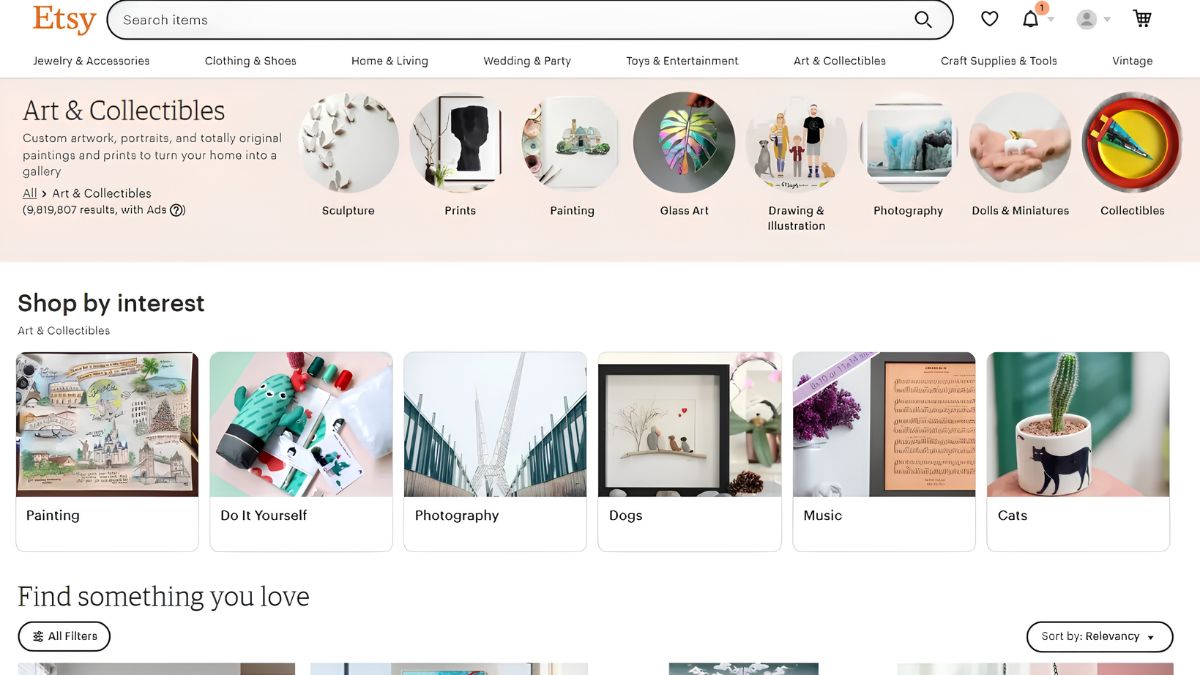
Step 6: Open Your Etsy Shop on a Budget
Etsy charges a small fee for each listing, so start small and focus on quality.
Budget-friendly launch strategy
- Open your shop and complete the setup.
- Start with 5 to 10 focused listings instead of dozens.
- Use free banner and logo templates from Canva.
- Write your shop policies and About section using clear, friendly language.
- Add more listings gradually as revenue comes in.
Optimize every listing for free traffic
- Keyword-rich titles based on real Etsy searches
- All 13 tags used with long-tail phrases
- Clear, bright mockups with a size chart
- Complete attributes and categories
- Well-written descriptions that mention who it’s for and the occasion
Trust me on this: free SEO work is your secret weapon when you don’t have an advertising budget. Every hour spent researching keywords can bring you views for months.
Step 7: Price for Profit (Even on a Tiny Budget)
When you have no cash cushion, underpricing can sink you quickly. Every sale needs to cover your costs and leave a profit.
Pricing formula
Retail price = Production cost + Etsy fees + shipping (if included) + profit
Practical tips
- Aim for at least a 30 to 40 percent margin after fees.
- Don’t compete with the cheapest sellers. Compete on niche relevance and quality.
- Use free shipping by including the cost in your price.
- Offer bundles to increase order value.
For example, if a tee costs you about $12 to produce and you price it at $29.99, you have enough room to cover fees, run occasional discounts, and still make money. If you price it at $17.99, you’ll barely break even.
Step 8: Market Your Products for Free
With no ad budget, you need free traffic strategies. Luckily, there are plenty.
Pinterest is a search engine, and pins can send traffic for months or years. Create keyword-rich pins linking to your Etsy listings. Make multiple pin images per product, and organize them into niche boards.
Short-form video
Post short videos on TikTok, Instagram Reels, and YouTube Shorts:
- Design process clips
- Sample unboxing videos
- “Gift idea for [niche]” content
- Behind-the-scenes shop stories
Community engagement
Join niche Facebook groups and forums. Focus on providing value and building relationships, not spamming links. Share your products when it’s appropriate and permitted.
Email list
Even with a small audience, collect emails by offering a small discount or freebie. Free email platforms can get you started at no cost.
Consistency over perfection
Post regularly, even if it feels awkward. I remember filming my first video and cringing at the result. But that awkward clip taught me more than hours of planning.
Step 9: Reinvest Your First Profits
Once your first sales roll in, resist the urge to spend them all. Here’s a smart reinvestment order I recommend:
- Order samples of your best-selling products.
- Upgrade your design tools if it saves you time.
- Add more designs in your best-performing niche.
- Improve photos and mockups.
- Consider small ad tests on proven products.
- Register your business and set aside money for taxes.
Reinvesting your profits builds a snowball effect. Each sale funds the next improvement.
Step 10: Stay Consistent and Track Your Progress
The biggest difference between people who succeed and those who quit is consistency.
A simple weekly routine
- Monday: Research keywords and trends
- Tuesday and Wednesday: Create new designs
- Thursday: Publish listings and optimize existing ones
- Friday: Post content on Pinterest and social media
- Weekend: Review your stats and plan next week
What to track
- Listing views
- Favorites and add-to-carts
- Conversion rate
- Top-selling designs and keywords
- Profit per product
Print on demand rewards patience. Many sellers don’t see traction in the first few weeks, and that’s completely normal. Keep improving your listings, adding relevant designs, and promoting your shop.
Common Mistakes When Starting With No Money
- Choosing a niche that’s too broad
- Publishing too many random listings and burning through listing fees
- Skipping quality checks on products
- Copying designs or using trademarked material
- Underpricing to attract quick sales
- Quitting after a month
- Ignoring free marketing channels
A Realistic 30-Day Zero-Budget Roadmap
Week 1: Choose your niche, research keywords, and open free accounts with Printful and Printify.
Week 2: Create 8 to 10 designs with free tools and build product mockups.
Week 3: Open your Etsy shop, publish your first focused listings, and set up a Pinterest business account.
Week 4: Promote consistently, review your stats, and refine your titles, tags, and photos.
Remember: results vary, and there are no guarantees. But following this roadmap gives you a real shot at learning, testing, and building momentum without heavy financial risk.
Your Zero-Budget Journey Starts Today
Starting a print on demand business with no money is possible because the model is designed to remove financial barriers. You don’t need inventory, a warehouse, or a large budget. You need a specific niche, good designs, honest effort, and partners who handle production and shipping for you.
That’s why I encourage you to open both platforms today. Join Printful for premium quality and branding tools, and join Printify for wide product selection and pricing flexibility. Both are free to start, so the only thing you’re investing right now is your time. Take the first small step this week, upload your first design, and let your business grow one sale at a time. You’ve got this!







Leave a Reply