


Did you know that businesses are projected to spend over $835 billion on digital marketing this year alone? I remember the exact moment that stat stopped me in my tracks. I was sitting at my kitchen table, staring at my laptop, wondering how I was going to make extra income without adding another shift to my already-packed schedule. Little did I know, the answer was sitting right there in the skill I’d been quietly learning for free on YouTube for months.
Here’s the truth: digital marketing isn’t just a corporate buzzword reserved for big agencies. It’s one of the most accessible, flexible ways to build real income from home — whether you want to freelance, manage social accounts for small businesses, or build your own marketing-based digital products. I went from knowing nothing about SEO or email funnels to earning consistent income managing marketing for a handful of small businesses, all while working around my own schedule.
If you’ve ever thought “I’m not techy enough” or “isn’t digital marketing something only agencies do?” — trust me, I thought the exact same thing before I started. In this comprehensive guide, I’ll walk you through everything you need to know about breaking into digital marketing, which skills actually pay, and how to turn this knowledge into a genuine income stream in 2026.
What Digital Marketing Actually Means (And Why It’s So Profitable)
Digital marketing is really just an umbrella term for how businesses attract customers online — through social media, search engines, email, content, and paid ads. Here’s what I learned the hard way: you don’t need to master every single piece of it. Most successful digital marketers I know picked one or two specialties and became genuinely great at them, rather than spreading themselves thin.
The reason this field is so lucrative right now is simple — every business, from your local bakery to massive e-commerce brands, needs someone who understands how to get in front of the right customers online. And most small business owners? They have zero time or expertise to figure it out themselves. That’s exactly where you come in.

The core skill areas you can specialize in:
- Social media marketing — managing content, engagement, and strategy for brand accounts
- Search engine optimization (SEO) — helping websites rank higher on Google
- Email marketing — building funnels and sequences that convert subscribers into buyers
- Paid advertising — running Facebook, Instagram, or Google ad campaigns
- Content marketing — writing blog posts, scripts, and copy that drives traffic and sales
- Marketing analytics — tracking data and reporting on what’s actually working
Game-changer realization for me: you don’t need a marketing degree for any of this. Nearly everything I know, I learned through free resources, trial and error, and one very good paid course that finally connected all the dots.
Step 1: Pick Your Digital Marketing Niche
I made a big mistake when I started — I told potential clients I could “do it all.” Social media, SEO, email, ads, you name it. It backfired badly because I sounded like a generalist instead of an expert, and clients want experts.
Here’s what actually works: pick one core service to lead with, then expand once you’ve built confidence and a portfolio.
Ask yourself these questions to find your lane:
- Which of these skills do I already enjoy learning about?
- What kind of businesses do I want to work with (local shops, e-commerce, coaches, restaurants)?
- Can I picture myself getting really good at this over the next year?
Pro tip: Social media management and email marketing tend to be the easiest entry points for beginners because the learning curve is shorter and small businesses desperately need help in both areas.
Step 2: Learn the Skill (Without Spending a Fortune)
You genuinely do not need an expensive certification to start. Fast forward to today, and most of what I use daily came from free platforms and hands-on practice.
Here’s where I recommend starting:
- Google’s free Skillshop courses for ads and analytics fundamentals
- HubSpot Academy for free certifications in content marketing, email, and inbound strategy
- YouTube tutorials for platform-specific skills (Meta Ads Manager, Canva design, Mailchimp setup)
- Practicing on your own small project — a personal blog, Instagram page, or even a mock business — before you ever pitch a client
Pro tip: build a simple “practice portfolio” this way. When you eventually pitch clients, having real examples (even self-made ones) makes a massive difference in how seriously you’re taken.

Step 3: Build Your Portfolio and First Case Study
Here’s what I wish someone had told me sooner: your first client doesn’t need to pay you top dollar. Your first client needs to become your proof.
- Offer a discounted rate or even a free trial project to one small business in exchange for a testimonial and permission to use the results in your portfolio
- Document everything — before and after engagement numbers, follower growth, email open rates, whatever metric applies
- Turn that single project into a simple one-page case study you can show future clients
This single strategy is honestly my secret weapon for landing every client after that first one. Numbers and proof speak louder than any pitch.
Step 4: Where to Actually Find Paying Clients
This is the part everyone asks about, so let me share exactly what worked for me.
- Local small businesses. Walk in, email, or DM shops, restaurants, and service businesses in your area — most have zero digital marketing strategy at all
- Freelance platforms like Upwork and Fiverr, where you can start building reviews even with a smaller portfolio
- Facebook groups for small business owners, where people frequently ask for marketing help
- Referrals from your first few clients — this became my biggest source of work by far once I had a handful of happy clients
- Cold outreach, which sounds scary but is genuinely a numbers game — a handful of “no’s” always led to a “yes” eventually
Big mistake I made early on: I waited to feel “ready” before reaching out to anyone. Trust me, you will never feel 100% ready. Reach out anyway.

Step 5: How Digital Marketers Actually Get Paid — The Income Streams
Okay, here’s the part everyone’s really here for. Let me break down the real ways this skill turns into income.
1. Freelance Client Work
This is usually where most people start. You manage social media, run ads, or handle email marketing for a set monthly retainer or per-project fee. Rates vary enormously by experience and niche, but beginner freelancers commonly start anywhere from $300–$800 per month per client, scaling up significantly as they gain experience and results.
2. Marketing Agency Work (Remote or Freelance)
Once you have a portfolio, agencies are often looking for freelance specialists to plug into client accounts. This can offer more consistent income without you having to find every client yourself.
3. Consulting and Strategy Sessions
As you gain experience, business owners will pay you just for your brain — reviewing their current strategy and telling them what to fix. This is high-value, low-time-investment income once you’ve built credibility.
4. Affiliate Marketing for Marketing Tools
You’ll naturally start recommending tools you genuinely use (email platforms, scheduling apps, design software). Signing up for their affiliate programs means you earn a commission every time someone signs up through your link — completely passive once it’s set up.
5. Your Own Digital Products
Here’s the truth: this is where digital marketing income gets really exciting, because it stops being tied to trading hours for dollars. Once you understand the frameworks that actually work, you can package that knowledge into templates, swipe files, or a complete playbook and sell it directly to other aspiring marketers or business owners.
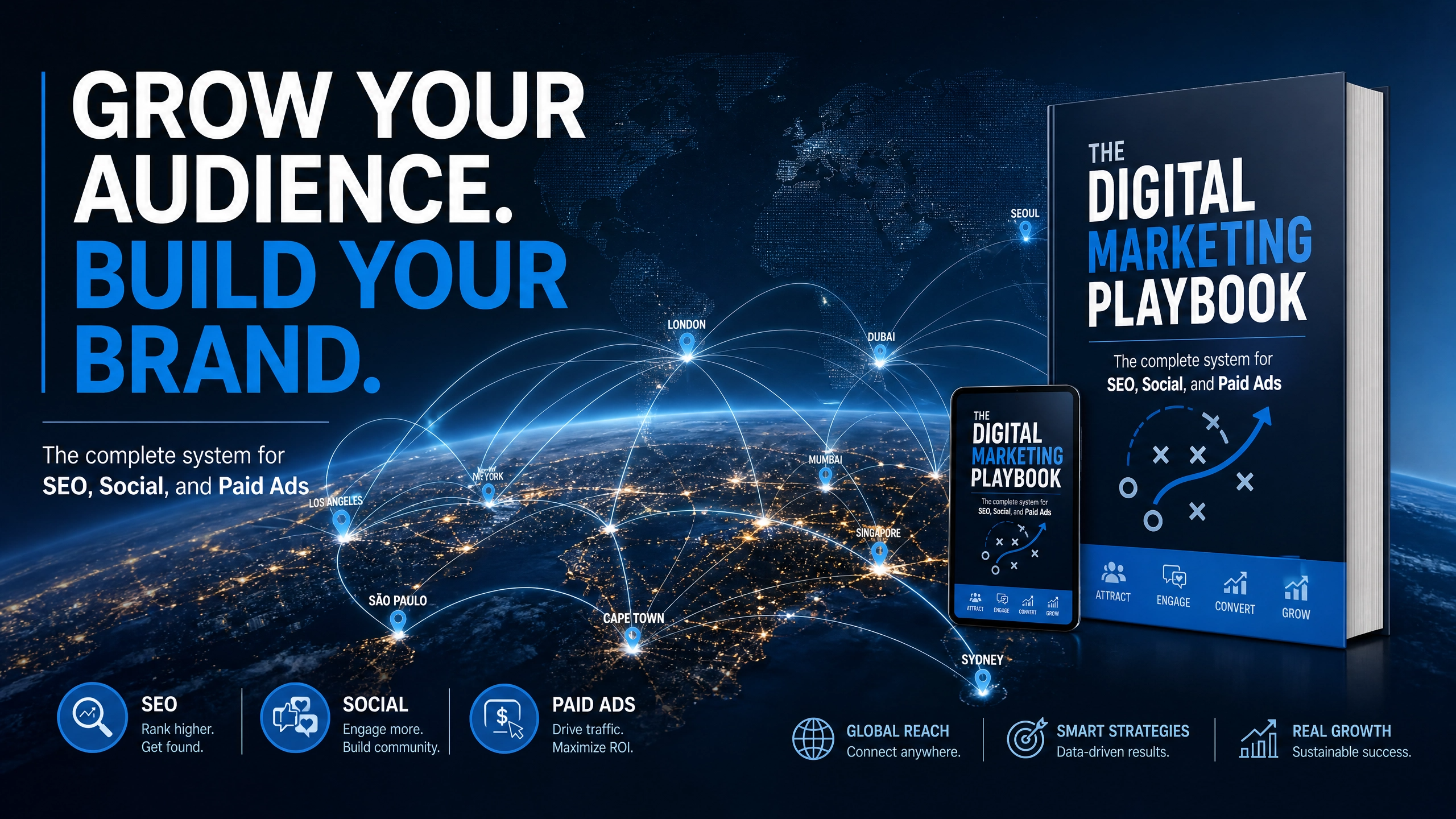
If you’re serious about building this skill into real income, I put together everything I know into one resource — the exact strategies, client-getting scripts, and monetization roadmap I personally used. It’s called The Digital Marketing Playbook, and it’s the guide I genuinely wish existed when I was piecing all of this together from scattered YouTube videos. It walks you through everything in this post step-by-step, plus the exact templates and pricing structures I use with my own clients today.
BUY EBOOK!
Step 6: Treat It Like a Real Business From Day One
I used to get nervous sweats thinking about the “official business” side of things, but a little structure early on saves you major headaches later.
- Open a separate bank account for your marketing income, even before your first client
- Use simple contracts for every project — free templates exist all over the internet
- Track your income and expenses in a basic spreadsheet from month one
- Set aside a percentage of every payment for taxes, since freelance income is typically self-employment income
- Revisit your rates every few months and raise them as your results and confidence grow
Step 7: Scale Beyond Trading Time for Money
Once you’ve got a few consistent clients, this is where real financial freedom kicks in. Trading hours for dollars only gets you so far — diversifying your income protects you and grows your ceiling.
- Package your process into templates or a course so clients (or other aspiring marketers) can pay for your system, not just your time
- Raise your retainer rates as your case studies and results grow stronger
- Build recurring monthly retainers instead of one-off projects for more predictable income
- Layer in affiliate and digital product income alongside client work so no single stream carries all the weight
Building a digital marketing income stream is genuinely one of the most accessible paths to financial freedom I’ve found — you don’t need a degree, a huge following, or years of experience to start. You need one skill, a willingness to learn from free resources, and the courage to pitch your very first client before you feel “ready.”
By picking a focused niche, building real proof through a first case study, and layering multiple income streams instead of relying on client work alone, you’ll be well on your way to building a sustainable digital marketing income in 2026. If you want the exact roadmap, scripts, and pricing frameworks I used to go from zero clients to a consistent freelance income, grab The Digital Marketing Playbook — it’s everything in this post, plus a whole lot more, in one place.
You May Also Like:









Leave a Reply