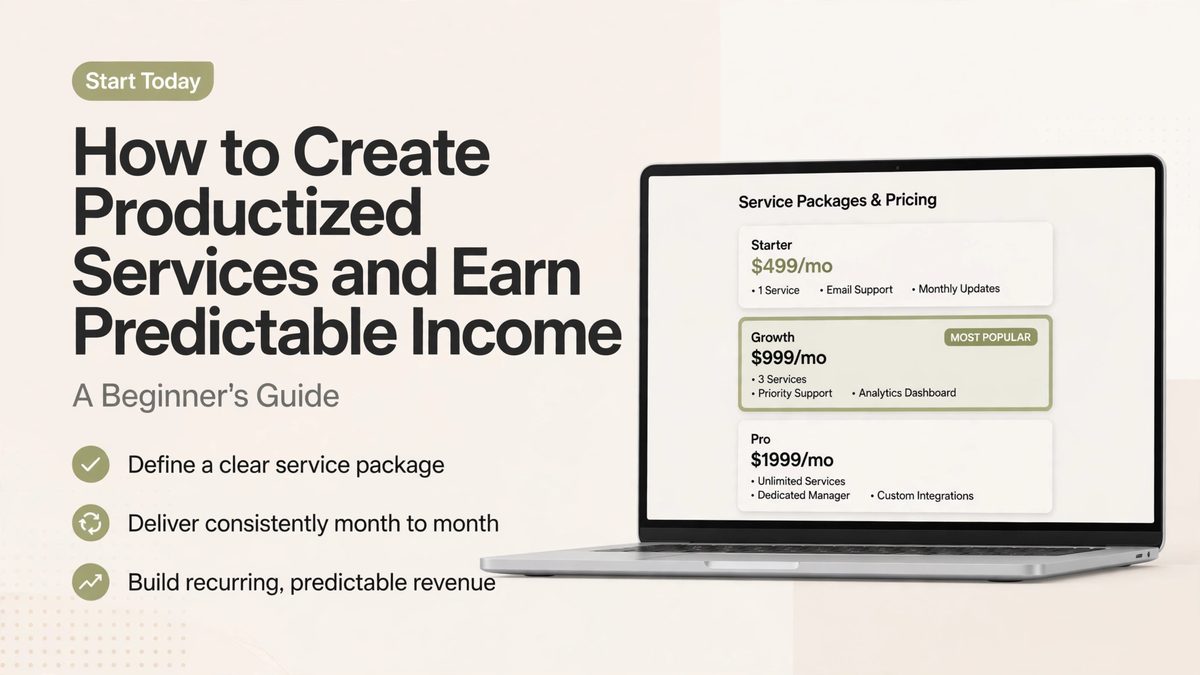
For my first two years of freelancing, every new client conversation started from scratch. I wrote custom proposals, guessed at prices, and spent hours explaining what I did. Then I tried something different: I turned one of my services into a clearly defined package with a fixed scope, a fixed price, and a fixed timeline. The first week I offered it, I closed two clients with a single, short email. That was the day I understood the power of productizing a service.
If you want to create productized services, you’re turning your skills into an offer that’s easier to explain, easier to sell, and easier to deliver. Instead of trading hours for money, you sell a clear result with a defined process.
In this guide, I’ll walk you through what productized services are, how to design them, how to price them, and how to sell and deliver them without burning out.
What Is a Productized Service?
A productized service is a service packaged like a product: it has a clear name, a specific outcome, a defined scope, a fixed price, and a repeatable process.
Examples
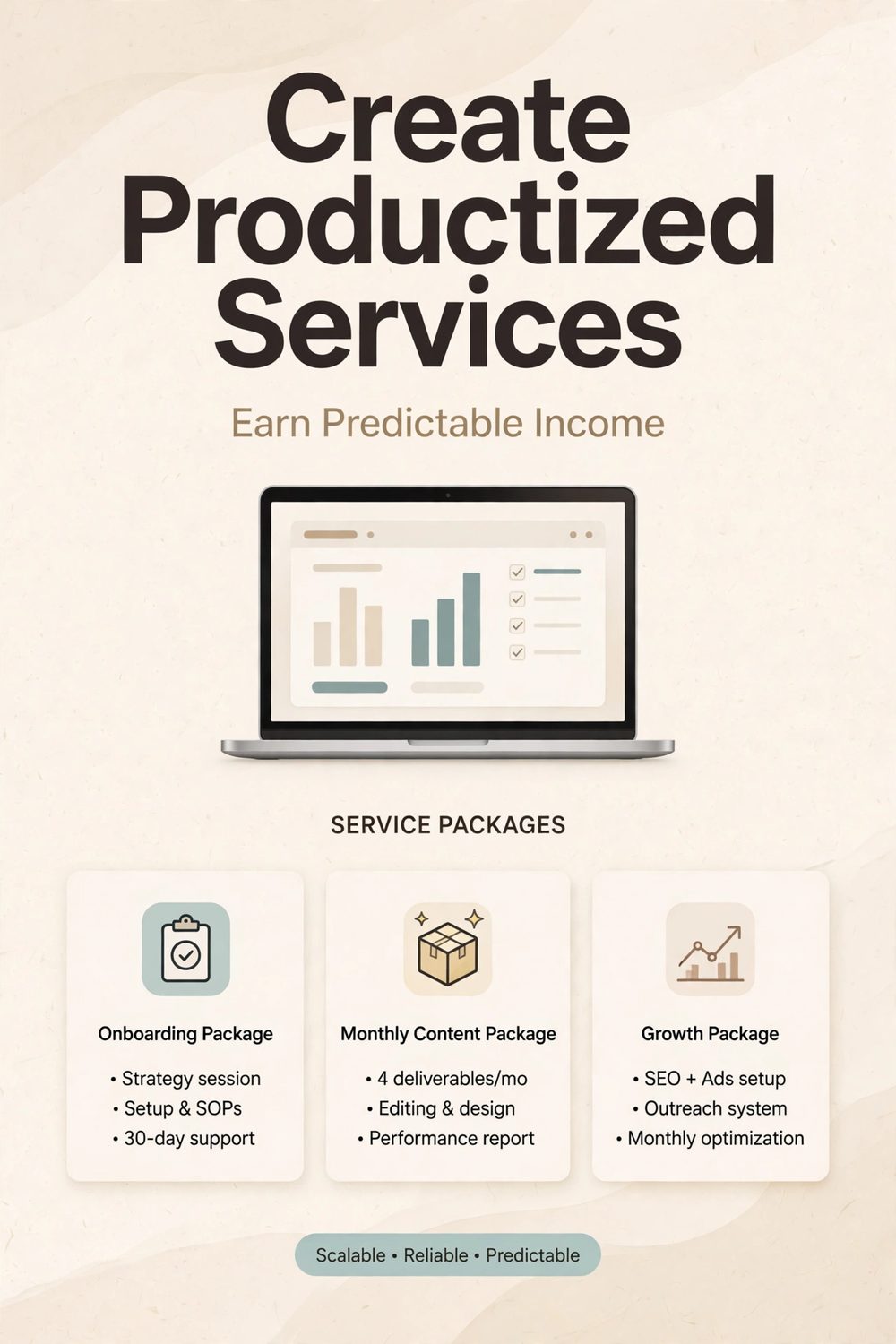
- “Podcast Launch Package”: Editing, show notes, and publishing for the first five episodes at a fixed price.
- “Resume Refresh”: A resume rewrite plus cover letter template delivered in five days.
- “Pinterest Setup”: Account optimization, boards, and 20 pins.
- “Monthly Content Pack”: Four blog posts and one newsletter per month.
- “Brand Starter Kit”: A simple logo, color palette, and style guide.
Why productizing helps:
- Easier to sell. Buyers understand exactly what they get.
- More predictable income.
- Faster delivery through repeatable processes.
- Less negotiation and scope creep.
- Easier to scale with templates and help.
The honest part: Productizing doesn’t suit every service, and fixed scopes can feel restrictive. Some clients need custom work, and you must keep quality high. Start small and adjust.

Step 1: Find the Service Worth Productizing
Look for work you do repeatedly.
- List your past projects and note which ones were similar.
- Identify the ones that went smoothly and brought good results.
- Choose the ones you enjoy.
- Look for requests clients make again and again.
- Consider the value: Does the result clearly matter to the client?
A good candidate has a clear start and end, a predictable process, and an outcome customers understand.
Step 2: Define Your Ideal Customer and Their Problem
Be specific.
- Who is this for? For example, new bloggers, small coaches, or online shop owners.
- What problem do they have?
- What result do they want?
- What have they tried before?
- What would make them say yes quickly?
Write one sentence: “I help [specific customer] get [specific result] in [timeframe] with [your service].”
Step 3: Define the Scope Clearly
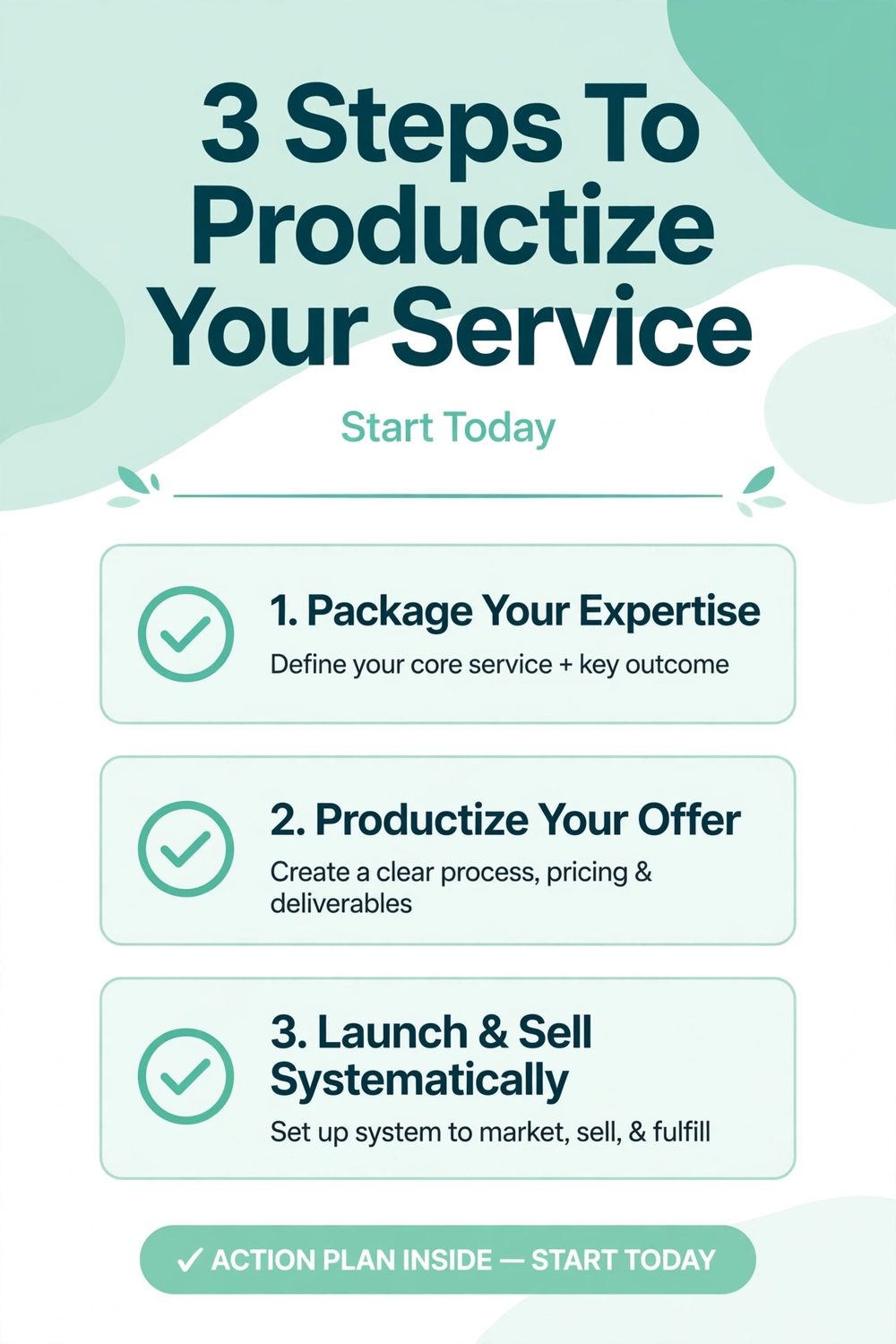
Scope is the heart of a productized service.
- List exactly what’s included.
- List what’s not included.
- Set limits, such as word counts, number of pages, or number of revisions.
- Define the timeline and delivery date.
- Specify what the client must provide and by when.
- Describe the delivery format.
Clear boundaries protect your time and set honest expectations.
Step 4: Build a Repeatable Process
Document each step.
- Onboarding: Intake form, payment, and welcome email.
- Information gathering: Questionnaire or kickoff call.
- Production: A checklist for each deliverable.
- Review: Quality checks and client approval.
- Delivery: Files, summary, and next steps.
- Follow-up: Feedback request and testimonial.
Use templates for emails, checklists, documents, and invoices. The AI-Powered Solopreneur offers simple systems for building repeatable workflows as a one-person business.
Step 5: Price Your Productized Service
- Calculate your time for a typical project, including communication.
- Decide your target hourly earnings.
- Add a buffer for revisions and unexpected issues.
- Check market prices for similar packages.
- Price by value, not only by hours.
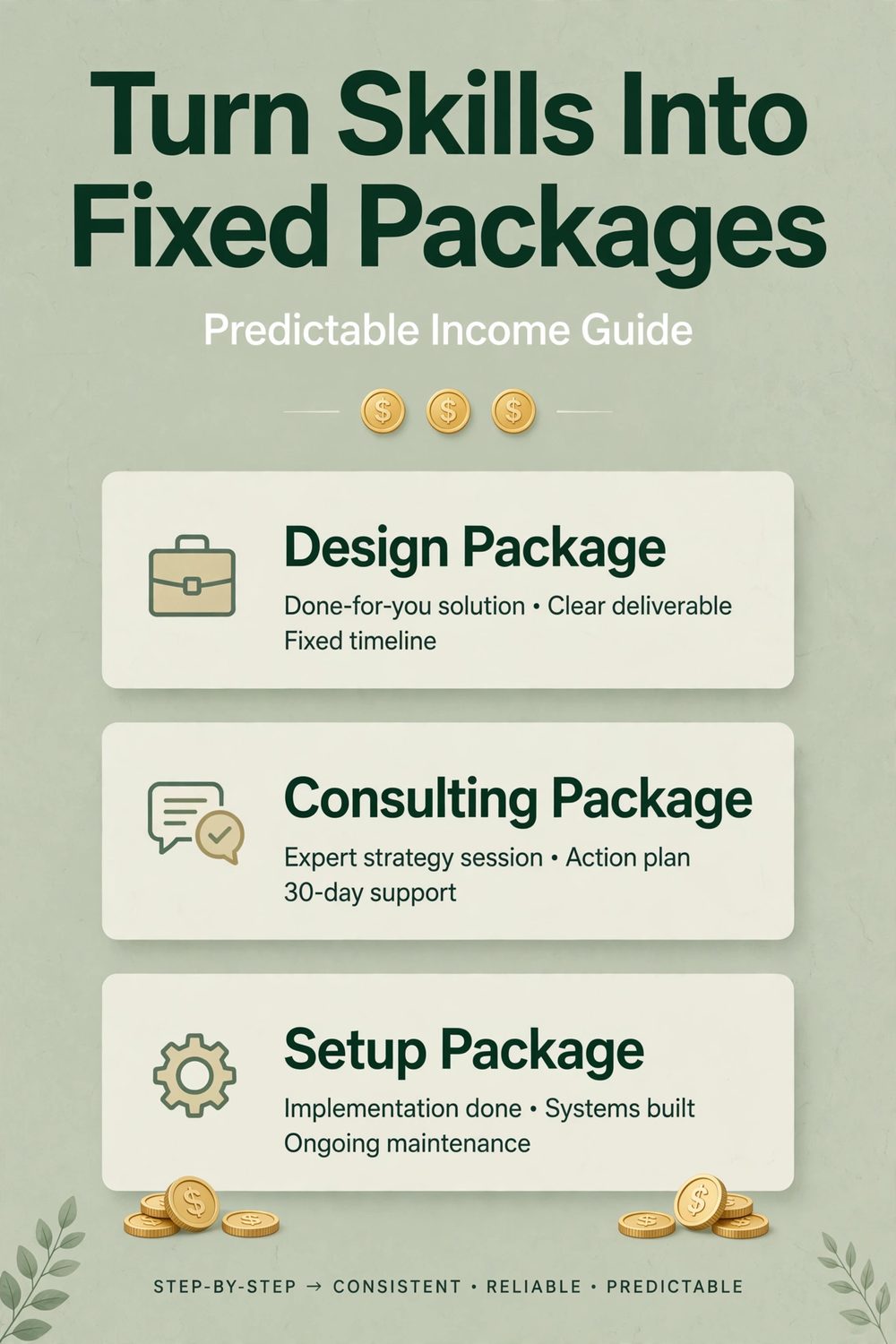
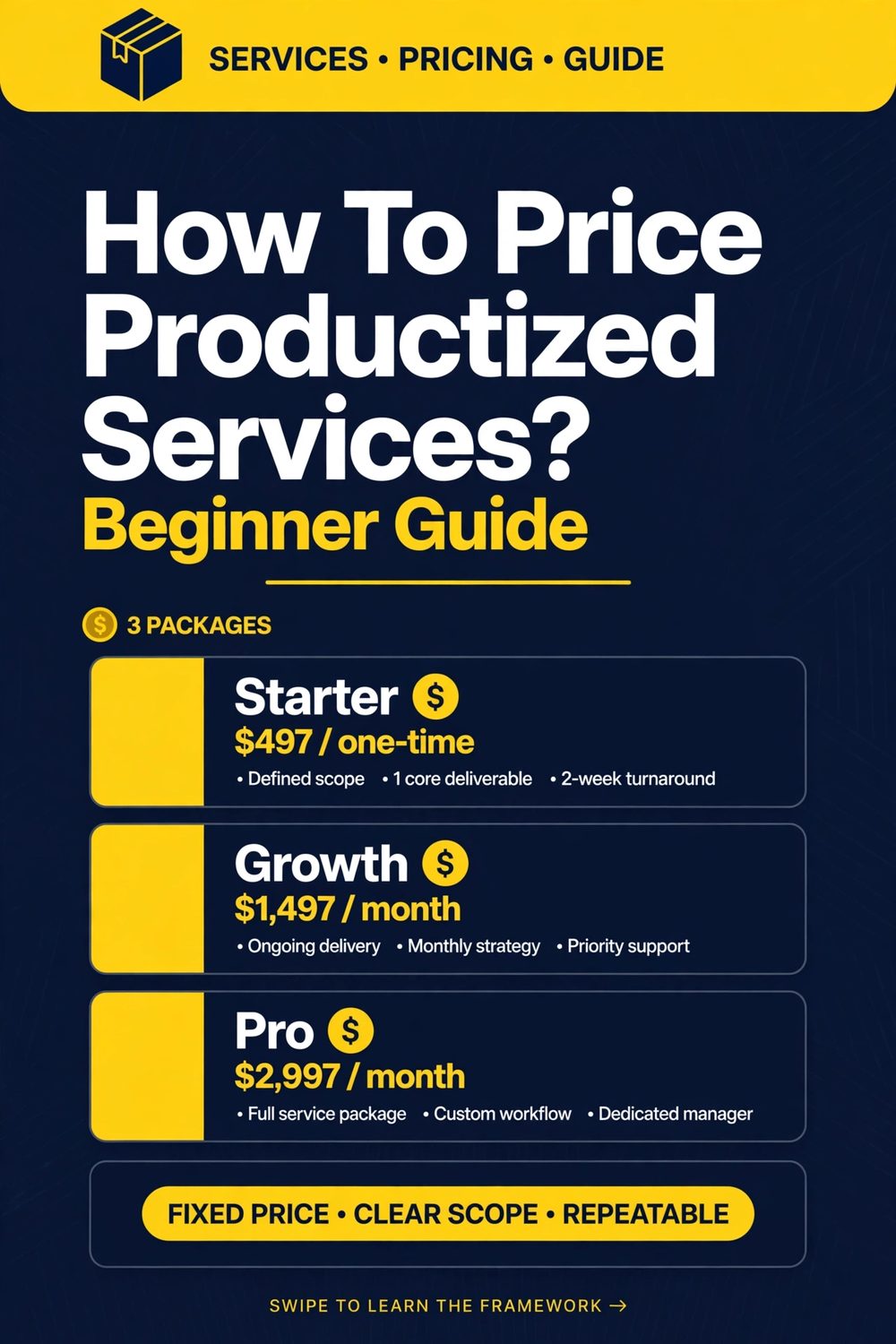
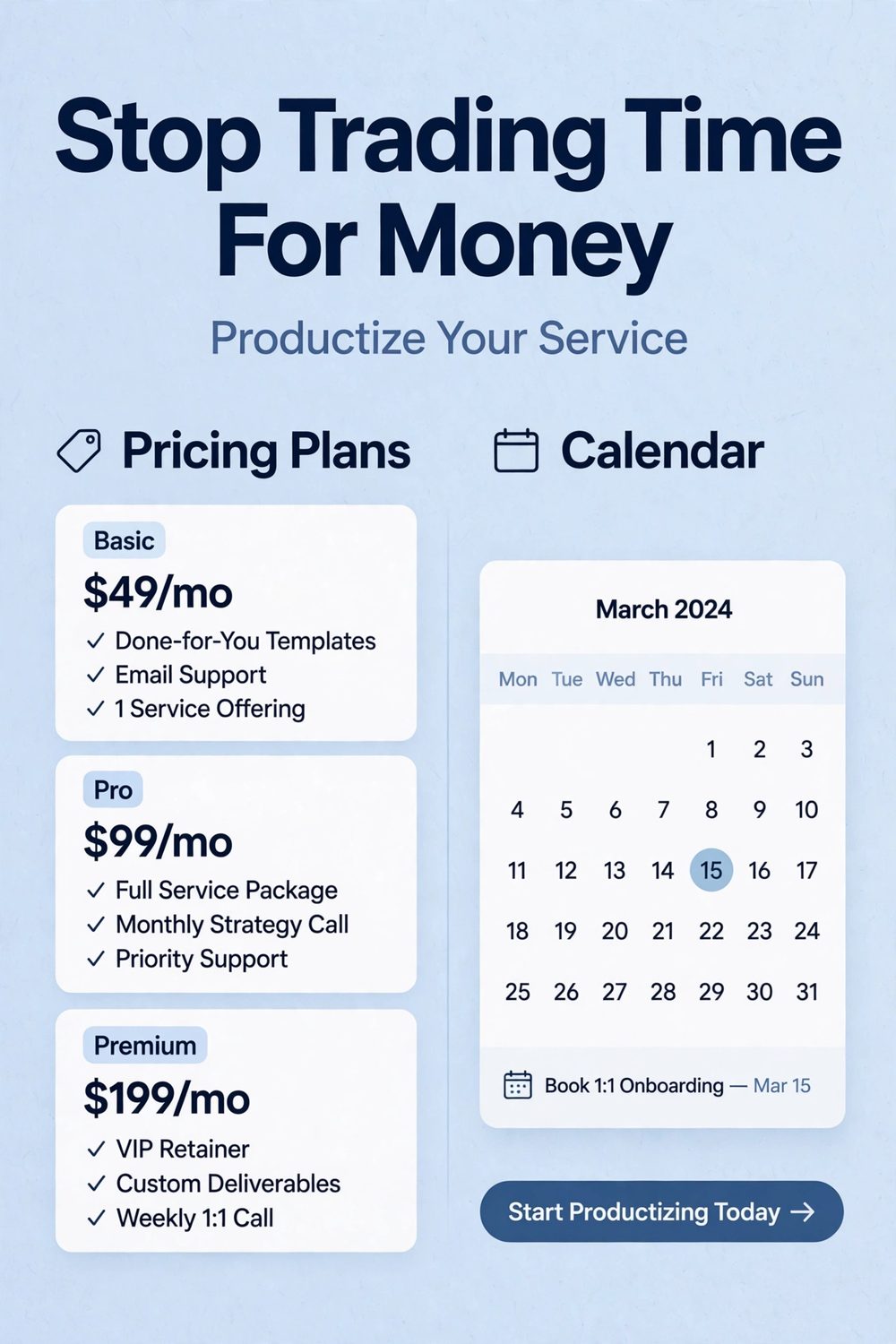
- Offer tiers, such as Basic, Standard, and Premium.
- Raise prices as demand grows.
Example Tiers
- Basic: Core deliverable with one revision.
- Standard: Core deliverable plus bonus items and two revisions.
- Premium: Everything plus strategy call and extra support.
Step 6: Use AI to Speed Up Delivery
AI can help with drafting, outlines, checklists, and summaries within your process. Always review for accuracy, protect client information, and make sure the final work reflects your standards. The Claude Advantage shows how to prompt effectively to build faster, more consistent workflows.
Step 7: Create a Simple Sales Page
A short page or document can sell a productized service.
- A clear headline stating the result.
- Who it’s for.
- What’s included.
- How it works in three to five steps.
- Pricing and timeline.
- Testimonials or samples.
- FAQ.
- A simple “Buy” or “Book” button.
Keep the language simple and honest. The Personal Brand Blueprint can help you shape a clear, trustworthy message.

Step 8: Sell Your Productized Service
- Your network and social media.
- LinkedIn and relevant communities, following rules.
- Direct outreach with a short, specific offer.
- Pinterest and blog posts that explain the problem and solution.
- Email list with a freebie.
- Referrals and partnerships.
The Digital Marketing Playbook explains beginner-friendly marketing strategies for finding the right customers.
Step 9: Deliver Consistently and Improve
- Track time per project to refine pricing.
- Ask clients for feedback.
- Update your process based on what you learn.
- Add upgrades or add-ons.
- Create case studies.

Step 10: Scale Thoughtfully
Once your process works:
- Document it fully so someone else could follow it.
- Hire help for repeatable tasks.
- Create a waitlist instead of overbooking.
- Offer monthly subscriptions for ongoing needs.
- Turn parts of your process into digital products.
If you’re building flexible income around family life, The Stay-At-Home Mom’s Guide to Making Money Online offers beginner-friendly ideas that pair well with productized services.

A Sample Productized Offer
Name: Blog Starter Pack.
For: New small business owners.
Result: A professional-looking blog ready to publish.
Includes: Three keyword-researched blog post outlines, one fully written post, a content calendar, and a short training video.
Timeline: Delivered within ten business days.
Price: A fixed fee with one revision round.
Not included: Website setup, design, or ongoing posting.
Notice how every detail is defined. A buyer can decide in minutes whether it fits.
A 30-Day Plan
- Week 1: Choose your service, customer, and outcome.
- Week 2: Define scope, process, and pricing.
- Week 3: Create your sales page and templates.
- Week 4: Pitch 20 prospects and deliver your first package.
Money Basics
- Use contracts or clear terms.
- Track income and expenses.
- Set aside money for taxes. Consult a qualified professional.
The Smart Mom’s Complete Guide to Money offers friendly guidance for managing steady service income.
How to Test a Productized Service Before You Build Everything
You don’t need a perfect system on day one. Test the idea in small steps:
- Write a one-page offer describing the result, scope, timeline, and price.
- Share it with five to ten people who fit your target customer and ask whether they’d buy it.
- Sell the first one or two packages at an introductory price in exchange for detailed feedback.
- Deliver manually, noting every step, question, and template you create.
- Refine the scope and process based on what actually happened.
- Raise the price once the process runs smoothly and you have testimonials.
This approach protects you from building complicated systems for an offer nobody wants. The first deliveries teach you more than weeks of planning ever could.
When Not to Productize
Productized services aren’t right for every situation. Keep custom work when:
- Every project is truly different, with little repeatable structure.
- Clients need deep strategy and ongoing adjustment.
- The scope can’t be limited without hurting results.
- You enjoy the variety of fully custom projects and charge high enough rates to support it.
Many freelancers blend both: a few productized entry offers to attract clients, plus custom engagements for larger or more complex needs. The goal isn’t to force everything into a box. It’s to make your best-fitting work easier to sell and deliver.
Mistakes to Avoid
- Vague scopes.
- Underpricing.
- Offering too many options.
- Skipping documentation.
- Taking clients who need heavy customization.
- Never updating your offer.
Quick Answers About Productized Services
Is a productized service the same as a package? Similar, but a productized service has a fully standardized process and scope.
Can I productize any service? Not all, but many repeatable services work well.
What if a client wants changes? Offer add-ons or a custom project at a different price.
Will I earn less per project? Often you earn more per hour because delivery is faster and clearer.
Sell Results, Not Hours
Creating productized services is about clarity: a defined result, a defined scope, and a defined price. Choose a repeatable service, document your process, and sell it with confidence.
This week, write down one service you could package and list what’s included and not included. Trust me, the day you close a client with a simple, clear offer, you’ll never want to write a custom proposal from scratch again. Let’s package it!