The first time I heard “UGC creator,” I assumed it meant a social media star with a huge following. Then a friend explained that brands pay everyday people to create authentic videos and photos about their products, often without ever posting them to the creator’s own audience. I made a sample video about a kitchen gadget I already owned, sent it to a small shop, and received my first paid UGC job a few weeks later.
If you want to become a UGC creator, here’s the good news: you don’t need thousands of followers. You need a phone, decent lighting, a clear voice, and the ability to make products look appealing and genuine. UGC, short for user-generated content, is content brands use in ads, websites, and social channels.
In this guide, I’ll walk you through what UGC is, the skills you need, how to build a portfolio, how to price your work, and how to pitch brands.
What Is UGC?
UGC refers to content created by customers or creators that brands use to build trust and drive sales.
Common UGC Formats
- Product review and demo videos.
- Unboxing videos.
- “Get ready with me” or “day in my life” clips featuring products.
- Testimonials.
- Photos of products in everyday settings.
- Tutorials and how-to videos.
- Short scripted ads in a natural style.
Why brands want it:
- It feels authentic. Shoppers trust real-looking content.
- It’s cost-effective compared with large productions.
- It works well in ads and product pages.
- It supplies a steady stream of fresh creative.
The honest part: Competition is growing, brands often want specific styles, and not every opportunity pays fairly. Be professional, protect your rights, and be cautious with free-product-only offers.
Step 1: Understand the Difference Between UGC and Influencing
- Influencer: Posts content on their own channel to their own audience, and pay often depends on reach.
- UGC creator: Creates content for the brand to use on the brand’s channels or ads, and pay depends on the deliverable and usage rights, not your follower count.
Some creators do both, but you can start as a UGC creator even with a small or private account.
Step 2: Build Your Core Skills
Skills That Help
- Filming clean, steady video with a phone.
- Using natural light or a simple lighting setup.
- Speaking clearly and naturally on camera, or voiceover.
- Basic editing with captions and cuts.
- Understanding hooks and short-form storytelling.
- Writing simple scripts.
- Showing products honestly and appealingly.
Ways to Practice
- Make sample videos with products you already own.
- Study successful ads and note structure and pacing.
- Practice different styles: casual, educational, and testimonial-based.
- Get feedback from peers.

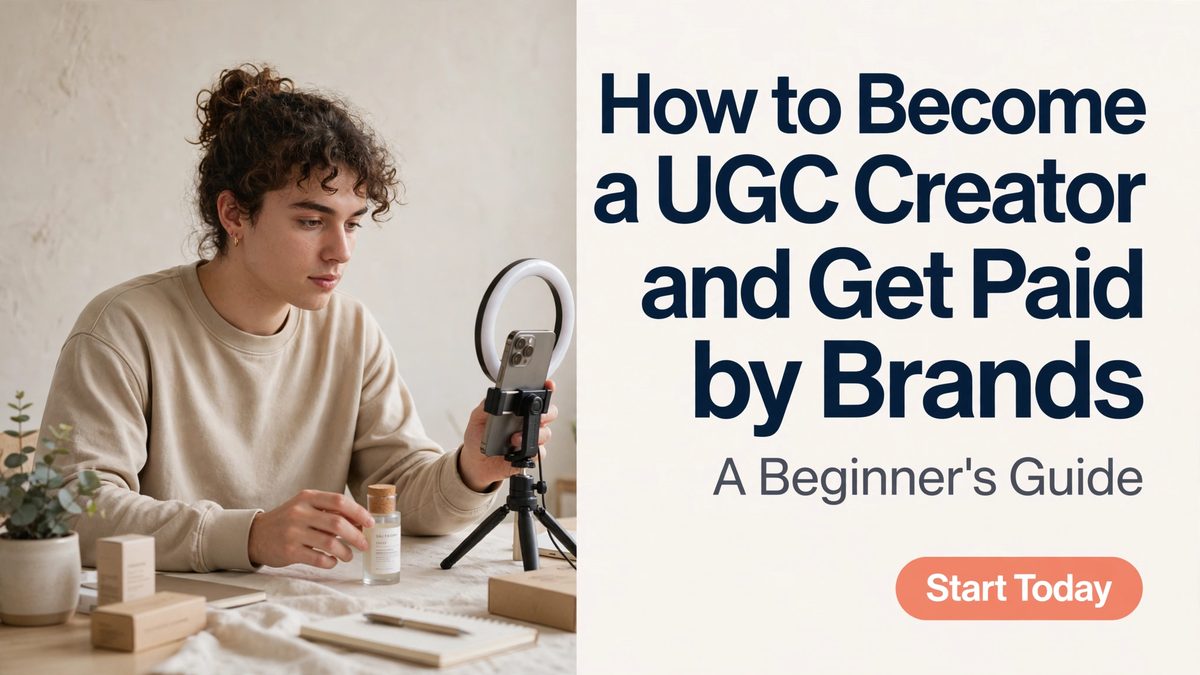
Step 3: Set Up a Simple Filming Space
- A phone with a good camera.
- A small tripod or phone stand.
- Natural light by a window, or an affordable ring light.
- A clean, tidy background.
- A simple microphone for clearer audio.
- A few props that fit your niche.
Choose a style that fits the types of brands you want to work with.
Step 4: Choose a Niche
Specialists get hired more easily.
- Beauty and skincare (stay accurate and avoid medical claims).
- Home and kitchen products.
- Parenting and baby products, following safety rules.
- Fitness and wellness.
- Tech and apps.
- Fashion and accessories.
- Food and beverage.
- Pet products.
Pro tip: Choose categories where you genuinely use products. Authentic enthusiasm shows on camera.
Step 5: Create a UGC Portfolio
- Make three to six sample videos showing different styles.
- Show variety: an unboxing, a demo, a testimonial, and a lifestyle clip.
- Include a few photos.
- Add short descriptions of your process and the goal of each sample.
- Host your portfolio on a simple website, a link page, or a cloud folder.
Label samples clearly as samples, and avoid claiming you worked with brands you haven’t.
Step 6: Use AI as a Planning Partner
AI can help brainstorm hooks, scripts, and shot lists. Make sure the final content is truthful, matches brand guidelines, and follows advertising rules. The Claude Advantage shows how to prompt effectively for scripts and outlines while keeping your own voice.
Step 7: Set Your Rates
Rates vary widely.
- Price per deliverable: a video, a set of photos, or a package.
- Charge more for usage rights, such as use in paid ads.
- Add fees for extra edits, rush delivery, or raw footage.
- Offer packages with multiple videos.
- Be clear about revisions.
Pricing Tips
- Research current market rates.
- Avoid working only for free products unless it truly benefits you.
- Raise rates as your portfolio and results improve.
- Be transparent about what’s included.
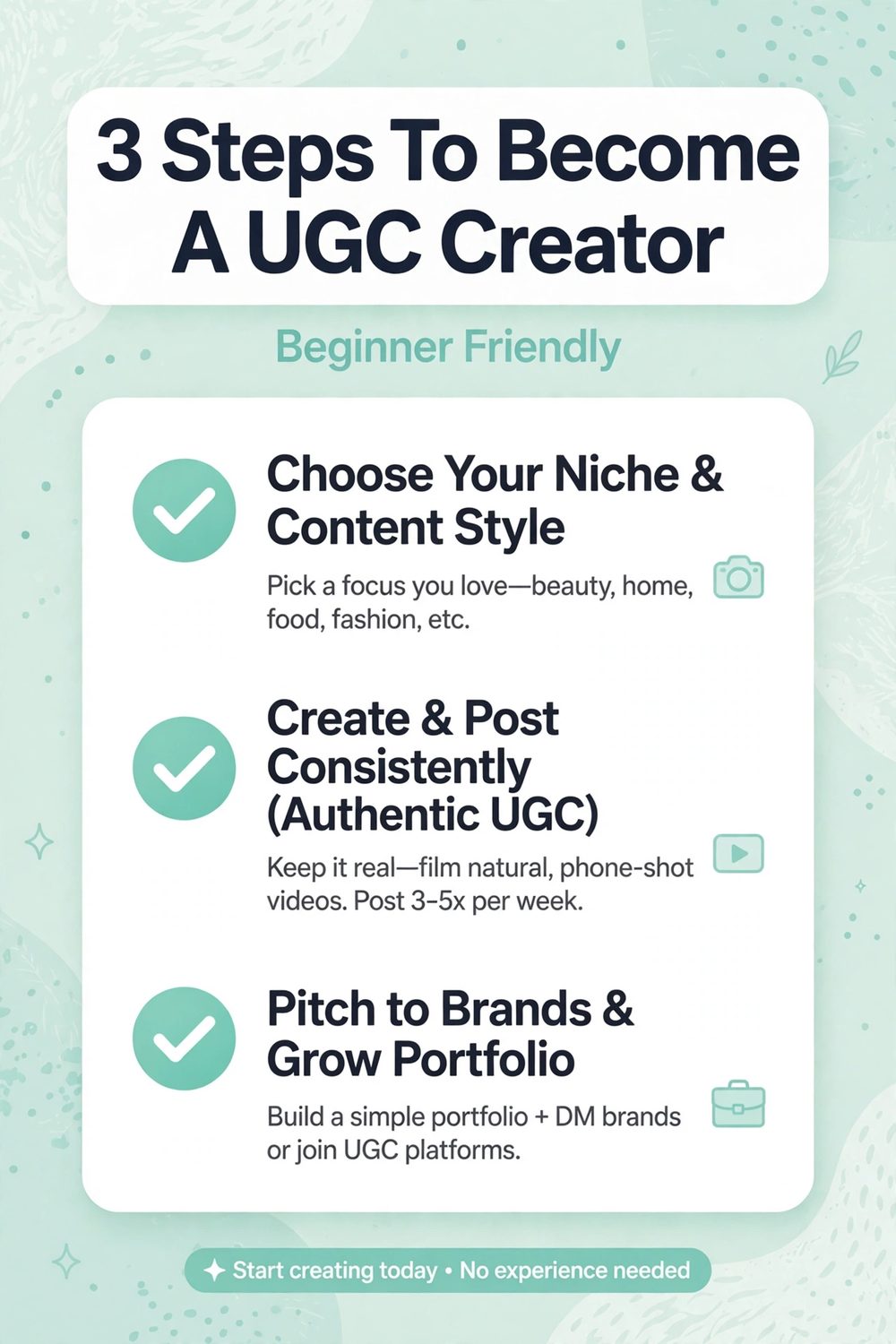
Step 8: Find Brands and Pitch
- Look at brands you already use and love.
- Check brand websites and social pages for UGC or creator programs.
- Join creator marketplaces and platforms that connect brands with UGC creators.
- Pitch small and mid-sized brands that may not have big marketing teams.
- Connect with marketing managers on LinkedIn.
- Network in creator communities, following rules.
A Simple Pitch
- Compliment something specific about the brand.
- Share one idea for a video.
- Show a relevant sample.
- State your offer and rates clearly.
- Invite a short call or reply.
The Digital Marketing Playbook explains beginner-friendly marketing strategies, and The Personal Brand Blueprint can help you shape a professional creator presence. If you’d like to grow your own audience too, The Complete Beginner’s Guide to Building a KOL Influencer Career goes deeper into brand partnerships.
Step 9: Use Contracts and Protect Yourself
- Put terms in writing: deliverables, deadlines, payment, usage rights, and duration.
- Clarify whether the brand can use content in ads and for how long.
- Request payment terms such as deposits.
- Keep copies of agreements.
- Follow advertising disclosure rules when required.
- Never make false claims about products.
Step 10: Deliver Great Work and Keep Clients
- Follow the brief carefully.
- Meet deadlines.
- Provide clean files in the requested formats.
- Communicate clearly.
- Ask for feedback and testimonials.
- Offer repeat packages and fresh ideas.
A 30-Day Starter Plan
- Week 1: Choose your niche and study ten successful UGC ads.
- Week 2: Film and edit three sample videos.
- Week 3: Build your portfolio and pricing sheet.
- Week 4: Pitch 20 brands and refine your approach.
Money Basics
- Track income and expenses.
- Set aside money for taxes. Consult a qualified professional.
- Invoice promptly.
The Smart Mom’s Complete Guide to Money offers friendly guidance for managing creator income, and The Stay-At-Home Mom’s Guide to Making Money Online offers flexible ideas for earning from home.

Sample UGC Video Structure
A simple structure works for many product videos:
- Hook (0–3 seconds): A relatable problem or a surprising visual, such as “I finally found a lunch box that doesn’t leak.”
- Problem and context (3–8 seconds): Briefly explain what you struggled with before.
- Demonstration (8–20 seconds): Show the product in use with clear close-ups.
- Benefit and proof (20–25 seconds): Share what changed and why you like it.
- Call to action (final seconds): A gentle, clear next step, as directed by the brand.
Write your script in short, natural sentences, and rehearse until it sounds like you speaking to a friend. Brands value content that feels real, not stiff or overly scripted.
Creating a Rate Card and Menu of Services
A rate card keeps your pricing clear and professional. Include:
- A short introduction about your style and niche.
- Deliverable options, such as a single video, a three-video bundle, or photo sets.
- Usage rights tiers, such as organic use only versus paid ad use for a set number of days.
- Add-ons, including raw footage, extra hooks, captions, and rush delivery.
- Revision policy and turnaround times.
- Payment terms.
Send your rate card after a brand shows interest rather than leading with it in every message. Having it ready lets you respond quickly and confidently when opportunities appear.
Mistakes to Avoid
- Working without a contract.
- Unclear usage rights.
- Overly polished, inauthentic videos.
- Pitching without samples.
- Making exaggerated claims.
- Underpricing.

Quick Answers About UGC
Do I need a large following? No. UGC pay is based on your content, not your audience size.
How much can UGC creators earn? It varies widely with niche, skill, and rates.
Do I need a fancy camera? No. A modern phone with good lighting is often enough.
Do I have to show my face? Not always. Hands-only and voiceover content is common.
Your Authentic Voice Has Value
Becoming a UGC creator is about showing products honestly and appealingly. Learn simple filming and editing, build samples, set clear rates, and pitch brands with confidence.
This week, film one sample video of a product you love. Trust me, once a brand says, “We’d love to use this,” you’ll realize how valuable genuine content can be. Let’s start filming!