I once helped a friend launch her podcast. She had great ideas, a warm voice, and absolutely no desire to learn audio editing. She said, “I’ll record, but please make it sound good.” I cleaned up the audio, added music, wrote show notes, and uploaded the episode. She cried a little when she heard it, because it sounded like a real show. That’s when I realized that many podcasters don’t want to become editors. They want to focus on their guests and their message.
If you’re interested in a podcast production service, you’re stepping into a niche with steady demand. Podcasters need editing, show notes, graphics, publishing, and promotion, and many prefer to outsource those tasks.
In this guide, I’ll walk you through the services you can offer, the skills and tools you need, how to price packages, and how to find your first clients.
What Does a Podcast Production Service Include?
Common Services
- Audio editing and cleanup: Removing mistakes, background noise, and long pauses.
- Mixing and mastering: Balancing levels and polishing sound.
- Intro and outro integration.
- Show notes and episode descriptions.
- Episode titles and keyword optimization.
- Transcripts and captions.
- Audiograms and short video clips.
- Publishing and scheduling on hosting platforms.
- Cover art and episode graphics.
- Guest coordination and scheduling.
- Launch support for new shows.
Why it’s a good business:
- Recurring work. Podcasters need weekly or biweekly support.
- Flexible and remote.
- Scalable. You can add services and team members.
- Skill-building. You learn audio, writing, and marketing.
The honest part: Editing can be time-consuming, clients may send messy audio, and pricing must reflect your effort. Clear processes and boundaries are essential.
Step 1: Learn Audio Editing Basics
Skills to Build
- Cutting and arranging audio clips.
- Removing filler words and long pauses while keeping a natural feel.
- Reducing noise and echo.
- Balancing volume between speakers.
- Basic equalization and compression.
- Adding music and sound effects with proper licenses.
- Exporting in the right formats.
Ways to Learn
- Follow free tutorials for beginner-friendly editing software.
- Practice with sample recordings.
- Listen to professionally produced shows and note their pacing and sound.
- Take a short course if you prefer structure.
Step 2: Choose Your Tools
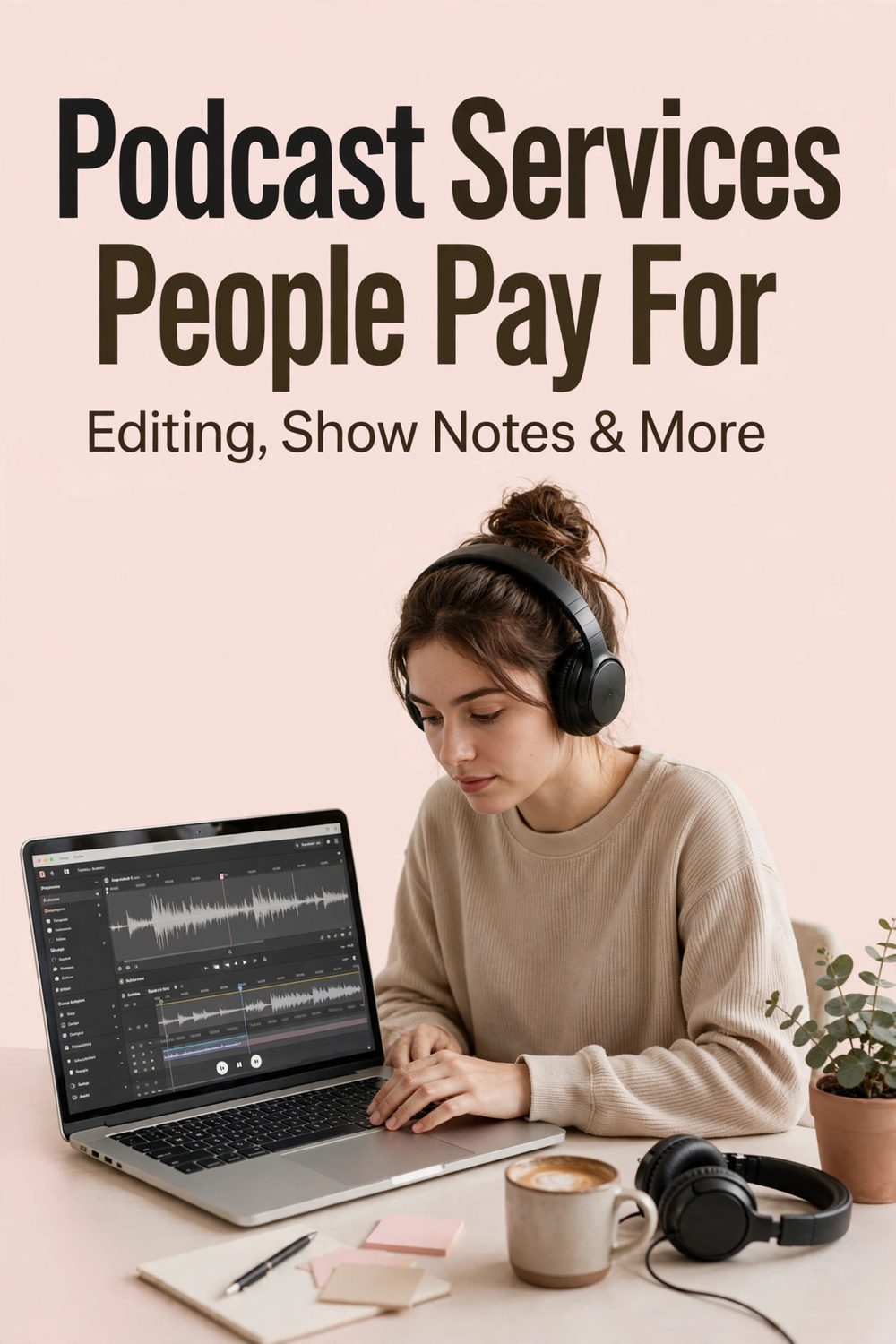
- Audio editing software (many have free or affordable options).
- Noise reduction tools.
- Headphones for accurate listening.
- A transcription tool for show notes.
- Cloud storage for sharing large files.
- A project tracker for episodes and deadlines.
- Design tools like Canva for graphics.
AI tools can help with transcription, draft show notes, summarize episodes, and suggest titles. Always review for accuracy, and protect client confidentiality. The Claude Advantage shows how to prompt effectively for summaries and outlines.
Step 3: Define Your Packages
Sample Packages
- Starter: Editing and basic cleanup for one episode per week.
- Standard: Editing, show notes, episode title, and publishing.
- Premium: Full production, graphics, transcripts, audiograms, and a content calendar.
What to Specify
- Episode length limits.
- Turnaround times.
- Number of revisions.
- File formats and delivery methods.
- What you need from the client, such as raw audio and guest details.
Clear packages make selling easier and prevent scope creep.
Step 4: Create Your Workflow
A repeatable process saves hours.
- Receive raw files and confirm the brief.
- Back up the files.
- Do a first edit pass for structure and major mistakes.
- Clean audio and balance levels.
- Add music and graphics.
- Create show notes and descriptions.
- Send for approval.
- Make revisions.
- Publish or deliver final files.
- Archive the project.
Use templates for show notes, checklists for each episode, and a consistent naming system.
Step 5: Build a Portfolio
- Edit a sample podcast episode from your own recording or a friend’s.
- Show a before-and-after audio clip.
- Write sample show notes.
- Create a sample audiogram.
- Offer a few pilot projects in exchange for testimonials.
- Publish your samples on a simple portfolio page.
Be careful to use content you have the right to share.
Step 6: Set Your Prices
- Research market rates.
- Price per episode or monthly package.
- Consider editing time, complexity, and extras.
- Charge more for messy audio and heavy editing.
- Add rush fees.
- Raise rates as you gain experience.
A sample approach is to track how long a typical episode takes and set prices that meet your hourly goals.
Step 7: Find Clients
- Your network: Friends and acquaintances who podcast.
- Podcast communities, following rules.
- Podcasters on social media: Offer helpful feedback and mention your service.
- Podcast directories: Find shows with inconsistent audio or missing show notes, and send a polite pitch.
- Business owners and coaches who want to start a show.
- Freelance platforms.
- Agencies that need production help.
A Simple Pitch
- Compliment a specific episode.
- Mention one improvement, such as audio clarity or show notes.
- Offer a free sample edit of a short clip.
- Share your packages and invite a call.
The Digital Marketing Playbook explains beginner-friendly strategies for finding clients, and The Personal Brand Blueprint can help you present a professional brand.
Step 8: Offer Marketing Add-Ons
Many podcasters need help promoting episodes.
- Social media graphics and captions.
- Short video clips.
- Email newsletter drafts.
- Blog posts from episodes.
- Pinterest pins.
- Guest outreach templates.
These add-ons increase your value and your monthly retainers.
Step 9: Protect Confidentiality and Rights
- Use contracts specifying scope, payment, and confidentiality.
- Respect guest privacy and permissions.
- Use licensed music and effects.
- Clarify ownership of final files.
- Keep raw files secure.
A 30-Day Starter Plan
- Week 1: Learn editing basics and study well-produced shows.
- Week 2: Edit two sample episodes and write show notes.
- Week 3: Build packages, pricing, and a portfolio page.
- Week 4: Pitch 20 podcasters and offer one pilot project.
Money Basics
- Track income and expenses.
- Invoice on a regular schedule.
- Set aside money for taxes. Consult a qualified professional.
The Smart Mom’s Complete Guide to Money offers friendly guidance for managing freelance income, and The AI-Powered Solopreneur offers simple systems for running a lean service business.
Sample Show Notes Template
Show notes help listeners, search engines, and guests. Here’s a simple template you can reuse:
- Episode title: Clear and keyword-friendly.
- Short summary: Two to three sentences describing the main idea.
- Key takeaways: Three to five bullet points.
- Timestamps: Major topics with times.
- Guest bio and links, if applicable.
- Resources mentioned, with links.
- Call to action: Subscribe, review, or join the email list.
Create the template once, then fill it in for each episode. Many podcasters will pay extra for polished show notes because they save time and improve discoverability.
Handling Poor Audio and Difficult Recordings
Clients won’t always send perfect files. Prepare for common problems:
- Ask for a short sample recording before you quote a price.
- Share simple recording tips, such as using headphones, recording in a quiet room, and speaking close to the mic.
- Charge a cleanup fee for heavy noise, echo, or uneven levels.
- Be honest when something can’t be fixed completely.
- Request separate tracks for each speaker when recording remotely, if possible.
- Document recurring problems and send a short guide to help the client improve over time.
Helping clients record better makes your editing easier and strengthens the relationship, which often leads to longer contracts and referrals.
Mistakes to Avoid
- Underpricing editing time.
- Vague scopes.
- Over-editing natural speech.
- Ignoring audio quality at the source.
- Missing deadlines.
- No contract.
Quick Answers About Podcast Production
Do I need audio experience? Not necessarily. You can learn basics and practice before taking clients.
How long does editing take? Often one to three hours per episode hour, depending on audio quality.
How much can I earn? It varies widely by niche, speed, and pricing.
Can I do this part-time? Yes. Many people start with a few clients while working or caring for family.
Help Voices Sound Their Best
Starting a podcast production service is about combining technical skill with kindness and reliability. Learn the basics, define packages, build samples, and reach out to podcasters who need support.
This week, edit a short audio clip and write sample show notes. Trust me, hearing a client say, “It sounds so professional!” is a lovely reward. Let’s get producing!