

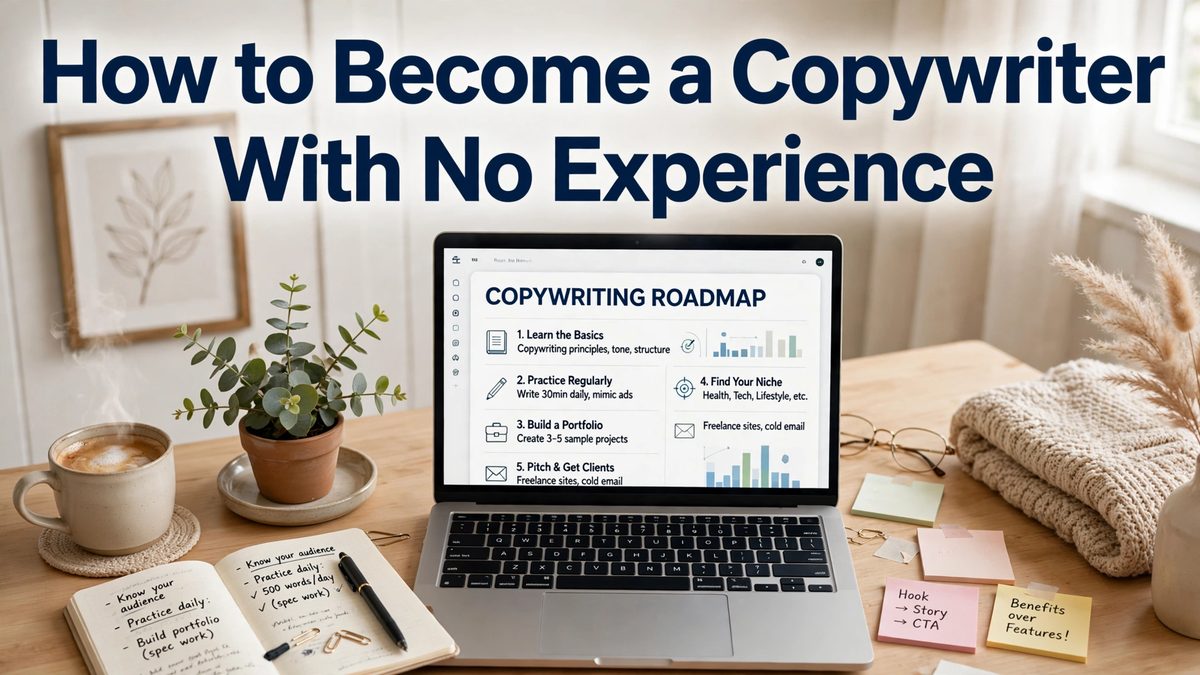
I still remember the first headline I ever rewrote for money. A local candle shop had a product page that said, “High quality candles made with care.” I changed it to something specific about the scent, the burn time, and who it made a great gift for. Sales on that page rose enough that the owner asked me to rewrite her whole site. I realized that day that words aren’t decoration. They’re part of how a business earns money.
If you want to become a copywriter, you don’t need a degree or a long résumé. You need curiosity about people, a love of clear writing, and the discipline to practice until your work gets results.
In this guide, I’ll walk you through what copywriters do, how to learn the craft, how to build a portfolio without clients, and how to find paying work.
What Does a Copywriter Do?
Copywriters write words that persuade people to take action, such as buying, subscribing, booking, or clicking.
Types of Copywriting
- Website and landing page copy.
- Email marketing.
- Sales pages and long-form sales letters.
- Social media and ad copy.
- Product descriptions.
- Video and podcast scripts.
- Brand messaging and taglines.
- Case studies and white papers.
Copywriting vs. content writing: Content writing educates or entertains to attract an audience, while copywriting focuses on motivating a specific action. Many writers do both.
Why this career appeals:
- High demand. Every business needs persuasive words.
- Remote-friendly and flexible.
- Good earning potential with specialization and results.
- Creative and strategic.
The honest part: Clients judge your work by results, which depend on offers, traffic, and design too. Learning to ask good questions and set expectations protects you.
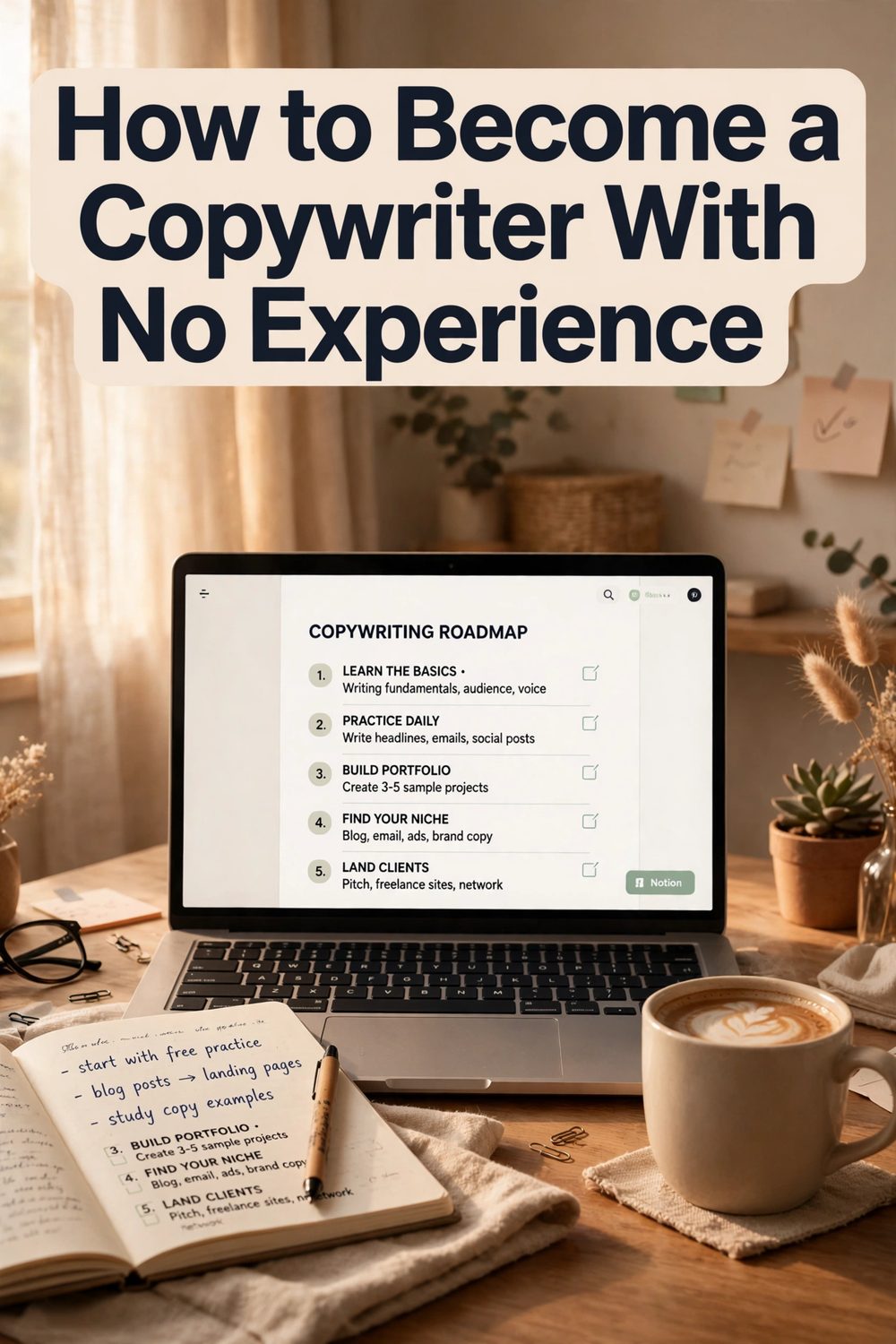
Step 1: Learn the Craft
Core Concepts
- Audience research: Understand desires, fears, and objections.
- Benefits over features: Explain how a product improves life, not just what it is.
- Clarity and specificity: Replace vague claims with concrete details.
- Headlines and hooks: Earn attention in seconds.
- Calls to action: Tell readers exactly what to do next.
- Proof: Use testimonials, data, and examples.
- Structure: Use proven frameworks like AIDA and PAS.
How to Learn
- Read classic and modern copywriting books and blogs.
- Study ads, landing pages, and emails you see every day and ask why they work.
- Keep a swipe file of strong examples.
- Hand-copy great copy to absorb rhythm and structure.
- Take free and low-cost courses.
- Write every day, even 15 minutes.

Step 2: Practice With Real Exercises
- Rewrite weak product descriptions into stronger versions.
- Write ten headlines for the same offer and choose the best.
- Create a landing page for a fictional product.
- Do a competitor research exercise, reading reviews to find customer language.
- Write a one-page brand voice guide for a business you admire.
Customer reviews are a goldmine. Real customers describe problems and benefits in words you can borrow.
Step 3: Use AI Wisely
AI can help brainstorm angles, generate headline options, and summarize research. It can’t replace your judgment about audience, tone, and truth.
- Draft variations and then rewrite them in a human voice.
- Summarize customer reviews into themes.
- Check for clarity and consistency.
- Avoid copying generic outputs.
Always fact-check claims, avoid misleading promises, and follow client and platform rules. The Claude Advantage shows how to prompt effectively and keep your voice, and The AI-Powered Solopreneur offers simple systems for running your freelance business efficiently.
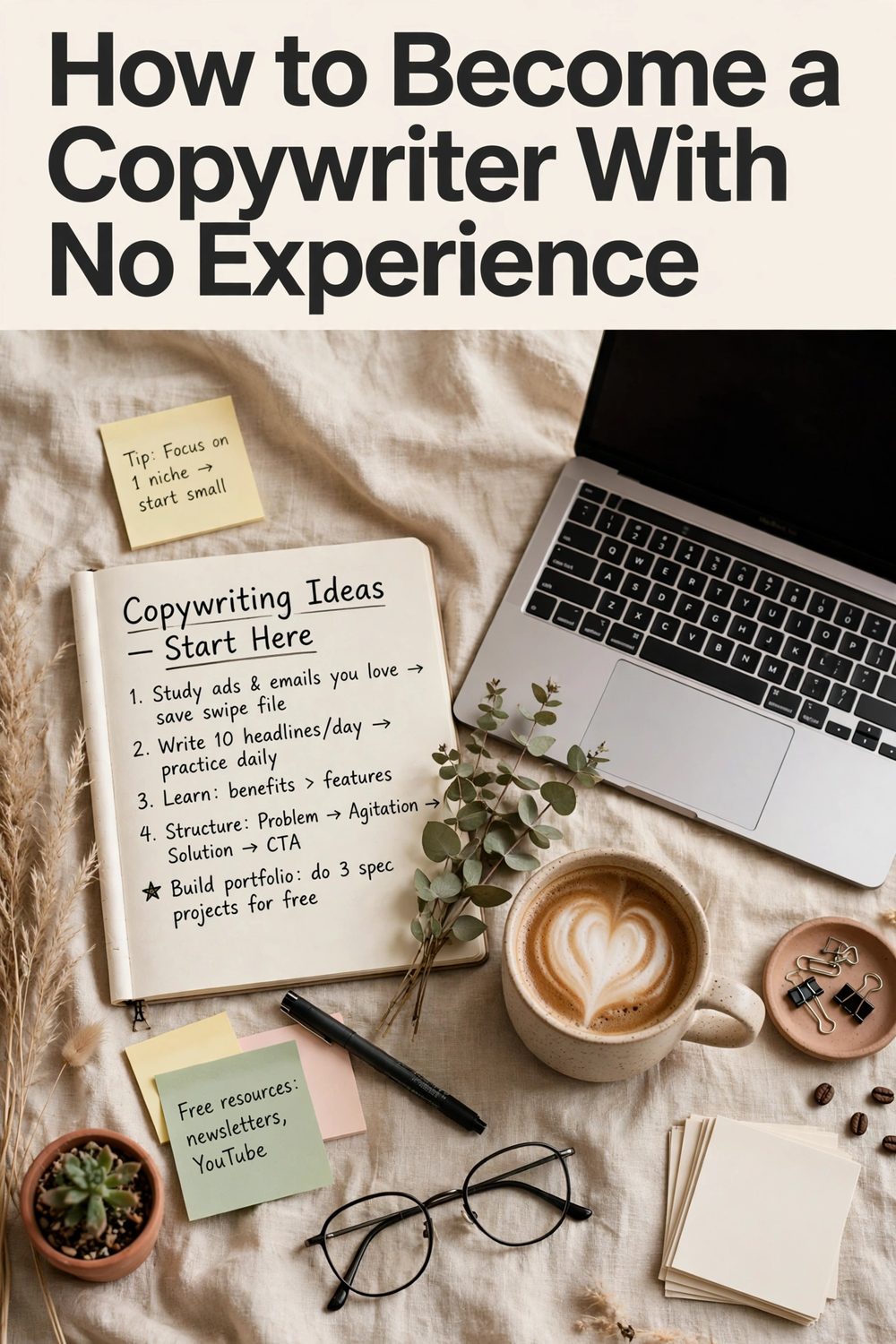
Step 4: Choose a Niche
Specialists earn more and market more easily.
- Industry niches: Health and wellness (with compliant claims), finance, education, ecommerce, SaaS, real estate, or coaching.
- Format niches: Email, landing pages, sales pages, or ads.
- Audience niches: Moms, small business owners, creators, or professionals.
Pro tip: Choose an industry you already understand. Your insider knowledge shortens the learning curve and impresses clients.
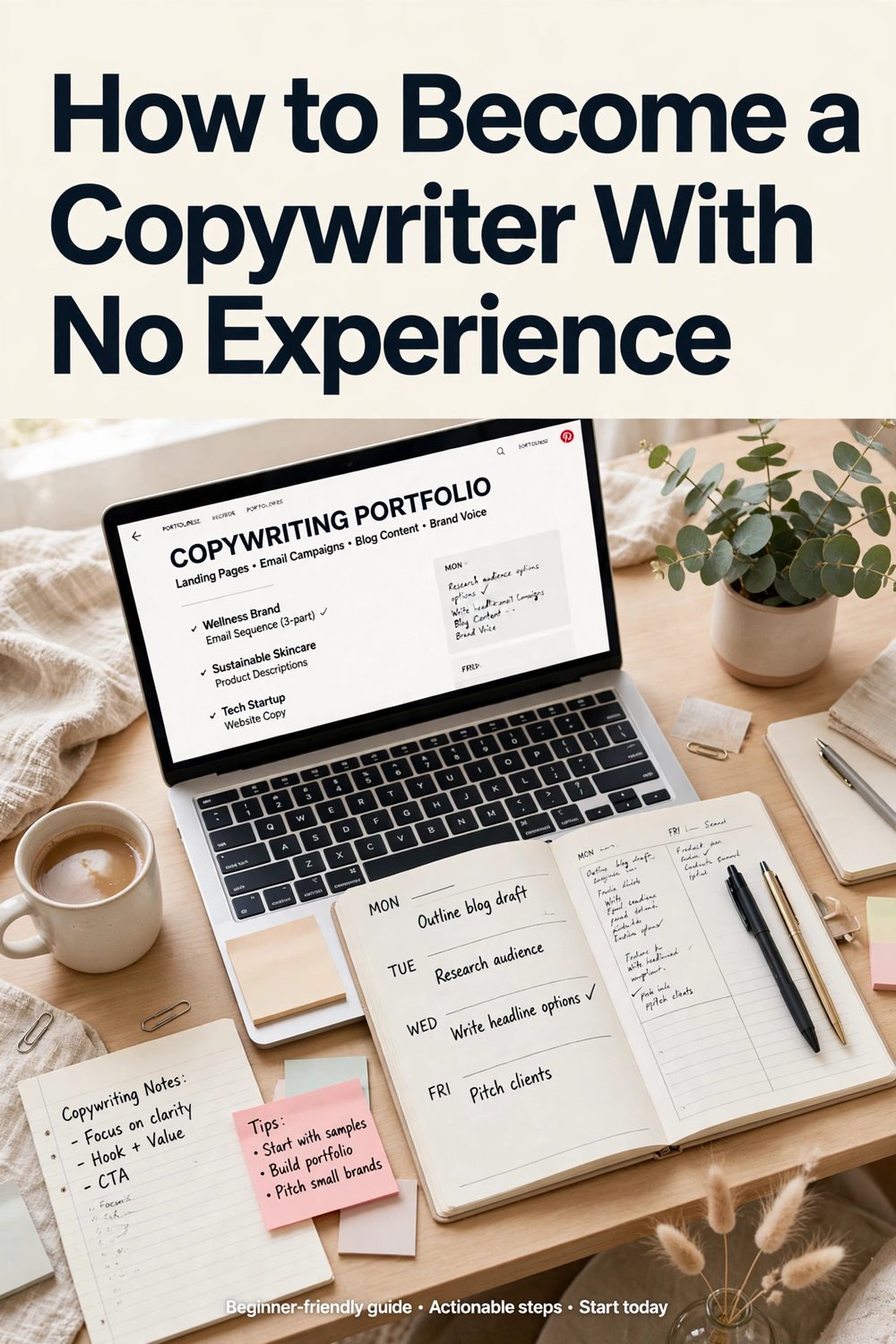
Step 5: Build a Portfolio With No Clients
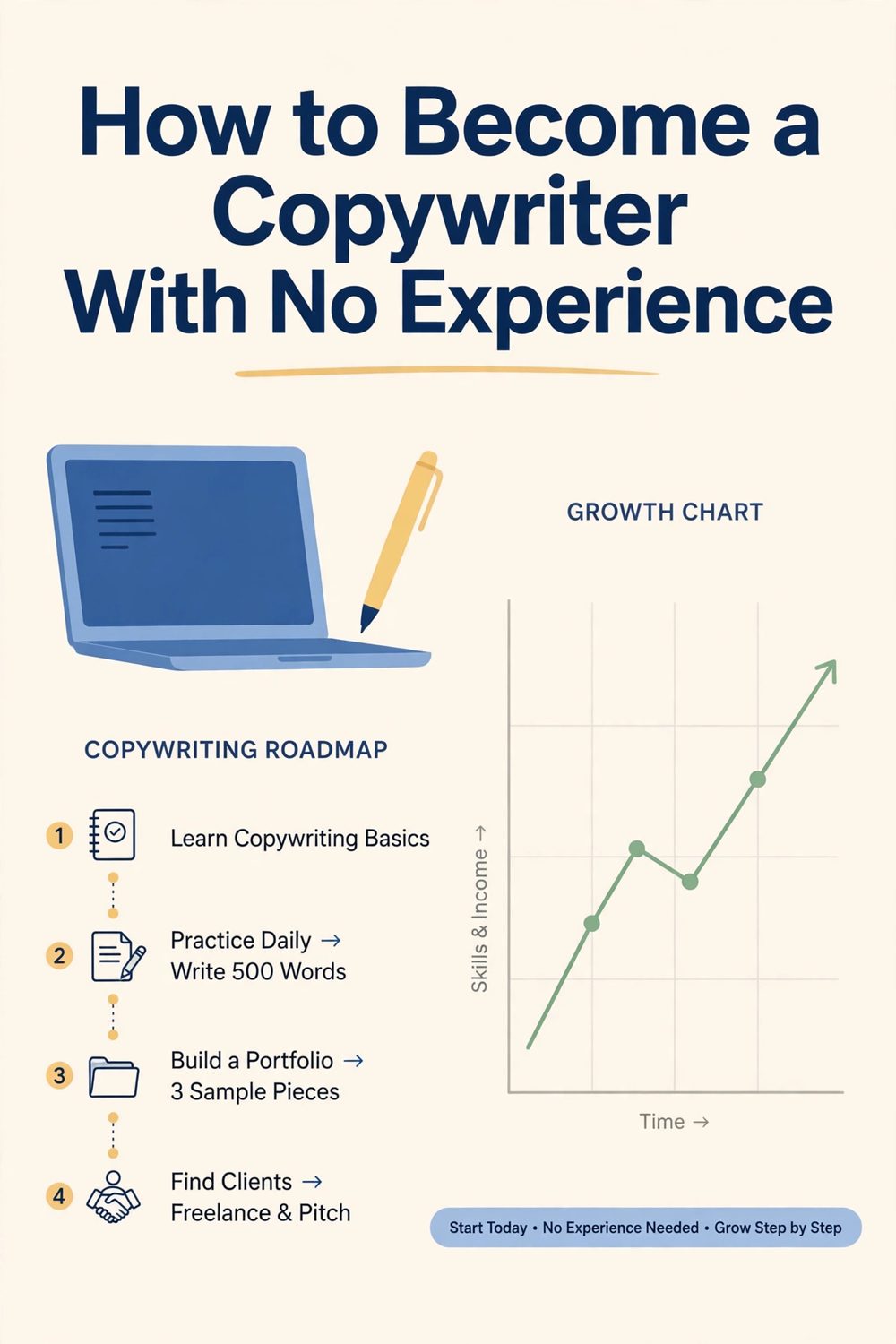
- Create three to five strong samples, such as a landing page, a welcome email sequence, and a set of product descriptions.
- Rewrite a real page as a “before and after” case study, noting your reasoning. Label it clearly as a concept sample.
- Start a blog or newsletter to show your voice.
- Offer a discounted pilot project to a small business in exchange for a testimonial.
- Document results when you have them, with permission.
Host your portfolio on a simple website, Notion page, or PDF, and keep it focused on your best work.
Step 6: Set Your Rates
Rates vary by experience, niche, and project type.
- Per project: Common for landing pages, emails, and sales pages.
- Per word: Used for some content.
- Hourly: Useful for editing and consulting.
- Retainers: Ongoing work for steady income.
Pricing Tips
- Research current market rates.
- Price by value, not only by time.
- Define scope, revisions, and deadlines.
- Charge rush fees.
- Raise rates as your portfolio and results grow.

Step 7: Find Clients
- Your network and social media.
- LinkedIn: Share copy tips and examples.
- Communities for small business owners, following rules.
- Direct outreach: Pitch businesses with specific improvements.
- Marketing agencies and web designers who need copy help.
- Freelance platforms and job boards.
- Referrals from past clients.
The Digital Marketing Playbook explains marketing fundamentals that help you understand client goals, and The Personal Brand Blueprint can help you present yourself as a trusted professional.
Step 8: Run Projects Professionally
- Start with a discovery questionnaire: goals, audience, offer, competitors, and tone.
- Share an outline or strategy before drafting.
- Deliver a draft with a short explanation of your choices.
- Collect consolidated feedback and revise.
- Suggest testing for headlines and calls to action.
- Request testimonials and results with permission.
A contract covering scope, payment terms, revisions, and ownership protects both sides.
Step 9: Grow Your Income
- Specialize in higher-value formats like launch copy and sales pages.
- Offer packages that combine strategy, copy, and testing.
- Create retainers for ongoing needs.
- Build digital products, such as templates and swipe files.
- Teach or mentor others once you’re experienced.
If flexibility is important to you, The Stay-At-Home Mom’s Guide to Making Money Online offers ideas that combine well with copywriting.
A 60-Day Starter Plan
- Days 1–15: Study fundamentals, build a swipe file, and write daily.
- Days 16–30: Complete practice projects and draft three portfolio pieces.
- Days 31–45: Build your portfolio page, define your niche, and set packages.
- Days 46–60: Send 30 personalized pitches, offer one pilot project, and refine based on feedback.

Money and Ethics Basics
- Avoid misleading or false claims. Honest copy protects clients and you.
- Follow advertising regulations in the client’s industry and region.
- Track income and expenses.
- Set aside money for taxes. Consult a qualified professional.
The Smart Mom’s Complete Guide to Money provides friendly guidance for freelancers with variable income.
A Simple Landing Page Structure to Practice
Landing pages are a great portfolio piece. Here’s a structure you can practice with for any product:
- Headline: State the main benefit in a clear, specific sentence.
- Subheadline: Add who it’s for and how it works.
- Opening paragraph: Name the problem and show you understand it.
- Benefits section: Three to five benefits, each tied to a real customer desire.
- How it works: Three simple steps.
- Proof: Testimonials, results, or credibility details.
- FAQ: Answer the top objections.
- Call to action: One clear button repeated at natural points.
Write a version for a fictional or real product, then rewrite it for a different audience. Seeing how the same offer changes with the reader is one of the fastest ways to build skill.
How to Handle Feedback and Revisions
Every copywriter faces feedback, and handling it well builds long-term relationships:
- Ask for specifics. “What about this headline doesn’t feel right?” is more useful than “I don’t love it.”
- Separate preference from strategy. Explain your reasoning calmly, then be flexible on matters of taste.
- Offer options when a client is unsure, such as two headline directions.
- Set revision limits in your contract.
- Keep a version history so you can restore earlier drafts.
Clients appreciate writers who listen, explain, and protect the goal of the project rather than their own ego.
Mistakes to Avoid
- Writing clever instead of clear.
- Skipping research.
- Promising results you can’t control.
- Working without a contract.
- Undercharging for too long.
- Ignoring feedback.

Quick Answers About Becoming a Copywriter
Do I need a degree? No. Skills, samples, and results matter most.
How long does it take? Many beginners land their first paid project within two to four months of focused practice and outreach.
How much can copywriters earn? It varies widely by niche, experience, and results. Many start modestly and increase rates with proven performance.
Will AI replace copywriters? AI changes the workflow, but strategy, audience insight, and brand voice remain valuable human skills.
Every Great Copywriter Started With One Headline
Becoming a copywriter is about studying people, practicing deliberately, and writing words that help businesses connect. Learn the craft, build samples, find a niche, and pitch with confidence.
This week, write ten headlines for a product you love and one 150-word product description. Trust me, the first time your words help someone buy, you’ll never see a product page the same way again. Let’s get writing!










Leave a Reply