


When I first heard the term “virtual assistant,” I pictured someone with a corporate background and a fancy résumé. I had neither. What I did have was a knack for organizing, a love of checklists, and a friend who ran a small business and was drowning in her inbox. I offered to help for a few hours a week. Little did I know that casual favor would become my first paying client.
If you’re wondering how to become a virtual assistant, even with no formal experience, you’re in the right place. Business owners everywhere need reliable people to handle tasks they don’t have time for. If you’re organized, communicative, and willing to learn, you can build real income from home.
In this guide, I’ll walk you through what VAs do, the skills you need, how to set rates, and how to land your first client.
What Does a Virtual Assistant Do?
A virtual assistant is a freelancer or contractor who provides remote administrative, creative, or technical support to business owners and professionals.
Common VA Services
- Email and inbox management
- Calendar scheduling and appointment booking
- Customer support via email or chat
- Social media management and content scheduling
- Data entry and spreadsheet organization
- Travel planning and research
- Bookkeeping basics and invoicing
- Blog and email newsletter support
- Podcast and video editing support
- Project management and task tracking
Why VA work is perfect for beginners:
- Low barrier to entry. Many tasks need organization more than advanced credentials.
- Fast income. Clients often need help immediately.
- Flexible. Work part-time or full-time around your life.
- Skill growth. You can specialize and raise your rates over time.
The honest part: You’ll trade time for money, and client work can be uneven early on. The good news is that experienced VAs often move into higher-paying specialties or build agencies.

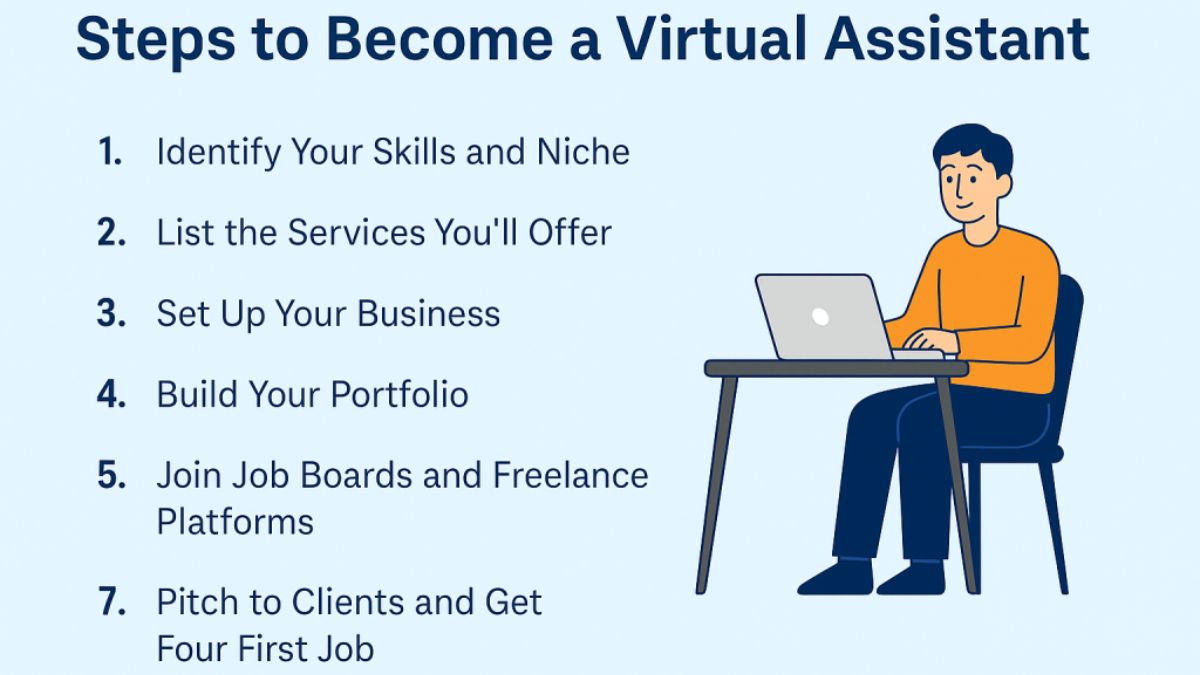
Step 1: Identify Your Skills
I didn’t think I had “real” skills until I wrote them down. You probably have more than you realize. Ask yourself:
- Have I managed schedules, inboxes, or paperwork?
- Am I comfortable with tools like Google Workspace, Microsoft Office, or Canva?
- Do I write clear emails?
- Have I done customer service?
- Am I organized and dependable?
Everyday life counts too. Running a household, coordinating a school event, or managing a team project all demonstrate transferable skills.
Step 2: Choose a Niche
General VA work is fine at the beginning, but specializing helps you stand out and charge more. Consider:
- Real estate agents who need scheduling and listing support
- Coaches and course creators who need email and launch help
- Bloggers and content creators who need Pinterest, scheduling, and editing
- Online shops needing customer support and order management
- Podcasters needing show notes and guest coordination
Pro tip: Choose a niche you understand. If you love wellness, serve wellness coaches. Your enthusiasm will show.

Step 3: Learn the Tools of the Trade
You don’t need to master everything, but being comfortable with core tools helps:
- Google Workspace (Gmail, Calendar, Docs, Sheets)
- Canva for simple graphics
- Trello, Asana, or Notion for project management
- Zoom or Google Meet for calls
- Slack for client communication
- Scheduling tools like Calendly
- Social media schedulers such as Buffer or Later
Free tutorials on YouTube and tool help centers can get you up to speed within a couple of weeks.
AI assistants can also boost your speed with drafting emails, summarizing documents, and organizing notes. The Claude Advantage teaches practical prompt techniques that help VAs deliver faster and more polished work. Always protect client confidentiality when using any tool.
Step 3.5: Build Simple Proof
No clients yet? Create credibility by:
- Making sample work, like a sample inbox-management system or a mock content calendar.
- Offering a few discounted pilot projects to friends or small businesses in exchange for testimonials.
- Documenting your process in a short case study.
- Listing your skills clearly on a simple one-page website or LinkedIn profile.
Step 4: Set Up Your VA Business
Keep it simple:
- Choose a business name (your own name works fine).
- Create a professional email address.
- Draft a service agreement outlining scope, rates, communication, and payment terms. Consider having a professional review it.
- Set up invoicing and payments with a tool like PayPal, Stripe, or a bank transfer.
- Check local registration and tax rules. Requirements vary by region.

Step 5: Set Your Rates
VA rates vary widely by skill, region, and niche. Here’s how I think about it:
- Research what other VAs charge for similar services.
- Choose a pricing model:
- Hourly for flexible tasks.
- Monthly retainer for predictable income.
- Project-based for one-off work.
- Start fair, not cheap. Very low rates attract difficult clients.
- Raise your rates as you add skills and results.
Retainers are my favorite model. They give both sides clarity and give you steady income.
Step 6: Find Your First Client
Warm Network
Tell friends, family, former coworkers, and social followers that you’re offering VA services. Personal referrals are often the fastest route to a first client.
Facebook and LinkedIn Groups
Join groups for entrepreneurs, bloggers, and small business owners. Answer questions helpfully, then share your services when appropriate and allowed.
Freelance Platforms
Upwork and similar sites connect you with clients. Write personalized proposals that show you understand their problem.
Direct Outreach
Find small businesses that clearly need support and send a short, friendly pitch pointing out one way you can help.
To attract the right clients consistently, The Digital Marketing Playbook is a helpful resource for learning marketing fundamentals.
Step 7: Deliver Excellent Service
Great VAs get referrals and retainer renewals. Here’s how:
- Communicate proactively. Share updates before clients ask.
- Stay organized. Use checklists and task trackers.
- Meet deadlines and flag problems early.
- Respect confidentiality. Treat client information carefully.
- Ask for testimonials after successful projects.
- Build your reputation. The Personal Brand Blueprint helps you position yourself as a trusted professional.
What a Typical VA Week Looks Like
Many beginners wonder what the work actually feels like. Here’s a sample week for a VA with two retainer clients, each around 10 hours:
- Monday: Review both clients’ inboxes, flag priorities, and update task lists. Schedule the week’s social posts for Client A.
- Tuesday: Book appointments and prepare a travel itinerary for Client B. Draft three emails for approval.
- Wednesday: Update spreadsheets, process invoices, and send a mid-week progress note to both clients.
- Thursday: Create graphics in Canva and schedule newsletters.
- Friday: Send a short weekly summary, confirm next week’s priorities, and invoice for hours worked.
Notice how much of the job is communication and organization. If you enjoy keeping things running smoothly, VA work can feel surprisingly satisfying.
Red Flags to Watch for in Clients
Not every client is a good fit, and I’ve learned to spot warning signs early:
- Vague expectations and no clear scope.
- Requests for lots of free “trial” work beyond a small paid test.
- Pressure to work outside agreed hours without extra pay.
- Slow or unclear payment terms.
- Disrespect for boundaries or constant last-minute emergencies.
A clear contract, upfront deposit or retainer, and polite boundaries protect you. Remember, you’re a business owner, not just a helper.
Grow Your VA Income
Once you’re established, consider:
- Specializing in high-demand services like email marketing or launch support.
- Raising rates with every new client.
- Creating packages that bundle services.
- Subcontracting or building a small team.
- Creating digital products, such as templates or training, to earn beyond your hours.
If you’re juggling kids and want flexible options, The Stay-At-Home Mom’s Guide to Making Money Online offers ideas that fit real family life.

Manage Your Money Wisely
- Separate business and personal finances.
- Set aside money for taxes. Consult a professional for your situation.
- Invoice promptly and follow up on late payments.
- Build a buffer for slow months.
For simple budgeting help, The Smart Mom’s Complete Guide to Money is a friendly place to begin.
Mistakes to Avoid
- Undercharging for too long. Raise your rates as you improve.
- Working without a contract. Put terms in writing.
- Taking every client. Choose people who respect your time.
- Ignoring boundaries. Set working hours to avoid burnout.
- Skipping marketing. Keep your pipeline full, even when busy.
Quick Answers About Becoming a VA
Do I need experience? Not always. Transferable skills, strong communication, and a few sample projects can be enough to get started.
How much can a virtual assistant earn? It varies widely by skill, niche, and region. Many beginners start modestly and increase income as they specialize and raise rates.
How long until I get my first client? Often within one to two months of consistent outreach, though it varies.
Is VA work a long-term career? Yes, and many VAs grow into specialists, project managers, or agency owners.

Your VA Career Starts With One Decision
Becoming a virtual assistant doesn’t require a perfect résumé. It requires reliability, willingness to learn, and the courage to tell people what you offer. Choose a few services, build simple proof, and reach out.
This week, list your skills, pick a niche, and message five potential clients. Trust me, the moment someone says “Yes, please help me!”, you’ll realize how valuable your organization really is. You’ve got this!










Leave a Reply