


Almost everyone wants to save more money. Fewer people actually feel like they’re making progress. Between rising prices, unexpected bills, and the everyday temptation to spend, saving can feel like pushing a boulder uphill.
Here’s the encouraging part: you don’t need a huge income or a perfect budget to start. You need a clear goal, a simple plan, and a way to track your progress. In this guide, I’ll walk you through each step so you can reach your savings goals faster and with less stress.
Quick note: I’m not a financial advisor, and this article is general information, not personalized financial advice. For decisions about your specific situation, consider talking with a qualified professional.
Why Savings Goals Work Better Than “Saving More”
“I should save more” is a wish. “I want to save $2,000 for an emergency fund by December 31” is a goal. Specific goals work better because they:
- Give you a target to aim for
- Create a timeline, which builds urgency
- Make progress measurable
- Keep you motivated because you can see how close you are
- Help you decide what to spend and what to skip
When you’re tempted to make an impulse purchase, a clear goal makes it easier to ask: “Is this worth more than getting closer to what I really want?”

Step 1: Decide What You’re Saving For
Start by listing your savings goals. Common ones include:
- Emergency fund: A cushion for unexpected costs, like car repairs or medical bills
- Debt payoff: Paying down credit cards or loans
- Vacation or travel
- Big purchase: A car, a laptop, or home improvements
- Business fund: Inventory, equipment, or marketing
- Education: Courses or certifications
- Holidays and gifts
- Down payment for a home
- Retirement or long-term investing
If you have several goals, don’t panic. We’ll prioritize them next. If your thoughts are jumbled, spend five minutes on a brain dump with the Brain Dump Worksheets to get all your money goals and worries out of your head.

Step 2: Prioritize
You can’t do everything at once, so choose your top one to three goals. Many people prioritize in this general order:
- A starter emergency fund (even a small one)
- High-interest debt
- Larger emergency savings
- Other goals (vacation, purchases, business)
The Top 3 Main Goals Right Now Journal is a handy tool for keeping your top priorities in front of you so you don’t get distracted.

Step 3: Make Each Goal Specific
For each goal, define:
- The amount: How much do I need?
- The deadline: By when?
- The reason: Why does this matter to me?
Example: “I will save $1,200 for a family vacation by June 30 so we can take a stress-free trip together.”
Step 4: Do the Math
Now break the goal into small, manageable pieces.
Formula: Goal amount ÷ number of weeks (or months) = amount to save each period.
Example: $1,200 ÷ 24 weeks = $50 per week.
If $50 a week feels like too much, adjust: extend the timeline, lower the target, or look for ways to increase your income. The point is to create a number you can realistically stick with.
Step 5: Track Your Progress Visually
Seeing progress is a powerful motivator. Use a tracker to log each deposit and watch your total grow. The Savings Goals Journal lets you set goals, record your contributions, and see how close you are to the finish line.

If you enjoy more visual or challenge-style tracking, the Savings Money tracker and the Savings Money Journal offer additional ways to log deposits, color in progress, and keep the momentum going.

Many people find that coloring in a box or checking off a milestone gives them a small hit of satisfaction, which helps them stay consistent.

Step 6: Automate and Pay Yourself First
One of the most effective strategies is to save before you spend. Set up an automatic transfer on payday to move money into a separate savings account. When saving happens automatically, you don’t rely on willpower.
Tips:
- Use a separate account (ideally one that’s not too convenient to dip into).
- Start small, even $10 per paycheck.
- Increase the amount whenever you get a raise or reduce an expense.
- Name your accounts after goals (“Hawaii Trip,” “Emergency Fund”) for extra motivation.
If your income is irregular (common for freelancers and business owners), set a percentage rather than a flat amount: for example, save 10-20% of every payment you receive.
Step 7: Find Money to Save
If you’re not sure where the money will come from, look in these places:
Review your spending
Track your spending for 2-4 weeks. You may uncover small leaks: subscriptions you don’t use, frequent takeout, impulse purchases. If you run a business, keep records in a Receipt Journal so personal and business expenses stay clear.

Cut or reduce
- Cancel unused subscriptions
- Negotiate bills (internet, phone, insurance)
- Cook at home more often
- Use a grocery list and plan meals. A Grocery List Journal can reduce impulse buys.
- Switch to store brands
- Delay non-essential purchases (try a 48-hour or 30-day rule)

Increase income
- Sell items you no longer need
- Take on a side gig or extra client
- Raise your prices if you run a business
- Offer a new product or service
- Ask for a raise
Use windfalls wisely
Tax refunds, bonuses, or gifts can give your savings a big boost. Decide in advance what percentage will go to savings.
Step 8: Try a Savings Challenge
Challenges make saving fun and give structure. Popular ones include:
- The 52-week challenge: Save $1 in week 1, $2 in week 2, and so on, up to $52 in week 52.
- The $5 bill challenge: Save every $5 bill you receive.
- No-spend days: Choose a few days each week or month where you spend nothing extra.
- Round-up savings: Round purchases up and save the difference.
- Weekly “found money”: Transfer the amount you didn’t spend on something you skipped.
- Savings sprints: Pick a 30-day period to save as aggressively as possible.
Pick one that suits your lifestyle and income. Use a tracker to check off each step.
Step 9: Stay Motivated
Saving is a long game, so build in encouragement:
- Visualize your goal. Put a photo or note somewhere you’ll see it.
- Celebrate milestones. At 25%, 50%, and 75%, do something small and free or inexpensive.
- Share your goal with a friend or accountability partner.
- Remind yourself of your why. Why does this goal matter?
- Review weekly. A quick five-minute check keeps you engaged.
- Forgive slip-ups. If you overspend one week, adjust and continue.
If you want to connect your savings with your broader vision, a journal such as the Daily Future Self Journal can help you think about the life you’re building and why your savings matter.

Step 10: Plan for Setbacks
Life happens. A car breaks down, a bill appears, a client pays late. Plan for it:
- Build a small buffer first. Even $500 can prevent small emergencies from derailing you.
- Have a “pause” plan. If you must stop saving temporarily, decide in advance how and when you’ll restart.
- Avoid dipping for non-emergencies. Define what counts as an emergency.
- Adjust, don’t quit. Lower your weekly amount rather than abandoning the goal.
Saving Tips for Business Owners and Side Hustlers
Income may vary, but you can still build good habits:
- Separate accounts: Business, personal, taxes, and savings.
- Pay yourself a regular amount from business profits.
- Set aside money for taxes as you earn. Ask a tax professional what percentage is appropriate for your situation.
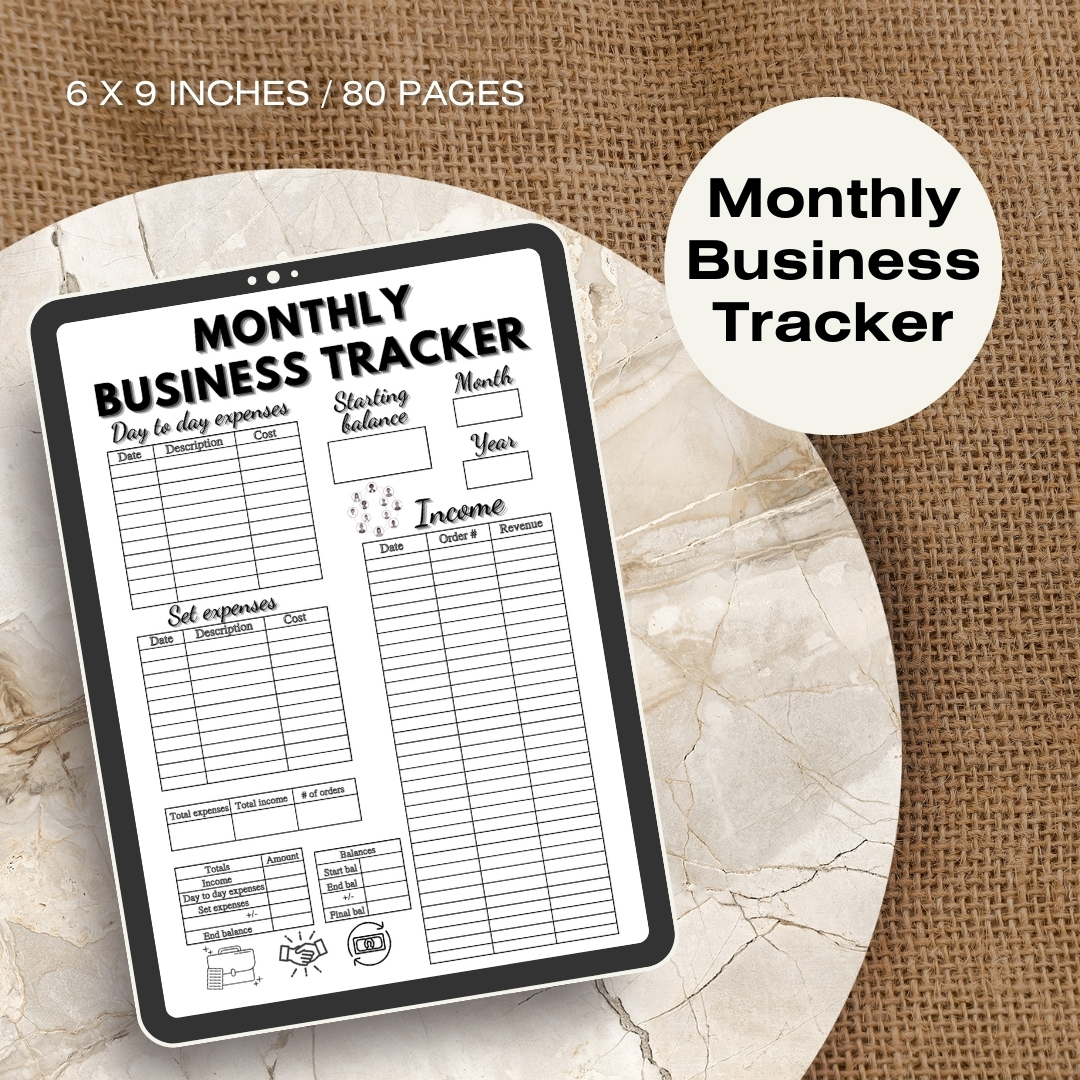
- Track your revenue and expenses with a Monthly Business Tracker so you know what you can safely save.
- Build a business emergency fund that covers slow months.
Common Savings Mistakes
Not having a specific goal. Define the amount and the date.
Setting an unrealistic number. Start with what you can sustain.
Keeping savings in your checking account. Separate accounts reduce temptation.
Giving up after a setback. Progress isn’t linear.
Ignoring small expenses. Little purchases add up.
Not tracking. What gets tracked gets done.
Waiting for the “perfect time.” Start where you are, with what you have.

Savings Goal Checklist
[ ] List your savings goals
[ ] Choose your top 1-3 priorities
[ ] Set specific amounts and deadlines
[ ] Calculate weekly or monthly savings
[ ] Open a separate savings account
[ ] Set up automatic transfers
[ ] Track every deposit
[ ] Review spending monthly
[ ] Celebrate milestones
Final Thoughts
Reaching your savings goals isn’t about deprivation. It’s about deciding what matters most to you and giving it a plan. Start small, stay consistent, and keep your goal in sight. Every dollar you save is a vote for the future you want.
Pick one goal today, calculate your weekly amount, and make your first deposit, even if it’s just a few dollars. Then keep going.
Ready to start saving? Grab the Savings Goals Journal, try the Savings Money Journal for ongoing tracking, and keep your priorities clear with the Top 3 Main Goals Right Now Journal.










Leave a Reply