


Picture this: it’s tax season, and you’re digging through your car, your purse, three drawers, and an old shoebox looking for receipts from last year. Half of them have faded. A few are missing. You’re not even sure what some of them were for.
Sound familiar? You’re not alone. Many side hustlers and small business owners put “organize receipts” at the bottom of their to-do list until it becomes a full-blown emergency.
The good news: a simple receipt tracking system takes only a few minutes a week. It saves you from stress, helps you keep more of your hard-earned money, and shows you the real numbers behind your business.
Let’s build one together.
Why Receipt Tracking Matters
Receipts are more than scraps of paper. They’re proof of what you spent, and they play several important roles.
They show your true profit. Revenue isn’t income. What matters is what’s left after expenses. Without tracking costs, you might think you’re doing great when you’re barely breaking even.
They support tax deductions. In many places, legitimate business expenses can reduce your taxable income. Good records help you claim what you’re entitled to. (Rules vary by country and situation, so check with a qualified tax professional about what applies to you.)
They help you price correctly. Knowing the real cost of supplies, packaging, and fees lets you set prices that make a profit.
They prevent overspending. Seeing where your money goes makes it easier to cut waste.
They provide protection. If you’re ever questioned about a purchase or expense, you have documentation.

What Counts as a Business Receipt?
Common business-related expenses include:
- Supplies and materials (blanks, vinyl, fabric, yarn, paper)
- Packaging and shipping supplies
- Postage and shipping labels
- Software and subscriptions (design tools, website hosting)
- Marketing and advertising costs
- Platform and payment processing fees
- Equipment and tools
- Education (courses, books related to your business)
- Business-related travel or mileage
- Printing costs
If you use something partly for personal and partly for business, keep track of how much is business use. When in doubt, record it and ask a tax professional later.
Step 1: Choose One Place for Everything
The biggest cause of receipt chaos is having no single home for them. Decide on one system and use it every time. You have three main choices.
Option A: A paper receipt journal
Write down each expense in a dedicated notebook, then keep the physical receipt in an envelope or folder. This works well if you like handwriting and a visual record. The Receipt Journal gives you a simple layout for logging the date, vendor, amount, and purpose of each purchase, so everything lives in one tidy place.

Option B: A digital system
Take a photo of each receipt and save it in a labeled folder or app. Name files consistently (for example, “2025-03-14_Amazon_Packaging_24.99”). This is great if you prefer a paperless approach.
Option C: A hybrid system
Log expenses in a journal, and snap a photo of the receipt as a backup. Thermal receipts fade quickly, so a digital copy is smart insurance.
Pick whatever you’ll actually stick with. The best system is the one that becomes a habit.
Step 2: Record Expenses Right Away
Don’t let receipts pile up. The longer you wait, the more likely you’ll forget what they were for. Build a quick habit:
- Make the entry the same day. Spend two minutes logging each purchase.
- Or batch it twice a week. Choose set days, like Wednesday and Sunday.
- Never throw receipts away until they’re recorded.
Record these details for each expense:
- Date
- Vendor or store
- Amount
- Category (supplies, shipping, marketing, etc.)
- Business purpose (what it was for)
- Payment method
Keeping a small envelope in your bag or car for receipts means they won’t get lost between the store and your desk.
Step 3: Create Expense Categories
Categories make it much easier to see where your money goes and to prepare for tax time. Keep them simple. Here’s a starter list:
- Materials & supplies
- Packaging & shipping
- Marketing & advertising
- Software & subscriptions
- Fees (platform, payment, bank)
- Equipment & tools
- Education & training
- Office & other
Use the same categories every month. Consistency makes comparisons meaningful.
Step 4: Review Weekly
Once a week, take ten minutes to:
- Match receipts to your journal entries
- Check your bank or card statements for any missing purchases
- Total your weekly spending
- Note anything unusual
This quick review catches mistakes early and keeps your records accurate.
You can build this into your weekly planning session. Add a recurring “money minutes” slot to your weekly plan, and use the Work Day Organizer to schedule it alongside your other tasks.

Step 5: Do a Monthly Summary
At the end of each month, add up your expenses by category and compare them with your income. This reveals your profit and shows where you can improve.
Ask yourself:
- Did spending increase? Why?
- Which category costs the most?
- Are any subscriptions I rarely use?
- Is my pricing high enough to cover all costs?
Use a tracker like the Monthly Business Tracker to bring your income and expenses together on one page. Seeing the full picture helps you make smarter decisions, such as raising prices or negotiating supplier costs.

Step 6: Store Receipts Properly
Rules about how long you must keep records differ depending on where you live, so check local guidelines. In general:
- Keep physical receipts organized by month in a folder, accordion file, or envelope.
- Label clearly with the year and month.
- Back up digital copies in cloud storage and on an external drive.
- Use a safe, dry place for physical records.
- Photograph faded receipts right away. Thermal paper can become unreadable in a few months.
Step 7: Prepare for Tax Time
If you’ve followed the steps above, tax prep becomes simple. At year-end:
- Total each expense category.
- Total your income from all sources.
- Gather your records, including receipts, statements, and your monthly summaries.
- Give your information to your tax preparer or use it to fill out your own return.
You’ll save hours and may reduce stress and costly errors. Many tax preparers also appreciate organized records, which can mean lower fees.
Separate Business and Personal Finances
One of the best things you can do is keep your business money separate:
- Open a separate bank account or use a dedicated card for business purchases.
- Pay yourself with transfers rather than mixing funds.
- Avoid using your personal card for business expenses when possible.
This makes tracking cleaner and dramatically reduces confusion. If you do mix them occasionally, mark those receipts clearly in your journal.
Tracking Expenses for Product-Based Businesses
If you sell physical products, calculate the cost per item, including all materials, packaging, and fees. For example, for a custom mug:
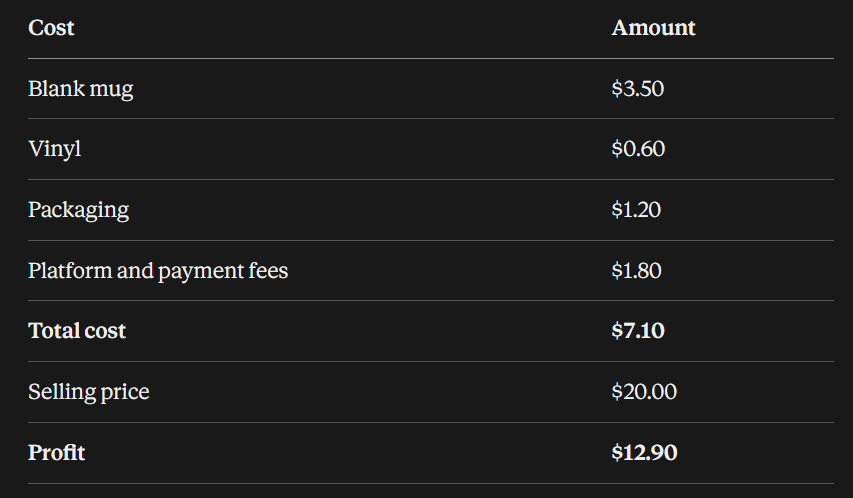
Without receipts and records, you’d only guess at these numbers. If you sell custom items, tie this to your order system, such as the Order Form Journal, so each order’s costs and sale price are connected.

Make It Easy to Stick With
Habits are built on repetition. Try these tips:
- Keep supplies visible. Place your journal on your desk, not in a drawer.
- Pair it with another habit. Log receipts while you drink your morning coffee.
- Set a reminder. A weekly phone alert helps.
- Track the habit itself. A Mini Habit Tracker Journal lets you check off each day you log expenses.
- Reward yourself. After finishing your monthly review, treat yourself to something small.

Common Receipt Tracking Mistakes
Waiting until tax season. Small, regular efforts beat a panicked marathon.
Tossing receipts too early. Keep them until you’ve recorded and backed them up.
Mixing personal and business spending. Separate accounts save headaches.
Using too many systems. Choose one primary method.
Not recording the purpose. In a year, you won’t remember why you bought something.
Ignoring small purchases. Dollars add up. Record everything.
Not reviewing the numbers. Tracking is only valuable if you use the information.

Receipt Tracking Checklist
[ ] Choose a single tracking system
[ ] Set up simple expense categories
[ ] Log expenses daily or twice weekly
[ ] Back up receipts (photo or scan)
[ ] Review weekly
[ ] Complete a monthly summary
[ ] Keep business and personal finances separate
[ ] Store records safely
[ ] Prepare year-end totals
Final Thoughts
Receipt tracking isn’t glamorous, but it’s one of the most powerful habits in a side hustle. It protects your profit, reduces stress, and gives you a clear picture of your business’s health. Start small: choose a place for your receipts and log your next purchase today.
Your future self at tax time will be grateful.
Ready to get your finances in order? Grab the Receipt Journal to log every expense, pair it with the Monthly Business Tracker to see your profit clearly, and keep your money goals on track with the Savings Money Journal.










Leave a Reply