


“I want to make more money this year.”
It’s a fine wish, but it isn’t a plan. Without a specific number, a deadline, and a way to track progress, “more money” stays in the land of good intentions.
Sales goals turn that wish into a roadmap. They tell you how many sales you need, how often you need to promote, and whether you’re on track by the middle of the month, while there’s still time to adjust.
In this guide, I’ll show you how to set realistic monthly sales goals, break them into small daily actions, and track your results so you can grow with confidence.
Why Sales Goals Matter
When you don’t set sales goals, you tend to react: you post when you remember, discount when you panic, and wonder at month-end why the numbers look the way they do.
With clear sales goals you can:
- Focus your effort on activities that bring in money
- Measure progress instead of guessing
- Spot problems early and fix them mid-month
- Stay motivated by watching your numbers climb
- Plan your finances more reliably

Step 1: Know Your Starting Point
Before you can set a goal, you need to know where you are. Look back at the last three months and write down:
- Total sales (revenue)
- Number of orders or clients
- Average order value
- Best-selling products or services
- Slowest weeks
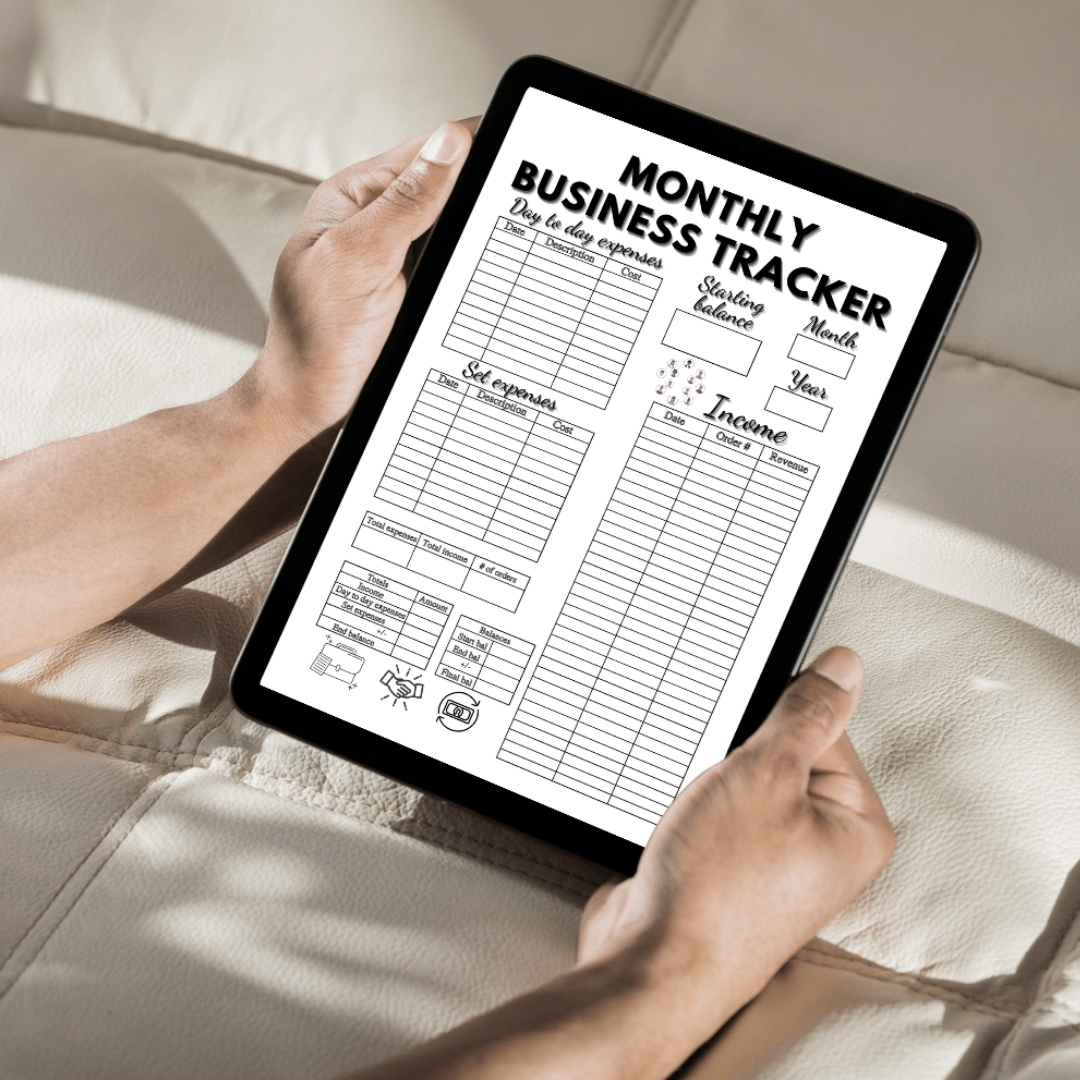
If you haven’t been tracking, don’t worry. Start now with whatever data you have (bank statements, payment platform reports) and track consistently from here on. The Monthly Business Tracker is a handy place to record your baseline so future comparisons are easy.
Step 2: Choose a Realistic but Stretching Target
A great goal makes you reach a little without being impossible. A common approach is to aim for 10-25% growth over your recent average. If you’ve averaged $2,000 a month, a goal of $2,400-$2,500 is challenging but achievable.
Consider these factors:
- Seasonality: Holidays and busy seasons can boost sales; slow months might require a different target.
- Capacity: Can you actually fulfill more orders without burning out?
- Marketing plans: Are you planning a launch, promotion, or new product?
- Your why: What does hitting this number make possible?
Write your goal clearly: “I will generate $2,500 in sales in [month].”

Step 3: Work Backward to Find the Math
Big numbers can feel scary, so break them down:
Revenue goal ÷ average order value = number of sales needed
Example: $2,500 ÷ $25 average order = 100 sales.
Now divide by weeks: 100 ÷ 4 = 25 sales per week. Divide by days you work: roughly 4-5 sales per day.
Suddenly “$2,500” turns into “4 or 5 orders today.” That feels much more doable.
Add the funnel
Next, ask how many people you need to reach. If 3% of visitors buy, then 100 sales requires about 3,333 visitors. If you convert 20% of inquiries, you need 500 inquiries. This tells you how much marketing you need to do.
You won’t have perfect numbers at first. Estimate, track, and refine.
Step 4: Set Activity Goals, Not Just Results
You can’t directly control how many people buy, but you can control your activities. Pair your sales target with actions you’ll take every week, such as:
- Post on social media 5 days a week
- Send 2 emails to your list
- Reach out to 10 potential customers
- List 3 new products
- Ask 5 happy customers for reviews
- Run one promotion
These “input” goals keep you motivated even when sales fluctuate. Schedule them into your planner so they actually happen. The Work Day Organizer makes it simple to block time for marketing tasks alongside order fulfillment.

Step 5: Use a Sales Goal Tracking Sheet
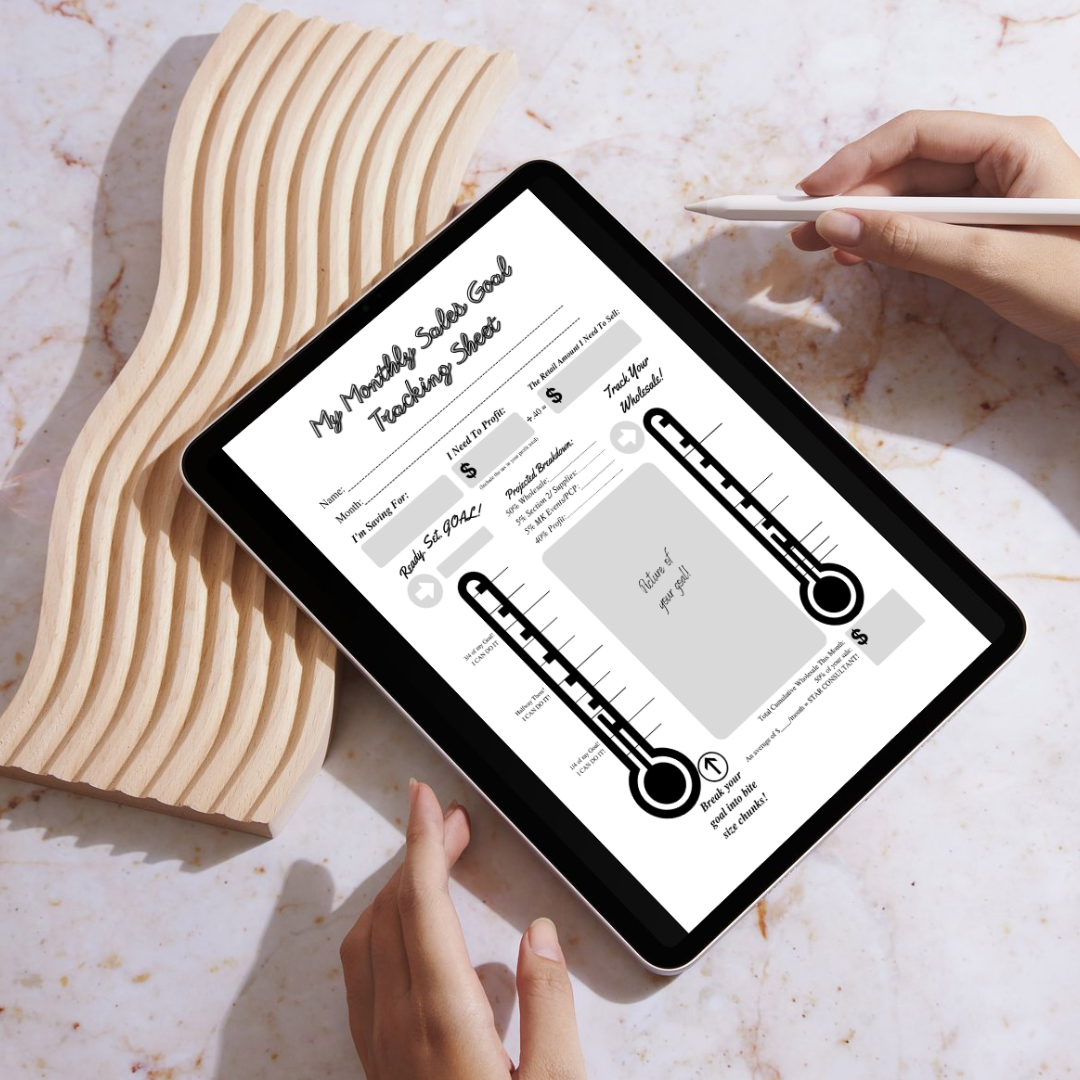
Tracking is where goals come to life. Each day (or at least weekly), record your sales and compare them to your target. The My Monthly Sales Goal Tracking Sheet lets you set your monthly target, log each day’s results, and see at a glance whether you’re ahead or behind.
What to track:
- Daily or weekly sales total
- Running total for the month
- Percentage of goal reached
- Number of orders
- Notes about promotions, events, or anything that influenced sales
Seeing a bar fill up or a number climb is genuinely motivating. It also prevents the dreaded end-of-month surprise.
Step 6: Hold a Weekly Check-In
Every week, spend ten minutes asking:
- Am I on pace to hit my goal?
- What drove sales this week?
- What slowed them down?
- What will I do differently next week?
If you’re behind, you have time to adapt: launch a flash sale, reach out to past customers, bundle products, or post more consistently. If you’re ahead, don’t coast. Figure out what’s working and do more of it.
The Staying on Track Journal is a nice place to jot down your weekly reflections and keep yourself accountable.

Step 7: Keep Your Orders Organized
Accurate tracking depends on tidy order records. If orders are scattered across messages and sticky notes, your numbers will be unreliable. Use consistent forms so every order captures the customer’s name, product details, price, and due date. The Order Form Journal keeps everything in one place, making it easy to total your sales at the end of each week.

Ideas to Boost Your Sales When You’re Behind
If the mid-month numbers aren’t where you want them, try one of these:
- Run a limited-time offer. Deadlines create urgency.
- Bundle products. Increase average order value.
- Email your list. Past customers are your most likely buyers.
- Ask for referrals. Offer a small thank-you for introductions.
- Share social proof. Post reviews and photos of finished orders.
- Follow up on inquiries. Many sales are lost because nobody replied.
- Add an upsell. “Want to add a matching item?” can raise order value.
- Collaborate. Partner with a complementary business for cross-promotion.
Choose one or two, not everything. Quality over quantity.

Celebrate and Learn at the End of the Month
When the month ends, compare your results to your goal. If you hit it, celebrate! If you missed, avoid beating yourself up. Ask instead:
- What worked better than expected?
- What would I change?
- Was the goal realistic?
- What did my customers respond to most?
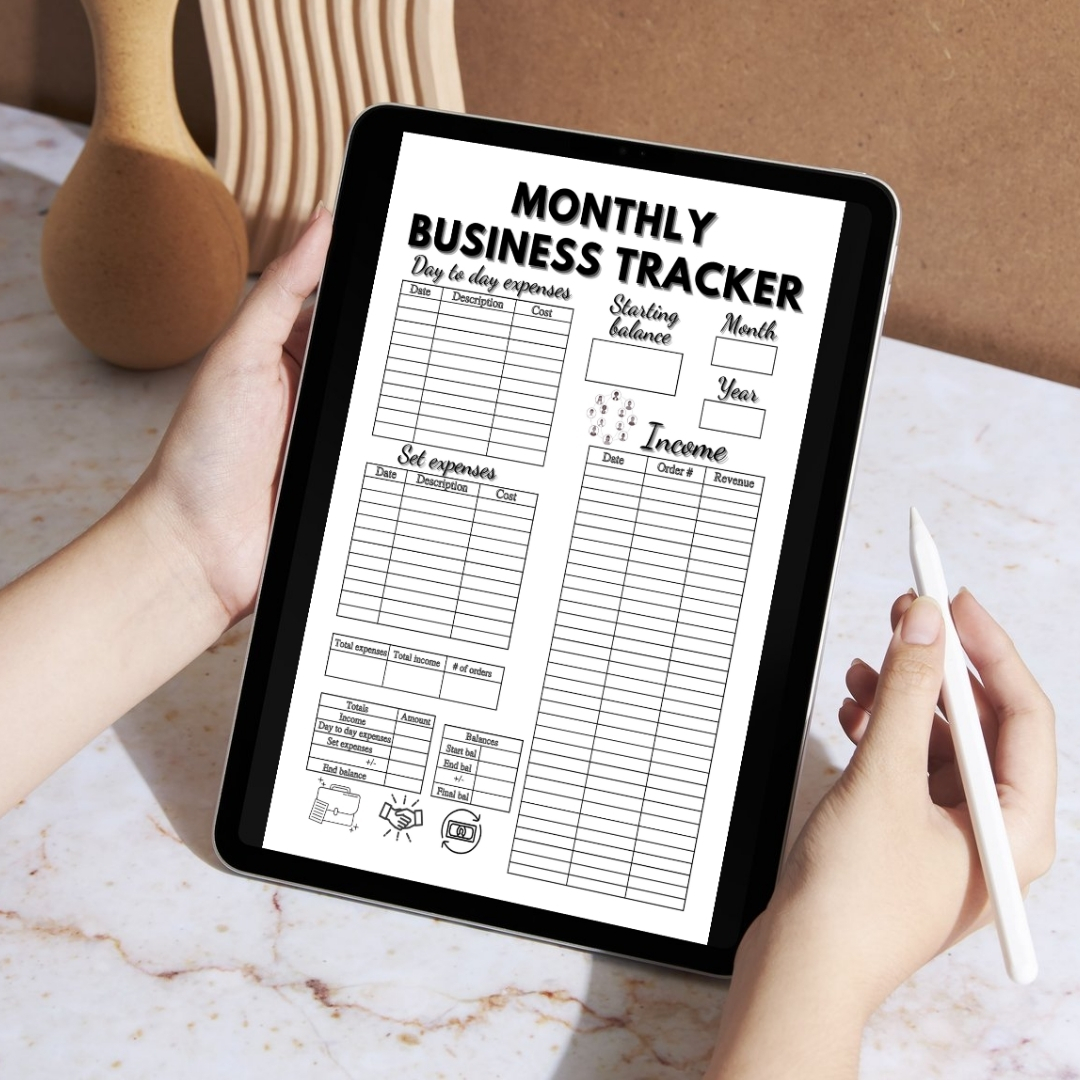
Record the lessons and use them to set next month’s target. Your sales sheet and your monthly review work together: one shows what happened, the other helps you decide what to do next. The Monthly Business Tracker is a great companion for that end-of-month review.
Sales Goals for Different Business Types
Product-based shops
Focus on average order value, repeat customers, and best-sellers. Plan inventory and promotions around your target.
Service providers
Set goals for number of clients, booked hours, or packages sold. Track inquiries and conversion rates.
Custom-order businesses
Track the number of custom orders, turnaround time, and profit per item. Using standard forms for each order type, like the Custom Tumbler Order Form, helps you capture details accurately and avoid costly mistakes.

Side hustlers
Start small. Even a goal of five sales this month is a meaningful milestone. Consistency matters more than size.
Common Sales-Goal Mistakes
Setting goals that are too vague. Use exact numbers and dates.
Setting unrealistic targets. Overreaching can lead to discouragement; scale up gradually.
Tracking only at month-end. Weekly or daily tracking allows adjustments.
Ignoring profit. A big sales number means little if expenses swallow the profit.
Not tracking expenses. Keep records with a tool like the Receipt Journal so you know what you’re actually keeping.

Changing goals constantly. Give your plan at least a full month before judging it.
Quick Sales Goal Checklist
[ ] Review the last 3 months of sales
[ ] Choose a monthly revenue target
[ ] Calculate orders needed per week and per day
[ ] Set weekly marketing activity goals
[ ] Set up a tracking sheet
[ ] Record sales daily
[ ] Do a weekly check-in
[ ] Review results and set next month’s goal
Final Thoughts
You don’t need a huge following or a fancy dashboard to grow your sales. You need a clear goal, a simple plan, and the discipline to check your progress regularly. Start by choosing a number, doing the math, and tracking each day. Within a few months, you’ll know your business better than ever and you’ll be able to grow it on purpose.
Ready to hit your numbers? Print or open the My Monthly Sales Goal Tracking Sheet, keep orders tidy with the Order Form Journal, and review your progress monthly with the Monthly Business Tracker.










Leave a Reply