

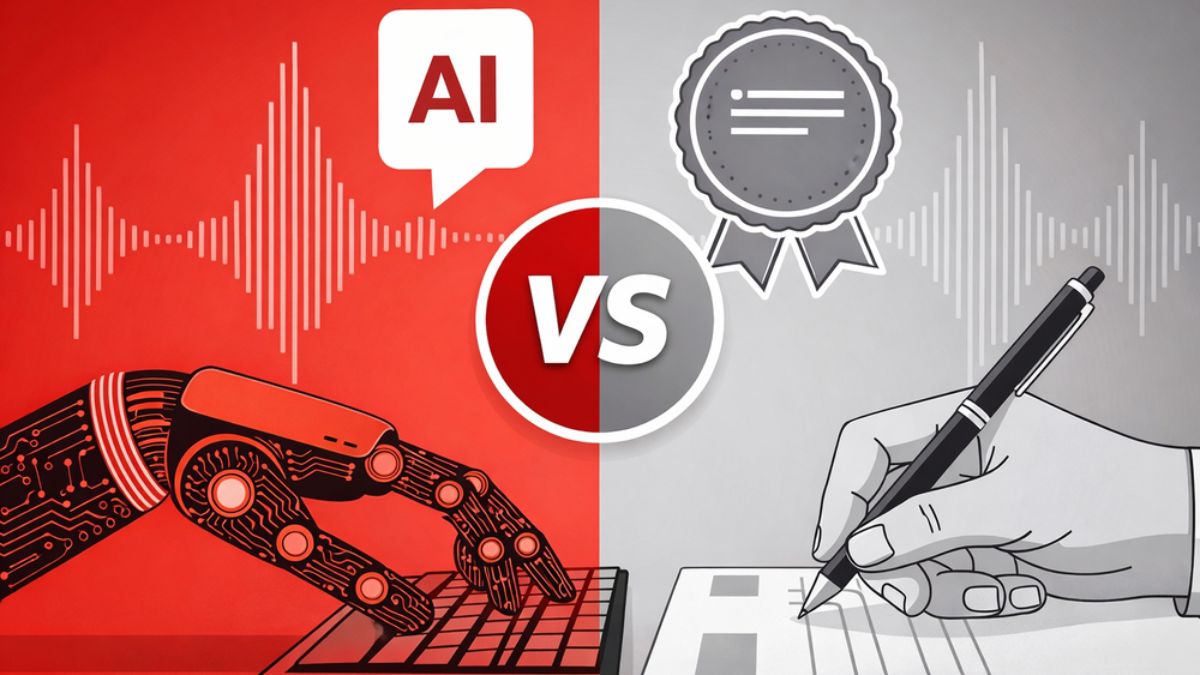
Years ago, transcription was the classic work-from-home job: put on headphones, type what you hear, get paid per audio minute. Then automatic speech recognition got very good, very fast, and many people wrote the job off. If you’ve been wondering whether transcription is still worth your time, the honest answer is: the basic version is crowded and cheap, but the quality-focused version still has a place.
Freelance research backs up the pattern. Reports on freelancer sentiment note that commodity services face the sharpest pressure from AI tools, while specialized, higher-skill work holds up better. Marketplace data shows demand for AI-related skills has more than doubled while core human skills remain in steady demand. For transcription, that means a shift from typing from scratch to reviewing, correcting, formatting, and delivering text that clients can trust.
In this guide, I’ll explain how to earn from transcription and captioning in the AI era: what still pays, how to use AI tools responsibly, how to protect client privacy, and how to find clients. (Pay varies widely, and income isn’t guaranteed.)
What’s Changed
- Basic transcripts are nearly free from automatic tools, which pushes prices down for simple jobs.
- Accuracy still matters. Automatic tools struggle with accents, background noise, overlapping speakers, jargon, names, and unclear audio.
- Captions are a growing need. Short-form video, accessibility, and silent viewing make accurate captions valuable to creators and businesses.
- Review work is the new core skill. Clients pay for polished, trustworthy output.
- Privacy expectations are higher. Clients want to know how their audio and data are handled.

Services You Can Offer
- Transcript cleanup and proofreading of machine-generated text
- Verbatim and clean-read transcripts for interviews, podcasts, and meetings
- Captions and subtitles for short videos, with correct timing and style
- Speaker labeling and timestamps
- Show notes and summaries (written in your own words, with accuracy checks)
- Meeting notes and action item lists
- Specialty transcription for fields where you have training, handled with extra care for confidentiality
Skills to Build
- Fast, accurate listening and typing
- Style guides: punctuation, speaker formatting, and brand-specific terms
- Caption timing and readability: line length, reading speed, and breaks
- Research habits for names, terms, and places
- A secure workflow for files and passwords
- A professional eye for mistakes AI makes, such as homophones, missing words, and invented text
Step 1: Choose a Niche
Specialization raises your value:
- Podcasts and interviews
- Marketing and business meetings
- Educational content and webinars
- Creator video captions
- Language-specific work, if you’re bilingual
- Specialized fields, only if you have appropriate knowledge and follow confidentiality rules
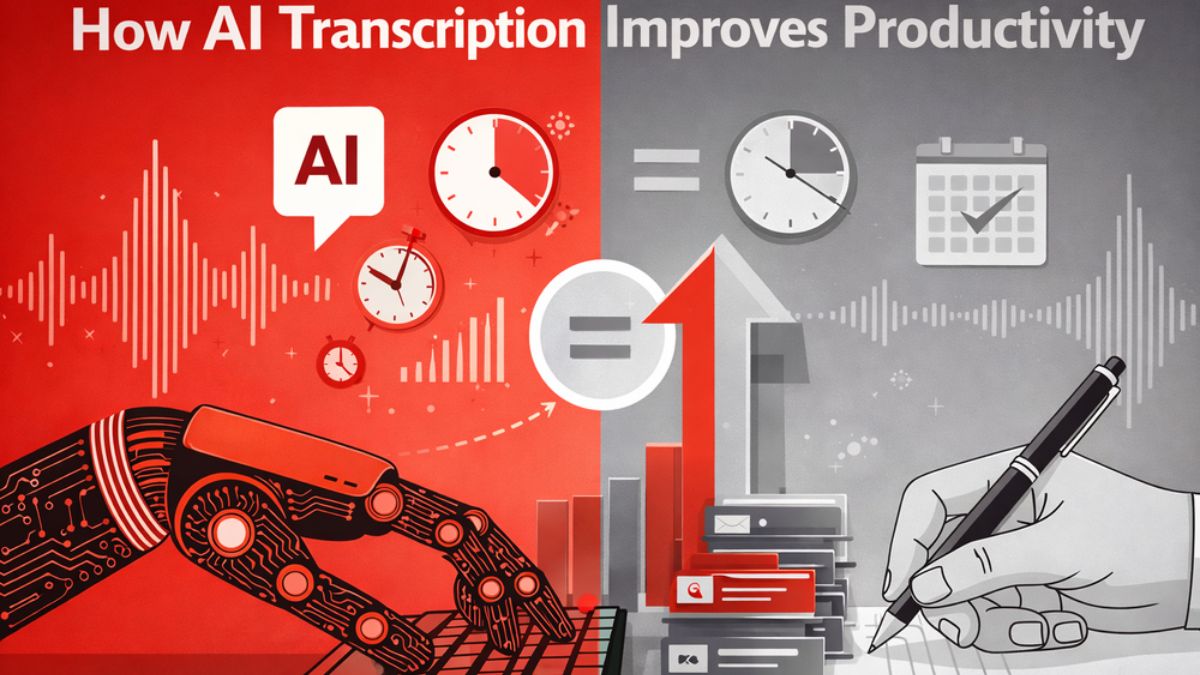
Step 2: Build a Simple Workflow With AI Support
- Run the audio through an automatic tool the client approves.
- Review line by line while listening. Never trust the output without checking.
- Fix names, jargon, punctuation, and speaker labels.
- Check timing for captions.
- Proofread once more after a short break.
- Deliver in the format requested.
Be transparent with clients about your process, and don’t upload their audio to tools they haven’t approved.
Step 3: Protect Privacy and Confidentiality
- Ask what the client allows. Some forbid third-party tools.
- Use secure storage and strong passwords, with two-factor authentication.
- Delete files after the agreed period.
- Don’t share clips or excerpts without permission.
- Include confidentiality terms in your contract.
- Avoid medical or legal transcription unless you’ve been trained and understand the privacy rules that apply.
Step 4: Price Your Services
- Charge per audio minute, per project, or per month, depending on the work.
- Account for difficult audio: accents, noise, multiple speakers, and heavy jargon take longer.
- Charge extra for rush delivery, verbatim style, timestamps, and special formatting.
- Calculate your effective hourly rate, including review time.
- Don’t compete only on the lowest price. Automatic tools already win there.
Step 5: Find Clients
- Podcasters and small creators who need transcripts and captions
- Small businesses that record meetings or training
- Coaches and course creators
- Video editors and social media managers who need a caption partner
- Freelance marketplaces for starter projects
- Direct outreach with a short sample
A good pitch: “I noticed your episodes don’t have transcripts. I can create clean, accurate ones that help with accessibility and search. Would you like a free sample of one minute?”
Step 6: Deliver Consistently
- Confirm style preferences and a glossary of names and terms.
- Set clear turnaround times.
- Provide a short notes list for unclear sections.
- Be upfront about audio problems instead of guessing.

Beware of Scams
Transcription is a common bait in fake job offers:
- Never pay for training, software, or a “starter kit” to get work.
- Be wary of check-overpayment requests.
- Avoid offers that promise huge per-minute rates for little work.
- Verify clients and platforms before sharing sensitive information.
Mistakes to Avoid
- Trusting machine output without a full check.
- Uploading client audio to unapproved tools.
- Ignoring confidentiality.
- Underpricing difficult audio.
- Missing deadlines.
- Taking specialized work you aren’t qualified for.
- Paying fees to get jobs.

Your 30-Day Launch Plan
- Week 1: Choose your niche and create your workflow.
- Week 2: Make three sample transcripts or caption files.
- Week 3: Build your rate card and agreement, and send 10 pitches.
- Week 4: Offer a short trial project and ask for a testimonial.
Build Your Freelance Income on a Roadmap
If you’d like a beginner-friendly roadmap for making money online as a stay-at-home mom, take a look at my ebook:
The Stay-At-Home Mom’s Guide To Making Money Online

Trust me, accuracy is a skill clients will always pay for.
Final Thoughts
Transcription has changed, but accuracy, review, and trust still matter. Specialize, use AI as a first draft, protect client data, and price for quality. The goal isn’t to type faster than a machine. It’s to deliver something clients can rely on.









Leave a Reply