

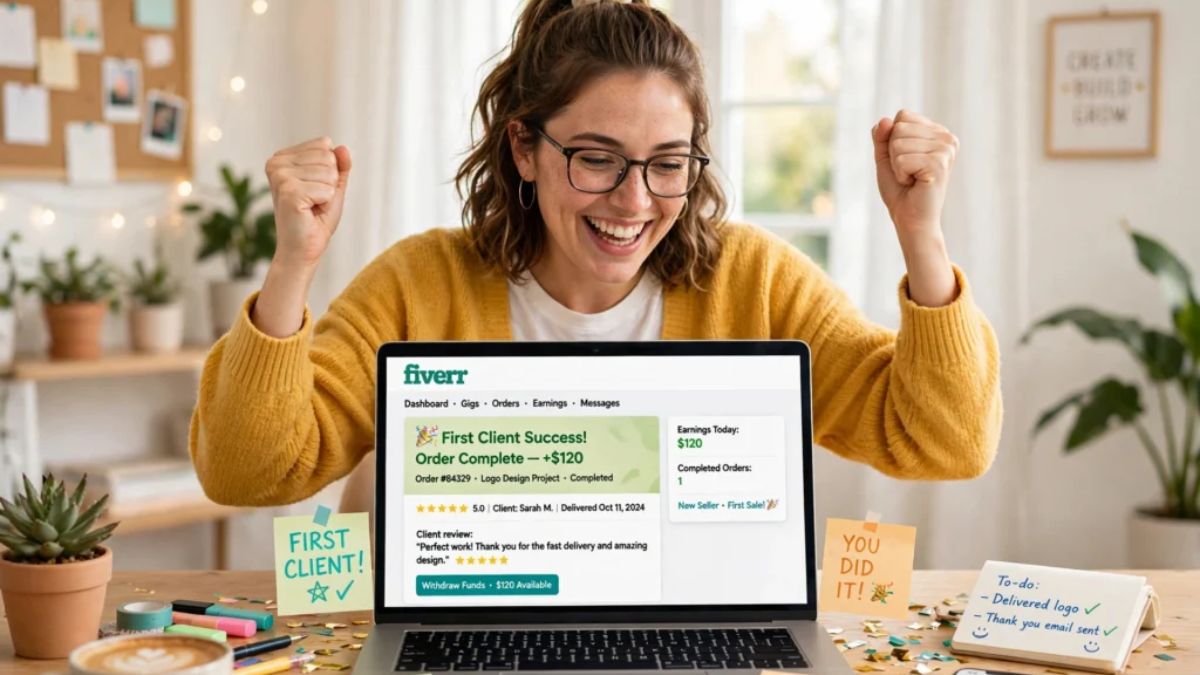
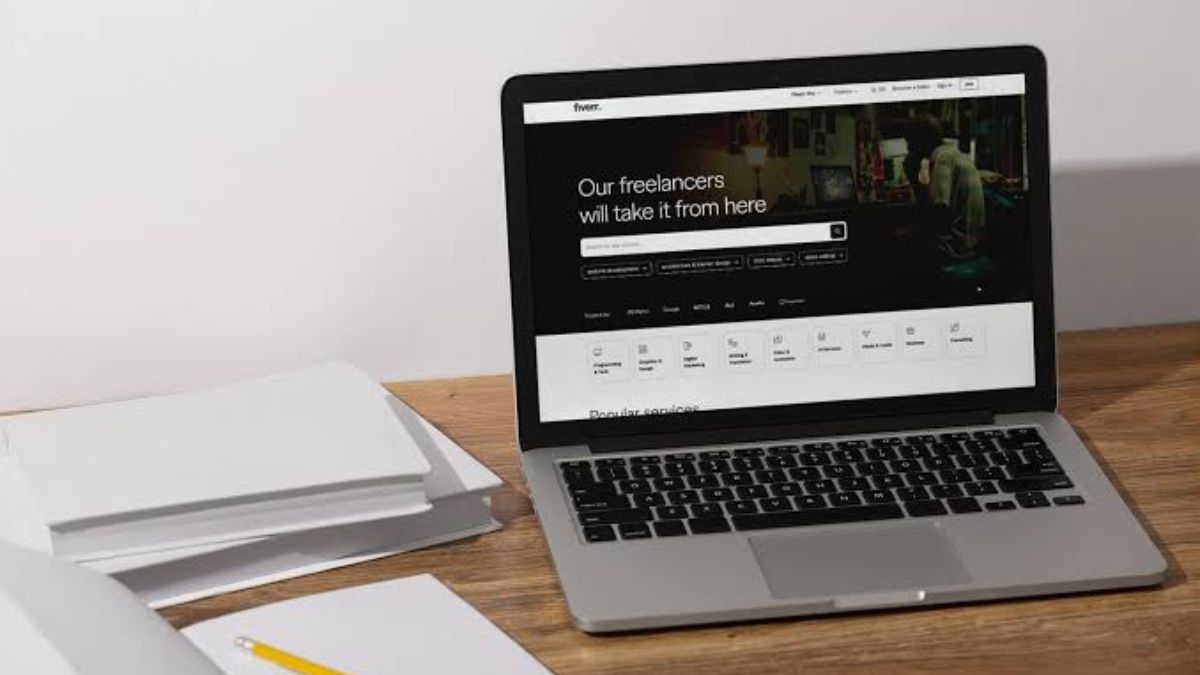
My neighbor sells custom birthday invitations on Fiverr. She’s a mom of three, she works while the baby naps, and she’s built a steady side income from a service she can explain in one sentence. When I asked how she started, she laughed and said, “I made one gig, sold it to my cousin, and used that review to get the next ten.” That, in a nutshell, is how Fiverr works: you don’t pitch clients, you create a listing and let buyers find you.
That makes Fiverr appealing for busy moms. It also makes it competitive. Freelancer reports note rising platform fees and heavier competition, and the squeeze is sharpest for basic services where AI tools have expanded supply and pushed prices down. Third-party comparisons describe Fiverr’s commission as a flat 20% (verify on Fiverr’s official page), so your pricing has to account for it.
In this guide, I’ll explain how to create Fiverr gigs as a stay-at-home mom: what to sell, how to package, how to price after fees, how to get your first reviews, and how to avoid common mistakes. (Income isn’t guaranteed.)
How Fiverr Works (In Plain English)
- You create a gig: a listing for a specific service with packages and prices.
- Buyers search, compare, and order.
- You deliver, get paid after the order completes, and receive a review.
- The platform takes a commission, and ranking depends on factors like relevance, conversion, reviews, and responsiveness.
What Sells Well for Moms
Services that are specific and easy to understand:
- Custom invitations, greeting cards, or party printables
- Social media templates for small businesses
- Pinterest pin design
- Meal plan or budget template creation
- Proofreading and editing
- Short video editing
- Resume formatting
- Voiceover for short projects
- Product description writing
- Basic bookkeeping organization (not tax advice)
Avoid vague gigs like “I’ll do anything.”
Step 1: Choose a Narrow Service
Ask:
- What can I deliver consistently in a few hours?
- Who needs it, and what do they search for?
- Can I show examples?
A specific gig such as “I’ll design five Pinterest pins for your food blog” ranks and converts better than “I’ll do graphic design.”
Step 2: Create Three Packages
Packages make it easy for buyers to choose:
- Basic: the core deliverable
- Standard: more items or an extra revision
- Premium: the most complete version, faster delivery, or added extras
Define exactly what’s included: number of items, revisions, file types, delivery time, and any usage rights.
Step 3: Price After Fees
Calculate:
- Your desired payout per order
- Platform commission (check the current rate)
- Any payment or withdrawal fees
- Taxes set-aside (in the U.S., net self-employment earnings of $400 or more trigger self-employment tax)
- The real time each order takes, including messages and revisions
Beginner prices that are too low can trap you in work you can’t sustain. Start at a fair but competitive price, and raise it as your reviews grow.
Step 4: Write a Gig Page That Converts
- Title: include the main keyword buyers use.
- Images or video: show real samples, clear and uncluttered.
- Description: who it’s for, what they get, how it works, and what you need from them.
- FAQ: answer the common questions.
- Requirements: ask for the information you need to start fast.
- Honest claims: don’t promise results you can’t control.
If you use AI tools to help produce work or descriptions, follow the platform’s rules, check quality and accuracy, and never present AI work as something it isn’t where disclosure is required.
Step 5: Get Your First Reviews
- Offer an introductory price for your first few orders, carefully, so you don’t lock yourself into unsustainable rates.
- Deliver fast and polish the details.
- Communicate clearly.
- Ask for feedback politely after delivery, following platform rules. Don’t offer incentives for positive reviews.
- Share your gig with your network, without spamming.
Early reviews boost trust and ranking.
Step 6: Be Responsive
- Reply quickly to messages.
- Set realistic delivery times.
- Use clear templates for common questions.
- Protect your boundaries: set availability hours.
Step 7: Improve Your Gig Over Time
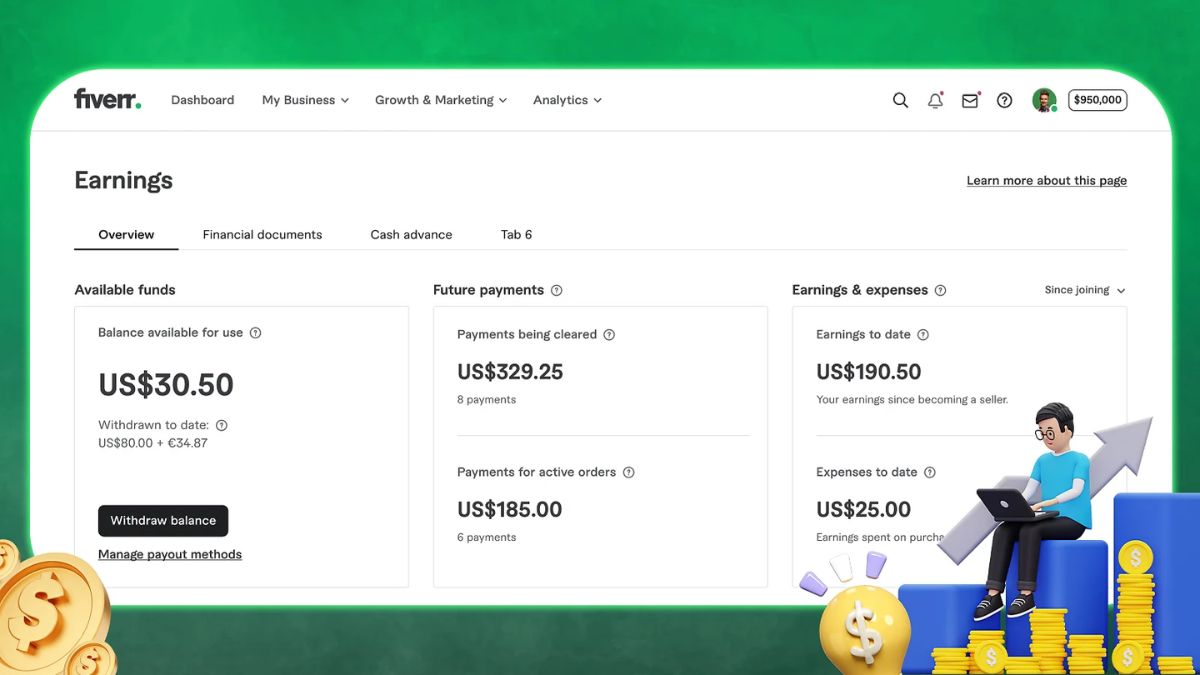
- Review impressions, clicks, and orders in your dashboard.
- Test a new thumbnail or title.
- Add a video or extra sample.
- Create add-ons: rush delivery, extra revisions, source files.
- Raise prices gradually as demand grows.
Step 8: Protect Yourself
- Keep communication and payments on the platform.
- Never accept off-platform payments or share personal financial information.
- Watch for scams: fake checks, requests to buy gift cards, and buyers pushing you to leave the platform.
- Define scope clearly to avoid endless revisions.
- Respect copyright: use only licensed fonts, images, and assets.
Beyond Fiverr
Marketplace fees and competition can limit growth. Over time, build:
- A simple website and portfolio
- A LinkedIn profile
- An email list for repeat clients
- Packages and retainers
Always follow the platform’s terms when working with repeat buyers.
Mistakes to Avoid
- A vague gig with no niche.
- Underpricing after fees.
- Slow responses.
- Overpromising.
- Using unlicensed assets.
- Taking work or payments off-platform.
- Quitting before your first ten orders.
Your 30-Day Fiverr Plan
- Week 1: Choose your niche and collect three samples.
- Week 2: Create your gig with three packages and a strong description.
- Week 3: Share it, deliver your first orders, and ask for reviews.
- Week 4: Review your stats, improve your images, and add one add-on.
Build Your Freelance Income on a Roadmap
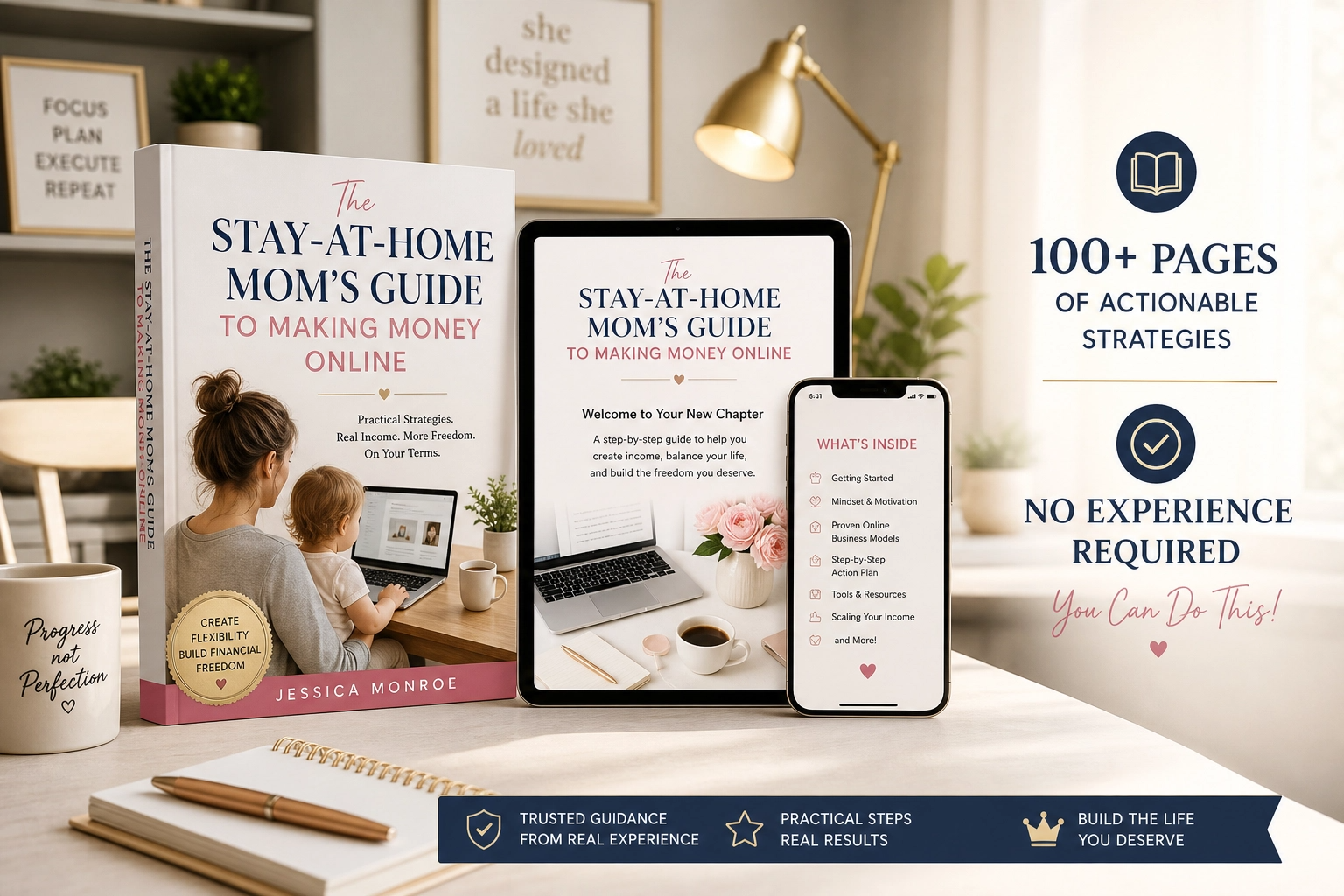
If you’d like a beginner-friendly roadmap for making money online as a stay-at-home mom, take a look at my ebook:
The Stay-At-Home Mom’s Guide To Making Money Online
Trust me, a clear service beats a clever slogan every time.
Final Thoughts
Fiverr can be a gentle way to start earning from a specific skill, especially if you package clearly, price after fees, deliver reliably, and build reviews. Treat it as a starting point, not your entire business, and keep building your own audience and offers.









Leave a Reply