


I sent my first Upwork proposal at 11 p.m., after my toddler finally fell asleep, with the confidence of someone who had read exactly one blog post about it. It was long, generic, and started with “Dear Sir or Madam.” I never heard back. The next nine proposals got the same silence. I almost deleted my account until I realized the problem: I was writing to a stack of strangers instead of to one person with a real problem.
If you’re thinking about Upwork, here’s the honest picture. Marketplaces are crowded, fees and rules shift often, and AI has expanded the supply of freelancers doing basic work. Reports on freelancer sentiment note the pressure is sharpest for commodity services, where AI tools have pushed prices down, while specialized, higher-skill work has held up better. Upwork research also shows demand for AI-related skills has more than doubled while core skills like virtual assistance stay steady. Secondary sources describe a variable service fee (commonly described as 0% to 15% per contract), paid Connects for proposals, and newer AI features such as brief matching and proposal assistance. Details change often, so check Upwork’s current fee page.
In this guide, I’ll show you how to get started on Upwork as a mom: how to build a profile that gets found, write proposals that get replies, manage fees, and avoid scams. (Results vary, and no platform guarantees income.)
Is Upwork Right for You?
Good fit if you:
- Have a clear, marketable skill (writing, design, virtual assistance, editing, bookkeeping support, customer support, video editing)
- Can commit a few focused hours a week to proposals and client work
- Are comfortable with written communication
Not ideal if you:
- Need income within days
- Offer a very generic service with heavy competition
- Aren’t willing to specialize or learn how clients choose
Step 1: Choose a Specific Offer
“I do admin work” gets lost. A specific offer stands out:
- “Inbox and calendar management for coaches”
- “Product descriptions for small online shops”
- “Short-form video editing for real estate agents”
Pick a niche where your background gives you credibility.
Step 2: Build a Profile That Matches How Clients Search
- Photo: clear, friendly, professional.
- Title: your service and niche, not just “Freelancer.”
- Overview: the problem you solve, your proof, and how you work. Because clients and AI-assisted matching tools surface profiles by keywords, use the phrases clients actually type.
- Portfolio: three to five samples, labeled honestly if they’re practice projects.
- Skills and categories: only those you can truly deliver.
- Rate: research your niche, and avoid starting so low that you can’t earn a living after fees.
Step 3: Understand Fees and Costs
Look at the platform’s current fee page, and calculate your real rate:
- Service fee on earnings (reported as variable, so check what applies to you)
- Connects used to submit proposals, and any membership plan
- Withdrawal and currency fees, which can apply depending on location and method
- Taxes: in the U.S., net self-employment earnings of $400 or more trigger self-employment tax
Add these into your pricing so you aren’t surprised.
Step 4: Write Proposals That Get Replies
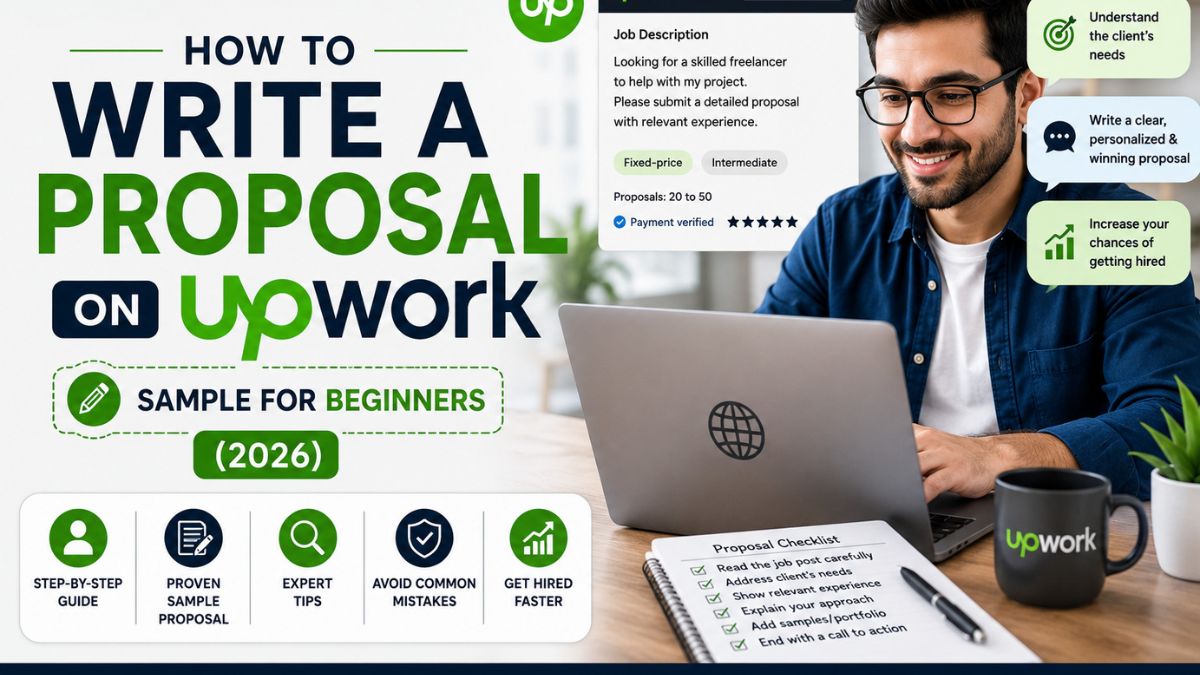
A simple structure, under 150 words:
- Open with their problem, using a detail from the job post.
- Show you understand, with one specific idea or question.
- Share relevant proof: a sample, a result, or a short example.
- Explain your process in one or two lines.
- Make the next step easy: “Would you like me to send a short outline?”
Template:
Hi [Name], I read your post about [specific need]. I’ve helped [type of client] with [similar task], including [short proof]. My approach is [two-step process]. One quick question: [specific question about their goal]? Happy to share a sample if helpful.
Don’t copy and paste the same message everywhere. If you use AI tools to draft proposals, edit heavily, check that every claim is true, and follow the platform’s rules. Newer terms reportedly require disclosure labels for agent-generated content and make you responsible for any agent’s actions, so read the current terms before connecting any AI tool.
Step 5: Pick Jobs Wisely
- Look for clear scopes and budgets.
- Check the client’s history: payment verified, reviews, hire rate, and spend.
- Avoid red flags: vague requests with “test projects,” requests to work off-platform, anything involving payment outside the platform, or very low budgets for big scopes.
- Start small: a first project that earns a review is worth more than a big one you can’t win.

Step 6: Deliver and Earn Reviews
- Confirm scope and deadlines in writing.
- Communicate early and update often.
- Deliver on time, and exceed expectations lightly.
- Ask for feedback and a review when the project ends.
- Keep communication and payments on the platform to stay protected.
Early reviews are the engine of your Upwork profile.
Step 7: Build Beyond the Platform
Fees and algorithm changes can squeeze marketplace income. Over time:
- Keep your best clients happy and ask about direct work where platform terms allow it. Read the rules carefully before moving any client off-platform.
- Build a simple website, LinkedIn profile, and email list.
- Create packages and retainers.
- Diversify across a few channels.

Beware of Scams
- Never pay to get a job.
- Don’t accept payment outside the platform.
- Be wary of fake checks, overpayment requests, and clients who push you to move to messaging apps.
- Don’t share personal banking or ID details with unverified clients.
Mistakes to Avoid
- Sending generic proposals.
- Underpricing so you can’t afford the fees.
- Ignoring the client’s budget and history.
- Taking work you can’t deliver.
- Moving payments off-platform.
- Over-relying on AI-written proposals.
- Giving up after ten proposals.
Your 30-Day Upwork Plan
- Week 1: Choose your niche, write your profile, and add three samples.
- Week 2: Learn the fees, set your rate, and write a proposal template you’ll personalize.
- Week 3: Send 10 personalized proposals to well-matched jobs.
- Week 4: Follow up, deliver your first project well, and ask for a review.
Build Your Freelance Income on a Roadmap
If you’d like a beginner-friendly roadmap for making money online as a stay-at-home mom, take a look at my ebook:
The Stay-At-Home Mom’s Guide To Making Money Online

Trust me, a clear plan keeps you from chasing every marketplace change.
Final Thoughts
Upwork can be a helpful place to land your first clients, but it rewards specialization, personalized proposals, and patience. Choose a clear niche, price for fees, write like a human, deliver well, and build your own channels along the way. Your first review is the hardest one, and it’s worth the effort.









Leave a Reply