

The worst marketing budget I ever made was written on a sticky note. It said, “Ads: $500. Content: some. Hope: lots.” I’d read somewhere that businesses should spend a percentage of revenue on marketing, so I picked a number that felt right, split it into three vague buckets, and then spent the whole thing in two weeks on the first thing that looked promising. Three months later, I couldn’t tell you what had worked.
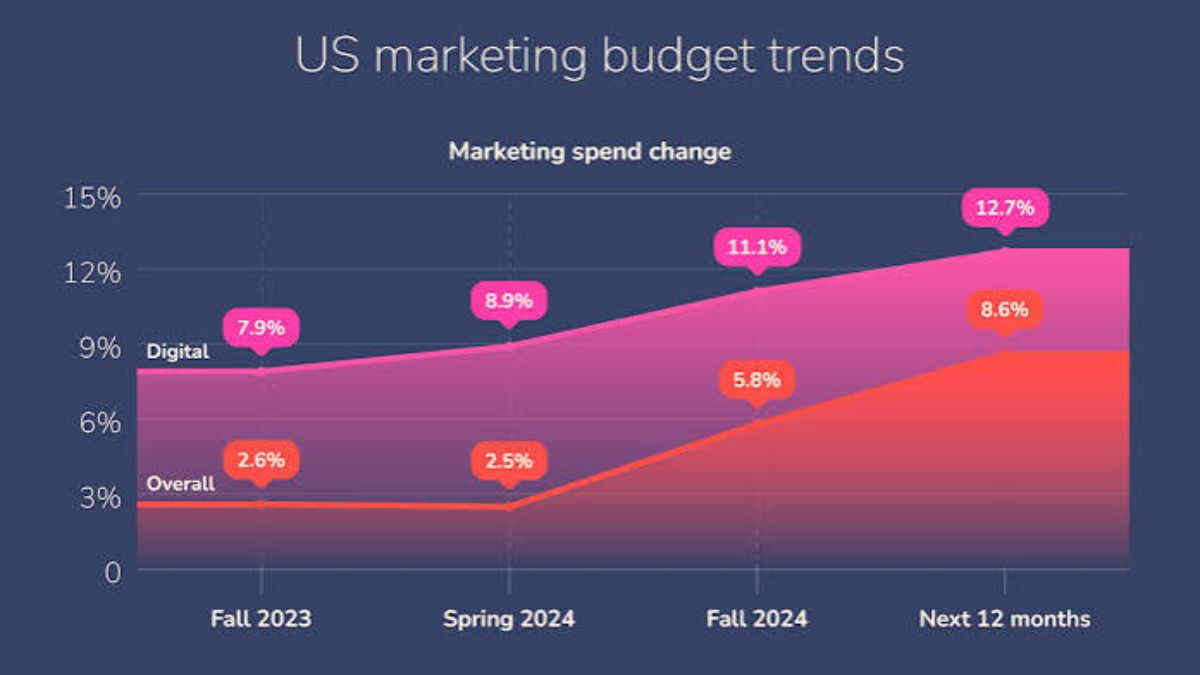
If you’re running a small business, you’ve probably felt similar pressure. Media costs keep rising. Recent surveys show rising media costs ranking among marketers’ top concerns heading into the busiest selling season, and many are shifting budgets toward channels that clearly tie to sales. Benchmark studies show Meta’s average cost per lead climbing to about $6.00 while TikTok’s fell to around $2.69, and that 91% of advertisers only run Meta ads, which keeps competition in one place high. Platforms are automating more, tracking is messier, and AI answers are changing how customers discover you.
In this guide, I’ll show you how to plan a marketing budget for a small business: how much to spend, where to put it, how to test without wasting money, and how to review results. (This is general information, not financial advice, and every business is different.)
Step 1: Start With Your Numbers, Not a Percentage
You’ll often hear a rule of thumb that small businesses should spend a certain percentage of revenue on marketing. Treat any such figure as a starting point only, because the right amount depends on your goals, margins, and stage. A new business trying to grow may spend more; an established one with steady referrals may spend less.
Before picking an amount, answer these:
- What’s your revenue goal for the next quarter and year?
- What’s your average order value or deal size?
- What are your profit margins?
- How many customers do you need to hit your goal?
- How many leads does it take to get one customer (your conversion rate)?
- What does a customer give you over time (lifetime value)?
Step 2: Know Your Break-Even Cost per Customer
This one number protects you from overspending.
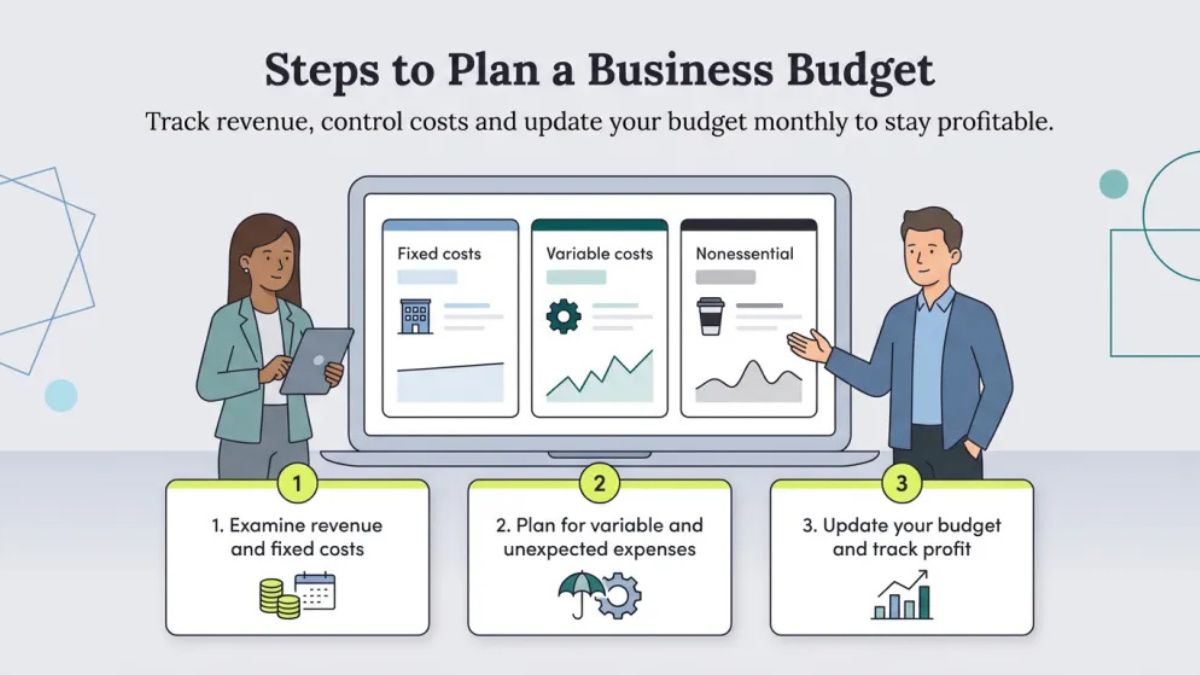
Customer acquisition cost (CAC): total marketing spend divided by new customers acquired.
Break-even CAC: the most you can spend to win a customer without losing money. A simple version:
Average profit per customer (after costs) over the period you’re measuring = your break-even CAC
Example (made-up numbers for illustration): if a customer typically brings in $200 of gross profit in their first year, spending more than $200 to acquire them loses money in year one. Many businesses aim for a CAC well below break-even to leave room for overhead and growth.
If you don’t know your numbers yet, estimate them, track for 60 to 90 days, and refine.
Step 3: Set a Total Budget
Pick a number using one of these approaches:
- Goal-based: Work backward from the customers you need and your expected conversion rates and CAC.
- Percentage-based: Choose a percentage of revenue (or projected revenue) that fits your situation.
- Affordability-based: Decide the most you can invest without risking essential expenses, and treat the early months as learning.
Whichever you choose, keep a small reserve (many people set aside around 10%) for opportunities and surprises.
Step 4: Divide It Into Three Buckets
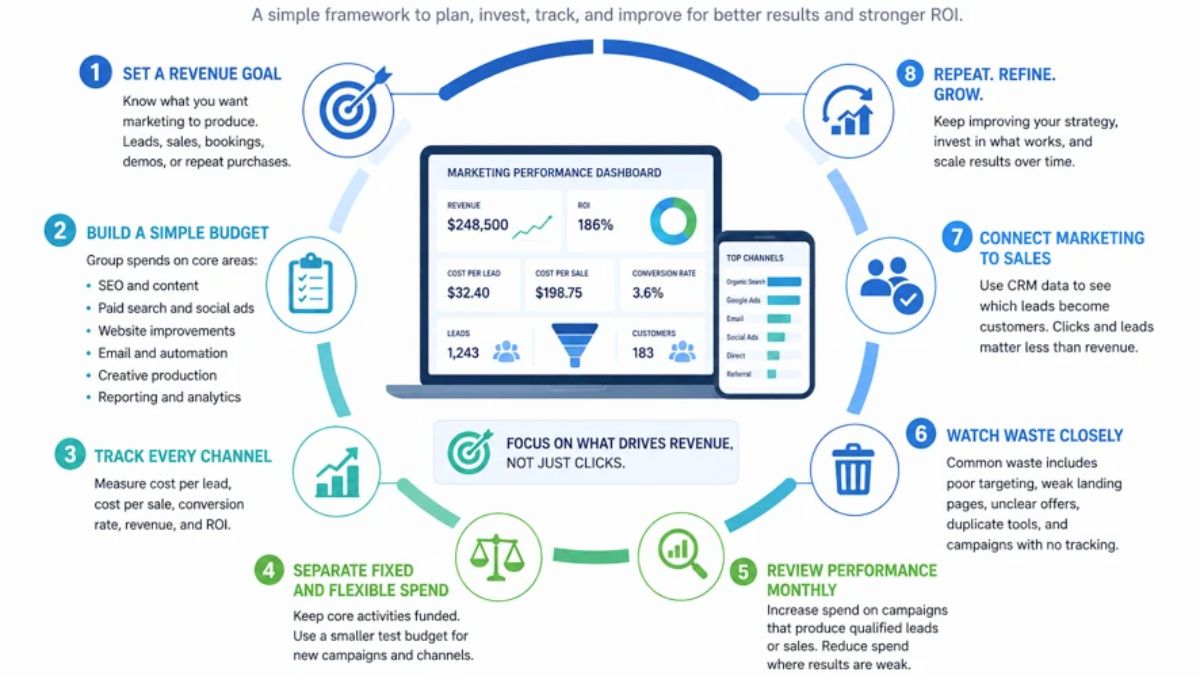
A practical way to allocate is the “core, growth, test” approach. These proportions are illustrations, not rules:
- Core (around 60% to 70%): Channels already proven to work for you, like email, search, or a referral program.
- Growth (around 20% to 30%): Scaling what shows early promise, such as a new ad campaign or content series.
- Test (around 10%): Small experiments with new channels, formats, or platforms.
If you’re brand new, your “core” may be small, so you might spend more on testing early, with firm limits.
Step 5: Choose Your Channel Mix
Compare channels by cost, speed, and control:
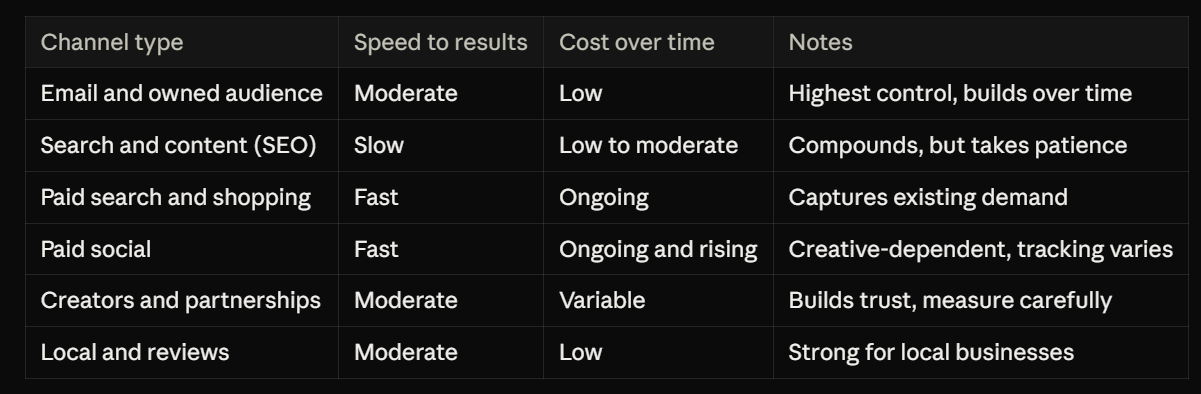
Because costs on a single platform can climb, spreading budget across a few channels reduces risk. Surveys also show marketers moving toward ad formats that tie clearly to sales, which is a good principle for small budgets too.
Step 6: Budget for More Than Ad Spend
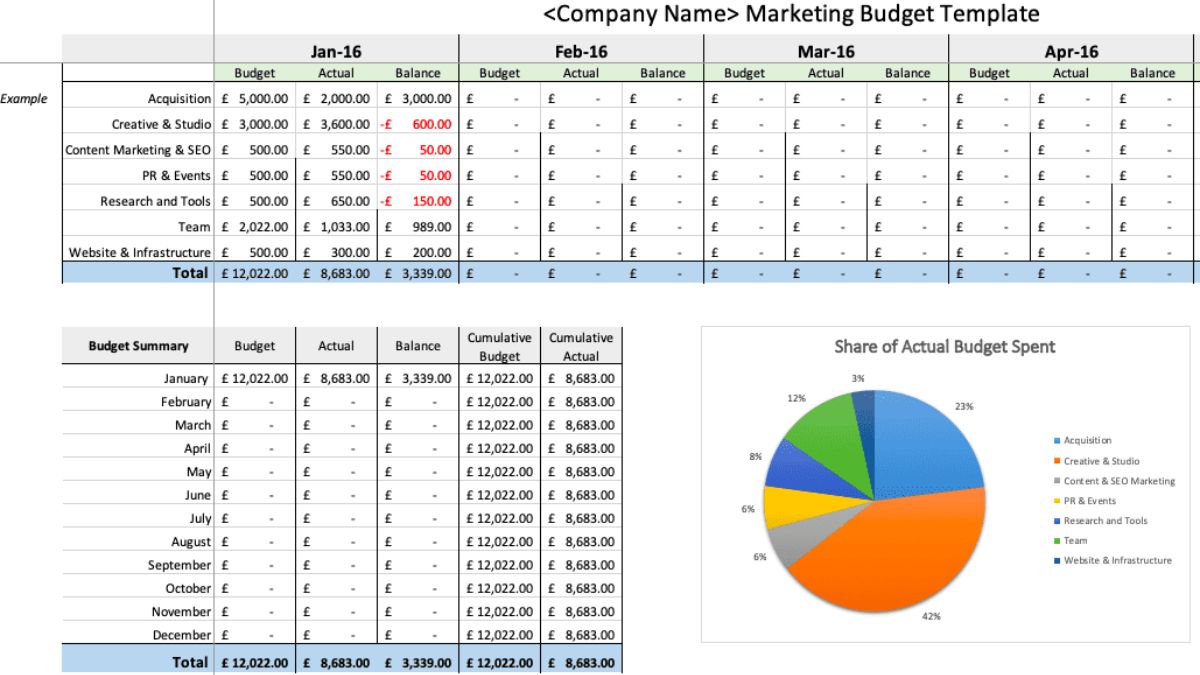
Many small businesses forget the hidden costs:
- Creative: photos, video, design, and creators
- Tools: email platform, CRM, analytics, design software, scheduling
- Landing pages and website improvements
- Freelancers or agencies, if you use them
- Product samples for creators or reviews
- Your own time, which has a real cost
A realistic budget includes both media and the work needed to make it perform.
Step 7: Plan for Seasons and Cash Flow
- Know your busy periods. Many businesses see big spikes around major shopping seasons, and some marketers allocate a large share of their holiday budgets to a few peak days.
- Expect higher costs during peaks. Plan more creative variations and start testing earlier.
- Match spend to cash flow. Don’t pour money into ads right before a slow stretch when you can’t cover bills.
- Build a pre-season warm-up with email and content before paid spending rises.
Step 8: Set Rules Before You Spend
Write down:
- Test duration and budget for each experiment
- Success metric: cost per lead, cost per sale, or return on ad spend
- Scale rule: when results beat your target for a set period, increase spend gradually
- Stop rule: when results fall well short after the minimum budget, pause
- Review date: when you’ll look at the numbers
Without rules, it’s easy to keep funding things out of hope.
Step 9: Track and Review Monthly
Use a simple monthly review:
- Total spend by channel
- Leads and customers by channel, using UTMs and self-reported sources
- Cost per lead and cost per customer
- Revenue and profit from marketing-driven customers
- What worked and what didn’t
- One decision: shift budget, test something new, or stop something
Because tracking can be imperfect, compare dashboards with your bank deposits and customer answers.
Step 10: Use AI as an Analyst, Not a Decision-Maker
AI tools can summarize reports, flag trends, and draft campaign plans. Some now connect to ad platforms and can build campaigns, but the safest setups hold new campaigns in a paused state until a person approves them. Keep control of spending decisions, and check every number the AI gives you.
Sample Budget Worksheet
Fill this in for the next quarter:
- Revenue goal: ___
- New customers needed: ___
- Break-even CAC: ___
- Total marketing budget: ___
- Reserve (about 10%): ___
- Core channels and amounts: ___
- Growth channels and amounts: ___
- Test channels and amounts: ___
- Tools and creative costs: ___
- Review dates: ___
Mistakes to Avoid
- Copying a percentage without understanding your numbers.
- Spending the whole budget on one channel.
- Cutting marketing completely when sales dip, which can dry up your pipeline.
- Ignoring tools, creative, and landing page costs.
- Having no stop rules.
- Judging results too early or too late.
- Trusting any single dashboard.
Your 30-Day Budget Reset
- Week 1: Gather your numbers: revenue, margins, average order value, and customer counts.
- Week 2: Calculate break-even CAC and choose your total budget.
- Week 3: Allocate across core, growth, and test buckets, and write your stop and scale rules.
- Week 4: Set up tracking, schedule monthly reviews, and launch your first controlled test.
Build Your Budget Into a Complete System
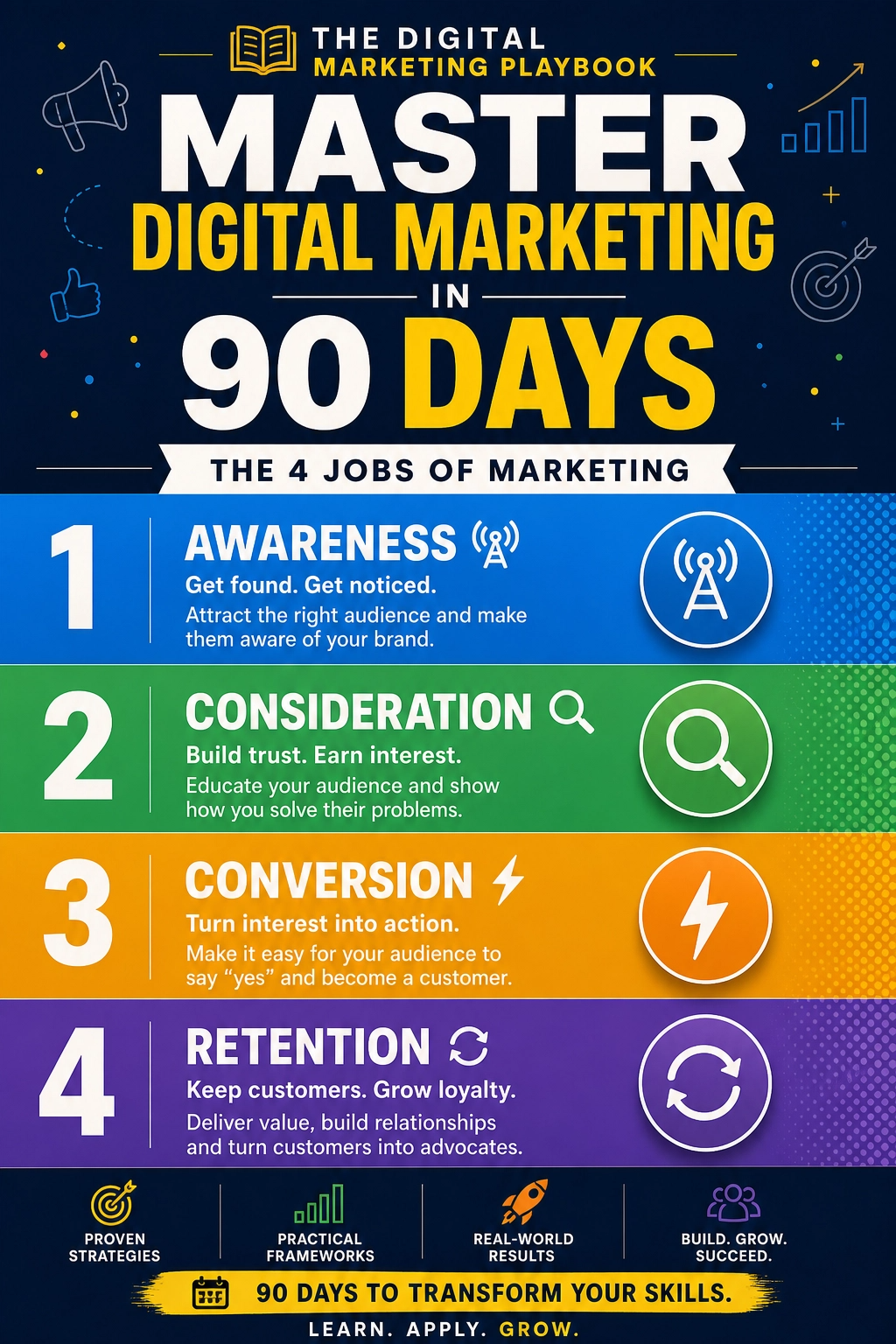
A smart budget works best inside a bigger plan with clear goals, solid content, and measurement. If you’d like a step-by-step guide to building a complete marketing system, take a look at my ebook:
The Digital Marketing Playbook
Trust me, a plan with rules beats a sticky note and a prayer.
Final Thoughts
A good marketing budget isn’t about spending more. It’s about knowing what a customer is worth, spreading risk across a few channels, testing with limits, and reviewing results honestly. Start with your own numbers, write your rules in advance, and let your data decide where the next dollar goes.










Leave a Reply