


Did you know that people who follow a consistent morning routine report being nearly 20% more productive than those who “wing it” every day? I found that stat after one of the messiest years of my working life, back when I was juggling client deadlines, a half-built side hustle, and a to-do list that lived in six different apps (and somehow still in my head at 2am).
Let me share what changed everything for me: I stopped trying to be “flexible” about my schedule and started treating my workday like an actual system. Fast forward to today, and I get more done by 11am than I used to finish in an entire day — without the frantic, coffee-fueled chaos. Boy, was I wrong thinking discipline meant waking up at 5am and hustling nonstop. It’s not about doing more. It’s about doing the right things, in the right order, on repeat.
In this comprehensive guide, I’ll walk you through exactly how to build a daily work routine that fits your real life, keeps you consistent, and actually sticks — even on the weeks when motivation is nowhere to be found.
Why Most Daily Routines Fail (And What I Learned the Hard Way)
I used to think a “routine” meant a rigid, color-coded schedule I had to follow to the minute. Big mistake. The first time I tried that, I lasted four days before I abandoned it completely and felt like a failure.
Here’s the truth: most routines fail because they’re built around who we wish we were, not who we actually are. If you’re not a morning person, forcing a 5am wake-up isn’t discipline — it’s setting yourself up to quit.

Common reasons routines collapse:
- They’re copied from someone else’s life instead of built around yours
- They’re too rigid, with zero room for a bad night’s sleep or an unexpected call
- They rely on willpower alone instead of systems and tools
- There’s no way to track progress, so you can’t tell if it’s even working
Pro tip: A routine should reduce decisions, not add pressure. The goal is to make your best habits automatic, not to punish yourself for being human.
Step 1: Audit Your Current Day Before You Change Anything
I remember when I tried to build a “perfect” routine without ever tracking what my days actually looked like. I was optimizing a schedule that didn’t reflect reality at all.
Before you build anything new, spend three to five days simply observing:
- What time do you naturally feel alert vs. sluggish?
- Which tasks eat the most time without moving the needle?
- Where do interruptions happen most (notifications, family, emails)?
- What time do you actually start focused work — not when you sit down, but when you truly begin?
Write this down. This is where a physical or digital daily planner becomes your best friend, because tracking in your head simply doesn’t work — trust me, I tried for years.
Step 2: Anchor Your Day Around 3 Non-Negotiables
Here’s what I learned the hard way: trying to optimize every single hour leads straight to burnout. Instead, pick three non-negotiables that structure your day, and let everything else flex around them.
For most work-from-home women I talk to, these three anchors work well:
- A fixed start time (even if it shifts by season, keep it consistent Monday–Friday)
- One deep work block for your most important task, protected from meetings and messages
- A hard stop time so work doesn’t quietly swallow your evening
Everything else — errands, admin tasks, calls — gets scheduled around these three anchors, not the other way around.
My Actual Anchor Schedule (For Reference)
- 8:30am: Start work, review priorities for the day
- 9:00–11:00am: Deep work block (no email, no Slack, phone in another room)
- 5:30pm: Hard stop, close the laptop
That’s it. Everything else moves around those three points.
Step 3: Time-Block Instead of List-Making
I used to live and die by to-do lists — and I wondered why I’d finish a day with ten items still unchecked. Here’s the game-changer: a to-do list tells you what to do, but a time-blocked schedule tells you when, which is the piece that actually gets things done.
How to time-block effectively:
- List your top 3–5 priorities for the day (not 15 — three to five)
- Assign each one a specific block of time on your calendar or planner
- Batch similar small tasks together (emails, calls, admin) into one block instead of scattering them
- Leave buffer time between blocks — 15 minutes minimum — for things that run long
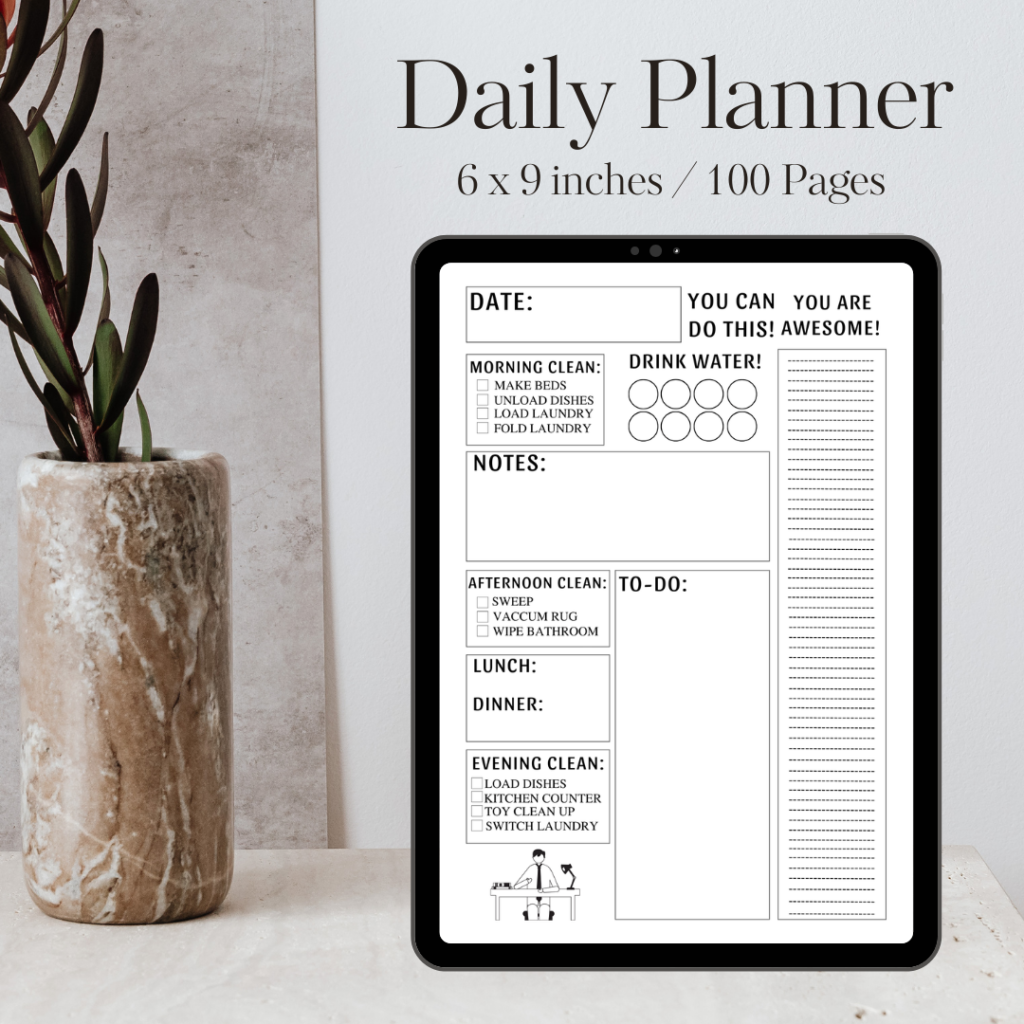
This is exactly where I lean on a proper daily planning system instead of scraps of paper. If you want a done-for-you structure instead of building your own from scratch, this Daily Planner has become my secret weapon for laying out time blocks, priorities, and notes in one place — and because it’s an editable Canva template, I customize it to match how my brain actually works.
BUY NOW!
Step 4: Build In Weekly Planning, Not Just Daily
Little did I know that skipping weekly planning was the reason my “productive days” never added up to productive weeks. Daily planning alone is reactive. Weekly planning is where you get strategic.
Every Sunday evening or Monday morning, take 20 minutes to:
- Review what actually got done last week vs. what you planned
- Identify your top 3 priorities for the upcoming week
- Block out any known meetings, appointments, or deadlines first
- Leave at least one flex day for the inevitable curveball
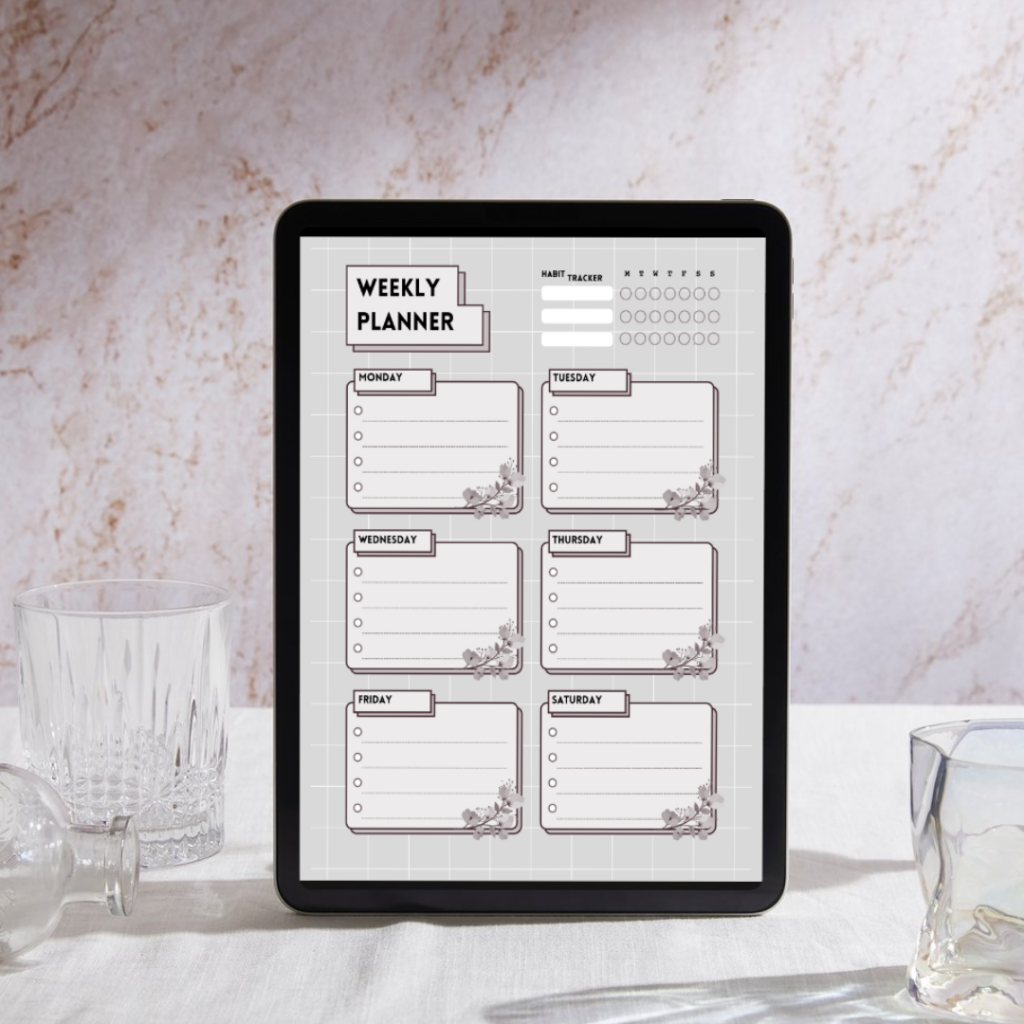
This weekly-to-daily approach is a big mistake most people skip, and it’s the difference between constantly feeling behind and actually feeling in control. I use a Weekly Planner to map out the big picture before I ever touch my daily to-do list, and honestly, it’s cut my “what should I even be doing today” moments down to almost zero.
BUY NOW!
Step 5: Protect Your Deep Work Block Like It’s a Client Meeting
Here’s something I wish someone had told me sooner: you would never casually cancel a paid client call, but most of us treat our own focused work time as optional. That has to change.
Ways to protect deep work:
- Turn off all notifications during your deep work block — not just silence, fully off
- Tell family or housemates this is your “do not disturb” window
- Batch-check email only 2–3 times a day, at set times, not constantly
- Use a visible signal (closed door, headphones on) if you work around others
Pro tip: If a two-hour block feels impossible right now, start with 45 minutes. Consistency matters more than length in the beginning.
Step 6: Build a Shutdown Ritual (This One Changed My Life)
I used to “finish” work by just closing my laptop mid-thought and carrying the mental clutter into dinner, into bedtime, into everything. A shutdown ritual fixed that almost overnight.
A simple 10-minute shutdown ritual:
- Review what got done today against your planned list
- Write down 1–3 priorities for tomorrow, so you’re not starting from zero
- Clear your desk or workspace, even just a little
- Say (out loud or in your head) “work is done for today”
It sounds almost silly, but this small ritual is what finally let me stop thinking about work at 9pm.
Step 7: Review and Adjust Weekly (Don’t Set and Forget)
A routine isn’t something you build once and never touch again. Here’s what I do every Friday afternoon:
- What worked well this week?
- What time block consistently got skipped or rushed?
- Is my start time still realistic, or has life shifted?
- What’s one small tweak to try next week?
This weekly review is what keeps a routine alive instead of letting it quietly fall apart by week three, which is exactly what happens to routines nobody revisits.

Common Mistakes to Avoid
- Overplanning your day — leave buffer room, always
- Copying someone else’s schedule exactly — your energy patterns are your own
- Skipping weekends entirely from planning — even loose weekend structure helps Mondays go smoother
- Not tracking progress — if you can’t see it, you can’t improve it
- Giving up after one bad week — one off week doesn’t mean the system failed
What to Do When Your Routine Falls Apart Mid-Week
Here’s something nobody tells you: even a well-designed routine will get knocked off track sometimes — a sick kid, a last-minute client fire drill, a rough night of sleep. I used to treat any disruption as proof the whole system had failed, and I’d abandon it entirely until “next Monday.” That mindset cost me weeks of momentum over the years.
Now, when a day goes sideways, I follow one simple rule: get back to just one anchor, not all three at once. If I missed my deep work block, I don’t try to cram it in plus everything else — I just make sure I hit my hard stop time that evening. One anchor back in place is enough to keep the routine alive until the next day, when I can pick the rest back up.
A few ways to recover gracefully:
- Don’t try to “make up” lost time by working later — that just compounds the disruption
- Pick the single anchor that matters most that day and protect only that one
- Remind yourself that one off day doesn’t erase three weeks of consistency
- If disruptions happen repeatedly at the same time (school pickup, a recurring call), build your routine around that reality instead of fighting it

Adjusting Your Routine as Your Work Changes
Your routine shouldn’t be frozen in time. What worked when I was freelancing solo looked completely different once I started managing a small team, and different again during a season with heavier travel. Revisit your anchors any time your workload, energy, or responsibilities shift significantly — not just during your weekly review, but as a bigger seasonal check-in every few months.
Ask yourself:
- Is my current start time still realistic given my actual life right now?
- Has my highest-energy time of day shifted?
- Am I protecting deep work for the tasks that genuinely need it, or has that block quietly become “catch-up on email” time?
Frequently Asked Questions
How long does it take for a new work routine to feel automatic? Most people I’ve talked to — myself included — start feeling real consistency around the three-week mark, as long as they’re not skipping the weekly review step. It’s rarely instant, and that’s completely normal.
What if I don’t know my most productive time of day yet? Spend a week simply noting your energy level every couple of hours, from a 1–5 scale. Patterns usually show up faster than you’d expect, often within just a few days.
Do I need special tools to build a routine like this? Not at all — a notebook works fine. That said, a structured planner removes a lot of the friction of designing your own system from scratch, which is exactly why I lean on one rather than reinventing my layout every week.
Is it bad to change my routine often? Small tweaks are healthy and expected. What hurts is abandoning the entire system every time one part isn’t working — try adjusting one piece at a time instead.
Final Thoughts
Building a daily work routine that actually sticks isn’t about becoming a different, more disciplined person overnight. It’s about designing a simple, repeatable structure around the person you already are — your energy, your priorities, your actual life. Start with your three anchors, add time-blocking, protect your deep work, and review weekly. Give it three weeks before judging whether it’s working, because that’s usually how long it takes for a new routine to start feeling automatic instead of effortful.
You don’t need a perfect system on day one. You just need one that you’ll actually use tomorrow.










Leave a Reply