


Did you know that over 90% of new bloggers quit within the first year? I almost became one of those statistics.
I remember sitting in front of my laptop at 11 PM, staring at my blog’s analytics dashboard: 12 visitors that month. Twelve. I had poured every free hour I had — nights after my day job, weekends I could have spent with my kids — into a blog that felt like it was screaming into the void. I genuinely thought about deleting the whole thing more than once.
But I didn’t. And today, that same blog brings in over $3,400 a month in passive income between ad revenue, affiliate links, and my own digital products. It didn’t happen because I got lucky or found some secret hack. It happened because I finally built a real plan instead of just “posting and hoping,” and because I learned how to keep going through the slow, frustrating middle part that nobody warns you about.
If you’re staring at your own blog right now wondering whether any of this is actually going to work, I want you to know: it can. In this comprehensive guide, I’ll walk you through exactly how to plan your blog strategically, monetize it the right way, and — most importantly — stay motivated when the growth feels painfully slow.
Why Most Bloggers Quit (And How to Avoid It)
Here’s the truth nobody tells you when you start blogging: the first 6-12 months are going to feel like you’re shouting into an empty room. I wish someone had told me that upfront instead of letting me believe I was doing something wrong.
Most new bloggers quit for three predictable reasons:
- No clear plan — they’re writing whatever comes to mind instead of targeting what people are actually searching for
- Unrealistic expectations — expecting Pinterest-famous income in month two
- No monetization strategy — they wait until they have “enough traffic” to even think about making money, which delays everything
Pro tip: The bloggers who succeed aren’t the ones who never feel like quitting. They’re the ones who built systems that keep them moving even on the days motivation is nowhere to be found. That’s exactly what we’re building in this guide.

Step 1: Choose a Niche You Won’t Resent in Six Months
Big mistake I made early on: I picked a broad “lifestyle” niche because I thought it would appeal to everyone. It appealed to no one, because Google and readers alike couldn’t tell what my blog was actually about.
When you’re planning your blog, your niche needs to hit three criteria:
- You can talk about it for 100+ posts without getting bored
- People are actively searching for it (use free tools like Google Trends or the “People also ask” boxes)
- There’s a realistic path to monetization (affiliate products, digital products, or advertiser demand)
Some of the most profitable blogging niches right now include personal finance, food and recipes, home organization, parenting, digital products/printables, and productivity. Notice a pattern? These are all topics where people are actively trying to solve a problem — and problem-solving content converts.
Here’s what I learned the hard way: narrow down further than feels comfortable. “Budgeting for single moms” will outperform “personal finance” every single time because you become the go-to resource instead of one voice in a crowded room.
Step 2: Build a Content Plan You Can Actually Stick To
This is the step almost everyone skips, and it’s the single biggest reason blogs stall out. Let me share what turned things around for me: I stopped “winging it” and built a real content calendar.
Here’s the simple system I still use:
- Pillar posts (1-2 per month): Long, comprehensive guides (2,000+ words) targeting a high-value keyword
- Supporting posts (2-4 per month): Shorter, specific articles that link back to your pillar content
- Consistency over volume: One quality post a week beats five rushed ones
To find what to write about, plug potential topics into a free keyword tool (Ubersuggest and AnswerThePublic both have free tiers) and look for:
- Low-to-medium competition keywords
- Search intent that matches what you can actually deliver
- Long-tail phrases (3+ words) — these are far easier to rank for as a new blog
Pro tip: Batch your content. I write four post outlines in one sitting on Sunday nights so I’m never staring at a blank page during the week wondering what to write. This one habit alone cut my “should I quit” moments in half, because momentum kills doubt.

Step 3: Set Up Your Blog for Monetization From Day One
Here’s where I made my second big mistake: I waited almost eight months to add any monetization because I thought I “didn’t have enough traffic yet.” Boy, was I wrong about that. You can — and should — start building income streams from the very beginning.
Affiliate Marketing
This was my bread and butter in the early days. Join affiliate programs relevant to your niche (Amazon Associates is the easiest starting point, but niche-specific programs often pay better commissions). Weave product recommendations naturally into content that’s already solving a problem for your reader — never force it.
Display Advertising
Once you hit around 25,000-50,000 monthly pageviews, premium ad networks like Mediavine or Raptive can become a serious income stream. Before that, Google AdSense or Ezoic’s starter program can get you earning something while you grow.
Your Own Digital Products
This is the game-changer nobody talks about enough. Digital products (ebooks, templates, printables, mini-courses) have zero inventory costs and can be sold to your existing traffic without waiting for an ad network’s traffic minimums. This is genuinely the fastest way I’ve seen new bloggers create real income, because you control the price and the payout — no algorithm or advertiser sits between you and your reader.
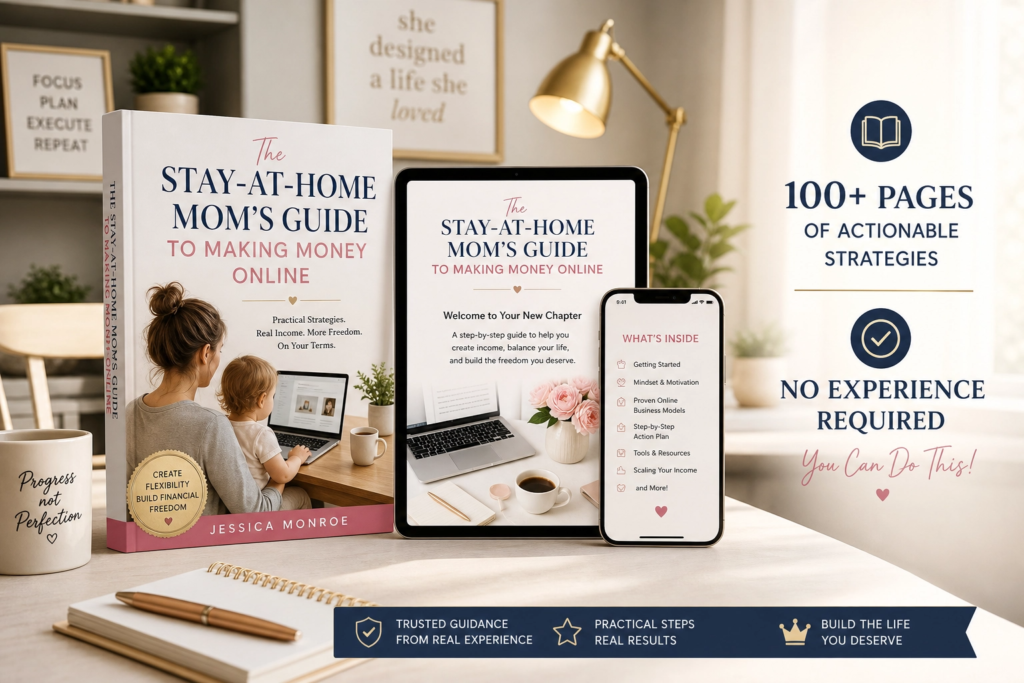
If you want a done-for-you roadmap instead of piecing this together from scratch, this is exactly what The Stay-At-Home Mom’s Guide to Making Money Online walks you through — it’s a 102-page blueprint covering blogging, freelancing, digital products, and affiliate marketing with no experience required, and it’s exactly the kind of step-by-step plan I wish I’d had when I started.
BUY NOW!
Sponsored Content
Once you have a modest but engaged audience (even 1,000-2,000 monthly readers can work for micro-influencer rates), brands in your niche may pay for sponsored posts or product features. Reach out proactively — don’t wait to be discovered.
Step 4: Track the Right Numbers (Not Just Pageviews)
Trust me, obsessing over pageviews alone will make you want to quit faster than almost anything else. Instead, track:
- Email list growth — this is your most valuable, most controllable asset
- Top 5 posts by traffic — double down on what’s already working
- Click-through rate on affiliate links — tells you if your recommendations are landing
- Revenue per post, not just revenue per month — this shows you exactly what to write more of
Little did I know, when I started tracking revenue per post instead of overall monthly income, I discovered that three specific posts were generating 70% of my affiliate income. I wrote five more posts in that exact style within a month, and my income nearly doubled.

Step 5: How to Keep Going When You Feel Like Quitting
This is the part of the guide I care about most, because strategy means nothing if you give up before it has time to work.
Set a real timeline. Blogging is a 12-18 month game before most people see meaningful income. Knowing this upfront changes everything — you stop measuring your worth against month-three numbers.
Celebrate leading indicators, not just income. Your first 100 email subscribers, your first Google ranking on page one, your first “this helped me so much” comment — these all matter before the money shows up.
Find your “why” beyond the money. On the nights I wanted to quit, remembering that I was building something that would eventually let me work from home with my kids kept me typing when the dashboard numbers didn’t.
Batch and automate wherever you can. Schedule social posts, use email automation for your welcome sequence, and repurpose one piece of content into five formats. Fewer decisions each day means more energy left for the work that actually moves the needle.
Connect with other bloggers. Isolation is a huge, underrated reason people quit. Join a Facebook group, a Discord community, or find even one accountability partner who’s on the same journey.
Here’s what I learned the hard way: the bloggers who “make it” aren’t more talented than you. They just didn’t stop during the boring middle part. That’s genuinely the whole secret.

Your Blogging Success Starts With a Plan
Planning and monetizing a blog without burning out isn’t about grinding harder — it’s about building a system that keeps working even on the days you don’t feel motivated. Pick a niche you can commit to, build a content calendar you’ll actually follow, layer in multiple income streams from day one, track the numbers that actually matter, and give yourself permission to move slowly without giving up.
If you want the complete step-by-step system — from choosing your niche all the way through your first sale — The Stay-At-Home Mom’s Guide to Making Money Online breaks down the exact blueprint for freelancing, digital products, blogging, and affiliate marketing so you’re not figuring it all out alone. It’s the guide I wish someone had handed me on that 11 PM night when I was staring at 12 monthly visitors, ready to give up.
You’ve got this, lady boss. Now go build the blog — and the income — you’ve been dreaming about.






Leave a Reply