


Did you know that the influencer marketing industry is now worth over $30 billion — and it’s still growing every single year? I remember the exact moment this hit home for me. I was scrolling through Instagram, watching a girl I went to college with post a simple “get ready with me” video, and I found out later she’d made more from that ONE post than I made in two weeks at my old marketing job. Girl, was I floored.
That was my wake-up call. I spent the next year figuring out how KOLs (Key Opinion Leaders) and influencers actually build sustainable income — not the “overnight fame” fantasy you see in headlines, but the real, repeatable systems. Today, brand partnerships, affiliate income, and my own digital products bring in a consistent side income every single month, and I didn’t need millions of followers to get there.
If you’ve ever thought “I could never be an influencer, I don’t have enough followers” or “isn’t that just for teenagers with perfect skin?” — trust me, I thought the exact same thing. In this comprehensive guide, I’ll walk you through everything you need to know about building a KOL and influencer career from scratch, choosing your niche, growing an engaged audience, and — most importantly — actually turning that audience into real income.
What Is a KOL & Why It’s Different From Being “Just an Influencer”
KOL stands for Key Opinion Leader, and honestly, I think it’s a more accurate term than “influencer.” A KOL isn’t just someone with a big following — it’s someone whose audience genuinely trusts their opinion in a specific area. Think of the friend everyone asks for skincare recommendations, or the coworker everyone texts before buying a new laptop. That’s a KOL, whether or not they’ve ever posted online.
Here’s what I learned the hard way: brands don’t pay for follower counts anymore. They pay for trust and influence within a niche. A micro-KOL with 8,000 highly engaged followers in, say, sustainable fashion, can often out-earn a general lifestyle account with 200,000 followers. This is genuinely good news for anyone starting from zero — you don’t need celebrity status, you need credibility.

The three tiers you’ll hear about:
- Nano-KOLs: 1,000–10,000 followers, incredibly high engagement, perfect for local and niche brand deals
- Micro-KOLs: 10,000–100,000 followers, the sweet spot for consistent brand partnerships
- Macro/Mega-KOLs: 100,000+ followers, bigger campaigns but often lower engagement rates
Little did I know when I started that the nano and micro tiers were actually where the smartest money was being made.
Step 1: Choose a Niche You Can Talk About for the Next 5 Years
I made a big mistake early on — I tried to be a “lifestyle” creator who talked about everything. Fashion one day, productivity tips the next, then suddenly cooking videos. My growth was painfully slow because the algorithm (and honestly, humans too) couldn’t figure out what I was actually about.
Here’s the truth: the riches are in the niches. When you pick a specific lane, three things happen — you attract the right audience faster, brands can immediately see the fit for partnerships, and you become the go-to person in that space instead of one voice in a crowded feed.

Some profitable niches I’ve seen work incredibly well for new KOLs:
- Beauty and skincare for specific skin types or concerns
- Personal finance and budgeting for young professionals
- Fitness for a specific demographic (postpartum, over 40, beginners)
- Home organization and decor on a budget
- Parenting and family life
- Career advice and remote work tips
- Sustainable and ethical living
Pro tip: Pick a niche where you can genuinely go deep, not just wide. Ask yourself: “Could I make 100 different pieces of content about this without running out of ideas?” If yes, you’ve found your lane.
Step 2: Build Your Content Foundation Before You Worry About Followers
When I first started, I was obsessed with follower counts. I’d refresh my profile ten times a day. Fast forward to today, and I can tell you that obsessing over numbers early on is honestly a waste of energy. What actually matters in the beginning is building a content system you can sustain.
Here’s what I recommend focusing on first:
- Pick your primary platform. Instagram, TikTok, YouTube, or even a blog — choose based on where your niche audience actually spends time, not where you personally enjoy scrolling.
- Nail your content pillars. I use 4–5 recurring content types (educational, behind-the-scenes, personal story, product/tool recommendations, trending audio/format) so I never run out of ideas.
- Batch your content. I film and edit an entire week’s worth of content in one sitting. This is a game-changer for consistency, which matters far more than perfection.
- Invest in the basics. You don’t need a $2,000 camera. Good natural lighting, a decent phone camera, and clean audio will take you further than expensive gear.
I use CapCut for editing (the free version is genuinely powerful) and Canva Pro ($119/year) for thumbnails, story graphics, and media kits — it’s honestly become my secret weapon for looking polished without hiring a designer.
Step 3: Grow an Engaged Audience (Not Just a Big One)
Here’s what I wish someone had told me sooner: 5,000 people who comment, save, and share your content will make you money faster than 50,000 silent followers. Engagement is the currency brands actually care about.
Things that genuinely moved the needle for my growth:
- Consistency over virality. Posting 3–5 times a week for six months beats one viral post followed by silence.
- Answering every comment for the first few months, even the small ones. It trains the algorithm and builds real community.
- Collaborating with other nano and micro creators in adjacent niches — this was my single biggest growth lever.
- Using trending audio and formats, but adapting them to my niche instead of copying them exactly.
- Studying your analytics weekly so you know exactly what’s resonating, not guessing.
Big mistake I made early on: I ignored my analytics for months because they felt overwhelming. Once I started checking my saves, shares, and watch-time weekly, my growth genuinely tripled within a quarter.

Step 4: The Monetization Playbook — How KOLs Actually Get Paid
Okay, this is the part everyone’s really here for. Let me share the real income streams that work, in the order most creators unlock them.
1. Brand Sponsorships & Paid Collaborations
This is usually the first real money you’ll see. Brands pay for sponsored posts, stories, or videos featuring their product. Rates vary widely, but a common starting benchmark is roughly $10–$100 per 1,000 followers depending on your niche and engagement rate.
Getting your first deals:
- Build a simple one-page media kit (Canva has great templates) showing your niche, audience demographics, and past results
- Pitch smaller and mid-size brands directly via email or DM — don’t wait to be discovered
- Sign up for influencer marketplaces where brands post campaigns you can apply to
2. Affiliate Marketing
This became my bread and butter fairly quickly because it doesn’t require a brand deal at all — you just share products you genuinely love with a tracked link or code and earn a commission on every sale.
- Join affiliate programs relevant to your niche (Amazon Associates, ShareASale, or direct brand affiliate programs)
- Disclose partnerships clearly — trust is everything, and honestly, your audience respects transparency
- Track which links actually convert so you can double down on what works
3. Digital Products
Here’s the truth: this is where the real passive income lives, and it’s the strategy I wish I’d started sooner. Once you understand your audience’s biggest struggle, you can package your knowledge into an ebook, template, or mini-course and sell it directly — no algorithm required, no brand approval needed, and you keep the vast majority of the profit.
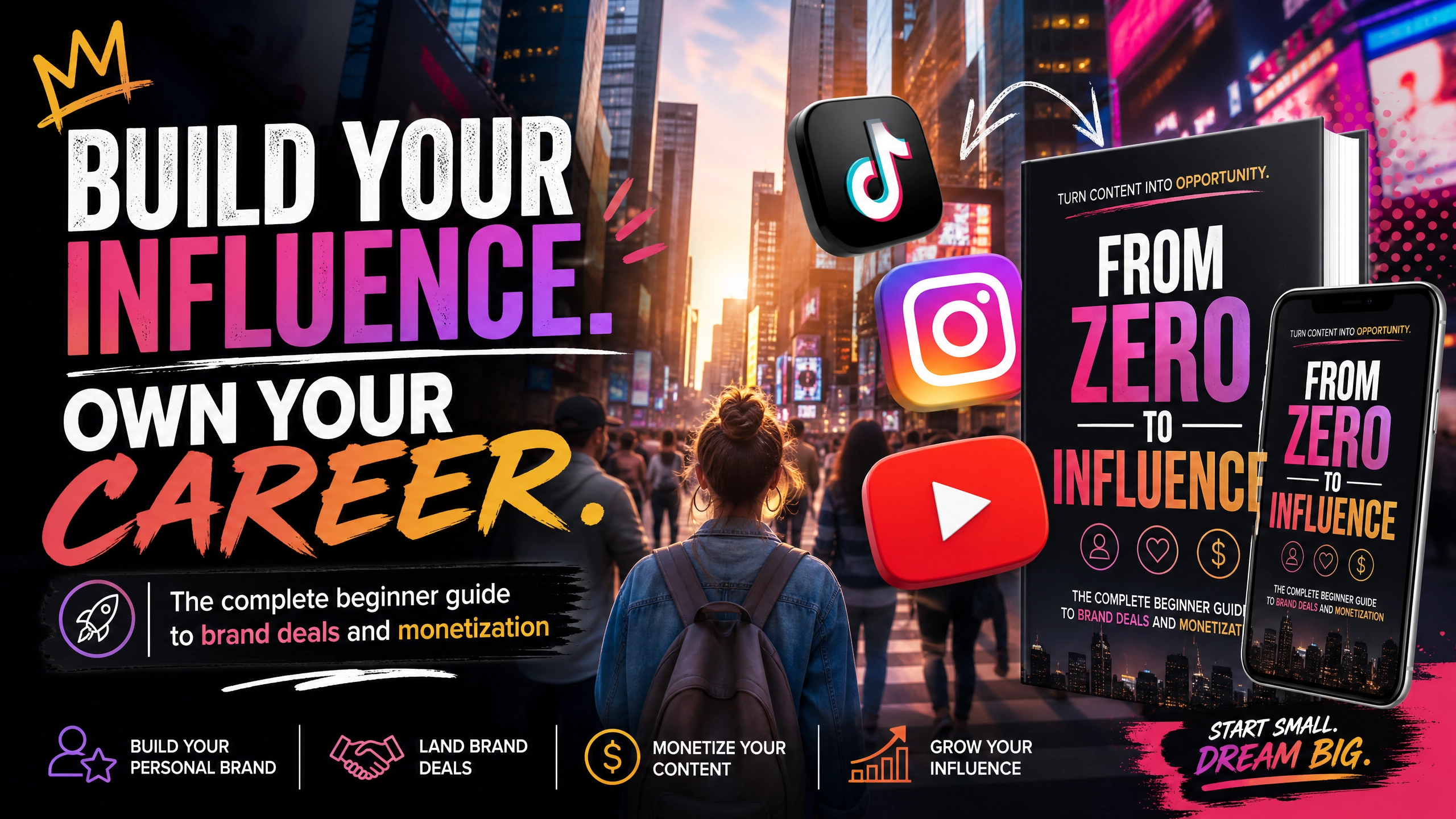
If you’re serious about building this side of your income, I actually put together a complete resource on this exact process — from picking your niche and building your first collaborations to setting up recurring income streams like digital products. It’s called The Complete Beginner’s Guide to Building a KOL & Influencer Career, and it’s the guide I genuinely wish existed when I was starting out — walking you step-by-step through everything in this post, plus the pitch templates and pricing frameworks I use myself.
BUY EBOOK!
4. Brand Ambassadorships
Instead of one-off posts, you become the recurring face of a brand over months or a full year. These deals pay significantly better and are far less stressful than chasing new one-off partnerships constantly.
5. UGC (User-Generated Content) Creation
Even if your following is small, brands will pay you just to create content for their channels — no posting required on your end. This is a fantastic starting point for nano-KOLs who want income before their own audience is large.
Step 5: Treat It Like a Real Business From Day One
I used to get nervous sweats thinking about the “business side” of all this, but trust me, a little structure early saves you massive headaches later.
- Open a separate bank account for your creator income, even before it feels “official”
- Track every payment and expense (I use a simple spreadsheet — nothing fancy needed at first)
- Set aside a percentage for taxes, since this income is typically self-employment income
- Create contracts or at minimum written agreements for every paid collaboration
- Set your rates based on value delivered, not just follower count, and don’t be afraid to raise them as your engagement grows
Step 6: Scale Beyond One Platform and One Income Stream
Once you’ve got momentum on your primary platform, this is where the real financial freedom kicks in. Diversifying protects you from algorithm changes and platform risk, which — trust me — you do not want to learn the hard way.
- Repurpose your best-performing content across 2–3 platforms
- Build an email list early; it’s the one audience you actually own
- Layer multiple income streams (sponsorships + affiliates + digital products) so no single stream carries all the weight
- Revisit and refresh your media kit and rates every few months as your numbers grow
Building a KOL and influencer career is absolutely something you can start part-time, alongside your current job, with nothing more than your phone and consistency. It won’t happen overnight, and there will be weeks where growth feels painfully slow — I promise you, that’s normal, not a sign you’re doing it wrong.
By choosing a focused niche, showing up consistently, building genuine trust with your audience, and layering multiple income streams instead of relying on one, you’ll be well on your way to building a real, sustainable creator income in 2026. If you want the exact roadmap, templates, and pricing frameworks I used to go from zero to consistent brand deals and digital product sales, grab The Complete Beginner’s Guide to Building a KOL & Influencer Career — it’s everything in this post, plus a whole lot more, in one place.
You May Also Like:






Leave a Reply